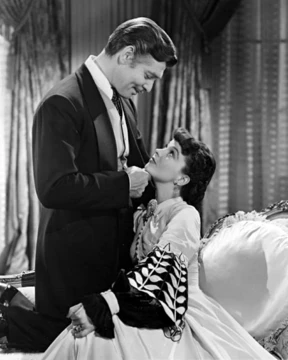
Florence Lawrence
The original Biograph Girl and inventor of car signals.

Jebulon · CC0
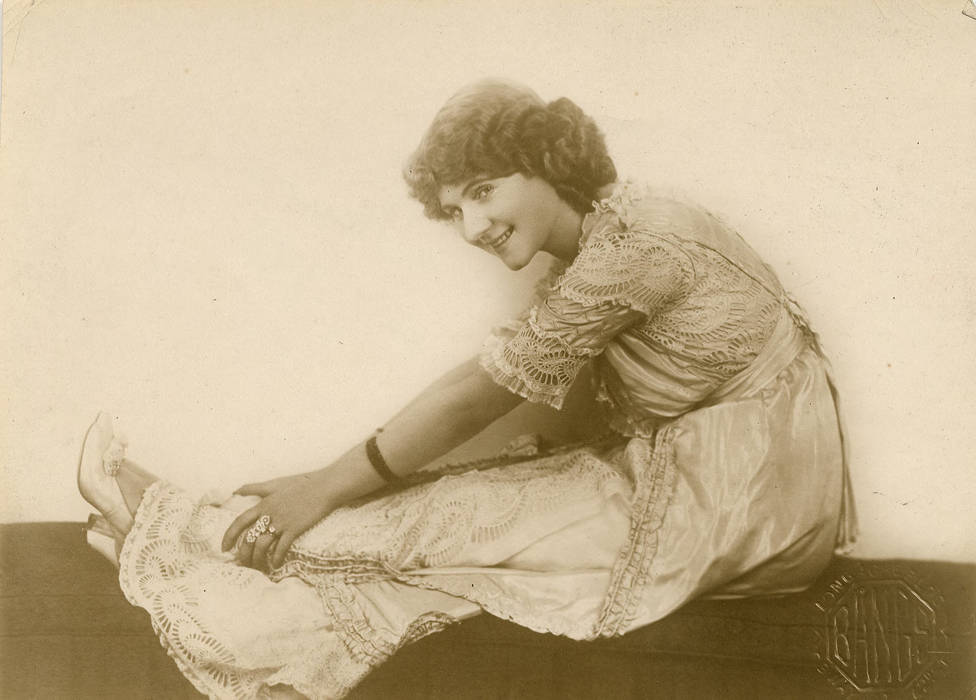
Florence Lawrence (born Florence Annie Bridgwood; January 2, 1886 – December 28, 1938) was a Canadian-American actress and inventor. She is often referred to as the "first movie star", and was long thought to be the first film actor to be named publicly until evidence published in 2019 indicated that the first named film star was French actor Max Linder. At the height of her fame in the 1910s, she was known as the "Biograph Girl" for work as one of the leading ladies in silent films from the Biograph Company. She appeared in almost 300 films for various motion picture companies throughout her career. Outside of her film career, she is best known for inventing the car turn and brake signals.
- Born
- January 2, 1886, Hamilton, Ontario, Canada
- Known for
- First movie star, Biograph Girl, inventor of car turn and brake signals
Lore & Background
Florence Annie Bridgwood was born on 2 January 1886 in Hamilton, Ontario. She was the youngest of three children of George Bridgwood, an English-born carriage builder and Charlotte "Lotta" Bridgwood (née Dunn), a vaudeville actress. On February 18, 1898, George Bridgwood died from accidental coal gas poisoning at his home in Hamilton. Lawrence was one of several Canadian pioneers in the film industry. In 1906, she appeared in her first motion picture. In 1907, she went to work for the Vitagraph Company. In 1908, she joined Biograph Studios under D. W. Griffith. In 1909, she and Harry Solter joined the Independent Moving Pictures Company. In 1912, Lawrence and Solter formed the Victor Film Company. During the filming of Pawns of Destiny in 1915, a staged fire got out of control. Lawrence was burned, her hair was singed, and she suffered a serious fall which fractured her spine.
Reader's Guide
Florence Lawrence was a pioneering silent film actress known as the "Biograph Girl" and inventor of car turn and brake signals. She was the youngest of three children, born in Hamilton, Ontario in 1886. Her father died in 1898 from coal gas poisoning. She began acting onstage at age three and in films in 1906. She worked for Vitagraph, Biograph (under D.W. Griffith), IMP, Lubin Studios, and co-founded the Victor Film Company. In 1915, a staged fire on the set of Pawns of Destiny caused burns and a fractured spine.
Did You Know?
- Florence Lawrence was known as the "Biograph Girl" because Biograph Studios refused to publicly name its actors.
- She invented the car turn and brake signals.
- Her father died from accidental coal gas poisoning in 1898.
- A staged fire during the filming of Pawns of Destiny in 1915 fractured her spine.
A Theatrical Heritage and a Child's Stage Debut
Florence Annie Bridgwood entered the world on January 2, 1886, in Hamilton, Ontario, as the youngest of three children. Her mother, Charlotte "Lotta" Bridgwood, was a vaudeville actress of Irish descent who had emigrated from Ireland as a child fleeing the Great Famine. Lotta went on to become the leading lady and director of the Lawrence Dramatic Company. From the age of three, young Florence performed alongside her mother in song-and-dance routines, and by the time she could memorize dialogue, she was appearing in dramatic plays. She earned the nickname "Baby Flo, the Child Wonder" by age six. However, the emotional weight of tear-jerking melodramas like Dora Thorne and East Lynne eventually led her mother to remove them from the repertoire. Florence loved the stage work itself but chafed against the constant traveling that vaudeville life demanded. When her father, an English-born carriage builder named George Bridgwood, died in a coal gas accident in 1898, Lotta relocated the family to Buffalo, New York, where Florence was finally enrolled in school and spared from further touring.
Discovery by Griffith and the "Biograph Girl" Phenomenon
In 1908, D. W. Griffith, the leading director at Biograph Studios, spotted a striking blonde actress in a Vitagraph film. Because silent-era actors were never credited, he had to make discreet inquiries to identify her as Florence Lawrence. Through a young actor named Harry Solter, who was seeking a "young, beautiful equestrian girl" for a new production, Lawrence secured the starring role in The Girl and the Outlaw, beating out Biograph's established leading lady Florence Turner. She went on to appear in most of the sixty films Griffith directed that year. As her popularity surged—particularly after the comedy series Mr. and Mrs. Jones and the hit Resurrection—fans flooded the studio with letters demanding to know who the woman on screen was. Biograph, like other studios of the era, refused to publicize her name, fearing that recognition would embolden actors to demand higher wages. The audience, undeterred, simply dubbed her the "Biograph Girl," a moniker that became inseparable from her identity during cinema's earliest years.
From Vitagraph to IMP — Forging Independence
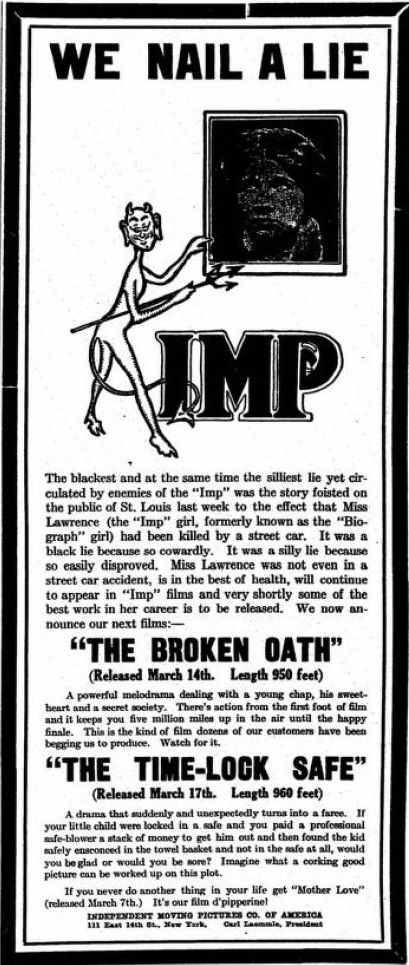
Lawrence's path into motion pictures began in 1906 when she was hired by the Edison Manufacturing Company to play Daniel Boone's daughter, a role she won largely because she could ride a horse. Both she and her mother were paid five dollars a day for two weeks of outdoor filming in freezing conditions. The following year she joined Vitagraph in Brooklyn, where she appeared in thirty-eight films and, thanks to her equestrian abilities, landed eleven parts in a single five-month stretch. She also moonlighted as a costume seamstress to supplement her twenty-dollar weekly salary. In 1909, after finding herself contractually free, she and her husband Harry Solter were recruited by Carl Laemmle's Independent Moving Pictures Company of America. Laemmle, who would later found Universal Pictures, lured her away with the promise of a marquee bearing her name. He first orchestrated a publicity stunt—spreading a false rumor that she had been killed by a streetcar in New York City—before placing advertisements to capitalize on the resulting media frenzy. Lawrence also negotiated to be paid weekly rather than daily, at double the standard rate.
Beyond the Screen — Invention and Legacy
Florence Lawrence's influence extended well beyond the silver screen. Outside of her acting career, she is best known for inventing the car turn and brake signals, a practical contribution to road safety that outlived her film work. In the world of cinema, she has long been celebrated as the "first movie star," the first film actor to be publicly named. However, evidence published in 2019 complicated that claim, indicating that French actor Max Linder may have preceded her in being publicly identified as a film star. Regardless of the title's precise origin, Lawrence's career spanned nearly three hundred films across multiple studios, making her one of the most prolific performers of the silent era. Born in Canada and working primarily in the United States, she embodied the transnational character of early Hollywood. Her life—from a child performer in a traveling vaudeville troupe to a named star with a marquee—traced the industry's evolution from anonymous spectacle to celebrity culture. She passed away on December 28, 1938.
Gallery
More in Golden Age Hollywood 1-24
Spotted an error? Know more?
Reader corrections go straight into our review queue. Suggest an edit · How this site is sourced