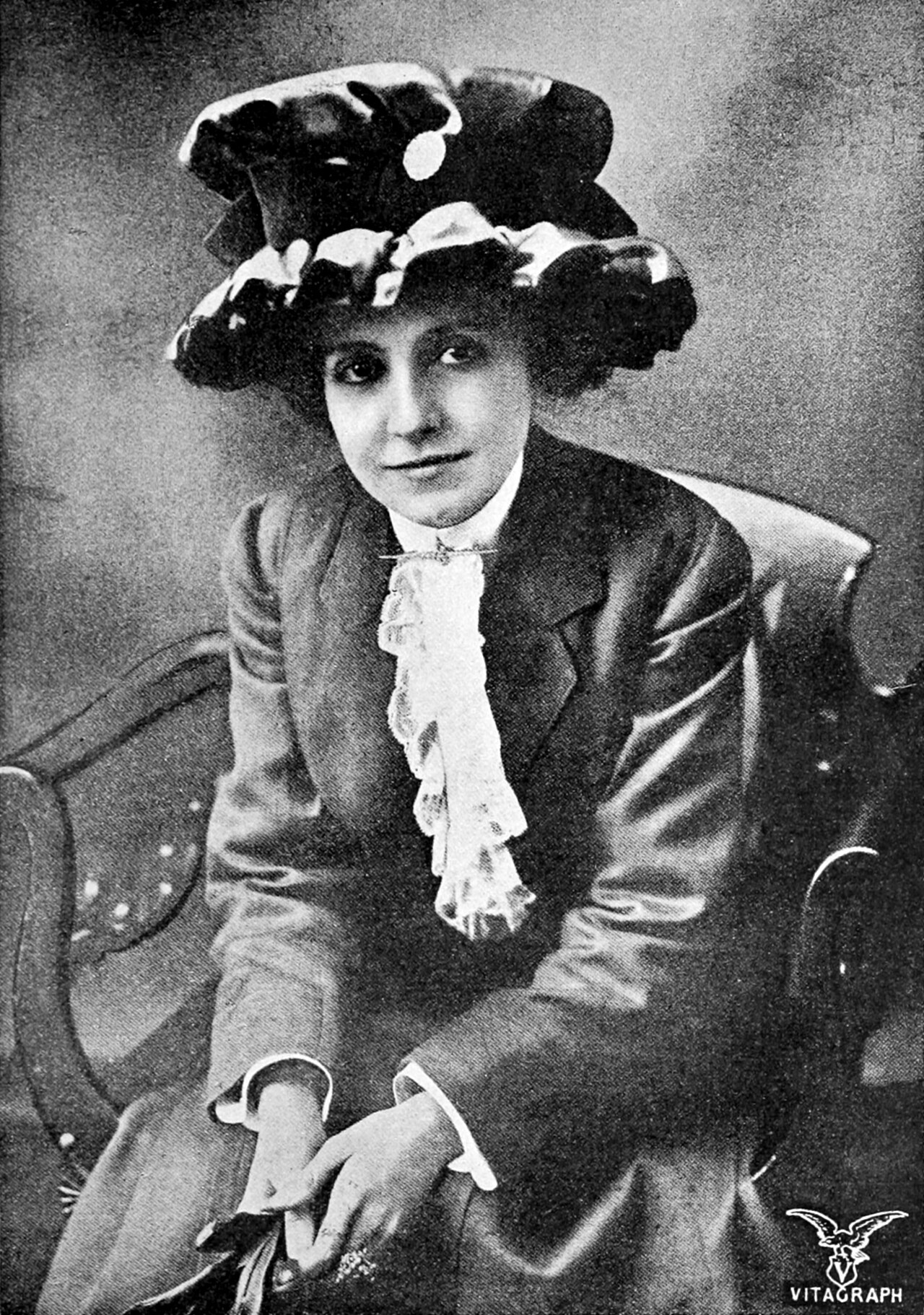
Florence Turner
The original "Vitagraph Girl" and silent film pioneer.

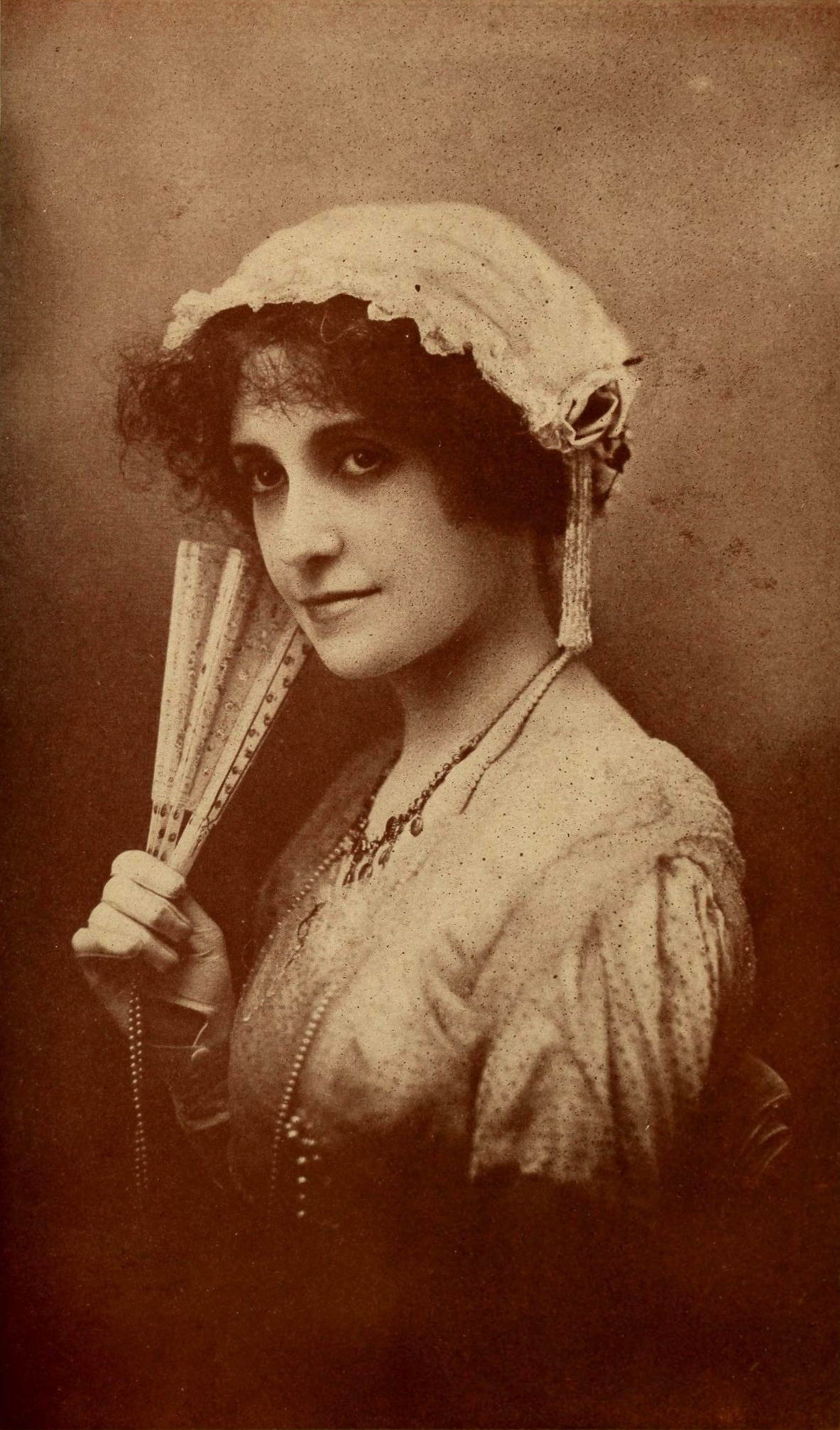
Unknown photographer · Public domain
Florence Turner (January 6, 1885 – August 28, 1946) was an American actress who became known as the "Vitagraph Girl" in early silent films.
- Known for
- Known as the "Vitagraph Girl"; one of the earliest screen actors publicized by name, preceding Florence Lawrence's widely recognized debut as the first film star publicized by name in March 1910
Lore & Background
Turner was born in New York City and pushed into appearing on stage at age three by her ambitious mother. She joined Vitagraph Studios in 1906 and made her film debut in How to Cure a Cold (June 8, 1907). At the time, performers were not mentioned by name; some heroines were given vague identities such as the "Edison Girl" or "The Girl from Sheepshead Bay." Turner became the most popular American actress on screen, and her pay was raised to $22 a week in 1907. In March 1910, she and Florence Lawrence became the first screen actors not already famous in another medium to be publicized by name by their studios. Later that year, she was paired several times with Wallace Reid. By 1913 she left the U.S. with Laurence Trimble for England, where she performed in music halls, wrote screenplays, directed movies, and organized her own production company, Turner Films, making more than thirty shorts at Walton Studios. She entertained Allied troops during World War I, returned to the U.S. after the Armistice, went back to England in 1920, and moved to Hollywood in 1924. She acted in supporting roles into the 1930s, appeared on Broadway in 1928 in Sign of the Leopard, and was placed on the payroll at MGM by Louis B. Mayer in the 1930s, mostly playing bit parts or working as an extra. She later moved to the Motion Picture Country House in Woodland Hills, California, and died at age 61 in Woodland Hills. She was cremated, and her ashes are stored in vault 1 at Chapel of the Pines Crematory.
Reader's Guide
Florence Turner was a pioneering silent film actress known as the "Vitagraph Girl." She began her career on stage at age three and joined Vitagraph in 1906. Her film debut was How to Cure a Cold (1907). In March 1910, she and Florence Lawrence were the first screen actors publicized by name. She later worked in England, directing and producing her own films. After returning to the U.S., she continued acting in supporting roles into the 1930s.
Did You Know?
- She organized her own production company, Turner Films, and made more than thirty shorts in England.
- She appeared in more than 160 motion pictures.
Roots in Detroit and a Father's Guitar
Florence Glenda Ballard entered the world on June 30, 1943, in Detroit, Michigan, as the eighth of thirteen children (or ninth of fifteen) born to Lurlee and Jesse Ballard. Her mother hailed from Rosetta, Mississippi, while her father—born Jesse Lambert in Bessemer, Alabama—had been adopted by the Ballard family after his grandmother was fatally shot. The family's journey to Detroit in 1929 was part of the broader Great Migration, and Jesse found steady work at General Motors. Beyond his factory job, Jesse was an amateur musician who planted the seed of Florence's singing ambition, teaching her songs and accompanying her on guitar. Financial hardship forced the family to relocate repeatedly across Detroit's neighborhoods until they settled in the Brewster-Douglass housing projects. Florence was fifteen when her father passed from cancer the following year. She attended Northeastern High School, where vocal coach Abraham Silver guided her training, and it was during a middle-school talent show that she first crossed paths with Mary Wilson, a friendship that would reshape popular music.
From the Primettes to the Supremes
After being accepted into Milton Jenkins' local group, the Primes, Ballard recruited Mary Wilson, and a neighbor named Diana Ross (then going by "Diane") was enlisted by Paul Williams. With Betty McGlown completing the quartet, Jenkins christened them "The Primettes." They performed at talent showcases and school parties before auditioning for Motown in 1960. Berry Gordy initially told them to finish high school first; Ballard ultimately dropped out while her groupmates graduated. They signed briefly with Lu Pine Records, releasing two underperforming tracks, but persisted in courting Motown. By early 1961, Gordy agreed to sign them on one condition: a new name. Janie Bradford presented a list, and Ballard selected "Supremes"—a choice that drew complaints from her groupmates, with Ross fearing they'd be confused with a male act. Gordy signed them on January 15, 1961. Their early years on the label were frustrating: eight consecutive singles failed to chart on the Billboard Hot 100, earning them the unflattering nickname "no-hit Supremes." A Ballard-led track, "Buttered Popcorn," found modest regional success in the Midwest but still fell short of national recognition.
The Strongest Voice in the Room
Although Diana Ross eventually became the group's frontwoman after 1963's "When the Love Light Starts Shining Through His Eyes," Ballard's vocal power was undeniable. Marvin Gaye, who occasionally shared the studio with her, called her "a hell of a singer, probably the strongest of the three girls." Mary Wilson recalled that Ballard's voice was so commanding during recording sessions that engineers had her positioned seventeen feet from the microphone to balance the mix. She sang lead on multiple Supremes album tracks, including a rendition of Sam Cooke's "(Ain't That) Good News," and was a frequent live performer of Barbra Streisand's "People." Between 1963 and 1967, Ballard contributed vocals to sixteen top-forty singles and fourteen top-ten pop hits, including nine number-one records. After extensive rehearsal with vocal coaches Cholly Atkins and Maurice King, the group's live performances sharpened considerably. In the spring of 1964, "Where Did Our Love Go" became their first chart-topper, launching a remarkable string of ten number-one hits through 1967. Ballard also briefly stepped in for Wanda Young of the Marvelettes during a maternity leave in early 1962.
A Tragedy Cut Short and a Legacy Restored
Ballard's removal from the Supremes in 1967 marked a devastating turning point. She attempted a solo path with ABC Records, but the venture never gained traction, and the label released her by the end of the decade. The years that followed were defined by alcoholism, depression, and poverty. Yet by the time of her death, she was in the midst of a musical comeback. On February 22, 1976, at just thirty-two years old, Ballard died of a heart attack. One critic later described her passing as "one of rock's greatest tragedies." Her story did not end there in terms of recognition: in 1988, she became the first woman inducted posthumously into the Rock and Roll Hall of Fame, honored as a member of the Supremes. Friends who knew her as a teenager—Mary Wilson and early boyfriend Jesse Green—remembered a "generally happy if somewhat mischievous and sassy" young woman. Wilson believed a traumatic 1960 assault in a Detroit parking lot contributed to the cynicism, pessimism, and deep distrust that characterized Ballard's adult years, though the incident was never spoken of again among the group.
Gallery
More in Golden Age Hollywood 1-24
Spotted an error? Know more?
Reader corrections go straight into our review queue. Suggest an edit · How this site is sourced