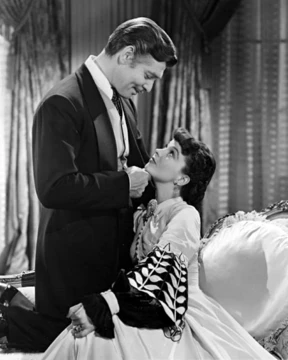
Judith Anderson
Australian actress acclaimed on stage and screen.
Dame Frances Margaret Anderson, who performed as Judith Anderson, was an Australian actress born on 10 February 1898 in Adelaide, South Australia. She built a notable career across stage, film, and television, earning two Emmy Awards, a Tony Award, and nominations for a Grammy and an Academy Award.
The youngest of four children, Anderson was born to Jessie Margaret Saltmarsh, a former nurse, and James Anderson Anderson, a Scottish-born sharebroker and prospector. She attended Norwood, a private school, but left before graduating.
Anderson made her professional debut in 1915 as Francee Anderson in *A Royal Divorce* at Sydney’s Theatre Royal, playing Stephanie. She credited Scottish actor Julius Knight, who led the company, with teaching her the basics of acting. She performed with him in adaptations of *The Scarlet Pimpernel*, *The Three Musketeers*, *Monsieur Beaucaire*, and *David Garrick*, and toured New Zealand in 1917.
Ambitious to leave Australia, Anderson chose the U.S. over London due to World War I. After four unsuccessful months in California, she moved to New York with no better luck. Following a period of poverty and illness, she joined the Emma Bunting Stock Company at the Fourteenth Street Theatre in 1918–19, then toured with other stock companies.
Her Broadway debut came in *Up the Stairs* (1922), followed by *The Crooked Square* (1923) and a Chicago run of *Patches* (1923). After the short-lived *Peter Weston* (1923), she changed her stage name to Judith and scored her first success in *Cobra* (1924), co-starring Louis Calhern, which ran 35 performances. *The Dove* (1925), with 101 performances, cemented her Broadway reputation. She toured Australia in 1927 with *Tea for Three*, *The Green Hat*, and *Cobra*. Back on Broadway, she appeared in *Behold the Bridegroom* (1927–28) and took the lead in *Anna* (1928), later replacing Lynn Fontanne during *Strange Interlude* (1929).
Anderson’s film debut was a Warner Bros. short, *Madame of the Jury* (1930), followed by her feature debut in *Blood Money* (1933). In 1931, she played the Unknown Woman in the American premiere of Pirandello’s *As You Desire Me*, which ran 142 performances. She appeared in a short-lived revival of *Mourning Becomes Electra* (1932), then *Firebird* (1932), *Conquest*, *The Drums Begin* (both 1933), and *The Mask and the Face* (1933, with Humphrey Bogart).
Quick Facts
- Honorific Prefix
- Dame
- Birth Name
- Frances Margaret Anderson
- Birth Date
- 10 February 1897
- Birth Place
- Adelaide, Colony of South Australia
- Death Date
- 3 January 1992 · 1897 · 2 · 10
- Death Place
- Santa Barbara, California, U.S.
- Spouse
- Benjamin Harrison Lehmann · 1937 · 1939 (1946–1951)
- Occupation
- Actress
- Years Active
- 1915–1987
Facts from the source article.
Lore & Background
Judith Anderson was born in Adelaide, South Australia, the youngest of four children. She made her professional debut in 1915 in Sydney, and after touring New Zealand, she moved to the United States, initially struggling in California and New York before finding work with stock companies. She made her Broadway debut in 1922 and changed her acting forename to Judith in 1924, achieving her first triumph with the play Cobra. She became a Broadway star with The Old Maid in 1935 and played Lady Macbeth opposite Laurence Olivier in 1937.
Anderson received a career boost when she was cast as Mrs. Danvers in Alfred Hitchcock's Rebecca (1940), earning an Academy Award nomination for Best Supporting Actress. She continued to work in film and on stage, winning a Tony Award for Best Actress for her performance as Medea in 1947. She also won two Emmy Awards for her television performances, including one for playing Lady Macbeth in 1960.
Reader's Guide
Judith Anderson's significance lies in her powerful stage presence and her ability to transition successfully between stage, film, and television. Her portrayal of the sinister housekeeper Mrs. Danvers in Rebecca remains iconic, and her Tony Award-winning performance as Medea solidified her reputation as a leading dramatic actress. She was one of the few performers to win both a Tony and two Emmys, and her career spanned from the early 20th century to the 1960s, influencing generations of actors. Her legacy is that of a versatile and commanding performer who brought depth to classical and contemporary roles alike.
Did You Know?
- She made her professional debut in 1915 using the name Francee Anderson.
- She was nominated for an Academy Award for Best Supporting Actress for her role as Mrs. Danvers in Rebecca (1940).
- She won two Emmy Awards, one for a 1954 television production of Macbeth and another for a 1960 television production of Macbeth.
More in Golden Age Hollywood 1-24
Spotted an error? Know more?
Reader corrections go straight into our review queue. Suggest an edit · How this site is sourced