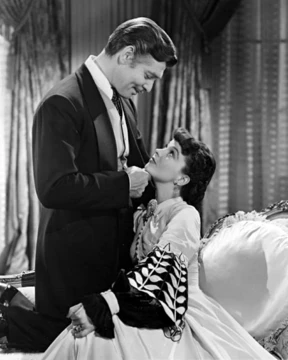
Irene Dunne
American actress nominated five times for Best Actress Oscar.

Irene Dunne was born Irene Marie Dunne on December 20, 1898, in Louisville, Kentucky. Her father, a steamboat engineer and government inspector of Irish descent, died from a kidney infection when she was fourteen. After his death, the family moved to Madison, Indiana, to live near her mother’s family. Her mother, a concert pianist and music teacher of German heritage, taught her piano early on. Dunne’s first taste of drama came from a school production of *A Midsummer Night’s Dream*. She studied at the Indianapolis Conservatory of Music, earned a diploma in 1918, and later won a scholarship to the Chicago Musical College, graduating in 1922. Hoping to become a soprano opera singer, she moved to New York in 1922 after graduating but failed two auditions with the Metropolitan Opera Company because of her inexperience and “slight” voice.
She then turned to musical theater, taking more singing and dancing lessons. After a vacation visit to New York, she was recommended for an audition and joined the touring company of *Irene* in 1922. Her Broadway debut came on December 25, 1922, as Tessie in *The Clinging Vine*. She understudied Peggy Wood, played the role several times in early 1923, and later took over the lead when the original actress left. She also replaced Leeta Corder in *Ginger* (1923) and appeared in *Lollipop* (1924) on Broadway. Supporting roles followed in *The City Chap* (1925), *Yours Truly* (1927), and *She’s My Baby* (1928). Her first top-billed lead, *Luckee Girl* (1928), was not a success. She later described her early career as “not great furor.” She got the role of Magnolia Hawks in a road company adaptation of *Show Boat* after a chance elevator meeting with producer Florenz Ziegfeld Jr. on the day she returned from her honeymoon. An RKO talent scout saw her perform, and she signed a contract. Her first film was *Leathernecking* (1930), an adaptation of the musical *Present Arms*. Because she was already in her 30s when she started in movies, she had to compete with younger actresses for parts.
Dunne made 42 films in total.
- Born
- December 20, 1898
- Died
- September 4, 1990
- Field
- Actress
- Nationality
- American
- Known for
- Comedic roles, screwball comedies, five Academy Award nominations
Lore & Background
Irene Dunne was born in Louisville, Kentucky, to Joseph John Dunn, an Irish-American steamboat engineer, and Adelaide Antoinette Dunn, a concert pianist. After her father died when she was 14, her family moved to Madison, Indiana. She studied music and aspired to become an opera singer, but after failing two auditions with the Metropolitan Opera Company, she turned to musical theater. Her Broadway debut was in The Clinging Vine in 1922, and she later starred in a road company adaptation of Show Boat. A talent scout for RKO Pictures saw her perform, leading to her Hollywood film debut in Leathernecking (1930).
Dunne starred in 42 films, earning five Academy Award nominations for Best Actress: for Cimarron (1931), Theodora Goes Wild (1936), The Awful Truth (1937), Love Affair (1939), and I Remember Mama (1948).
Reader's Guide
Irene Dunne's significance lies in her versatility across film genres, particularly her comedic roles in screwball comedies such as The Awful Truth and Theodora Goes Wild. She is regarded as one of the best comedic actresses in the screwball genre. Despite five Academy Award nominations, she never won, a fact that underscores her reputation as one of the finest actresses never to have won an Oscar. Her career spanned from the early sound era to the early 1950s, and she successfully transitioned from musicals to dramas and comedies. Beyond film, her work as a UN delegate and her philanthropic efforts highlight her public service. Her legacy endures as a leading lady of Hollywood's Golden Age, noted for both her screen performances and her dignified public persona.
Did You Know?
- Irene Dunne was born Irene Marie Dunn and later added the 'e' to her surname after it had been misspelled as 'Dunne'.
- She was rejected by the Metropolitan Opera Company due to her inexperience and 'slight' voice.
- She was chosen by President Dwight D. Eisenhower as a delegate for the United States to the United Nations.
- Dunne received a papal knighthood: Dame of the Order of the Holy Sepulchre.
More in Golden Age Hollywood 1-24
Spotted an error? Know more?
Reader corrections go straight into our review queue. Suggest an edit · How this site is sourced