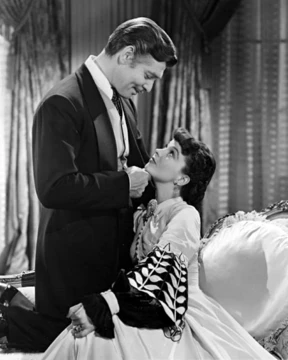
Greer Garson
British-American actress who won an Oscar for Mrs. Miniver.

Eileen Evelyn Greer Garson, born on 29 September 1904 and passing on 6 April 1996, was an actress and singer who held both British and American citizenship. She became famous for portraying elegant, virtuous, and composed women in historical films and wartime stories, rising swiftly to fame during Hollywood’s Golden Age. As a leading figure at Metro-Goldwyn-Mayer (MGM), she was one of the most beloved stars of the 1940s and ranked among the highest-earning performers in both the United States and Britain. Between 1942 and 1946, the Motion Picture Herald consistently listed her as a top box-office attraction in America.
Garson began her career on stage and television in England. In 1937, she signed a film contract with Louis B. Mayer, then head of MGM. Her first movie was the British short *The Hands of the Enemy* (1937), though she may have also appeared uncredited in *A Yank at Oxford* (1938). Her first major role came in *Goodbye, Mr. Chips* (1939), which earned critical praise and her initial Academy Award nomination for Best Actress. After standout roles in the romantic comedy *Remember?* (1939) and the period piece *Pride and Prejudice* (1940), she appeared in a series of commercially and critically successful films. These earned her an unprecedented five consecutive Oscar nominations for Best Actress: *Goodbye, Mr. Chips* (1939), *Blossoms in the Dust* (1941), *Mrs. Miniver* (1942), *Madame Curie* (1943), and *Mrs. Parkington* (1944). She won the award for *Mrs. Miniver*, which was the highest-grossing film of 1942. *The Valley of Decision* (1945) marked her sixth nomination, coming after the consecutive streak.
By the late 1940s, Garson’s career started to wane, though she continued making films regularly. Notable works from this period include the romantic drama *Adventure* (1946), the romantic comedy *Julia Misbehaves* (1948), and the 1953 adaptation of Shakespeare’s *Julius Caesar*. She staged a brief comeback in 1960 by playing First Lady Eleanor Roosevelt in *Sunrise at Campobello*, which brought her a final Best Actress Oscar nomination. After that, she made only occasional film appearances until her death in 1996.
Over her career, Garson received many honors.
- Born
- 29 September 1904 in Manor Park, East Ham (then in Essex, now part of Greater London)
- Died
- 6 April 1996
- Field
- Actress and singer
- Nationality
- British and American
- Known for
- Playing graceful, noble, and dignified women in period and war dramas; record five consecutive Academy Award nominations for Best Actress (1939–1944)
Lore & Background
Garson was born on 29 September 1904 in Manor Park, East Ham, the only child of Nancy Sophia Greer and George Garson. Her father died when she was young, and she was raised by her mother, growing up mainly in Castlewellan. She read French and 18th-century literature at King's College London and did postgraduate studies at the University of Grenoble. Before acting, she worked as head of the research library of LINTAS in the marketing department of Lever Brothers, where co-worker George Sanders later credited her with suggesting he start an acting career.
Garson began her professional stage career at Birmingham Repertory Theatre in January 1932. She appeared on television in its earliest years, starring in experimental broadcasts. Her film debut was in the British short *The Hands of the Enemy* (1937), with a possible uncredited role in *A Yank at Oxford* (1938). She rose to fame with *Goodbye, Mr. Chips* (1939), earning her first Oscar nomination. Her five consecutive Best Actress nominations were for *Goodbye, Mr. Chips* (1939), *Blossoms in the Dust* (1941), *Mrs. Miniver* (1942), *Madame Curie* (1943), and *Mrs. Parkington* (1944). She won the Oscar for *Mrs. Miniver* with a speech lasting five minutes and 30 seconds—the longest in Academy history, a record that remains unbroken as of 2025.
Reader's Guide
Greer Garson's significance lies in her status as one of the defining stars of Hollywood's Golden Age, particularly during the 1940s when she was a top box-office draw and among the highest-paid actresses. Her record of five consecutive Academy Award nominations for Best Actress tied Bette Davis's record and remains a notable achievement. Her Oscar-winning performance in Mrs. Miniver (1942) became emblematic of wartime resilience, and her long acceptance speech prompted the Academy to institute a time limit. Garson frequently co-starred with Walter Pidgeon, making eight films together, and worked with major stars such as Clark Gable and Ronald Colman. Though her popularity waned after the 1940s, her later nomination for portraying Eleanor Roosevelt demonstrated her continued dramatic range. She was recognized with a Golden Globe, a star on the Hollywood Walk of Fame, and a CBE from Queen Elizabeth II. Her legacy endures as a symbol of dignified, noble screen presence and as a record-holder in Oscar history.
Did You Know?
- Garson's Oscar acceptance speech for Mrs. Miniver lasted five minutes and 30 seconds, the longest in Academy history until Adrien Brody's speech at the 97th Academy Awards eighty-two years later.
- She was a co-worker of George Sanders at Lever Brothers and suggested he start an acting career.
- Garson was invested as Commander of the Order of the British Empire (CBE) by Queen Elizabeth II in 1993.
- Her birthplace was erroneously reported as County Down, and her year of birth as 1908, in The Macmillan International Film Encyclopedia.
More in Golden Age Hollywood 1-24
Spotted an error? Know more?
Reader corrections go straight into our review queue. Suggest an edit · How this site is sourced