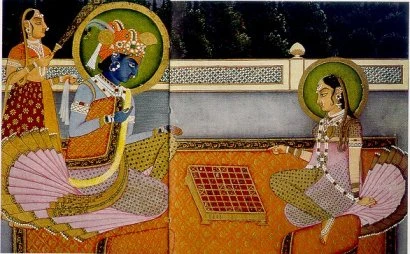
Sittuyin
Burmese chess descended from chaturanga, still played in northwestern Myanmar.

Sittuyin (Burmese: စစ်တုရင်), often called Burmese chess, is a strategy board game that originated in Myanmar. It comes directly from the Indian game chaturanga, which likely reached Myanmar by the 11th century or later, making it a relative of chess and shogi. The name *sittuyin* derives from Burmese words for 'chess' and 'war' or 'army,' reflecting its martial origins. In Myanmar, the game has mostly been pushed aside by Western (international) chess, though it still sees regular play in the northwestern parts of the country.
The board has 64 squares arranged in eight rows and eight columns, but the squares are not colored in alternating patterns. Two diagonal lines run from corner to corner across the board; these are called *sit-ke-myin* (Burmese: စစ်ကဲမျဉ်း), or "general's lines."
Pieces are usually carved from wood, sometimes from ivory, and their height varies by type. The official colors for the pieces are red and black. Each player has one *min-gyi* (Burmese: မင်းကြီး, "king"), which moves one step in any direction, similar to the king in Western chess. There is also one *sit-ke* (Burmese: စစ်ကဲ, "general"), which moves one step diagonally in any direction, like the fers in shatranj. Two *sin* (Burmese: ဆင်, "elephant") pieces move one step diagonally forward or one step forward—unlike the silver general in shogi, which can also move diagonally backward. Two *myin* (Burmese: မြင်း, "horse") pieces jump two squares horizontally and one vertically, or two vertically and one horizontally, exactly like the knight in Western chess. Two *yahhta* (Burmese: ရထား, "chariot") pieces move any number of free squares along the four orthogonal directions, like the rook. Finally, eight *nè* (Burmese: နယ်, "feudal lord") pieces move one step forward and cannot retreat; they capture one step diagonally forward, similar to pawns.
At the start, only the feudal lords (pawns) are placed on the board. The game begins with the Red player (shown here with white pieces) and then the Black player placing their other pieces anywhere on their own half of the board—this phase is called *sit-tee* (troops deployment). Chariots can be placed on any square of the back rank. In official tournaments, a small curtain is set across the middle of the board so players cannot see each other's deployment during the *sit-tee* stage.
Quick Facts
- Italic Title
- no
- Title
- Sittuyin
- Years
- 8th century to present
- Genre
- Board game · Abstract strategy game
- Players
- 2
- Setup Time
- < 1 minute
- Playing Time
- From 20 minutes to several hours
- Random Chance
- None
- Skills
- Strategy, tactics
- Aka
- Burmese chess
Facts from the source article.
Lore & Background
Sittuyin is a strategy board game created in Myanmar, derived from the Indian game of chaturanga which arrived no earlier than the 11th century. The board consists of 64 squares without alternating colors, marked with two diagonal lines called sit-ke-myin (general's lines). Pieces are commonly made of wood, sometimes ivory, with official colors red and black. The pieces include the min-gyi (king), sit-ke (general), sin (elephant), myin (horse), yahhta (chariot), and nè (feudal lord). The general moves one step diagonally (like the fers in shatranj), while the elephant moves one step diagonally forward or one step forward—unlike the silver general in shogi, which can also move diagonally backward.
Reader's Guide
Sittuyin is significant as a living descendant of chaturanga, preserving ancient movement patterns such as the general's diagonal-only move and the elephant's limited diagonal-forward step. Its unique deployment phase (sit-tee) allows players to arrange their non-pawn pieces on their own half of the board before play begins, with a curtain used in tournaments to hide the arrangement. Pawns (feudal lords) promote to general only if the player's general has been captured, and only when reaching the diagonal lines. The game's legacy includes a variant with dice, as noted by Anne Sunnucks, where three dice were thrown and each player made three moves at a time. H. J. R. Murray's 1913 history describes a three-stage version with additional deployment flexibility. Sittuyin remains culturally important in Myanmar, especially in the northwest, despite being overshadowed internationally by Western chess.
Did You Know?
- The word sittuyin translates as 'representation of the four characteristics of army'—chariot, elephant, cavalry and infantry.
- The board has two diagonal lines from corner to corner, known as sit-ke-myin (general's lines).
- A feudal lord promotes to general only if that player's general has been captured, and only when reaching the diagonal lines.
More in Games related to chaturanga 1-18
Spotted an error? Know more?
Reader corrections go straight into our review queue. Suggest an edit · How this site is sourced