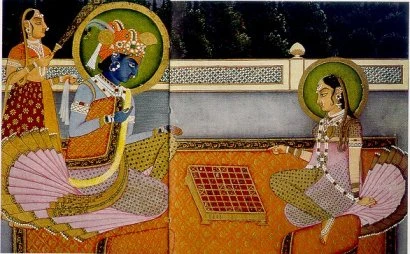
Janggi
Korean chess derived from xiangqi, played on a 9×10 board.

Janggi, also known as Korean chess, is a strategy board game derived from xiangqi (Chinese chess) and popular on the Korean Peninsula. It is played on a 9×10 board without a river, and features pieces such as generals, guards, horses, elephants, chariots, cannons, and soldiers, with unique movement rules including jumping cannons and long-range elephants.
Quick Facts
- Italic Title
- no
- Title
- Janggi
- Genre
- Board game · Abstract strategy game · Mind sport
- Players
- 2
- Setup Time
- < 1 minute
- Playing Time
- From 20 minutes to several hours
- Random Chance
- None
- Skills
- Strategy, tactics
- Aka
- Changgi · Janki · Korean chess
Facts from the source article.
Lore & Background
Janggi is a strategy board game popular on the Korean Peninsula, derived from xiangqi (Chinese chess). The board is nine lines wide by ten lines long, with no river dividing the center, unlike xiangqi. Pieces are octagonal disks marked with Hanja characters, with red and blue (or green) sides. In North Korea, the blue (or green) side is called jang (general) and the red side is called gwan (minister). The game begins with the general placed at the center of a 3×3 palace, and players may pass their turn, a rule called han-soo-shim.
Reader's Guide
Janggi is significant as a traditional Korean board game that shares roots with xiangqi but has distinct rules, such as the absence of a river, the ability for elephants to cross the board, and the requirement for cannons to jump over a piece to move or capture. The game allows players to pass turns, and stalemate does not end the game—instead, the player with no legal moves must pass. The first world janggi tournament was held in 2009 in Harbin, China, indicating growing international interest. Its legacy lies in its cultural importance on the Korean Peninsula and its unique strategic depth, with professional games often exceeding 150 moves.
Did You Know?
- Janggi pieces are traditionally octagonal in shape and differ in size according to rank.
- The generals cannot leave the palace, and if they face each other across the board, it results in a draw called bikjang.
- Cannons in janggi must jump over exactly one piece to move or capture, and cannot jump over or capture another cannon.
- In North Korea, the blue (or green) general is called jang (將) and the red general is called gwan (官).
Ancient Lineage and the Family Tree of Strategy Games
Janggi occupies a distinguished position within a vast family of strategy board games that trace their origins to Chaturanga, an ancient Indian game first documented around the seventh century CE. Chess historians widely regard Chaturanga as the common ancestor from which janggi, along with chess, xiangqi, shogi, sittuyin, makruk, ouk chatrang, and modern Indian chess all ultimately descended. The transmission path ran through Sassanid Persia, where the game was adapted as chatrang or shatranj, before branching into the various cultural traditions of East and Southeast Asia. This shared heritage means that the fundamental architecture of janggi—its board dimensions, its core objective of checkmating the raja, and the basic movement logic of its pieces—carries echoes of a game that was already ancient when the Gupta Empire flourished in north India. Understanding janggi thus requires acknowledging that it is not an isolated invention but one thread in a centuries-old tapestry of strategic thought that stretched from the Indian subcontinent across trade routes and into the Korean peninsula.
The Elephant and Janggi's Distinctive Piece Movement
Among the pieces inherited from Chaturanga, the gaja, or elephant, carries the most uncertainty in the historical record, and it is precisely here that janggi carves out its own identity. Ancient Indian literature describes at least three different moves for the elephant, and the Korean variant adopted a hybrid that distinguishes it from its neighbors. In janggi, the elephant moves two squares in a diagonal direction, jumping over the first square, much like the alfil of Persian shatranj or the elephant in Chinese xiangqi. However, janggi adds a crucial constraint: the move begins with an initial orthogonal step, and the piece cannot leap over an intervening piece or pawn. This contrasts with the pure (2,2)-leaper of shatranj, where no such blocking restriction exists, and with the xiangqi elephant, which shares the no-jumping rule but lacks the orthogonal starting step. The result is a piece whose movement feels both familiar and uniquely Korean, a small but meaningful divergence that reflects how each culture refined the inherited rules to suit its own strategic sensibility.
The Board, the Objective, and Core Mechanics
Janggi is played on an eight-by-eight grid, a layout inherited directly from the Chaturanga board known as the ashtāpada. Unlike the checkered boards of modern Western chess, the original ashtāpada was uncheckered, though it sometimes bore special markings whose purpose remains unknown to modern players. These marks, scholars note, corresponded to squares that no starting elephant could ever reach given its movement rules, and chess historian H. J. R. Murray speculated they may have served a different game entirely, perhaps an old race-type dice game. The objective in janggi, as in Chaturanga, is to checkmate the opponent's raja or reduce the enemy to a bare king, with a draw if the opposing side can reciprocate on the next move. White moves first. There is no castling. The raja steps one square in any direction, the mantri or minister moves one diagonal step, and the ratha or chariot slides along ranks and files like a rook. These core mechanics, preserved across millennia, form the structural backbone of the Korean game.
Etymology, the Four Divisions, and Epic Roots
The name Chaturanga, from which janggi's entire conceptual framework descends, is a Sanskrit bahuvrihi compound meaning 'having four limbs or parts.' In the epic poetry tradition, the term frequently signified an army, and its origin lies in a battle formation described in the Mahabharata. The four divisions referenced are elephantry, chariotry, cavalry, and infantry, and an ancient formation called the akshauhini mirrors the setup of the board game. This military imagery is not mere decoration; it is embedded in the very identity of the pieces. The ratha, the gaja, the mantri, and the raja all echo the hierarchical structure of a classical Indian army. The earliest clear textual reference to the game comes from Banabhatta's Harsha Charitha, composed around 625 CE, where the name chaturanga appears in a passage about a peaceful court. Stewart Culin also pointed to the Bhavishya Purana as an early source, though that text is known to contain later interpolations. Some scholars even propose roots stretching back five thousand years, citing Indus Valley remains from Lothal. For janggi, these layered origins mean that every move on the board is, in a sense, a fragment of an ancient military imagination.
Frequently Asked Questions
What is Janggi and where does it come from?
Janggi is the Korean name for a strategy board game that evolved from xiangqi (Chinese chess) and has been a popular pastime across the Korean Peninsula for centuries. It shares the chaturanga lineage with other chess-like games but developed its own distinct rules and piece set.
How does the Janggi board differ from xiangqi's?
Janggi is played on a 9×10 grid of intersections, but unlike xiangqi it has no river dividing the two halves. This means all pieces can traverse the full length of the board, which changes how mid-game tactics and endgames unfold.
What pieces do you find in a standard Janggi set?
Each side fields a general, two guards, two horses, two elephants, two chariots, two cannons, and five soldiers. The elephants and cannons in particular move differently from their xiangqi counterparts—elephants can reach long range, and cannons jump over pieces to capture.
When and where was the first official world Janggi tournament held?
The inaugural world Janggi championship took place in Seoul, South Korea, in 2009. It marked a major milestone in bringing the traditionally regional game to an international competitive stage.
Why do fans consider Janggi important in the chaturanga family?
Janggi preserves the ancient chaturanga heritage while showcasing how Korean culture adapted and refined the game's mechanics over generations. Its unique twists—like the riverless board and reworked piece movements—make it a vital living branch of the chess-like game tree.
More in Games related to chaturanga 1-18
Spotted an error? Know more?
Reader corrections go straight into our review queue. Suggest an edit · How this site is sourced