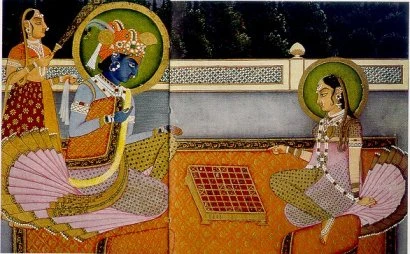
Shatar
Mongolian chess variant with distinct rules and piece designs.

Shatar (Mongolian: ᠮᠣᠩᠭᠣᠯ ᠰᠢᠲᠠᠷᠠ Monggol sitar-a, 'Mongolian shatranj'; also known as shatar) is a chess variant played in Mongolia. It is distinct from Western chess in its piece designs and rules, and is one of two chess variants played in Mongolia, the other being hiashatar.
- Field
- Chess variant
- Known for
- Mongolian chess variant with unique rules and piece names
Lore & Background
Shatar pieces have designs very distinctly different from Western chess pieces. The game rules are similar to standard chess but with several differences: the noyan (lord) does not castle; the küü (pawn) does not have an initial double-step move option except for the queen pawn or king pawn. In old shatar rules, a pawn that reaches its eighth rank must promote to half-power tiger, but a pawn could step back to its sixth rank to promote to all-power tiger, which moves like a queen. The baras (tiger) in old rules moves like a promoted rook in shogi (like a rook or one square diagonally) and was called half-power tiger or half-power lion; in modern rules it moves like a queen.
Reader's Guide
Shatar is significant as a traditional Mongolian chess variant that preserves elements of medieval shatranj while incorporating local innovations. Its rules reflect a distinct cultural approach to chess, such as the mandatory opening moves (White always plays 1.d4 and Black responds 1...d5, the only time a pawn may advance two squares) and the old rule that a pawn could retreat to promote. The variant also includes the concept of tuuxəi, similar to komi in Go, where a player who leaves the enemy with only two pieces must make consecutive checks until checkmate, with the number of checks counting as tuuxəi. The mori (knight) cannot deliver mate in old rules, but can in modern rules. Baremate (one player having only a king remaining) is a draw in old rules. These features show how shatar evolved differently from Western chess, maintaining its own identity within Mongolian culture.
Did You Know?
- The baras (tiger) in old shatar rules moves like a promoted rook in shogi: like a chess rook or one square diagonally.
- In old shatar rules, baremate (one player having only a king remaining) is a win for the player who achieves it.
- The initial double-step move is allowed for the king pawn and queen pawn, but the opening is not canonically fixed to 1.d4 and 1...d5.
Frequently Asked Questions
What is Shatar?
Shatar is a traditional chess-like board game that originated in Mongolia and is sometimes referred to as 'Mongolian shatranj.' It stands as one of two chess variants historically associated with Mongolian culture, the other being hiashatar.
How does Shatar differ from standard Western chess?
The two most visible differences are the aesthetic design of the pieces and a set of rule variations that diverge from the international chess standard. These distinctions give Shatar its own local identity rather than making it a simple copy of European chess.
Where is Shatar traditionally played?
Shatar is rooted in Mongolian culture and has been played across Mongolia as a traditional pastime passed down through generations. It occupies a place in the country's folk games alongside other culturally specific board games.
How does Shatar connect to the ancient game chaturanga?
Shatar, like Western chess, ultimately traces its lineage back to the Indian game chaturanga that spread along ancient trade routes. However, it evolved independently within Mongolian tradition, developing its own piece styles and local rules rather than following the European trajectory that produced modern chess.
What are the pieces called in Shatar?
Rather than using the familiar English or European piece names, Shatar employs its own Mongolian terminology for each piece. This local naming system is one of the hallmarks that marks it as a culturally distinct variant of the chaturanga family.
More in Games related to chaturanga 1-18
Spotted an error? Know more?
Reader corrections go straight into our review queue. Suggest an edit · How this site is sourced