
Sofa bed
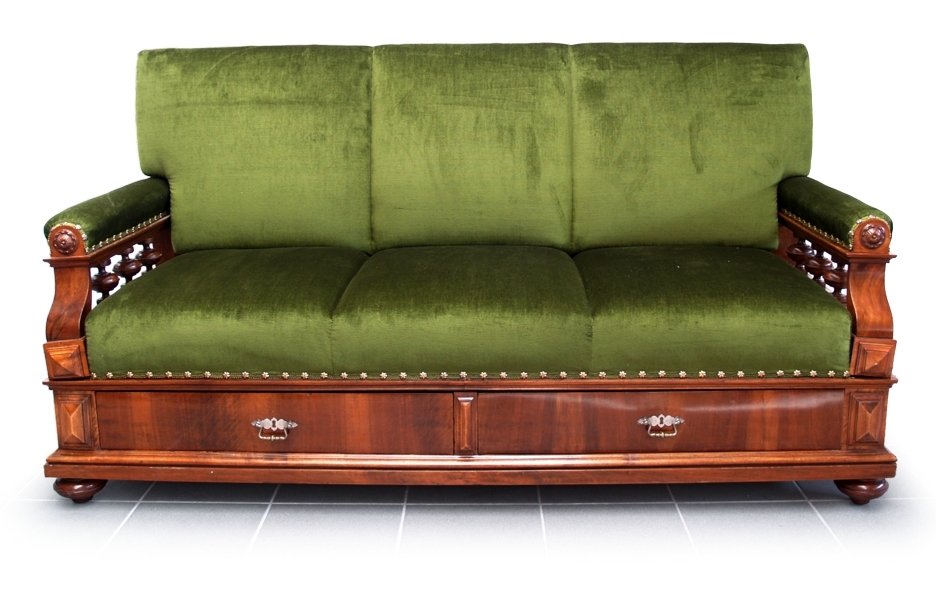
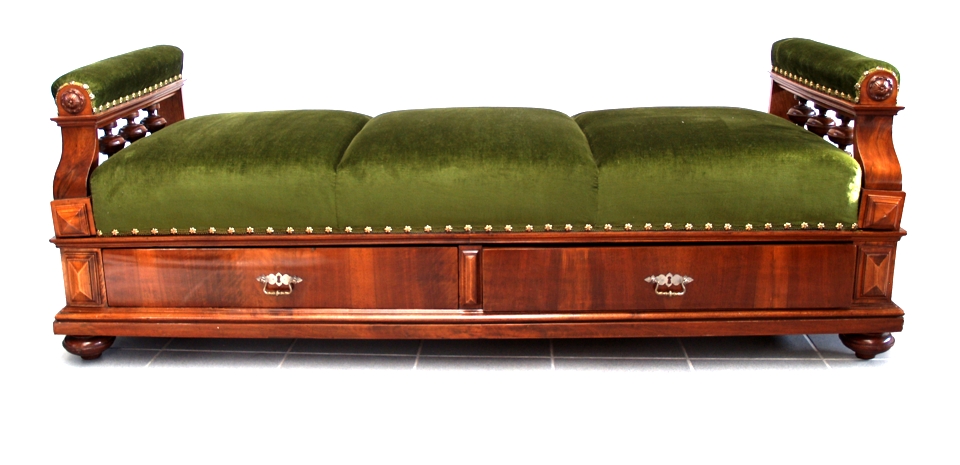
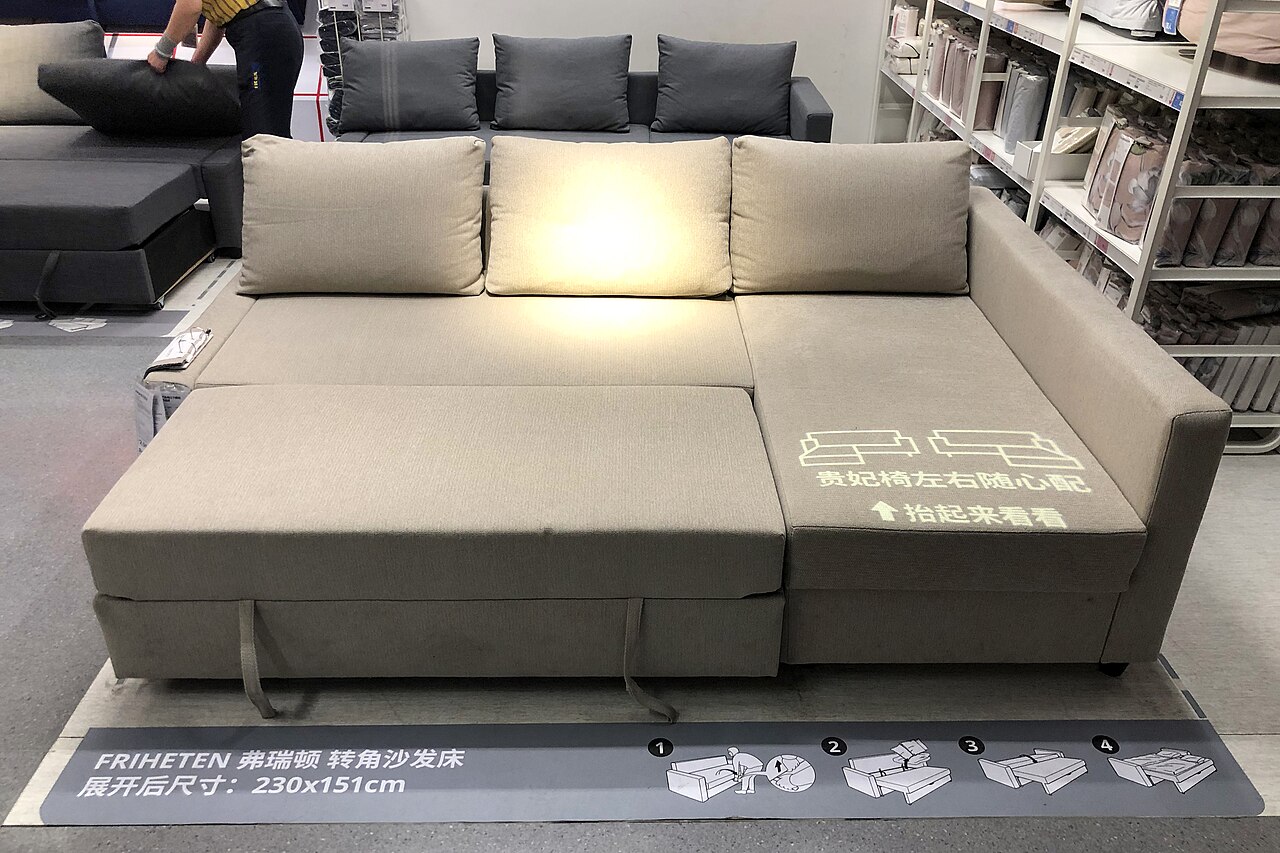
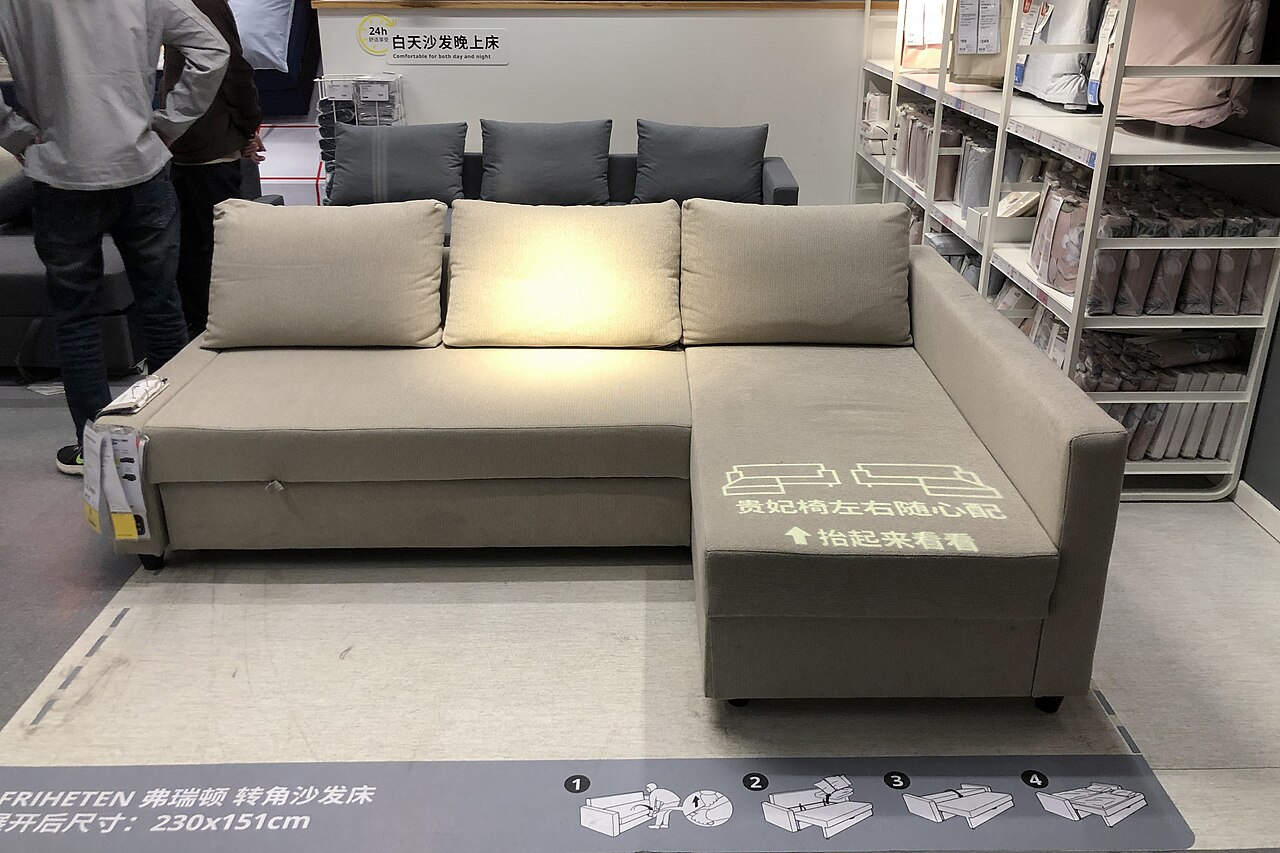
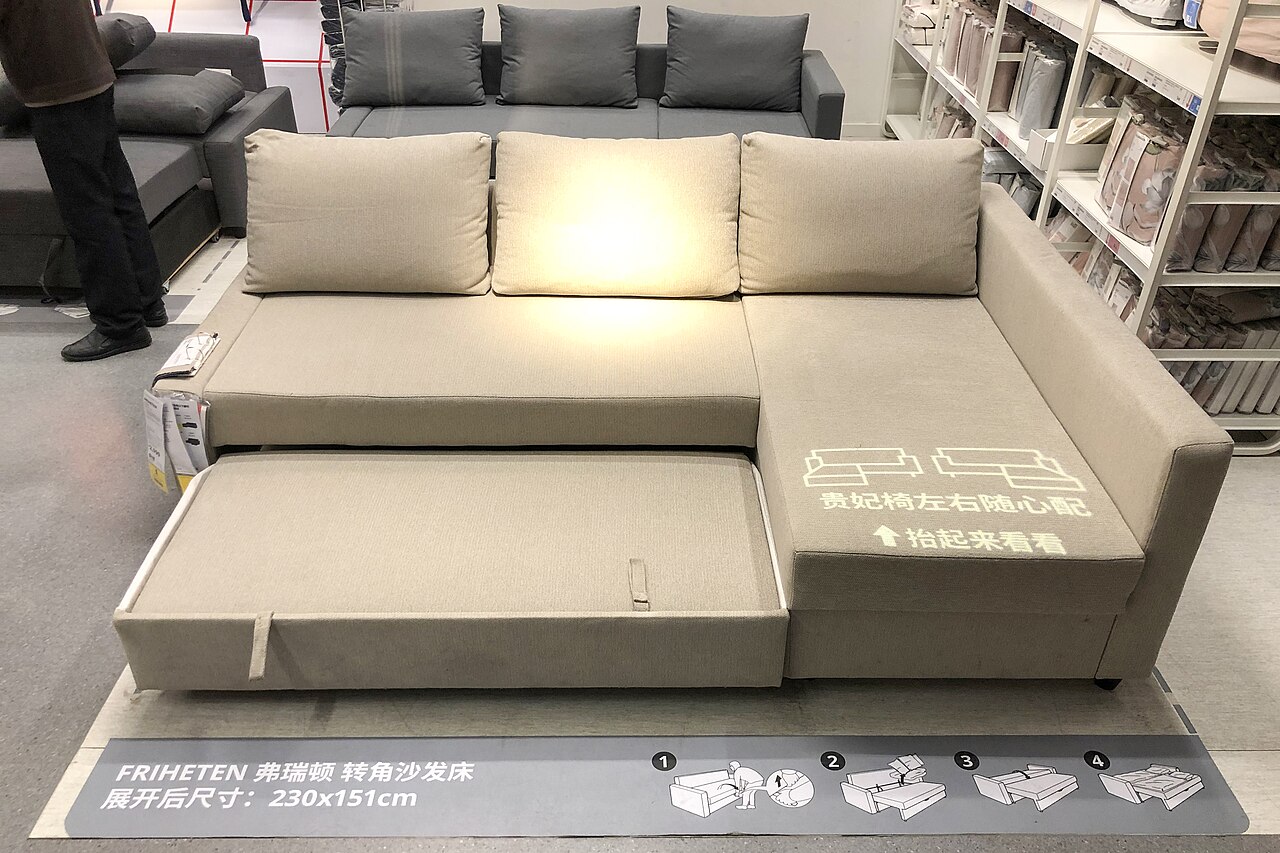
A sofa that unfolds into a bed for space-saving.

N509FZ · CC BY-SA 4.0
A sofa bed, also known as a sofabed, hide-a-bed, bed-couch, sleeper-sofa, or pullout sofa, is a multifunctional piece of furniture that combines a sofa with a hidden bed. Underneath its seating cushions, it contains a metal frame and thin mattress that can be unfolded to form a bed. The sofa bed has evolved through multiple patents and designs since the late 19th century, becoming a common household item for space-saving and guest accommodation.
- first patent
- Leonard C. Bailey, July 18, 1899
- key inventor
- Bernard Castro (1931, 'Castro Convertible')
- modern precursor
- Bernard Castro's 'Castro convertible' (1931)
- common mattress size
- Queen short: 150 cm × 185 cm (60 in × 72 in)
- average mattress thickness
- 11 cm (4.5 in)
- typical materials
- Springs or foam
Lore & Background
Leonard C. Bailey filed the first patent for a 'folding bed' on July 18, 1899, featuring a metal frame that could be folded and a bent mattress that could close for use. This design later became known as a 'hide-a-bed'. Rudolf Coopersmith filed a patent for the Davenport bed in 1905 and, between 1905 and 1947, filed over 30 patents for mechanical parts of sofa beds, mattresses, and mattress manufacturing machinery.
William Lawrence Murphy patented the 'In-A-Dor bed', now known as a Murphy bed, which folds into a wall closet. In 1931, Bernard Castro used $400 from his savings to make and sell the 'Castro convertible', which is the direct precursor of most sofa beds sold today. The futon appeared in the United States around 1980 after mimicking Japanese founders.
The 'slide away bed' was invented by Manning Lane, Warren J. Hauck, and Roy O. Sweeney of Cincinnati, Ohio. Their patent for a knock-down sofa bed with hinged mattress was filed on September 5, 1978, and issued on May 27, 1980. This design slides to the wall to form a sofa, with the mattress hinged to create a seating surface and back support, and a telescoping frame allows the bed platform to recess below the seating cushion.
Reader's Guide
The sofa bed has significantly influenced modern furniture design by providing a dual-purpose solution for small living spaces. Its development from Bailey's folding bed to Castro's convertible and the slide-away bed reflects ongoing innovation in space-saving furniture. The sofa bed's significance lies in its versatility, allowing a room to serve as both a living area and a sleeping area without requiring separate furniture. The introduction of various mattress types—spring, foam, and pocket-coil—has improved comfort and durability. Common mattress sizes, such as the queen short (150 cm × 185 cm), accommodate standard bedding needs while fitting within sofa dimensions. The sofa bed remains a staple in homes, hotels, and dormitories, offering practical accommodation for guests. Its legacy is evident in the continued popularity of convertible furniture, with modern designs incorporating advanced materials and mechanisms for ease of use. The sofa bed's evolution from a simple folding bed to a sophisticated piece of furniture underscores its enduring relevance in interior design and space optimization.
Did You Know?
- Leonard C. Bailey filed the first patent for a 'folding bed' on July 18, 1899.
- Rudolf Coopersmith filed over 30 patents for sofa bed parts between 1905 and 1947.
- Bernard Castro used $400 from his savings to make and sell the 'Castro convertible' in 1931.
- The slide-away bed was invented by Manning Lane, Warren J. Hauck, and Roy O. Sweeney of Cincinnati, Ohio.
Roots in Stone, Wood, and the Natural World
Long before any workshop existed, early humans turned to the landscape itself for seating and rest. Tree stumps served as chairs, flat rocks functioned as tables, and patches of soft moss provided a place to sleep. This improvised practice persists in some households and campsites even now. The leap from using what nature provided to actively shaping it came roughly thirty thousand years ago, when people began carving and assembling their own pieces from wood, stone, and animal bones. One of the earliest pieces of evidence is a small figurine unearthed at the Gagarino site in Russia, showing a goddess perched on a throne, while a comparable seated figure was recovered from Çatalhöyük in Turkey, dating to around 6000–5500 BCE. Perhaps the most remarkable early collection comes from Skara Brae in Orkney, Scotland, a Neolithic village built between 3100 and 2500 BCE. Lacking timber, its inhabitants fashioned an entire domestic interior from stone—cupboards, dressers, beds, shelves, and even limpet tanks. The stone dresser, positioned to face the doorway, appears to have carried symbolic weight, likely displaying carved stone balls and other decorative objects found throughout the site.
Craftsmanship Across Ancient Civilizations
The ancient world saw furniture construction become a genuine craft, driven by both necessity and ambition. In Egypt, local timber proved unsuitable for building pieces, so wood had to be imported, particularly from Phoenicia. That scarcity pushed Egyptian makers to develop clever joinery methods, including scarf joints that lashed two shorter boards into a single longer beam. During the Dynastic Period, which opened around 3200 BCE, furniture design became a visible part of the broader artistic tradition. Pieces were built primarily from wood but could also incorporate leather, and their surfaces were frequently embellished with gold, silver, ivory, and ebony. Beyond Egypt, excavations at the Phrygian tumulus known as the Midas Mound in Gordion, Turkey, yielded tables and inlaid serving stands from the eighth century BCE, while the Assyrian palace at Nimrud preserved furniture dating to the ninth and eighth centuries. In Siberia, the frozen Pazyryk tomb produced what is considered the earliest surviving carpet, dated between the sixth and third centuries BCE. Meanwhile, the Greeks and Romans developed the klinai—multipurpose couches that served simultaneously for relaxing, dining, and sleeping—alongside thrones that signified authority.
A Thousand Years of Shifting Aesthetics
From the medieval period onward, the visual language of furniture shifted dramatically with each era. The Middle Ages favored heavy, oak-based pieces richly ornamented, reflecting the weight and solidity valued in that age. The Italian Renaissance of the fourteenth and fifteenth centuries broadened the design vocabulary considerably, introducing new proportions and decorative approaches. The seventeenth century, across both Southern and Northern Europe, embraced the Baroque style, producing opulent forms often finished in gilding. The nineteenth century is generally characterized by a wave of revival styles, looking backward to earlier periods for inspiration. The first three-quarters of the twentieth century are frequently described as a steady march toward Modernism, stripping away ornament in favor of clean lines and new industrial materials. One distinctive outgrowth of post-modern design has been a deliberate return to natural shapes and textures, echoing the organic forms that characterized the very earliest furniture. This long trajectory shows that furniture design has never been static; each generation reinterprets what a piece should look like and how it should feel in a living space.
Purpose, Meaning, and the Language of Furniture
Furniture occupies a unique position where pure utility meets cultural expression. Its primary job is practical: supporting seating, eating, sleeping, working, and storage, while also holding objects at a convenient height above the ground. Yet it routinely transcends function. A piece can be a product of deliberate design and appreciated as a form of decorative art, and it may carry symbolic or even religious significance within a household or community. The materials available to makers have ranged enormously—wood, metal, plastic, and many others—and the specific woodworking joints chosen often mirror the local cultural traditions of the region. The very word we use carries its own history. English "furniture" descends from the French fourniture, the noun form of fournir, meaning to supply or provide, so the original sense was simply "supplies or provisions." The English habit of applying that word specifically to household objects is unique; French, other Romance languages, and German instead use variants of meubles, which traces back to the Latin mobilia, meaning moveable goods.
Gallery

Frequently Asked Questions
Who is Sofa bed?
Sofa bed is a multifunctional furniture piece that merges a couch with a concealed sleeping surface, first patented by Leonard C. Bailey on July 18, 1899. It went through numerous design iterations before becoming a staple in homes worldwide.
What are Sofa bed's powers/role?
Its core ability is transforming from a daytime seating arrangement into a full sleeping platform by unfolding a hidden metal frame and thin mattress tucked beneath the cushions. This dual-purpose design makes it a go-to solution for small apartments and guest rooms.
What's Sofa bed's true form?
Beneath the upholstery lies a steel or metal frame paired with a mattress typically around 11 cm thick, supported by springs or foam. When fully extended, the sleeping surface measures roughly 150 cm by 185 cm, close to a short queen size.
Why is Sofa bed important to the household canon?
It solved a persistent problem for people with limited square footage by eliminating the need for a separate guest room. Its evolution from Bailey's 1899 patent through Bernard Castro's 1931 'Castro Convertible' design shaped how modern homes balance living and sleeping space.
How does Sofa bed's story end?
Rather than fading away, the sofa bed became a permanent fixture in countless households, with modern iterations offering improved comfort and sturdier mechanisms. It remains one of the most searched and recommended space-saving furniture options to this day.
More in Furniture & Household Items 1-24
Spotted an error? Know more?
This is a living reference — every entry is fact-audited, and reader corrections feed straight into our audit queue. Suggest an edit · See this site's audit record