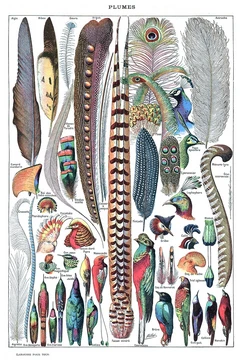
Plume hunting
Hunting birds for feathers used in hat decoration.

Plume hunting involved killing wild birds for their feathers, particularly the showy plumes used to decorate hats. In the United Kingdom, women like Etta Lemon, Eliza Phillips, and Emily Williamson spearheaded the opposition to this trade, which ultimately led to the creation of the Royal Society for the Protection of Birds. The feather trade peaked in the late 1800s and had largely ceased by the early 1900s.
- Key species targeted
- snowy egret, great egret, flamingo, roseate spoonbill, blue heron, Arctic tern, peafowl
Lore & Background
Plume hunting reached its height in the late 19th century, driven by Victorian-era fashion that included large hats decorated with silk flowers, ribbons, and exotic plumes, sometimes entire stuffed birds. By 1886, an estimated 5 million birds were killed annually for the millinery trade. Poachers often entered densely populated rookeries, shot roosting birds, and left carcasses to rot, while unprotected eggs and chicks became easy prey. By 1900, more than five million birds were killed every year, including a devastating number of wading birds like egrets and herons in Florida. The most popular plumes came from egrets, known as 'little snowies,' with their nuptial plumes especially prized. So-called 'osprey' plumes were actually egret plumes, but they were not used in British army uniforms—that is a confusion with ostrich plumes used in military headdress.
Reader's Guide
Plume hunting had a devastating impact on bird populations, nearly wiping out the snowy egret in the United States and threatening species such as flamingoes, roseate spoonbills, great egrets, blue herons, Arctic terns, and peafowl. The Empress of Germany's bird of paradise was also heavily targeted. Conservation efforts began in the late 19th century, with early environmentalists like Adeline Knapp working to curtail the trade. In Florida, the American Ornithologists Union and the National Association of Audubon Societies persuaded the state legislature to pass a non-game bird protection law in 1901, and wardens were employed to protect rookeries. President Theodore Roosevelt established Pelican Island as the first national wildlife refuge in 1903 to protect egrets and other birds. Private efforts, such as Edward Avery McIlhenny's Bird City refuge on Avery Island, Louisiana, helped restore snowy egret populations. The plume trade was brought to an end in the early 20th century, and protected species like the great egret recovered.
Did You Know?
- Plume feathers were reportedly more valuable by weight than gold, selling for $32 an ounce in 1915.
- By 1900, more than five million birds were being killed every year, including a huge proportion of Florida's wading birds like egrets and herons.
- The first bird of paradise bred in captivity was a lesser bird of paradise at the Bronx Zoo in 1928, not the 'Empress of Germany's bird of paradise'.
- Guy Bradley, a former plume hunter scout, became a warden protecting birds and was shot and killed after confronting plume hunters.
More in Feathers 1-24
Spotted an error? Know more?
Reader corrections go straight into our review queue. Suggest an edit · How this site is sourced