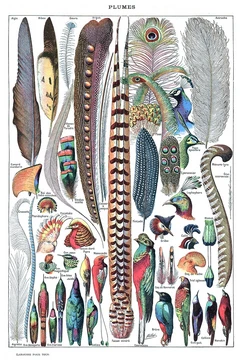
Covert feather
Coverts are feathers that cover other feathers on birds.

Chinmayee Mishra · CC BY-SA 4.0
Covert feathers, also called tectrices, are a set of feathers on birds that cover other feathers. They help smooth airflow over the wings and tail, contributing to efficient flight.
- Type
- feather group
- Location
- wings, tail, and ear
- Function
- cover other feathers and smooth airflow
- Subtypes
- ear coverts, tail coverts, wing coverts
Lore & Background
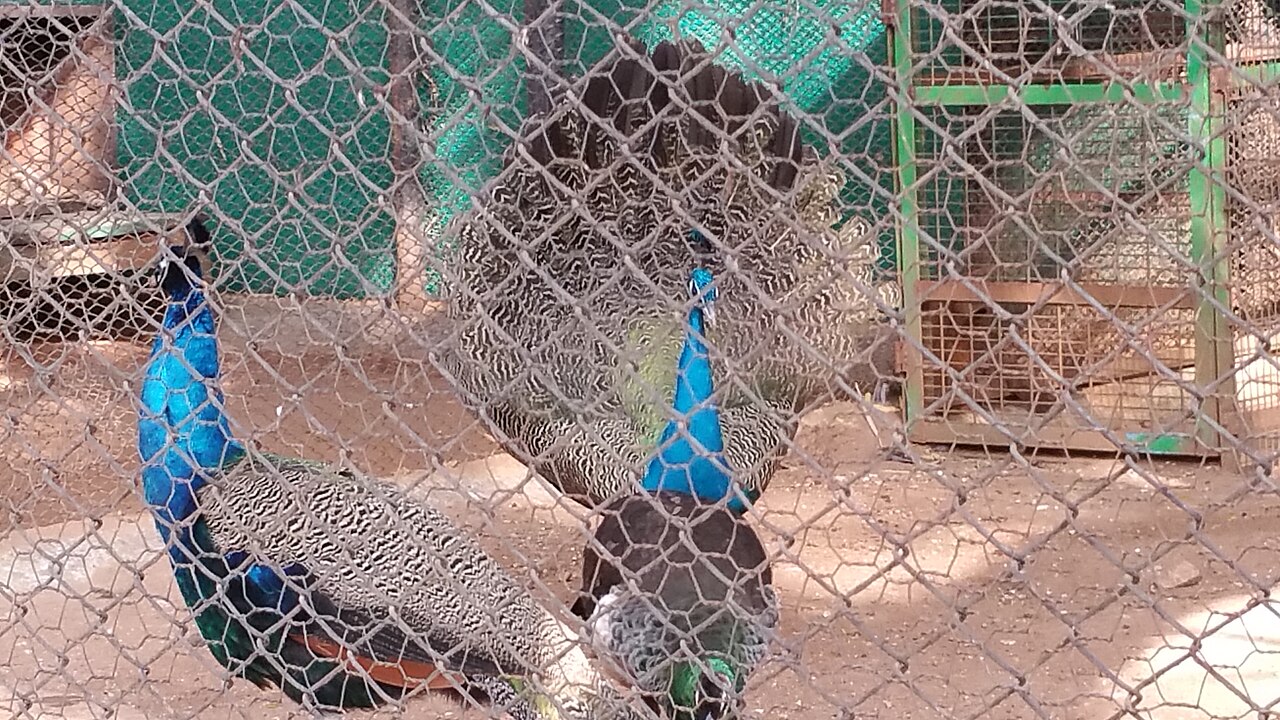
Ear coverts are small feathers behind the bird's eye that cover the ear opening, as a bird's ear has no external features. Tail coverts include uppertail and undertail coverts that cover the base of the tail feathers above and below. In peacocks, the 'tail' is actually made of modified elongated uppertail coverts called a 'train'.
Reader's Guide
Wing coverts are divided into upperwing and underwing coverts. Upperwing coverts include secondary coverts on the inner wing and primary coverts on the outer wing. Within each group, feathers form rows: greater coverts are the outermost largest row, median coverts are the next row, and lesser coverts are any remaining rows. The front edge of the wing is covered by marginal coverts. The rows overlap like roof tiles, with greater coverts overlain by median coverts, which are overlain by the outermost row of lesser coverts. This arrangement streamlines the wing surface, reducing drag and improving flight efficiency. The underwing has corresponding sets of coverts, distinguished by the terms upperwing and underwing coverts.
Did You Know?
- The 'tail' of a peacock is made of modified elongated uppertail coverts called a 'train'.
- Wing coverts include marginal coverts on the front edge of the wing.
- Rows of wing coverts overlap each other like roof tiles.
Aerodynamic Purpose and General Role
A covert feather, also known as a tectrix, is a single member of a broader group of feathers collectively called coverts or tectrices. Rather than serving as the primary structural elements of a bird's wing or tail, these feathers exist to cover and protect the larger flight feathers beneath them. Their most critical contribution lies in aerodynamics: by lying over the wing and tail surfaces, coverts help streamline the airflow that passes over a bird in flight. Without this smoothing effect, the exposed edges and gaps between the larger flight feathers would create turbulence and drag, reducing the efficiency of every wingbeat. In essence, coverts act as a sleek outer skin that allows air to glide cleanly over the wing and tail, making sustained flight more energy-efficient. This role is consistent across all birds, whether the covert feathers are small and inconspicuous or large and vividly colored, as seen in certain species. Their placement and overlap are not arbitrary but are precisely organized to maximize their aerodynamic benefit while still allowing the underlying flight feathers to move freely during the upstroke and downstroke.
Wing Covert Hierarchy and Arrangement
The wing represents the most complex arrangement of covert feathers on any bird. The upperwing coverts are divided into two major groups based on their position: those covering the inner wing, which overlay the secondary flight feathers and are therefore called secondary coverts, and those on the outer wing, which lie over the primary flight feathers and are termed primary coverts. Within each of these groups, the feathers are organized into distinct rows. The outermost and largest row is designated the greater coverts, either greater primary or greater secondary depending on the group. The row immediately inside that is the median coverts, and any additional rows closer to the body are collectively called the lesser coverts. The underwing carries its own corresponding sets of coverts, distinguished in nomenclature from the upperwing sets. Along the front edge of the wing sits yet another group known as the marginal coverts. All of these rows overlap one another in a pattern reminiscent of roof tiles: the greater coverts sit beneath the median coverts, which in turn are overlain by the outermost row of lesser coverts, creating a continuous, layered surface that protects the flight feathers below while maintaining flexibility.
Ear Coverts: A Unique Anatomical Role
Among all the covert feathers on a bird's body, the ear coverts occupy a particularly distinctive and somewhat unusual niche. These are small feathers positioned behind the bird's eye, and their primary function is to cover the ear opening. This is a notably different role from that of the wing or tail coverts, which are primarily concerned with aerodynamics and smoothing airflow. The ear coverts instead serve a protective and concealing purpose over a structure that, in birds, has no external features whatsoever. Unlike mammals, which possess visible pinnae or auricles, a bird's ear is essentially a small opening with no outward-facing anatomical structures to mark its location. The ear coverts blend this opening seamlessly into the surrounding plumage, rendering it invisible to casual observation. Their small size reflects their limited role in flight aerodynamics; their importance is almost entirely anatomical and protective. They shield the ear opening while adding no noticeable bulk to the head's profile, ensuring that the bird's overall shape remains streamlined and unobstructed. This makes the ear coverts a unique category within the broader family of covert feathers, one whose significance lies not in flight performance but in the quiet protection of a sensory structure.
Tail Coverts and the Peacock's Train
The tail region of a bird is also draped in covert feathers, specifically the uppertail coverts on the upper surface and the undertail coverts on the lower surface. Together, these two sets cover the base of the tail feathers, providing protection and contributing to the smooth contour of the tail. In most species, these tail coverts are relatively modest in size and appearance, fulfilling their role as a protective underlayer without drawing particular attention. However, in certain birds, the tail coverts undergo remarkable specialization, taking on forms far beyond their typical function. The most well-known example is the peacock, whose spectacular tail display is not actually composed of true tail feathers at all. Instead, what is commonly called the peacock's tail is made up of modified, elongated uppertail coverts, collectively referred to as a train. These elongated coverts extend far beyond the actual tail feathers, transforming what would ordinarily be a small, inconspicuous group of covering feathers into one of the most visually remarkable structures in the avian world. This dramatic modification of a simple covert feather into an elaborate display structure illustrates the extraordinary range of form that covert feathers can take across different bird species.
Gallery

Frequently Asked Questions
What is a covert feather?
A covert feather (also called a tectrix) is a small group of feathers that sit on top of and shield other feathers on a bird's body. Think of them as the bird's built-in 'roof tiles' layered over larger flight feathers.
Where on a bird can you find covert feathers?
They appear on the wings, the tail, and around the ear region. Each placement serves the same covering role but is adapted to the specific area it protects.
What is the main job of covert feathers?
Their primary function is to cover the feathers beneath them while smoothing the airflow that passes over the wing and tail surfaces. This streamlining helps the bird fly more efficiently with less drag.
What subtypes of covert feathers are there?
Ornithologists generally divide them into ear coverts, tail coverts, and wing coverts. The name simply reflects which body region the particular set of tectrices sits on.
Why are covert feathers important for a bird's flight?
By overlapping and covering the larger flight feathers, they create a smoother aerodynamic surface that reduces turbulence. Without them, airflow would disrupt more easily over the wing and tail, making sustained flight harder.
More in Feathers 1-24
Spotted an error? Know more?
Reader corrections go straight into our review queue. Suggest an edit · How this site is sourced