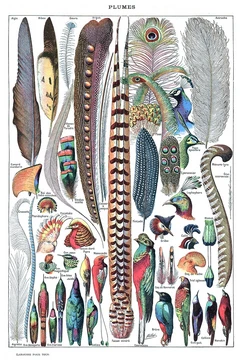
Aigrette
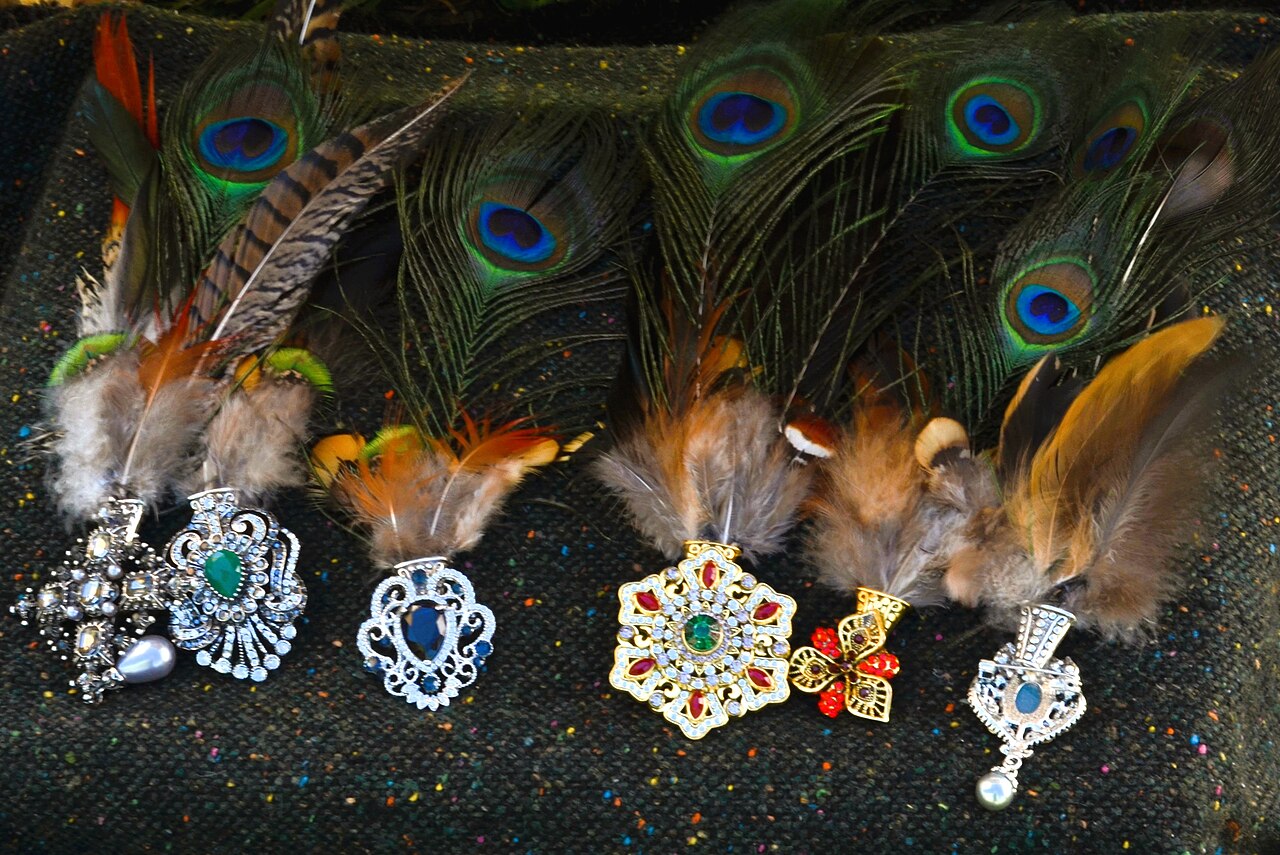
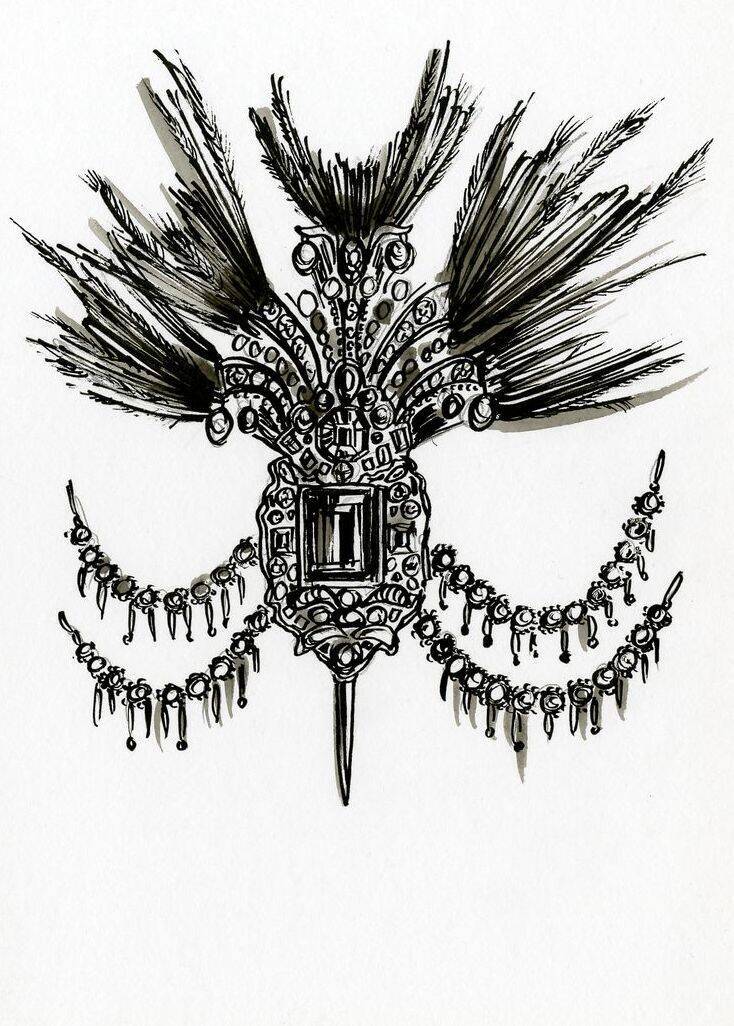
Aigrette: egret plume or gemmed head ornament.

Greenbox · CC BY-SA 4.0
The word "aigrette" (pronounced /eɪɡrɛt/) comes from the French term for the egret, a type of small white heron. It originally meant the tufted crest or head-feathers of that bird, which were used to decorate a headdress. Over time, the word also came to describe any similar ornament, especially one made of gems.
In history, aigrettes set with diamonds and rubies adorned the turbans of Ottoman sultans and the ceremonial chamfrons of their horses. Several of these pieces are kept in the Treasury of Topkapı Palace in Istanbul, Turkey. The French army also once required certain officers to wear an aigrette. At the English court of James VI and I and Anne of Denmark, jewelled aigrettes and "diamond feathers" were linked to the goldsmith Arnold Lulls, whose design book still exists.
During the late 19th and early 20th centuries, a fashion craze for extravagant aigrettes in women's hats led plume hunters to kill huge numbers of egrets and other birds. Public outrage and government action eventually ended the trend, causing demand for such feathers to collapse. In 1934, Cartier mounted the 61.50-carat 'Porter Rhodes' diamond in a turban aigrette for the Jam Sahib, or Maharajah of Nawanagar. The yellow 137.27-carat Florentine Diamond was last known to be set in a Habsburg headdress or hat ornament, though its current whereabouts are unknown.
- Field
- Ornamental headdress accessory
- Known for
- Turban ornament of Ottoman sultans; fad in women's fashion in late 19th–early 20th centuries; mounted with notable diamonds such as the 'Porter Rhodes' and the Florentine Diamond (last known in a Habs
Lore & Background
Aigrettes, studded with diamonds and rubies, decorated the turbans of Ottoman sultans or the ceremonial chamfron of their horses. Several of these aigrettes are on display in the Treasury of the Topkapı Palace in Istanbul, Turkey. An aigrette was also formerly worn by certain ranks of officers in the French army. Jewelled aigrettes and 'diamond feathers' worn at the English court of James VI and I and Anne of Denmark are associated with the goldsmith Arnold Lulls whose book of designs still survives.
Reader's Guide
During the late 19th and early 20th centuries a fad in women's fashion for wearing extravagant and fanciful aigrettes resulted in large numbers of egrets and other birds being slaughtered by plume hunters for the millinery industry, until public reaction and government intervention caused the fad to end and demand for such plumes collapse. The 61.50 carat (12.3 g) whiskey-coloured diamond, 'The Eye of the Tiger', was mounted by Cartier in a turban aigrette for the Jam Sahib or Maharajah of Nawanagar in 1934. The yellow 137.27 carat Florentine Diamond was last set as a part of an aigrette. The word aigrette is also used to describe a type of deep-fried fritter made of batter in an elongated shape, and by analogy in various sciences for feathery excrescences of like appearance, such as tufts on insects, dandelion down, luminous rays at the end of electrified bodies, or rays diverging from the moon's edge during solar eclipses.
Did You Know?
- The word aigrette comes from the French for egret, or lesser white heron.
- The 61.50-carat 'Porter Rhodes' diamond was mounted by Cartier in a turban aigrette in 1934.
Royal and Military Adornment
The aigrette has long served as a symbol of supreme authority and ceremonial distinction across multiple cultures. In the Ottoman Empire, these ornamental crests—often encrusted with diamonds and rubies—adorned the turbans of sultans and even the ceremonial chamfrons worn by their warhorses. Several such pieces remain preserved in the Treasury of the Topkapı Palace in Istanbul, testifying to their enduring prestige. In France, specific ranks of military officers were entitled to wear an aigrette as part of their uniform, marking it as a badge of rank and honour. Across the English Channel, the court of James VI and I and Anne of Denmark featured jewelled aigrettes and what were called diamond feathers among its regalia. The goldsmith Arnold Lulls, whose surviving book of designs documents these elaborate pieces, played a role in crafting such court ornaments. Together, these examples reveal the aigrette as a cross-cultural emblem of power, worn by the highest echelons of society from the early modern period onward.
The Plume Trade and Its Downfall
Between the late nineteenth and early twentieth centuries, a sweeping fashion craze among women for elaborate, fantastical aigrettes sent the millinery industry into a frenzy of demand. Plume hunters flocked to slaughter vast numbers of egrets and other birds to supply the raw material for these extravagant headdress ornaments. The ecological toll was staggering, and the practice drew mounting public outrage. Eventually, a combination of grassroots backlash and direct government intervention put a stop to the trade. The once-insatiable appetite for fresh plumes collapsed almost overnight, and the aigrette as a living-bird ornament faded from mainstream fashion. This episode stands as one of the earliest and most vivid examples of consumer fashion driving wildlife to the brink, and of public sentiment and legislation successfully reversing the damage. The aigrette's journey from a symbol of natural beauty to a catalyst for conservation awareness remains one of its most consequential chapters.
Diamond Masterpieces
Perhaps no other setting has showcased the aigrette's form more spectacularly than the world of high jewellery. In 1934, the legendary house of Cartier mounted the 61.50-carat whiskey-coloured diamond known as The Eye of the Tiger into a turban aigrette commissioned for the Jam Sahib, the Maharajah of Nawanagar. The piece transformed the bird-inspired silhouette into a vehicle for one of the most striking coloured stones of its era. Separately, the 137.27-carat yellow Florentine Diamond found its final setting as part of an aigrette, lending the ornamental crest an extraordinary burst of golden fire. These two gems, each unique in size, hue, and provenance, demonstrate how the aigrette's elegant, upward-sweeping profile served as an ideal architectural frame for rare diamonds. Whether perched on a maharajah's turban or adorning an unidentified noble head, the aigrette elevated individual stones into objects of almost mythic grandeur, binding the language of avian grace to the permanence of precious minerals.
A Word That Travels
The term aigrette, derived from the French word for egret or lesser white heron, has escaped its original ornamental meaning to describe a wide range of similarly shaped phenomena across disciplines. In the kitchen, it names a type of deep-fried fritter formed from batter in an elongated shape. In the natural sciences, the word is applied by analogy to feathery excrescences: the tufts crowning certain insects, the delicate down of a dandelion seed head, the luminous rays that appear at the tips of electrified bodies, and the brilliant rays diverging from the moon's edge during a solar eclipse. In military heraldry, the Chelengk and Sarpech—Turkish decorative pieces—occupy a similar conceptual space. This linguistic versatility reveals how a single evocative image of a bird's crest can migrate from a jeweller's bench into physics, entomology, astronomy, and even the frying pan, carrying with it a sense of delicate, radiating beauty that transcends any single material or field.
Gallery




Frequently Asked Questions
What is an aigrette?
An aigrette is a decorative headpiece, originally the plumed crest feathers of an egret (a small white heron) mounted as an ornamental accessory. Over time the term broadened to include similar headdress ornaments crafted from precious stones rather than feathers.
Where does the word 'aigrette' come from?
It is borrowed from French, where the word names the egret bird itself. The term first referred specifically to that bird's distinctive tufted head-feathers before expanding to cover any comparable decorative ornament.
What role did aigrettes play in Ottoman court culture?
Sultans wore aigrettes set with diamonds and rubies on their turbans, and matching pieces adorned the ceremonial headgear of their horses. Several of these ornamental objects remain in the Treasury at Topkapı Palace in Istanbul.
How did aigrettes become a women's fashion craze?
During the late 1800s into the early 1900s, aigrettes surged in popularity as a sought-after headdress accessory in women's fashion. The trend was so widespread that it drew scrutiny over the demand it placed on live egret populations.
Which famous diamonds were once mounted in aigrettes?
The 'Porter Rhodes' diamond and the Florentine Diamond are two well-known stones that were set into aigrette settings. The Florentine Diamond's last documented appearance was in connection with the Habsburg collection.
More in Feathers 1-24
Spotted an error? Know more?
Reader corrections go straight into our review queue. Suggest an edit · How this site is sourced