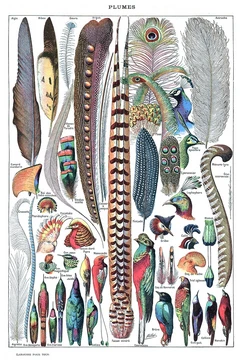
Crest (feathers)
A feather structure used for display and communication in birds.

Novoklimov · CC0
A crest is a prominent feature exhibited by several bird species on their heads, made up of semiplume feathers. These feathers are soft and bendable, and crests are generally used for display purposes, communication, or defense.
- Type
- Feather structure
- Composition
- Semiplume feathers (long rachis with barbs)
- Function
- Display, communication, defense
- Notable bearers
- Cockatoos, cockatiels, galah
- Crest types
- Recumbent, recursive, modified
Lore & Background
The crest is distinct from features such as casques and cockscombs, which are bony and fleshy structures respectively. It is made up of semiplume feathers, which are plumulaceous—soft and bendable. In birds, these semiplumes are common along the head, neck, and upper back, and may also be used for buoyancy and sensing vibrations.
Reader's Guide
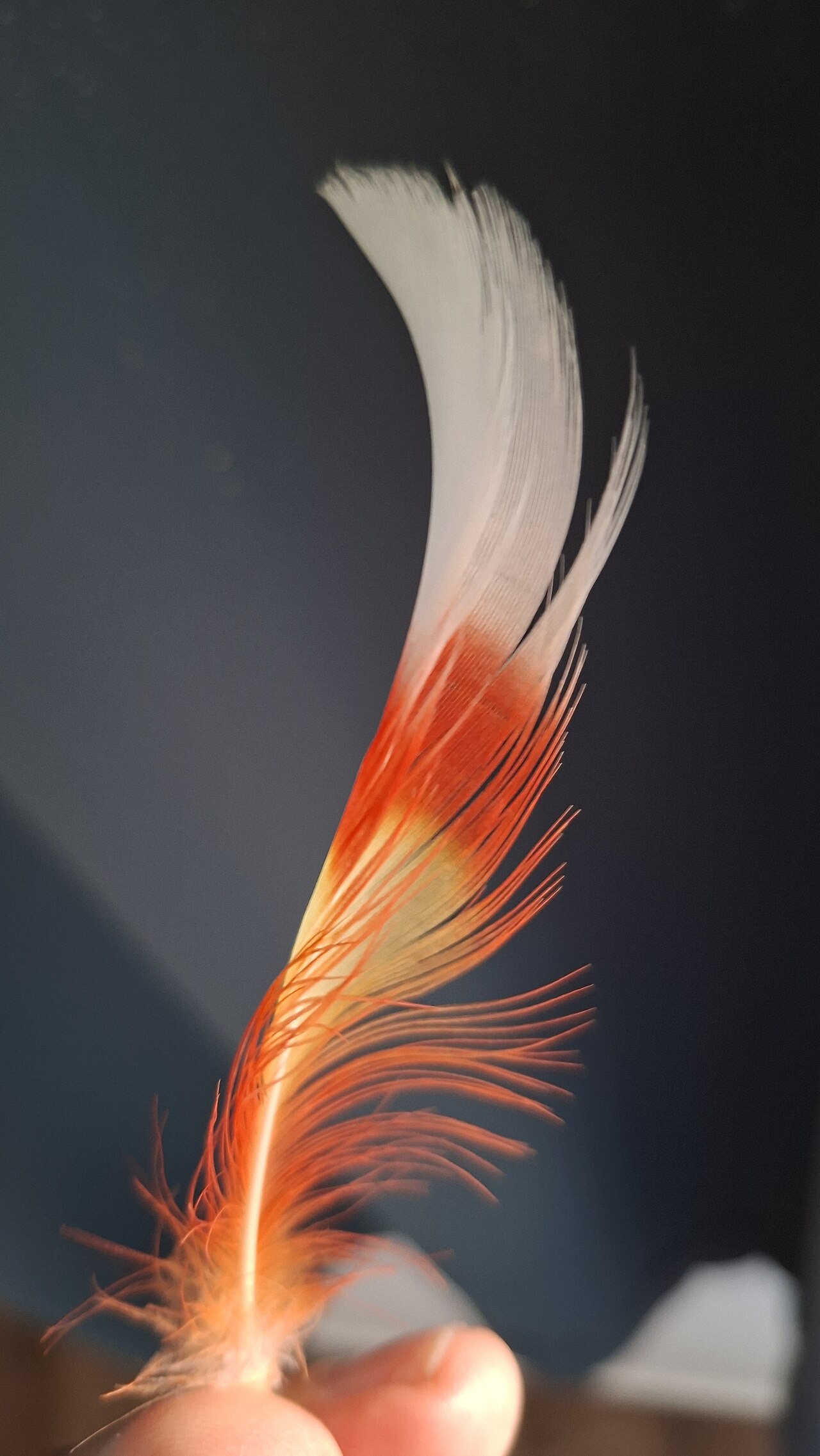
Crests are most recognizable in cockatoos, a family found in Australia, the Bismarck Archipelago, and the Philippines. Cockatoos and cockatiels can raise or lower their crests at will, using them to communicate with fellow species members or to frighten away other species by making the bird appear larger. Crests can be recumbent (lying flat until fanned out) or recursive (curving upward at the tips even when lying down). Some birds, like the galah, have modified crests with features of both types. Crest feathers also appear in many domesticated bird species, arising from selective breeding or mutations. The underlying molecular and genetic mechanisms for crest formation in domestic birds are not well understood, making crest feathers a subject of morphological research.
Did You Know?
- Crests are made of semiplume feathers, which are soft and bendable.
- Recursive crests often feature brilliant colors.
- Crest feathers in domestic birds originate from selective breeding or mutations.
Evolutionary Marvel & Structural Complexity
Feathers stand as one of the most architecturally intricate structures produced by any vertebrate, representing a genuine evolutionary novelty with no true parallel in the animal kingdom. While they are the hallmark feature that sets living birds apart from every other extant group, their origins stretch further back than most realize: certain non-avian dinosaurs and other archosaurs also developed these epidermal growths, suggesting the trait emerged earlier in the dinosaurian lineage. Each individual feather grows from a tiny follicle embedded in the outer skin layer, where specialized cells manufacture keratin proteins. What makes feather keratin extraordinary is its molecular architecture: the β-keratin protein strands are hydrogen-bonded into pleated sheet configurations, then twisted and crosslinked via disulfide bridges, producing a material that outperforms the α-keratins found in mammalian hair, horns, and hooves in sheer toughness. Scientists have identified the transcription factor cDermo-1 as a trigger for feather and scale development on skin, yet the full cascade of signals orchestrating this growth remains only partially understood. The dedicated scientific discipline for studying these structures is called plumology, or plumage science.
Classification & Anatomy
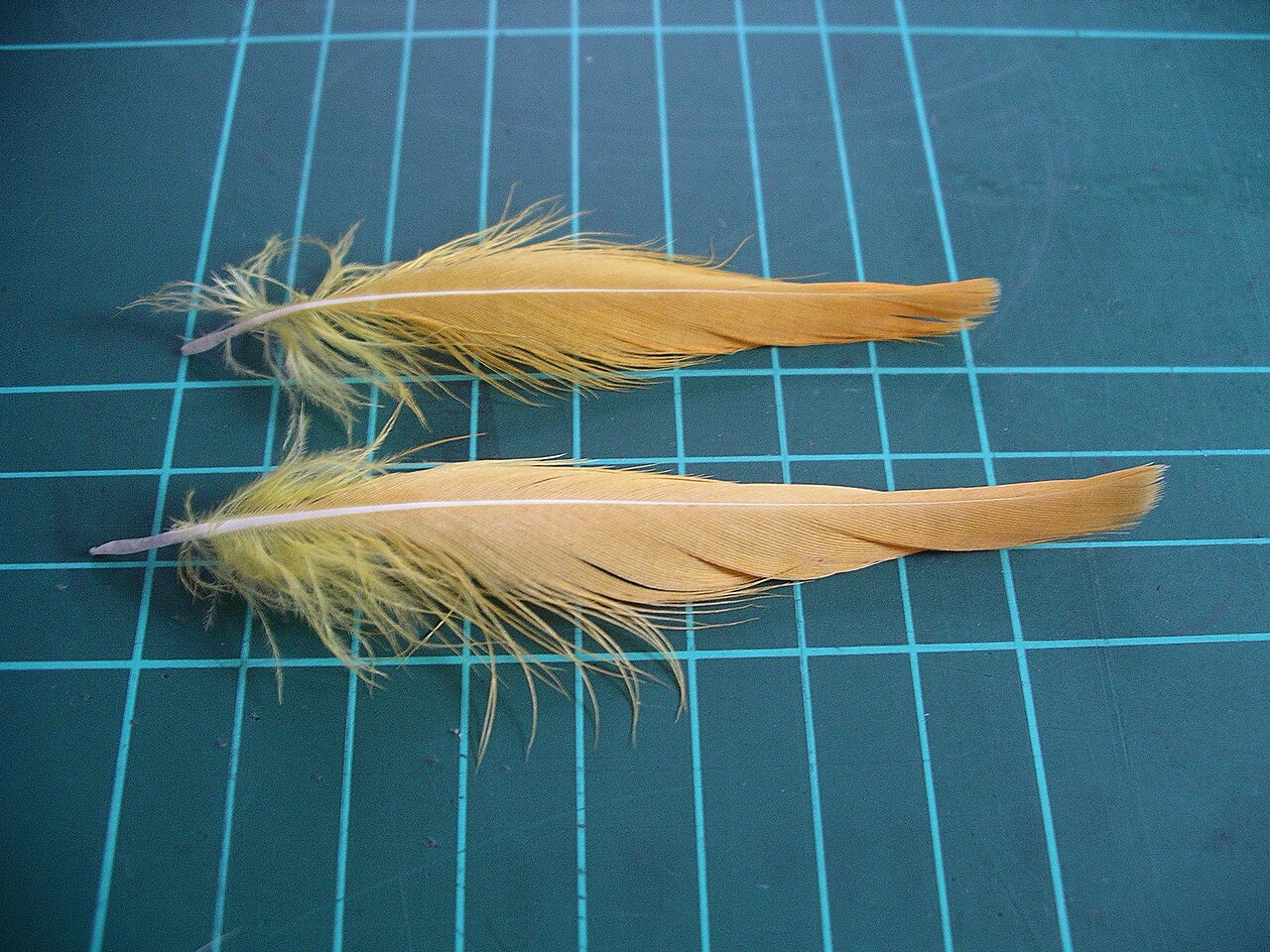
Feathers fall into two primary categories, with a third rarer type adding further diversity. Vaned feathers—also called pennaceous or contour feathers—arise from well-defined tracts on the skin and drape the entire exterior of the bird's body. Beneath them lies a layer of down feathers, which are fluffy precisely because their barbules lack the tiny hooks, or barbicels, that interlock the barbules of vaned feathers, allowing the down to trap air and deliver superb thermal insulation. A third, less common type called the filoplume is hairlike and grows in close association with pennaceous feathers, often entirely concealed beneath them; ratites lack filoplumes altogether. The most aerodynamically critical feathers are the remiges on the wings and the rectrices on the tail. Structurally, a typical vaned feather features a central shaft, the rachis, from which barbs branch, each barbule further subdivided and linked by barbicels. At the base, the rachis widens into a hollow tubular calamus, or quill, that anchors the feather in its skin follicle. Hatchlings of certain species also produce a special natal down, called neossoptiles, that is displaced once adult feathers emerge.
Functions & Communication
Beyond their structural elegance, feathers serve a remarkable range of biological purposes. They shield birds from water and cold, line nests to insulate eggs and chicks, and—most dramatically—enable flight, with wing and tail feathers working in concert to generate lift and steer. Despite their lightness, a bird's full plumage can weigh two or three times more than its skeleton, a feat made possible by hollow, air-sac-filled bones. Coloration plays an equally vital role: patterns provide camouflage against predators, with dorsal and ventral surfaces often differing to blend with sky and ground during flight. In many species, striking differences in feather color and pattern form a key component of sexual dimorphism, guiding mate selection. Some birds even exploit ultraviolet reflectivity differences between sexes that are invisible to the human eye. A few species, such as the club-winged manakin, have evolved specialized wing-feather structures that produce audible clicks through stridulation. Certain birds also maintain a continuous supply of powder down, from which fine particles constantly shed.
Human Use & Cultural Legacy
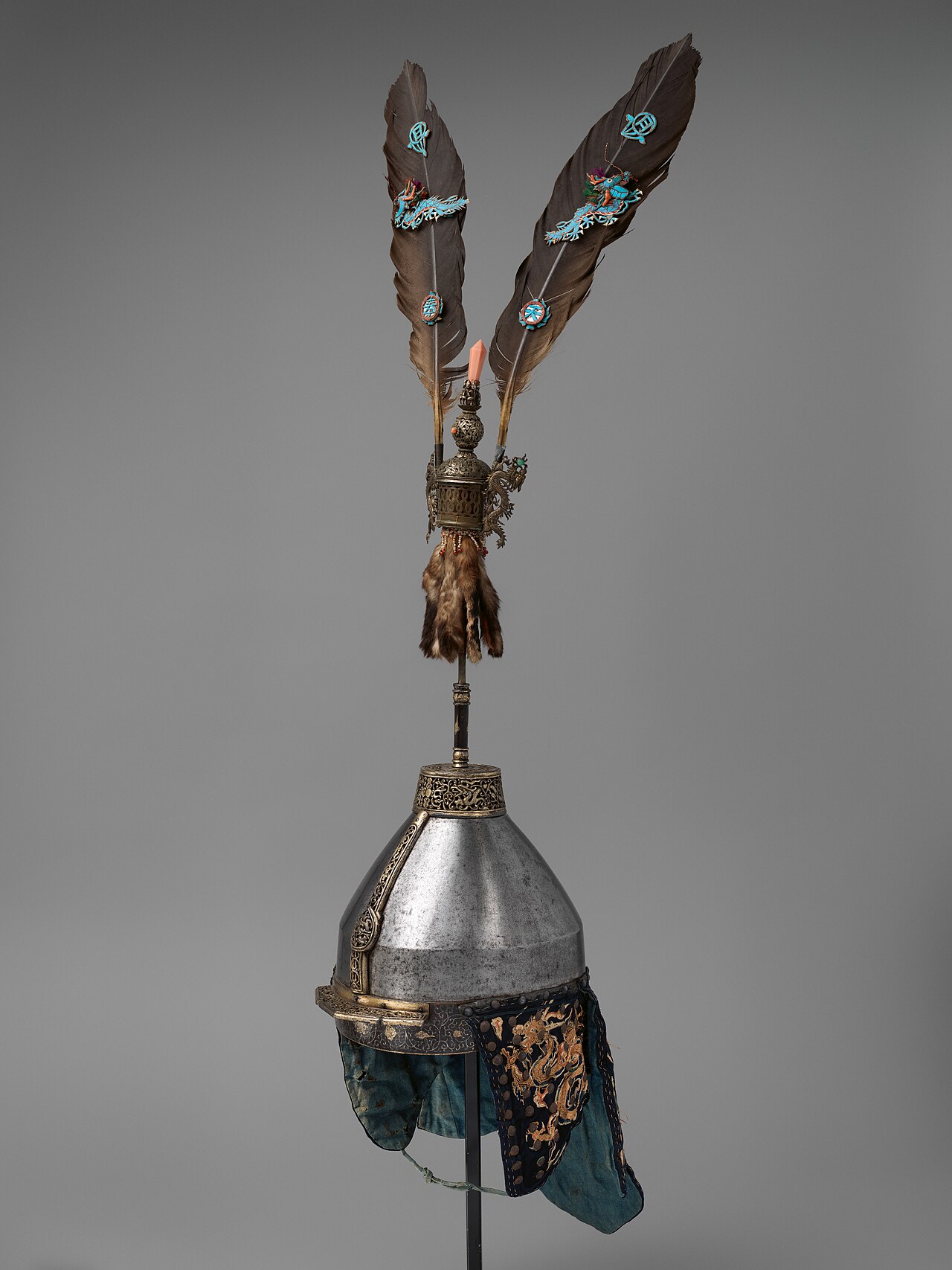
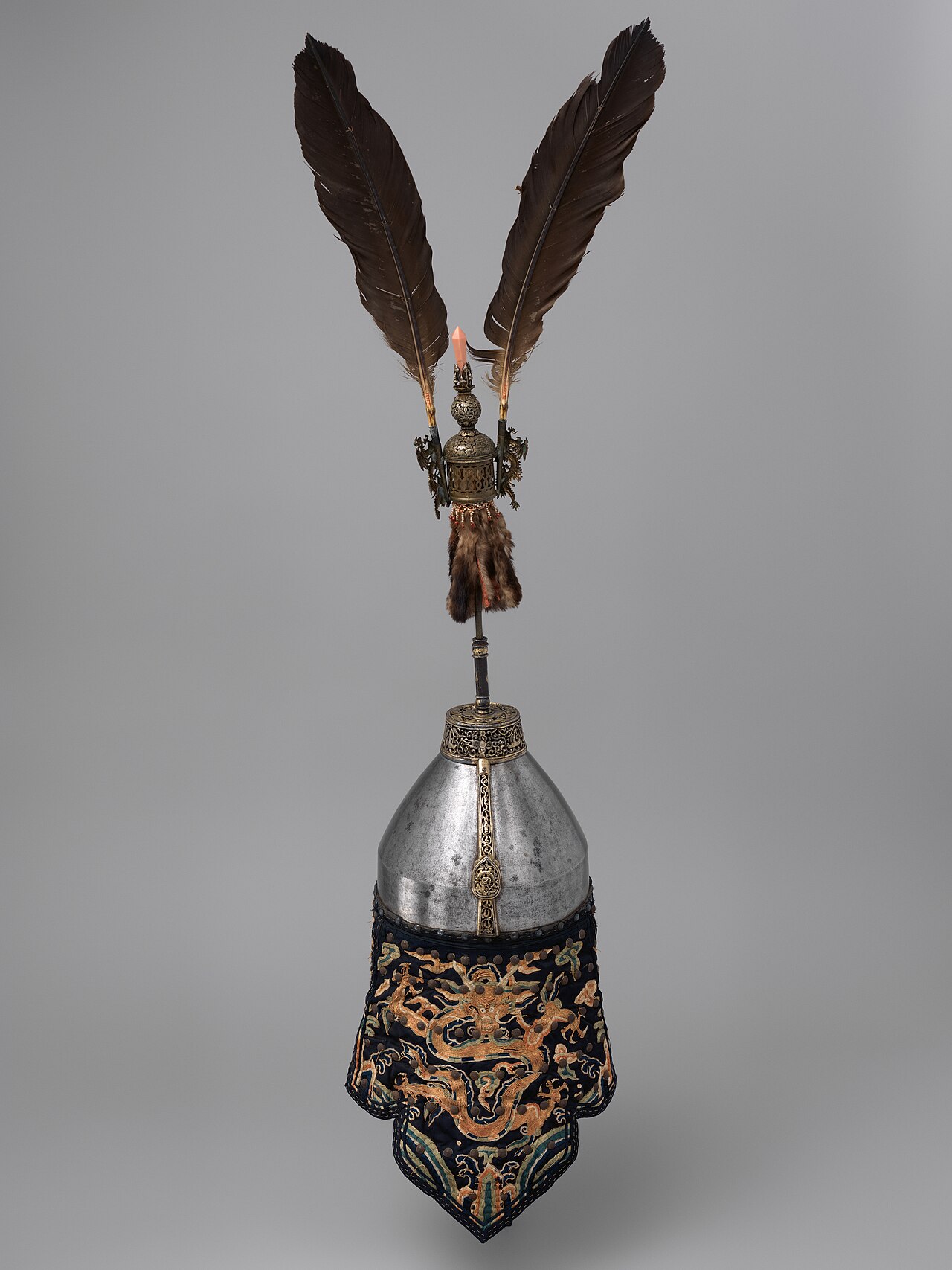
The relationship between humans and feathers spans practical utility, cultural expression, and even linguistic heritage. Because they are soft and trap heat exceptionally well, feathers have long been prized for high-end bedding—pillows, blankets, and mattresses—as well as for filling winter coats and sleeping bags. Goose and eider down are particularly valued for their loft, the ability to expand from a compressed state and lock in large volumes of insulating air. The stiff quills of large birds, especially geese, served as writing instruments for centuries; indeed, the English word "pen" descends directly from the Latin "penna," meaning feather, and the French "plume" carries the same triple meaning of feather, quill, and pen. The word "feather" itself traces back to Old English "feþer" of Germanic origin, cognate with Dutch "veer" and German "Feder," all ultimately rooted in an Indo-European ancestor shared with Sanskrit "patra" (wing), Latin "penna," and Greek "pteron." Historically, the ornamental feather trade drove some bird species to endangerment and extinction. Today, feathers used in fashion and military headgear are harvested as byproducts of poultry farming, then dyed and shaped to compensate for the naturally duller appearance of domesticated birds' plumage.
Gallery

Frequently Asked Questions
What is a crest in feather terminology?
A crest is a distinctive cluster of elongated, flexible feathers that project from the top of a bird's head, giving it a recognizable silhouette. It is a structural arrangement rather than a single feather, and it sets the bird apart visually from species without one.
What kind of feathers make up a bird's crest?
Crests are composed of semiplume feathers, which feature a long central shaft (rachis) with soft, pliable barbs branching off it. This construction gives the feathers a flowing, bendable quality quite different from the stiff vanes found in flight feathers.
What purpose do crests serve for birds?
Crests are primarily used for visual display, social communication, and occasionally as a defensive tool. They allow birds to signal mood, attract a mate, or appear larger and more intimidating to rivals.
Which birds are most famous for their crests?
Cockatoos, cockatiels, and galahs are among the most well-known crest-bearing species. Each of these parrots can raise or lower its crest in response to emotional state, making the feature a clear behavioral indicator.
What are the different types of crests?
Ornithologists typically classify crests into three categories: recumbent (lying flat along the back of the head), recursive (curving backward), and modified (taking on unusual shapes or orientations). The classification depends on the angle and direction in which the feathers project.
More in Feathers 1-24
Spotted an error? Know more?
Reader corrections go straight into our review queue. Suggest an edit · How this site is sourced