Marabou (fashion)
A down feather trimming used in fashion since the late 18th century.

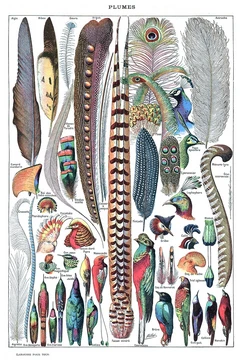
Marabou, originally spelled marabout, is a trimming made from down feathers. The name comes from the marabou stork, whose undertail down was the original source, though white turkey feathers are now commonly used instead. Its ability to absorb dye well makes it a flexible choice for dress trimmings and a practical alternative to fur. From the late 1700s onward, marabout was widely used to decorate hats, muffs, and feather boas. At the Great Exhibition of 1851, it was noted as second only to ostrich feathers in popularity, with white marabout sometimes hard to find, and some manufacturers earning praise for items made from turkey and goose down. In the 20th century, the spelling shifted to marabou, and the material became linked to lingerie and sex appeal. According to the Metropolitan Museum, the marabou mule—a type of slipper—is the item that best captures the sex kitten glamour of the 1950s, famously worn by Marilyn Monroe in *The Seven Year Itch*.
- Field
- Fashion trimming
- Known for
- Feather trimming used in hats, muffs, boas, lingerie, and fly fishing lures
- Material
- Down feathers (originally from marabou stork, later turkey or goose-down)
- Era
- Late 18th century onwards
Lore & Background
Marabout was a very popular trimming from the late eighteenth century onwards, used for trimming hats and making up muffs and feather boas. The Great Exhibition of 1851 prominently featured marabout alongside other feathers as second only in popularity to ostrich feathers. It was noted that white marabout was sometimes very scarce, and that some manufacturers were making highly commended items from turkey and goose-down.
Reader's Guide
Marabou (historically spelled marabout) has been a significant trimming in fashion since the late 18th century, valued for its ability to take dye well and serve as a substitute for fur. Its popularity was evident at the Great Exhibition of 1851, where it ranked second only to ostrich feathers. In the 20th century, marabou became associated with lingerie and sex appeal, epitomized by the marabou mule, which the Metropolitan Museum describes as the object that best epitomizes the sex kitten glamour of the 1950s. Actresses such as Marilyn Monroe, who wore them in The Seven Year Itch, popularized these mules. Beyond fashion, marabou is also used in fly tying for making fishing lures.
Did You Know?
- Marabou takes its name from the marabou stork, whose undertail down originally provided the feathers.
- White turkey feathers have been used as a substitute for marabou stork down.
- The Great Exhibition of 1851 featured marabout as second only in popularity to ostrich feathers.
- Marabou mules are associated with 1950s actresses such as Marilyn Monroe.
More in Feathers 1-24
Spotted an error? Know more?
Reader corrections go straight into our review queue. Suggest an edit · How this site is sourced