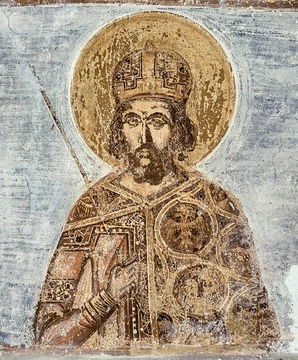
Cato the Elder
Roman soldier, senator, historian, and censor known for conservatism.
Last updated
Cato the Censor and Cato the Elder are his most common names, since he carried out the office of Censor with extraordinary standing.[1] Cato's work Origines, which survives only in fragments, marked the first instance of Roman history being composed in the Latin language.[2]
Life and work
According to Cicero's chronology, Cato was born in 234 BC and died at age 85 in 149 BC.[3] Plutarch said he was first known by the cognomen Priscus, but later called Cato, a word indicating 'common sense that is the result of natural wisdom combined with experience'.[4] Plutarch reports that Cato protested Scipio's lenient discipline and exaggerated expenses, and Scipio replied he would give an account of victories, not of money.[5] In 191 BC Cato served as legatus under consul Manius Acilius Glabrio at the Battle of Thermopylae.[6]
In 199 BC, Cato won election as aedile and, working alongside his colleague Helvius, reinstated the Plebeian Games.[7] The Roman senate ordered a three-day thanksgiving celebration in recognition of Cato's accomplishments while in Hispania.[8] Following the battle, the consul embraced Cato warmly and credited him entirely for the victory.[6]
What the cited sources add
The Open Library record for ISBN 3825856526 lists "libri scientiae" as a 2015 publication by Lit Verlag.[9]
References
- Wikipedia, "Cato the Elder" (CC BY-SA 4.0), which cites: Cicero, Laelius On Friendship, 2.; Justinus, xxxiii. 2; Gellius, xvii. 21. (original not read by us) en.wikipedia.org
- Wikipedia, "Cato the Elder" (CC BY-SA 4.0), which cites: "Marcus Porcius Cato", Encyclopædia Britannica, Inc. (original not read by us) en.wikipedia.org
- Wikipedia, "Cato the Elder" (CC BY-SA 4.0), which cites: Pliny, Natural History, xxix. 8. (original not read by us) en.wikipedia.org
- Wikipedia, "Cato the Elder" (CC BY-SA 4.0), which cites: Plutarch, Life of Cato the Elder, 1. (original not read by us) en.wikipedia.org
- Wikipedia, "Cato the Elder" (CC BY-SA 4.0), which cites: Plutarch, Life of Cato the Elder, 3. (original not read by us) en.wikipedia.org
- Wikipedia, "Cato the Elder" (CC BY-SA 4.0), which cites: Livy, History of Rome, xxxvi. 17–21. (original not read by us) en.wikipedia.org
- Wikipedia, "Cato the Elder" (CC BY-SA 4.0), which cites: Aurelius Victor, On famous Roman men, 47. (original not read by us) en.wikipedia.org
- Wikipedia, "Cato the Elder" (CC BY-SA 4.0), which cites: Livy, History of Rome, xxxiv. 46. (original not read by us) en.wikipedia.org
- Open Library record, ISBN 3825856526 ("libri scientiae"). CC0 (metadata); book content not read. openlibrary.org
Each numbered sentence above was checked against the source it cites before publication. Sentences citing Wikipedia adapt text from the English Wikipedia article Cato the Elder (contributors), used under CC BY-SA 4.0; this entry is available under the same licence. Other sources were used for facts only; no text or images are copied from them.
More in Emperors Of The Byzantine And Roman World
Sources
Compiled from Wikipedia and the sources listed below. Text from Wikipedia is available under CC BY-SA 4.0; this entry is adapted from it.
- Wikipedia: Cato the Elder (CC BY-SA 4.0).
Spotted an error? Know more?
Reader corrections go straight into our review queue. Suggest an edit · How this site is sourced