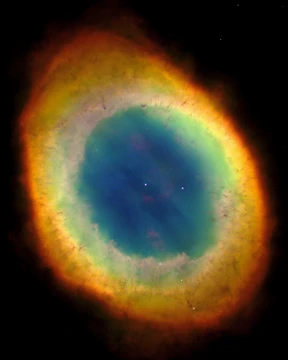
Star-forming regions of Cassiopeia
A northern sky region of multiple star-forming complexes at varying distances.
Last updated
The star-forming regions of Cassiopeia are an extensive portion of the sky rich in giant molecular clouds and highly luminous associations of blue stars, located in the direction of the Cassiopeia constellation. They do not form a single complex but consist of several distinct complexes separated by thousands of light-years, appearing aligned along the line of sight.
Lore & Background
The star-forming regions of Cassiopeia are located in the northernmost section of the Milky Way, deep in the Northern Hemisphere, within the eponymous constellation. Despite their large extent, even the brightest structures are not visible to the naked eye or with small instruments; bright stars are scarce, and the background stellar fields are less rich compared to other areas of the galactic plane. The luminous band of the Milky Way appears highly irregular and crossed by large dark bands due to extensive dust clouds.
The region closest to Earth lies on the outer edge of the Orion Arm, consisting mainly of large concentrations of dark nebulae connected to the Cepheus complex, situated in a very northern position relative to the galactic plane and first observed by Edwin Hubble. The more visible and extensive areas are located in the Perseus Arm, at a distance of over 7000 light-years, lying almost exactly on the galactic plane where the line of sight is clearer. Here, bright OB associations are found, some associated with open clusters such as M103 and NGC 457, as well as large nebular complexes connected to the Double Cluster in Perseus.
A Mosaic of Distinct Complexes
The star-forming regions of Cassiopeia are not a single unified structure but rather a collection of separate complexes spread across thousands of light-years, which only appear aligned because of our particular vantage point within the galaxy. The nearest of these sits on the outer rim of the Orion Arm—the same secondary spiral arm that cradles the Solar System—and is composed largely of vast dark nebulae linked to the Cepheus complex, positioned at a notably high angle above the galactic plane. Edwin Hubble was the first to observe this northern structure.
Farther out, beyond 7,000 light-years, the Perseus Arm hosts the more luminous and spatially extensive portions of this celestial sector. Because this outer region lies almost precisely on the galactic plane, the line of sight is far clearer, allowing bright OB associations, open clusters like M103 and NGC 457, and large nebular complexes to shine without the heavy dust veils that shroud the nearer material. The eastern side of the constellation is especially rich, with nebular structures extending toward the famous Double Cluster in Perseus.
The Paradox of Visibility
Despite spanning a vast stretch of the northern Milky Way, the star-forming regions of Cassiopeia present a remarkable observational paradox. The closest structures, sitting just a few degrees above the galactic equator, are entirely invisible without a telescope. Bright stars are sparse in this sector, the background star fields are thinner than in other parts of the galactic plane, and the Milky Way's luminous band appears broken and irregular, pierced by broad dark lanes of dust. The young stellar associations that should populate this area are so thoroughly hidden by obscuring clouds that the sky looks as though it lies well away from the galactic core.
Yet the structures in the Perseus Arm, more than 8,000 light-years distant, are easily seen with binoculars or a modest amateur telescope. Clusters such as M103, NGC 457, and NGC 663, along with the Heart and Soul Nebulae, all belong to this outer arm and benefit from their position on the clearer galactic equator. From the Southern Hemisphere, most of these regions never rise above the horizon at all.
Dust, Globules, and the Gould Belt Question
The nearest nebular system in the Cassiopeia direction, sitting just over 900 light-years away, spans roughly 260 light-years and is the primary source of the heavy obscuration seen in this part of the sky. It is the natural eastward extension of the cloud system visible in the neighboring constellation of Cepheus, and it connects to the larger Cepheus Cloud, within which several substructures reside. One of the most notable is the Bok globule Sh2-136, a dark cocoon only about 2 light-years across, nestled against a faintly glowing background and harboring young stellar objects still in the process of formation.
Whether these cloud systems belong to the Gould Belt—the arc of giant stars stretching from Perseus toward the southern Argo Navis—remains unresolved. Radial velocity data hints at a link to an expanding superbubble associated with the Belt, yet the clouds' position, noticeably detached from the Belt's plane, suggests they may be an independent structure. Beyond this dusty veil, the sky opens into a sparser region, home to the OB association Lacerta OB1 and, at 2,600 light-years, one of the largest giant molecular clouds in the Orion Arm—a long dust belt formed by the Cygnus and Aquila Rifts.
A Shifting Sky Across Millennia
The position of Cassiopeia's star-forming regions in the night sky is not fixed. Because of the precession of the equinoxes, the celestial coordinates of stars and constellations drift over thousands of years, and the Cassiopeia complex is no exception. It currently occupies roughly 0 hours of right ascension, the same point where the ecliptic crosses the celestial equator at the vernal equinox. As precession carries it toward 6 hours of right ascension—a journey of approximately 5,000 years—the complex will climb to its northernmost declination, settling just a few degrees from the north celestial pole.
At that epoch, the pole itself will have migrated into the direction of the nearby constellation of Cepheus, making Cassiopeia's nebular fields even more prominently circumpolar for northern observers. Today, at a declination of about 65 degrees north, the constellation is already a circumpolar fixture across Canada, Northern Europe, and Russia, a familiar anchor in boreal autumn evenings when it rides high near the zenith. For southern-hemisphere observers, however, this precessional drift offers little comfort: most of the region remains permanently below the horizon.
Reader's Guide
The star-forming regions of Cassiopeia are significant for demonstrating the layered structure of the Milky Way's spiral arms along a single line of sight. The closest system, a dark nebula complex over 900 light-years away, is the primary cause of obscuration in this direction and is connected to the larger Cepheus Cloud. Beyond it, the Orion Arm hosts the Cassiopeia OB14 association and open clusters, while the Perseus Arm contains some of the brightest OB associations in the entire Galaxy, including Cassiopeia OB6.
The Heart Nebula and Soul Nebula, among the best-known northern nebulae, belong to this distant arm. Due to precession, the complex will reach its northernmost declination in about 5000 years, approaching the north celestial pole. The region's visibility is circumpolar from much of the northern hemisphere, while from the Southern Hemisphere most of its regions remain below the horizon.
Frequently Asked Questions
What are the Star-forming regions of Cassiopeia?
They are a broad swath of northern sky, centered near 65° declination, teeming with giant molecular clouds and brilliant associations of young blue stars projected against the Cassiopeia constellation. Rather than being a single structure, the region is actually a collection of several separate star-forming complexes that merely appear lined up because they share the same line of sight from Earth.
How far away are the Star-forming regions of Cassiopeia?
The nearest complex lies just beyond 900 light-years and stretches roughly 260 light-years across, making it the closest major star-forming zone visible to northern observers. The more distant Perseus Arm complexes sit well past 7,000 light-years, so the full set spans an enormous depth range.
Which famous nebulae are in the Star-forming regions of Cassiopeia?
The Perseus Arm portion includes the Heart Nebula, the Soul Nebula, M103, NGC 457, and NGC 663, all of which are popular targets for astrophotographers. These objects showcase a mix of emission, dark, and reflection nebulae illuminated by the surrounding hot young stars.
Are the Star-forming regions of Cassiopeia one single cloud or multiple?
They are definitely multiple distinct complexes separated by thousands of light-years, not a single connected structure. The alignment is purely a line-of-sight effect from our vantage point on Earth, which is why they look like one continuous band in wide-field photographs.
What OB associations are found in the Star-forming regions of Cassiopeia?
The Perseus Arm section hosts Cassiopeia OB1, OB2, OB4, OB5, OB6, and OB7, each a tight grouping of massive, luminous blue stars. Their combined ultraviolet output is what ionizes the surrounding gas and powers the emission nebulae fans photograph in this region.
More in Emission, Dark and Reflection Nebulae
Sources
Compiled from Wikipedia and the sources listed below. Text from Wikipedia is available under CC BY-SA 4.0; this entry is adapted from it.
- Wikipedia: Star-forming regions of Cassiopeia (CC BY-SA 4.0).
- Word definitions: the Codexery glossary, each quoted from its Wikipedia article.
Spotted an error? Know more?
Reader corrections go straight into our review queue. Suggest an edit · How this site is sourced