Sharpless catalog
Catalog of 313 H II regions, planetary nebulae, and supernova remnants.
Last updated
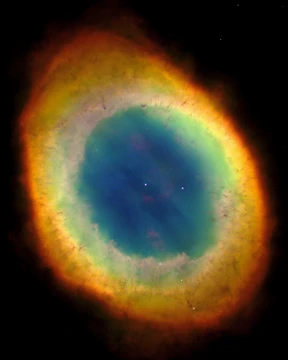
The Sharpless catalog is a list of 313 H II regions (emission nebulae) intended to be comprehensive north of declination −27°, though it does include some nebulae south of that declination as well. The catalog also includes some planetary nebulae and supernova remnants in addition to H II regions. It was compiled by US astronomer Stewart Sharpless, who joined the staff of the United States Naval Observatory Flagstaff Station in 1953 and surveyed H II regions of the Milky Way using images from the Palomar Sky Survey.
Quick Facts
- Total objects
- 313
- First edition objects
- 142
- First edition year
- 1953
- Second edition objects
- 312
- Second edition year
- 1959
- Coverage
- Comprehensive north of declination −27°, with some southern objects
Facts from the source article.
Lore & Background
The Sharpless catalog was published in two editions: the first in 1953 with 142 objects (Sh1), and the second and final version in 1959 with 312 objects (Sh2). Stewart Sharpless based the coordinates on the star catalogs Bonner Durchmusterung (BD) and Cordoba Durchmusterung (CD), with the second release adjusted to the 1900 epoch. In the second release, some coordinates for southern hemisphere regions have an uncertainty over one minute of arc, which can make them difficult to find.
The 312 items in the Sharpless catalog sometimes overlap with the 110 Messier objects (M), the 7,840 objects in the New General Catalogue (NGC), the Caldwell catalogue (a 'best of' from other catalogues with 109 items), and the RCW catalog. Contemporary catalogs were Gum and RCW, but they mainly covered the southern hemisphere. A revised catalog called BFS (Blitz, Fich and Stark) was later released with 65 new regions and about 20 removals, most of the removed items being the aforementioned nebula or remnants.
Reader's Guide
The Sharpless catalog remains a foundational reference for emission nebulae in the northern Milky Way, despite its coordinate uncertainties for some southern objects. Its overlap with other major catalogs—Messier, NGC, Caldwell, and RCW—makes it a useful cross-reference for astronomers studying star-forming regions.
The catalog's inclusion of planetary nebulae and supernova remnants alongside H II regions broadens its utility beyond pure emission nebulae. The later BFS revision addressed some of the positional inaccuracies, adding 65 new regions and removing about 20 objects, but the original Sharpless catalog continues to be cited for its comprehensive northern coverage. Its creation from Palomar Sky Survey plates marked an early systematic effort to map H II regions across the Milky Way, and it remains a standard identifier for many well-known nebulae.
More in Emission, Dark and Reflection Nebulae
Sources
Compiled from Wikipedia and the sources listed below. Text from Wikipedia is available under CC BY-SA 4.0; this entry is adapted from it.
- Wikipedia: Sharpless catalog (CC BY-SA 4.0).
- Word definitions: the Codexery glossary, each quoted from its Wikipedia article.
Spotted an error? Know more?
Reader corrections go straight into our review queue. Suggest an edit · How this site is sourced