Friendship Archway
One of the largest ceremonial arches outside of China.

Iamharleyas · CC BY-SA 4.0
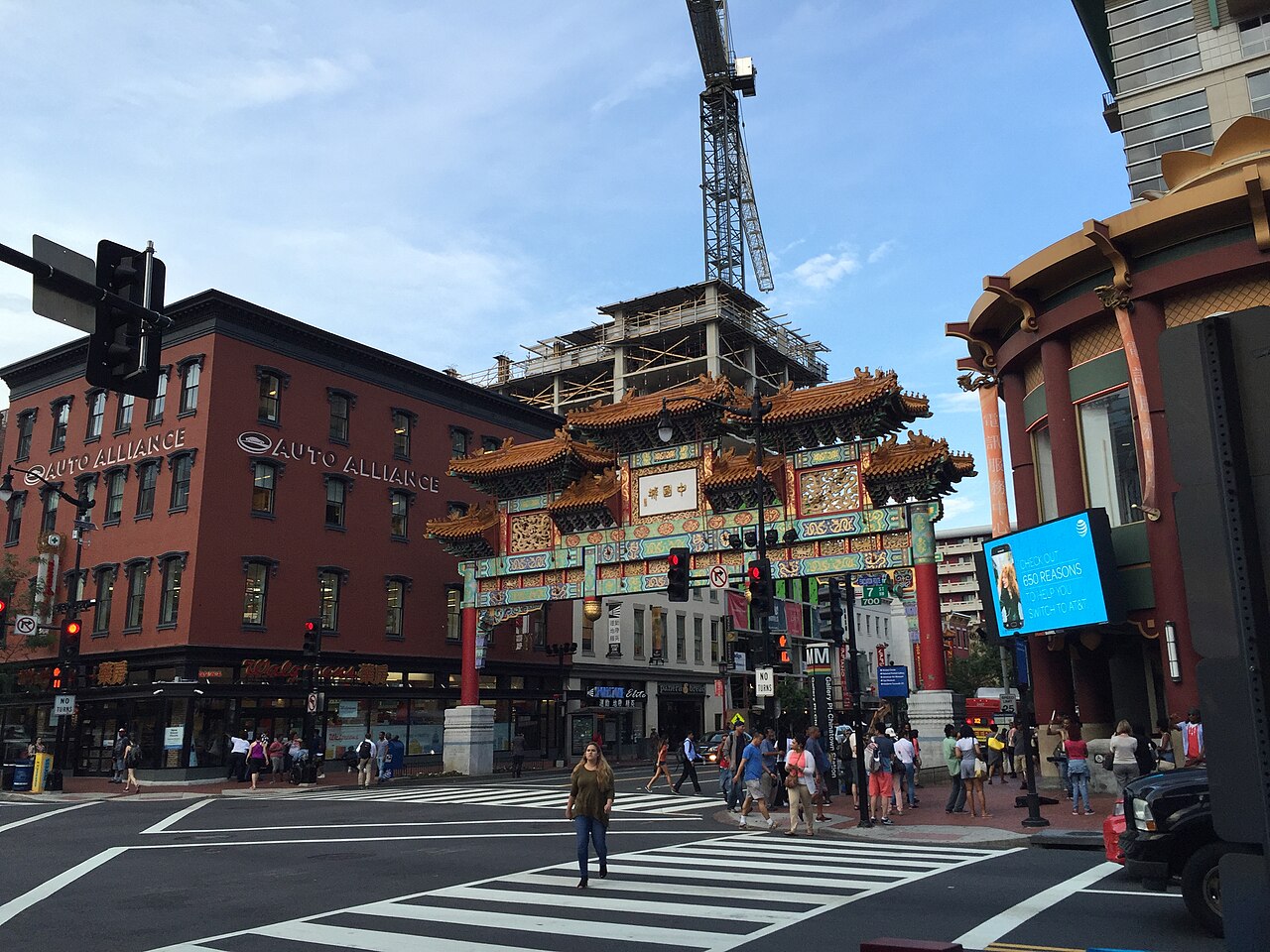
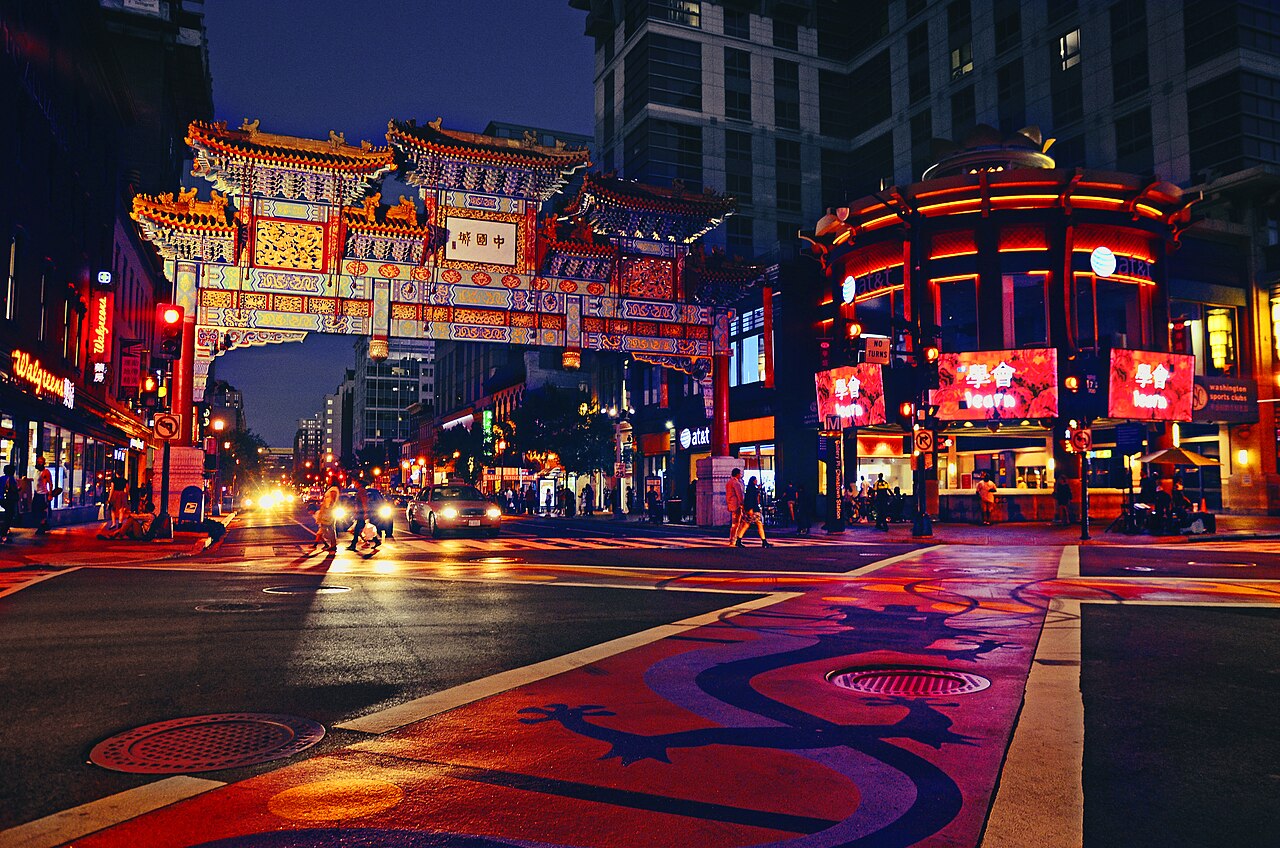
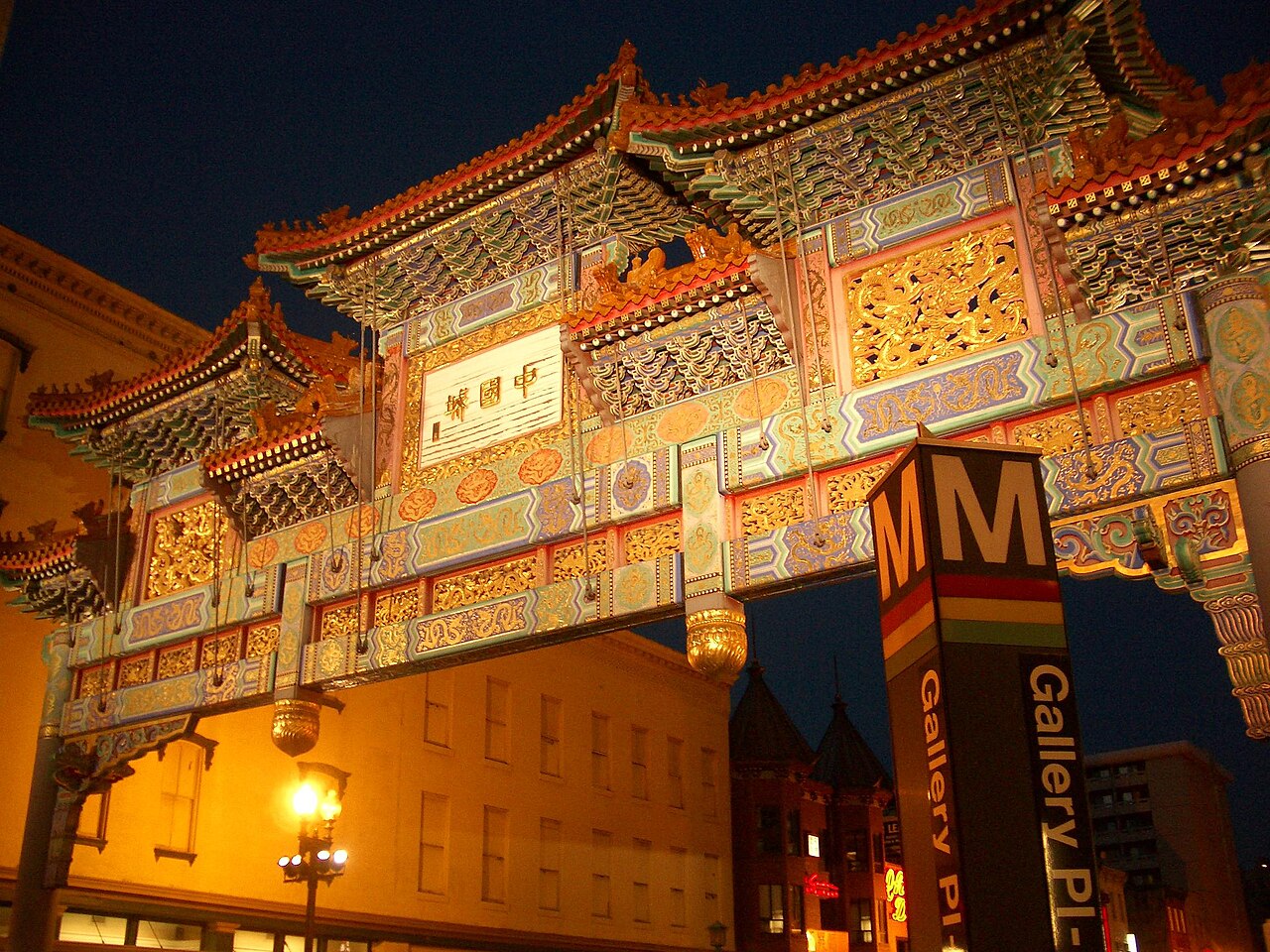
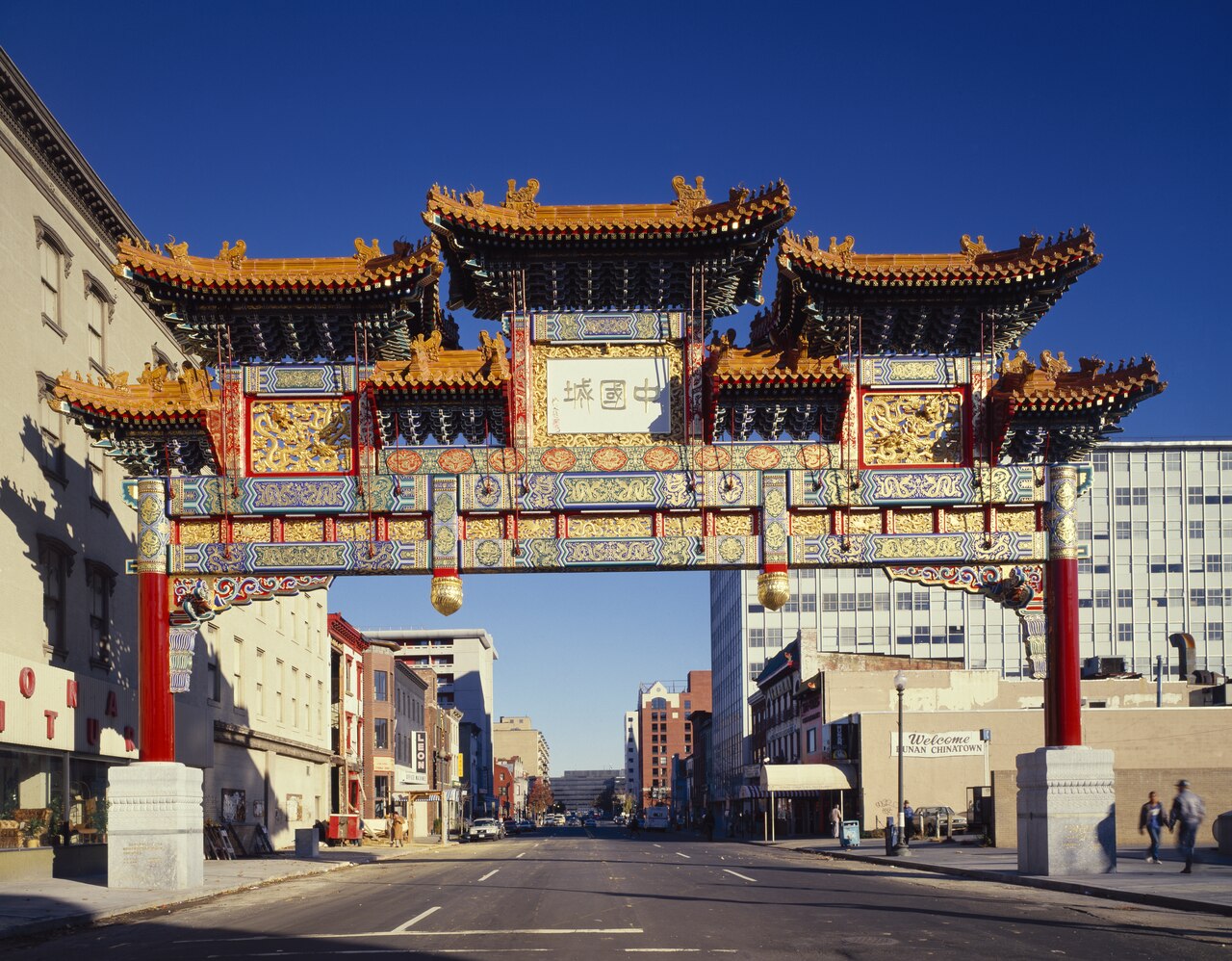
Friendship Archway is a paifang (ceremonial arch) installed in Chinatown, Washington, D.C., United States. It is one of the largest ceremonial arches outside of China, erected to celebrate the friendship between Washington, D.C., and its sister city, Beijing. The archway was dedicated on November 20, 1986, and was recognized by The Guinness Book of Records as the largest single-span archway in the world after its completion.
Quick Facts
- Location
- 675 H St NW
- Designer
- Alfred H. Liu
- Open
- November 20, 1986
- Restore
- 1993, 2009, 2019
Facts from the source article.
Lore & Background
Planning for the Friendship Archway began in 1984, to be jointly funded by Washington, D.C.'s newly-announced sister city, Beijing. However, the largely anti-communist population of Chinatown, where the archway was to be located, disagreed with the involvement of mainland China and protested. Local architect Alfred H. Liu designed the archway in 1985 after city officials rejected plans for twelve smaller arches to be placed throughout Chinatown, each decorated with one of the Chinese zodiac animals. Liu had previously designed Wah Luck House, a low-income residential high-rise, in 1982 to meet a HUD deadline; that building was designed in three days and constructed in seven weeks. He was also chairman of the Chinatown Development Corporation, and had emigrated from Taiwan to the United States as a teenager.
On November 20, 1986, the city dedicated the traditional Chinese gate; the signatures of Mayors Marion Barry (of Washington, D.C.) and Chen Xitong (of Beijing) are engraved on the dedication plaque at the monument's base. Meanwhile, the local Chinese Consolidated Benevolent Association announced plans for a second privately-financed gate at the neighborhood's eastern border, near 5th and H, although the financing fell through later. Erected to celebrate friendship with Washington's sister city of Beijing, it was hoped the arch would reinforce the neighborhood's Chinese character.
Reader's Guide
The Friendship Archway stands as a significant cultural and architectural landmark in Washington, D.C.'s Chinatown. Its construction was a joint project between Washington, D.C., and its sister city, Beijing, though it faced local opposition due to the anti-communist sentiments of the Chinatown community. The archway's design, by Taiwanese-American architect Alfred H. Liu, incorporates 284 dragons and seven roofs covered in 7,000 tiles, styled after the Ming and Qing dynasties. It spans H Street just east of 7th, and its width is enabled by a concealed steel beam; without it, the arch would be narrower. The archway has undergone multiple restorations: in 1993, after tiles began falling and a soda truck struck a dragon head in 1990, a major renovation was funded by D.C. and Chinese governments, with artisans from China performing extensive repairs. In 2020, it underwent restoration for faded and peeling paint and tiles. The archway remains a symbol of international friendship and a defining feature of the neighborhood, though its history reflects tensions between local sentiment and diplomatic goals.
Did You Know?
- The archway includes 284 dragons (272 painted and 12 carved) in the style of the Ming and Qing dynasties.
- In 1990, a passing delivery truck struck the head of a dragon, prompting the removal of tiles and ornaments.
Origins Amid Political Tension
The Friendship Archway emerged from a politically charged moment in the mid-1980s. When Washington, D.C., formally designated Beijing as its sister city in 1984, city leaders envisioned a grand ceremonial gate to symbolize the new diplomatic bond, with Beijing contributing to the funding. The proposal, however, collided with the deeply held sentiments of the neighborhood's residents. Many in Chinatown harbored strong anti-communist views and openly protested the idea of mainland Chinese involvement in a landmark within their own community. Despite the backlash, the project moved forward, and on November 20, 1986, the city dedicated the traditional Chinese gate. The dedication plaque at its base bears the engraved signatures of both Mayor Marion Barry and Beijing's Mayor Chen Xitong, a tangible record of the cross-Pacific partnership. The arch was intended to reinforce the neighborhood's distinctly Chinese identity. Around the same time, the local Chinese Consolidated Benevolent Association floated a plan for a second, privately funded gate at the neighborhood's eastern edge near 5th and H Streets, though that effort ultimately collapsed when financing dried up.
Design, Scale, and Engineering
Standing 47 feet 7 inches tall and 75 feet wide across H Street just east of 7th, the Friendship Archway is a monumental piece of public art that cost approximately one million dollars to realize. Its colorful structure features seven layered roofs adorned with roughly 7,000 individual tiles and a total of 284 dragons—272 rendered in paint and 12 carved in relief—all executed in the visual vocabulary of China's Ming and Qing dynasties. The total weight of the structure reaches 128 short tons, with the roofing and ornamental elements accounting for 63 of those tons. The supporting framework draws on 27 short tons of steel and 38 short tons of concrete. A concealed steel beam hidden within the structure is what makes the full 75-foot span structurally possible; without it, the arch would have to be considerably narrower. Decorative components were fabricated and supplied by the Beijing Ancient Architectural Construction Corporation. Just below the central roof, a panel displays the Chinese characters for Chinatown, read right to left. After its completion, the Guinness Book of Records recognized it as the largest single-span ceremonial archway in the world.
The Architect and the Community He Served
The archway's design was the work of local architect Alfred H. Liu, who produced the final plans in 1985 after city officials turned down an earlier concept for twelve smaller arches scattered throughout the neighborhood, each bearing one of the twelve Chinese zodiac animals. Liu brought a distinctive personal connection to the project: he had emigrated from Taiwan to the United States as a teenager and served as chairman of the Chinatown Development Corporation, giving him both cultural fluency and institutional standing within the community. His architectural credentials were already well established locally. In 1982, he had designed Wah Luck House, a low-income residential high-rise, in a remarkably compressed timeline—three days of design work to satisfy a HUD deadline, followed by just seven weeks of construction. That track record of delivering substantial projects under tight constraints likely informed his approach to the archway, a far more ornate and culturally layered commission. The rejection of the zodiac-arch scheme in favor of a single grand gate reflected a desire for a unifying, visually commanding landmark rather than a series of smaller decorative elements spread across the streetscape.
Decades of Deterioration and Renewal
Despite its grandeur, the archway's early years were marred by structural and weather-related problems. By 1990, roof tiles had begun detaching and falling, and in June of that year a passing soda delivery truck struck the head of one of the dragon ornaments, prompting the Department of Public Works to remove the remaining tiles and decorative elements for safety. Post-incident analysis suggested that the original tile installation, carried out in October 1986, may have suffered from cold temperatures that prevented the mortar from curing properly. The archway sat in a diminished state until 1993, when a major renovation was undertaken with funding from both the D.C. and Chinese governments. Skilled artisans traveled from China to perform extensive repairs and to repaint the decorative elements, restoring the structure's visual richness. The cycle of wear and renewal continued into the twenty-first century: in 2020, the archway underwent another round of restoration to address faded and peeling paint as well as deteriorating tiles, ensuring that the landmark's vivid colors and intricate ornamentation remain visible to the neighborhood and its visitors.
Gallery
Frequently Asked Questions
What is the Friendship Archway?
It is a traditional Chinese paifang, or ceremonial arch, standing in the Chinatown neighborhood of Washington, D.C. The structure was built to honor the sister-city bond between the nation's capital and Beijing.
Where is the Friendship Archway located?
The archway stands in Chinatown, Washington, D.C., in the United States. It is one of the largest ceremonial arches of its kind found outside of China.
How large is the Friendship Archway?
The structure measures 47 feet 7 inches in height and 75 feet in width, with a total weight of 128 short tons. Its single-span design earned it a place in The Guinness Book of Records as the world's largest archway of that type.
When was the Friendship Archway dedicated and what did it cost?
It received its official dedication on November 20, 1986. The project came to a total cost of roughly one million U.S. dollars.
Why is the Friendship Archway significant?
It serves as a physical symbol of the diplomatic friendship between Washington, D.C., and its sister city, Beijing. The arch also holds a Guinness Book of Records distinction as the largest single-span archway in the world.
More in Dragons in art 1-20
Spotted an error? Know more?
Reader corrections go straight into our review queue. Suggest an edit · How this site is sourced