
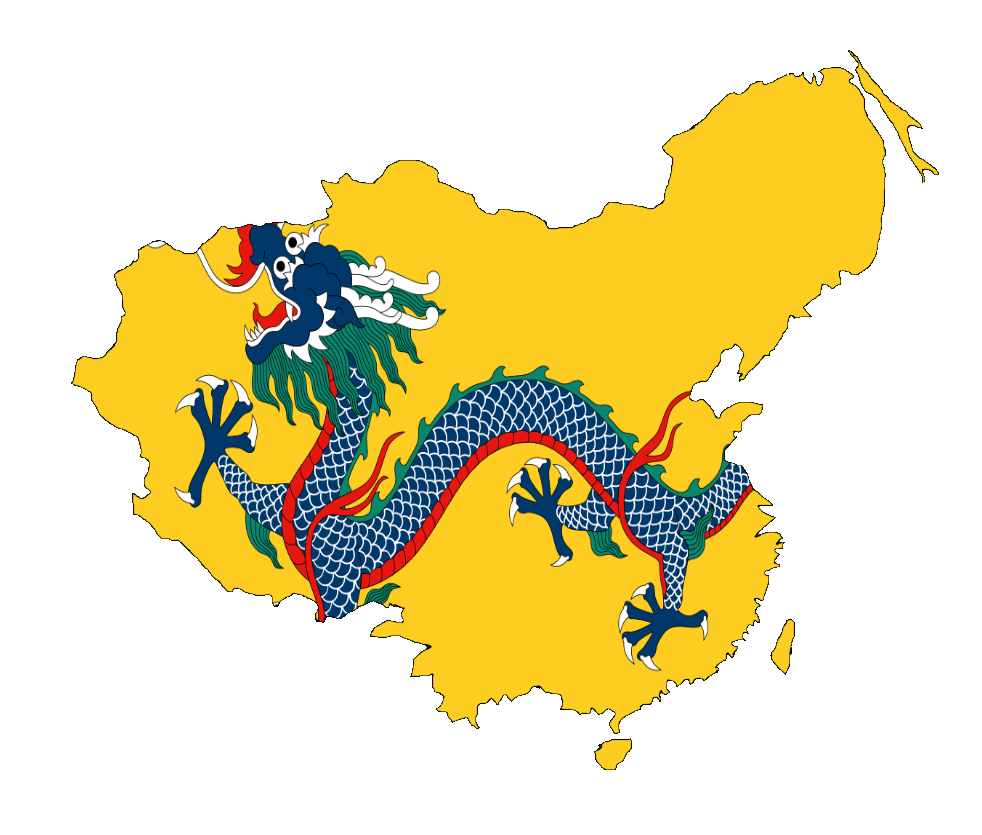
Flag of the Qing dynasty
First national flag of China, used from 1862 to 1912.

Windmemories · CC BY-SA 4.0
The Yellow Dragon Flag, featuring an azure dragon on a yellow field with a red flaming pearl in the upper left corner, was formally adopted as China’s first national flag in 1888 by imperial decree. The Qing dynasty, which ruled from 1644 until the Xinhai Revolution ended the monarchy, used this flag to represent itself between 1862 and 1912. On January 10, 1912, the Yellow Dragon Flag was replaced by the Five-Colored Flag, and Emperor Puyi abdicated on February 12, ending Qing rule.
Yellow had been an imperial color since at least the Tang dynasty, restricted to the imperial family for buildings and clothing. The emperor typically used a five-clawed dragon as a symbol of power, and the flaming pearl above the dragon’s head represented wealth, luck, and prosperity in Chinese culture. The flag’s design was largely based on the Plain Yellow Banner, one of the three “upper” banners among the Eight Banners directly commanded by the emperor.
The Eight Banners were administrative and military divisions that organized all Manchu households. In war they functioned as armies, but the system also formed the basic structure of Manchu society.
A triangular version of the flag existed from 1862 to 1889. The Arrow Incident of 1856 occurred because Qing civilian vessels flew foreign flags, as the dynasty had no official flag. In 1862, a clash between Chinese and British sailors on the Yangtze River led the British to protest that they could not distinguish Chinese navy ships from civilian vessels. Prince Gong urged Zeng Guofan to create a governmental flag, suggesting a yellow dragon design already used by the Eight Banners and the army. Zeng worried that a square flag too closely resembled the Plain Yellow Banner and might be seen as endorsing the Eight Banners hierarchy, so he removed one corner to make it triangular. This triangular flag was used as a naval ensign from 1862 onward and was restricted to naval and governmental use—no civilian ships could fly it—and it never formally became the national flag. It was also used on some diplomatic occasions.
The rectangular version came into use from 1889 to 1912. In 1888, after the cruisers Chaoyong and Yangwei were delivered from England, Li Hongzhang petitioned to change the triangular naval flag to a rectangular one, as a triangular ensign was unique among other countries' flags.
Quick Facts
- Nickname
- Yellow Dragon Flag (zh-Hant · 黃龍旗)
- Use
- 111111
- Symbol
- 111111 historical Mirror
- Proportion
- 2:3
- Relinquished
- 1912-02-12
- Design
- Blue dragon on plain yellow, with a red pearl at the upper left corner.
Facts from the source article.
Lore & Background
The flag's design originated from the need for a governmental flag after the Arrow Incident of 1856 and clashes between Chinese and British navies in 1862. Prince Gong urged Zeng Guofan to create a flag, suggesting a yellow dragon design. Zeng Guofan initially created a triangular version to avoid resemblance to the Plain Yellow Banner of the Eight Banners, restricting it to naval and governmental use. The triangular flag was used as a naval ensign from 1862 onward but never formally became the national flag.
In 1888, Li Hongzhang petitioned to change the triangular naval flag to a rectangular one, as triangular ensigns were unique among other countries' flags.
Reader's Guide
The Yellow Dragon Flag holds significance as the first national flag of China, marking a shift from dynastic symbols to a formal state emblem. Its design—a five-clawed dragon on yellow—drew from imperial traditions: yellow was the royal color since the Ming dynasty, and the five-clawed dragon symbolized the emperor's power. The flaming pearl represented wealth and prosperity. The flag's adoption was driven by diplomatic and military necessity, as the Qing dynasty needed a recognizable ensign to avoid incidents like the Arrow Incident. The triangular version (1862–1889) was limited to naval and governmental use, while the rectangular version (1889–1912) became the national flag. Its legacy influenced later flags: the yellow in the Five Races Under One Union flag of the Republic of China and the flag of Manchukuo referenced Qing imperial color, though Sun Yat-sen challenged this association. The blue dragon also appeared in the Twelve Symbols national emblem (1913–1928). The flag remains a key symbol of China's last imperial dynasty.
Did You Know?
- The triangular version of the flag was created because Zeng Guofan feared a square flag would resemble the Plain Yellow Banner of the Eight Banners.
- The flag was first used in 1862 after clashes between Chinese and British navies on the Yangtze River at Wuhan.
- Empress Dowager Cixi selected the Yellow Dragon design over proposals for a Ba gua flag or Qilin flag.
- The rectangular version was adopted in 1889 after Li Hongzhang noted that triangular ensigns were unique among other countries' naval flags.
From Diplomatic Crisis to Triangular Ensign
The story of China's first national flag began not with deliberation but with diplomatic embarrassment. In 1856, the Arrow Incident erupted partly because Chinese civilian vessels were flying foreign flags, as the Qing court possessed no official emblem of its own. The problem sharpened in 1862 when Chinese and British sailors clashed at Wuhan on the Yangtze River, and the British government protested that its ships could not tell apart Qing naval vessels from merchant craft. Prince Gong, responding to these complaints, urged Zeng Guofan to devise a governmental flag and recommended a yellow dragon design already familiar from the Manchu Eight Banners and the Chinese army. Zeng Guofan, however, worried that a square flag would look too much like the Plain Yellow Banner of the Eight Banners and might be read as an endorsement of that military hierarchy. His solution was to lop off one corner, producing a triangular pennant. This flag was restricted to naval and governmental use, never formally declared a national flag, and was reserved for official occasions. One notable exception came on February 23, 1873, when the Tongzhi Emperor assumed direct rule and every ship in the fleet flew the triangular ensign in celebration.
The Rectangular Flag and Imperial Selection
By September 1881, the triangular ensign had become a diplomatic oddity. Li Hongzhang, overseeing the delivery of two cruisers, Chaoyong and Yangwei, ordered from Birkenhead, England, noticed that no other nation's navy flew a triangular flag. He petitioned the imperial court for permission to reshape the naval ensign into a rectangle. Observing that Western powers displayed national flags at official functions, he also approached Empress Dowager Cixi with a broader request: choose a national flag for the Qing dynasty. Three designs were tabled before her — the Ba gua symbol, the Yellow Dragon, and the Qilin. Cixi selected the Yellow Dragon. In 1888 the imperial court formally promulgated the rectangular naval flag as the national flag of the Qing, and it remained in that role until January 10, 1912, when it was replaced by the Five-Colored Flag. On February 12 of that same year, Emperor Pu Yi abdicated, bringing the dynasty's two-and-a-half-century rule to a close.
Symbolism Rooted in Imperial and Manchu Tradition
Every element of the Yellow Dragon Flag drew on centuries of Chinese imperial tradition. Since the Ming dynasty, yellow had been reserved exclusively for the emperor and his family; no other subject could display the color on buildings or garments. The dragon itself, specifically the five-clawed variety, was the sole heraldic symbol of imperial power and strength. Perched above the dragon's head sat a red flaming pearl, a motif in Chinese culture tied to wealth, good fortune, and prosperity. The flag's overall composition was not invented from scratch: it was largely modeled on the Plain Yellow Banner, one of the upper banner armies among the Eight Banners that fell under the emperor's direct command and belonged to the right-wing group. The Eight Banners served as both military formations in wartime and the fundamental administrative structure of all Manchu households throughout the dynasty. By anchoring the national emblem in this existing banner system, the Qing court wove together military heritage, Manchu identity, and imperial symbolism into a single visual statement.
Echoes in Later Chinese Flags and Emblems
The Yellow Dragon Flag cast a long shadow well beyond the dynasty's fall in 1912. The concept of yellow as a marker of Manchu identity carried forward into the Five Races Under One Union flag of the Republic of China and into the flag of the Empire of China, though Sun Yat-sen objected to using the traditional imperial color for that purpose. Mustard yellow also appeared on the flag of Manchukuo, a deliberate nod to the Qing dynasty on whose emblem it was based. The blue dragon from the flag's design reappeared in the Twelve Symbols national emblem, which served as China's state emblem from 1913 to 1928. Even in specific institutional contexts, the flag's imagery persisted: the Chinese Eastern Railway flew a combined Qing-and-Russian emblem until 1912, and the Commissioner of Weihaiwei incorporated a Chinese dragon into his flag from 1899 until 1903. These echoes demonstrate that the Yellow Dragon Flag's visual language remained a reference point for Chinese political identity across multiple regimes and decades.
Gallery
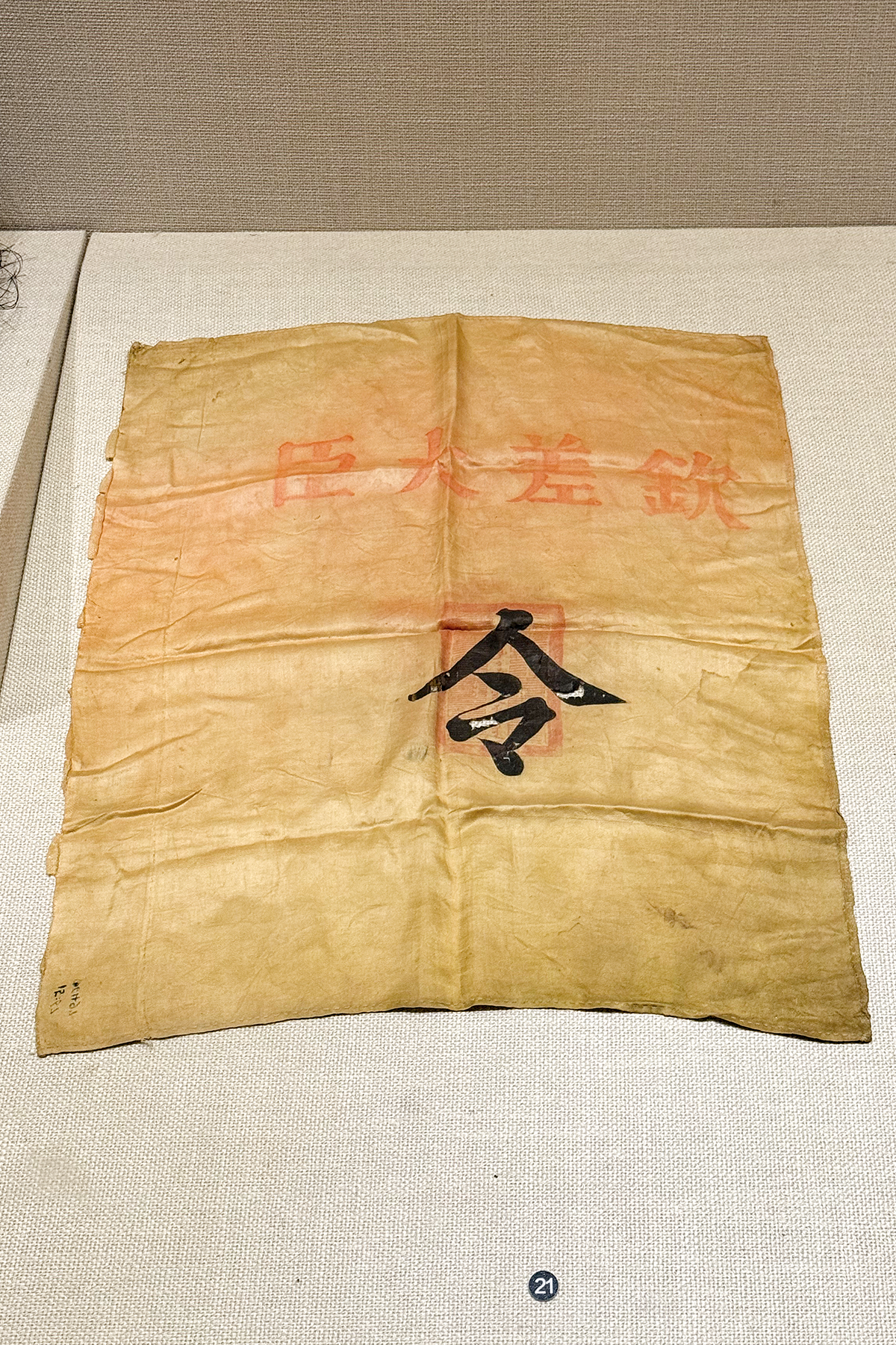
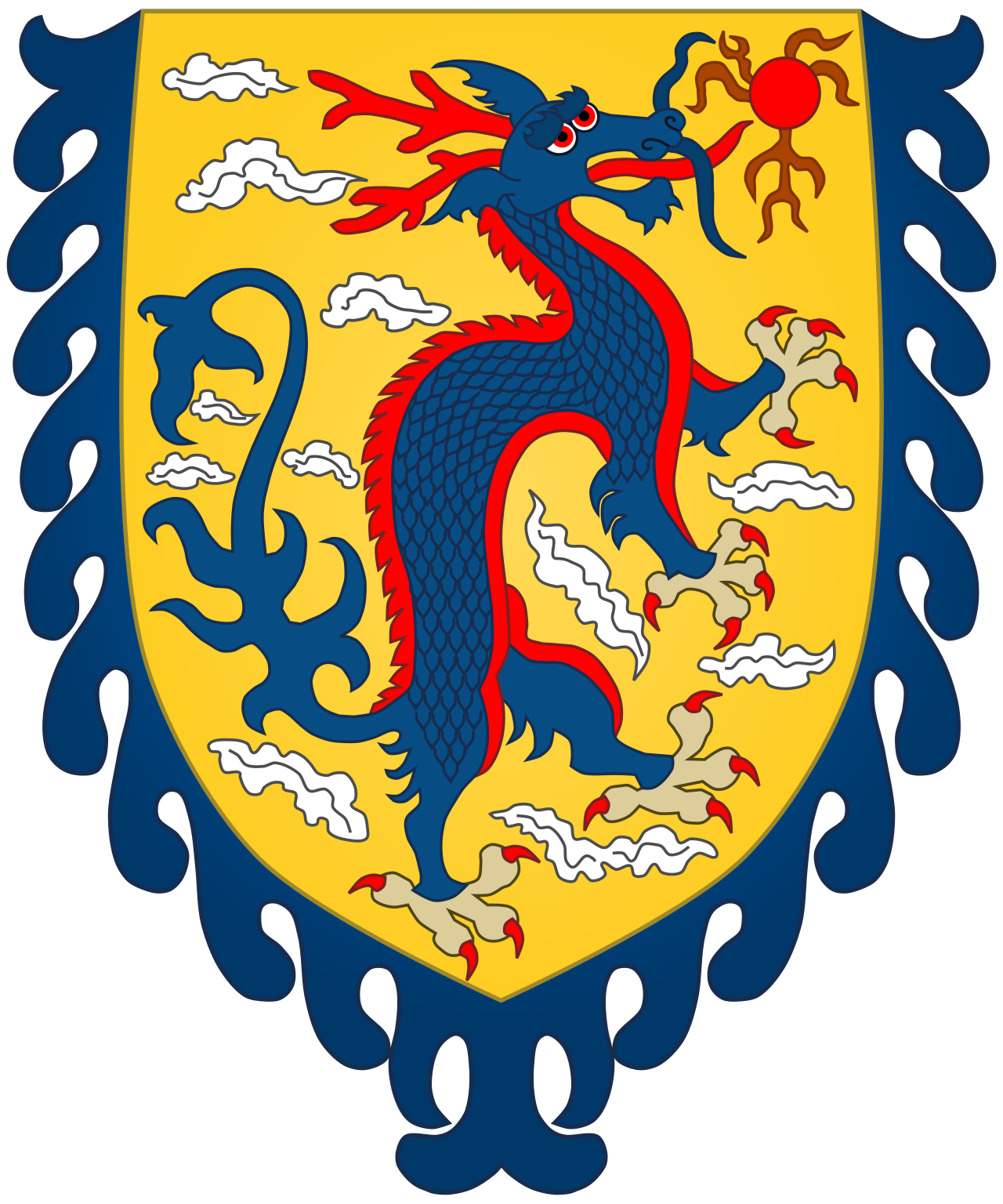
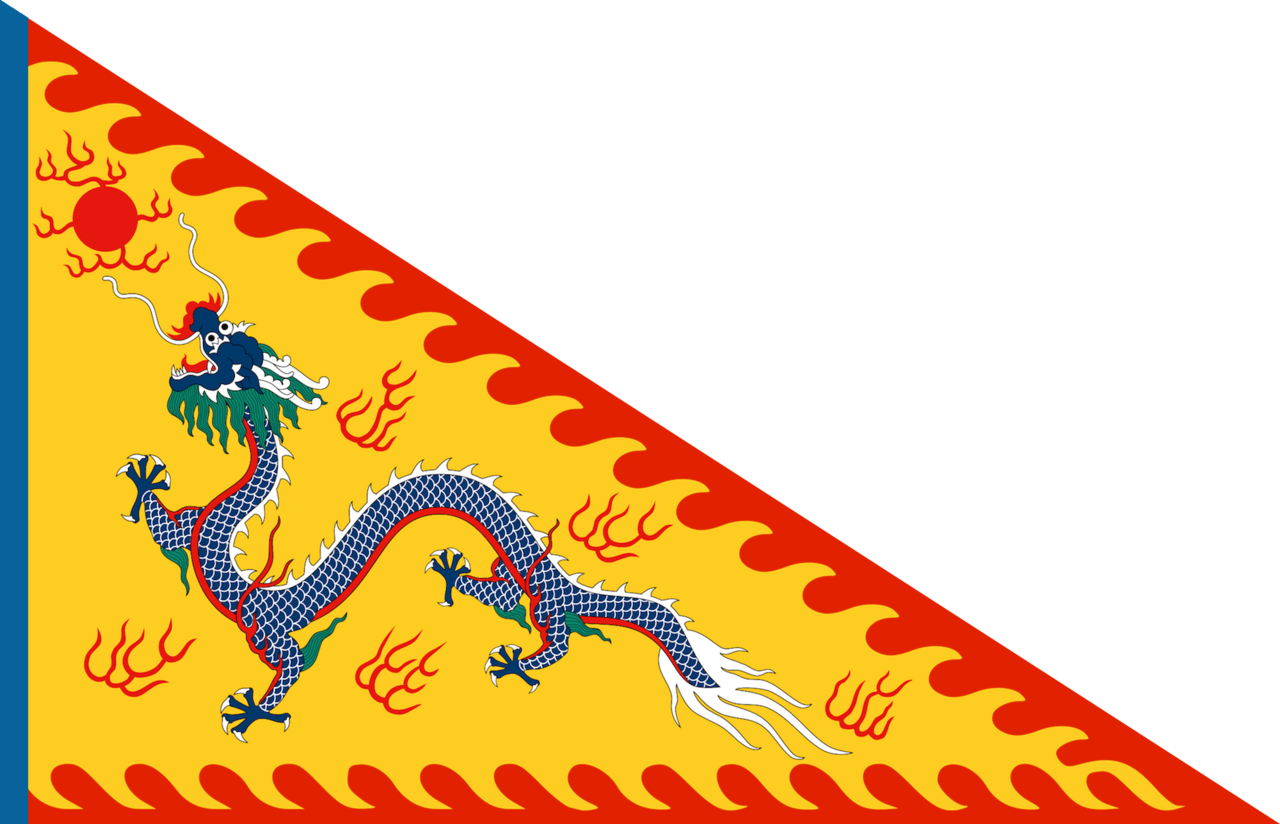
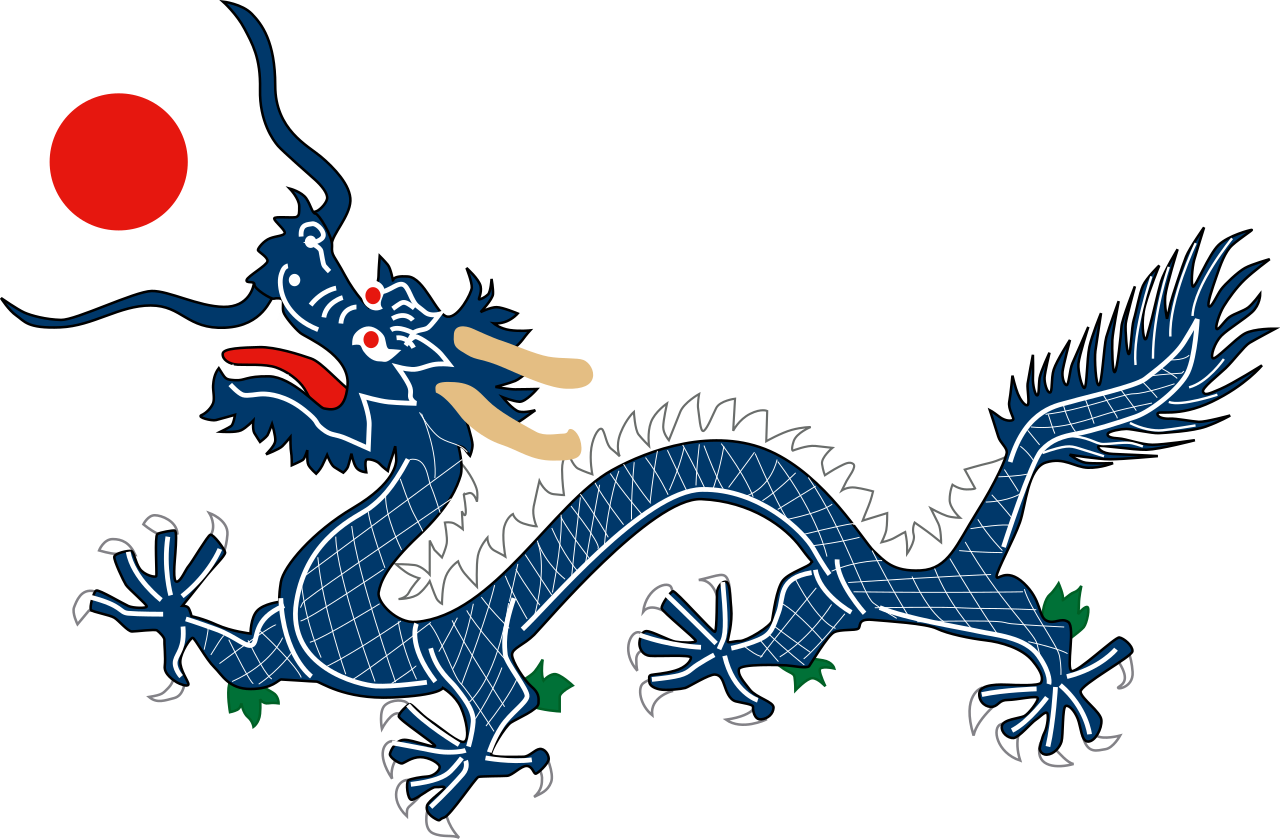

Frequently Asked Questions
What is the Flag of the Qing dynasty in dragon art history?
It is the Yellow Dragon Flag, an azure dragon rendered on a plain yellow field with a small red flaming pearl in the upper-left corner. It served as China's first official national flag during the Qing period.
When was the Flag of the Qing dynasty formally adopted?
A triangular version first appeared in 1862, and the rectangular form was officially sanctioned by imperial decree in 1888. The flag remained in use until it was retired in early 1912.
What are the key design elements of the dragon on the Qing flag?
The design places a single blue-green (azure) dragon across a solid yellow background, with a red flaming pearl positioned in the upper-left corner. The yellow field echoes the Plain Yellow Banner of the Eight Banners system and the long imperial association of yellow with the emperor's household.
Why is the Flag of the Qing dynasty significant for fans of dragon imagery?
It is the earliest example of a sovereign nation choosing a dragon as its central national emblem, making it a landmark in how the creature was deployed as a state symbol. Its adoption in 1888 marked the first time China had an official national flag at all.
What happened to the Flag of the Qing dynasty at the end of the dynasty?
On January 10, 1912, the Yellow Dragon Flag was formally replaced by the Five-Colored Flag. Shortly after, on February 12, Emperor Puyi's abdication ended Qing rule and the flag's official use.
More in Dragons in art 1-20
Spotted an error? Know more?
Reader corrections go straight into our review queue. Suggest an edit · How this site is sourced