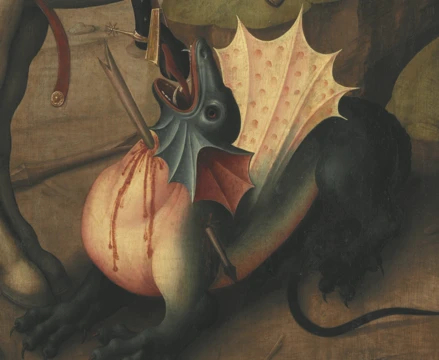
"Dragons" armchair
Lacquered armchair with dragon motifs, set a 2009 auction record.

Wikimedia Commons · Public domain
The "Dragons" armchair, also known as the "Fauteuil aux Dragons," is an upholstered wooden seat created by Irish designer Eileen Gray from 1917 to 1919. Its defining feature is a pair of stylized, lacquered dragons. In 2009, the chair sold for €21,905,000 ($28.5 million), setting a new auction record for 20th-century decorative art.
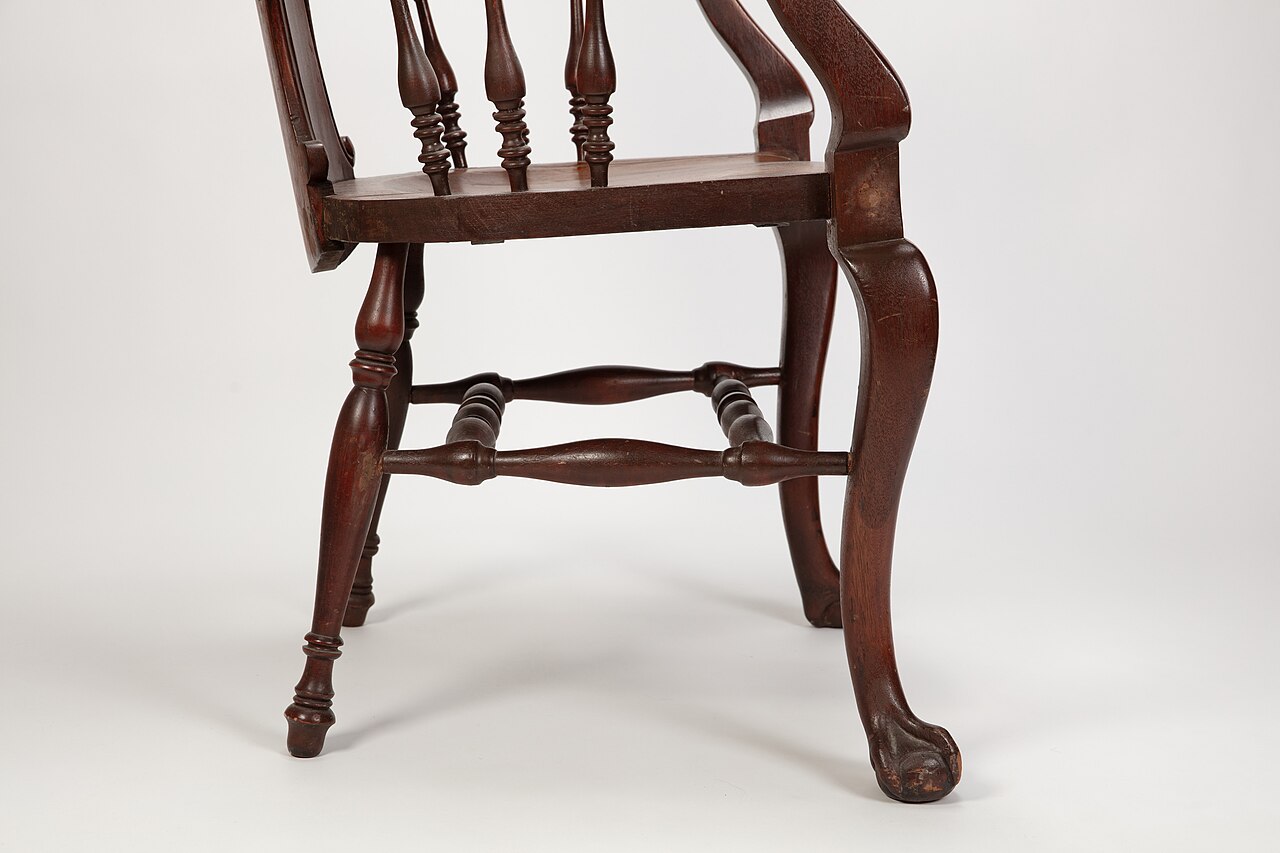
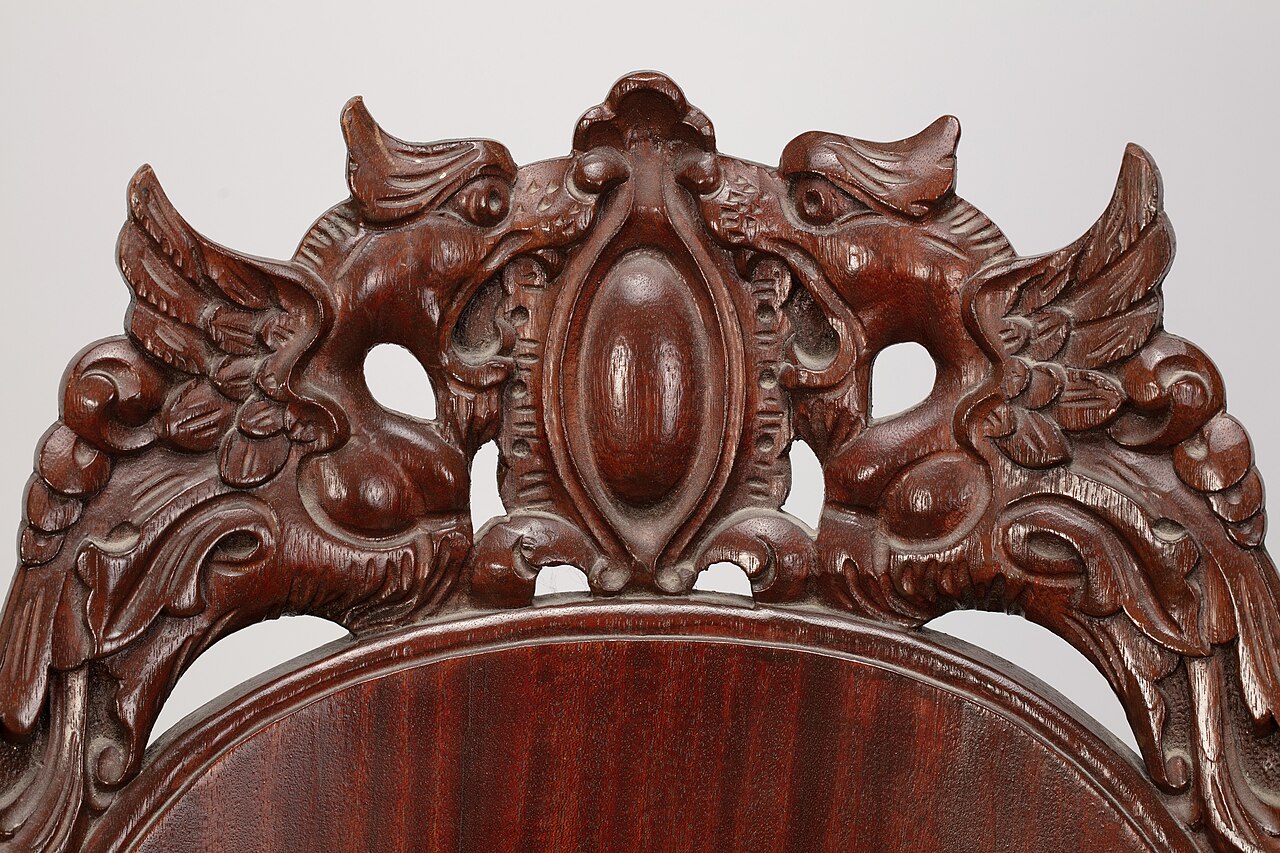
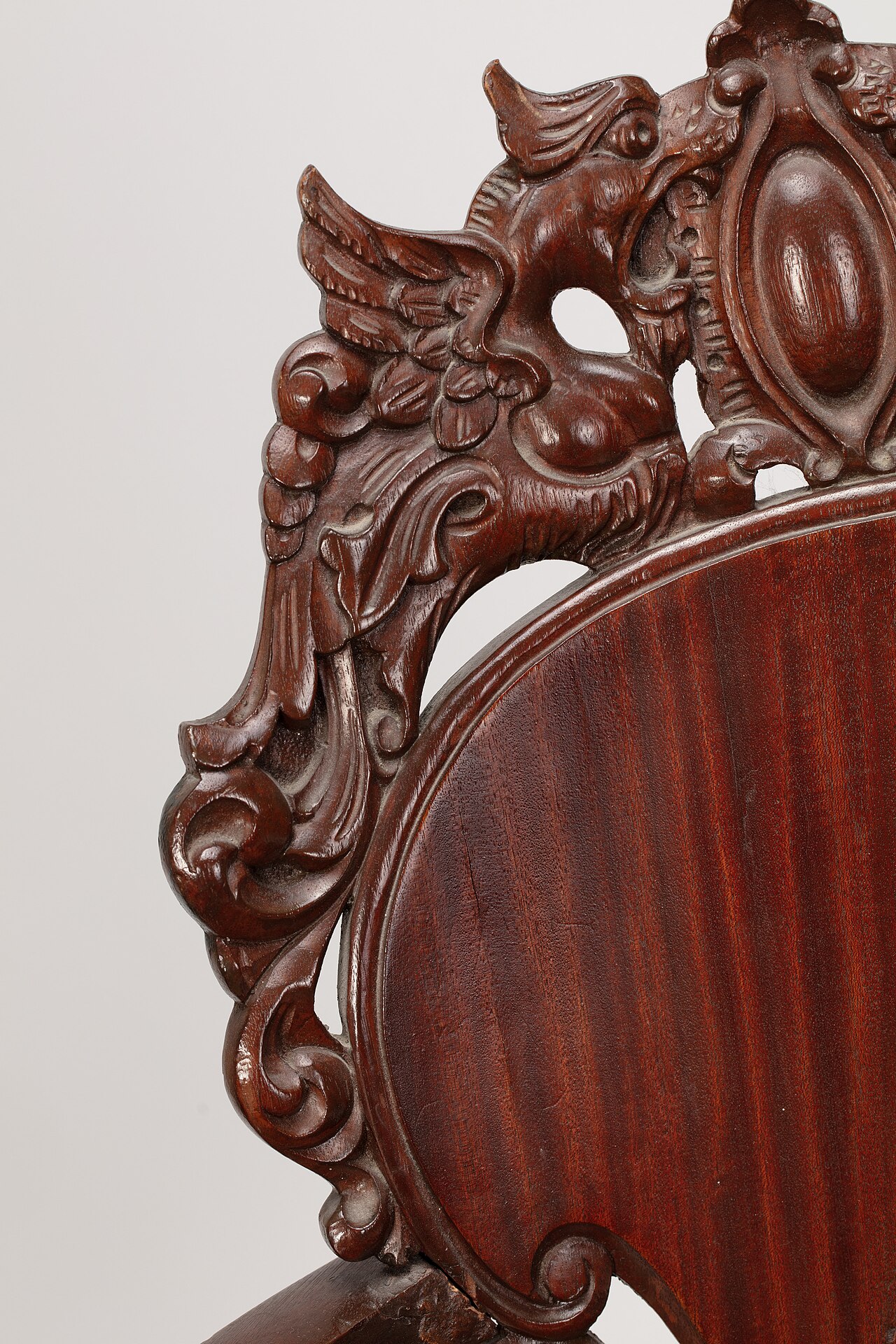
The chair measures 61 by 91 cm. Its frame is sculpted wood, lacquered in brownish orange and silver, and upholstered in brown leather. The design depicts two intertwined dragons with serpentine bodies, their eyes rendered in black lacquer on white, and their bodies decorated with low-relief stylized clouds. Auction house Christie’s described the piece as resembling unfurling petals and praised it as a masterpiece of invention and execution. Curator Jennifer Goff called it a perfect example of Gray’s unique and eccentric style. The dragon and cloud motifs echo traditional Chinese art, while the flowing armrests, compared to a sea monster, inspired the chair’s name.
Gray hand-lacquered the chair, letting the lacquer set in her humid bathroom before spending days polishing it. The first owner was patron Suzanne Talbot. In 1971, Parisian dealer Cheska Vallois bought it for $2,700, then sold it to fashion designer Yves Saint Laurent in 1973. It was auctioned in February 2009 as part of the Saint Laurent and Pierre Bergé collection, with a pre-sale estimate of €2–3 million. It sold for €21,905,000, beating the previous record by $22 million. Vallois repurchased the chair, later saying the cost was “the price of desire,” and acquired it for an unknown third party, not the Kravises as initially reported.
- Designer
- Eileen Gray
- Nationality
- Irish
- Field
- Architecture and design
- Created
- 1917–1919
- Known for
- Record-breaking 20th century decorative art piece
Lore & Background
Eileen Gray, an Irish architect and designer, created the "Dragons" armchair between 1917 and 1919. She lacquered the piece by hand, letting the lacquer set in her humid bathroom before spending days polishing it. The chair features two stylized dragons with eyes in black lacquer on a white ground, their bodies decorated in low relief with stylised clouds, and the frame is sculpted wood lacquered brownish orange and silver.
Reader's Guide
The "Dragons" armchair is a significant work in 20th century decorative art, representing the early expressive phase of Eileen Gray's career. Its design, described by Christie's as distilling "all that was so personal and so magical" in Gray's work, incorporates dragon imagery and clouds likened to traditional Chinese art. The chair's flowing armrests, compared to a sea monster, gave it its moniker. Its auction in 2009 for €21,905,000, far exceeding its pre-sale estimate of €2-3 million, set a new record for 20th century decorative art, beating the previous record by $22 million. The piece was acquired by dealer Cheska Vallois for an unknown third party, with Vallois calling the cost "the price of desire."
Did You Know?
- The chair sold for €21,905,000 ($28.5 million) in 2009, a record for 20th century decorative art.
- Gray lacquered the chair by hand and let it set in her humid bathroom before polishing for days.
- The chair's first owner was Gray's patron, Suzanne Talbot.
- The 2009 buyer was dealer Cheska Vallois, who acquired it for an unknown third party.
Design & Craftsmanship
The "Dragons" armchair is a compact piece measuring 61 by 91 centimetres, built around a wooden frame and upholstered in brown leather. Its most arresting feature is the pair of stylized dragons whose serpentine bodies intertwine to form the structural frame, finished in a warm brownish-orange lacquer with silver accents. The dragons' eyes are rendered in black lacquer set against a white ground, while their bodies carry low-relief decorations of stylized clouds. The overall silhouette has been likened to unfurling petals, and the ornately carved, flowing armrests evoke a sea monster — imagery that earned the chair its popular moniker. The dragon and cloud motifs draw clear parallels to traditional Chinese artistic iconography. Eileen Gray executed the lacquering entirely by hand, a process that involved allowing each coat to cure in the humidity of her bathroom before dedicating days to meticulous polishing. The work spanned roughly 1917 to 1919.
Provenance & Ownership
The chair's journey through private hands is as remarkable as its design. Eileen Gray, the Irish architect and designer who created the piece, first placed it in the possession of her patron, Suzanne Talbot. For decades the chair remained in private collections until Parisian art dealer Cheska Vallois acquired it in 1971 for a modest $2,700. Two years later, in 1973, Vallois passed it on to the renowned French fashion designer Yves Saint Laurent, who held it as part of his personal collection alongside his partner Pierre Bergé. The chair resurfaced in the public marketplace in February 2009 when Christie's in Paris included it in the auction of the Saint Laurent and Bergé collection. In a twist that underscored the piece's singular appeal, Vallois herself emerged as the successful bidder, purchasing it on behalf of an unnamed third party. Early reports mistakenly identified the buyer as Henry and Marie-Josée Kravis, but the true identity was never confirmed.
The Record-Breaking Auction
When the gavel fell at Christie's Paris in February 2009, the "Dragons" armchair fetched €21,905,000 — approximately $31,292,857 — a figure that shattered the previous record for any 20th-century decorative art object by roughly $22 million. The pre-sale estimate had placed the chair at a far more modest €2 to 3 million, making the final hammer price nearly ten times the upper bound. The dramatic overestimate reflected an extraordinary level of competitive demand for a single piece of early-20th-century design. Cheska Vallois, who had originally purchased the chair in 1971 and now reclaimed it after its passage through the Saint Laurent and Bergé collection, later reflected on the purchase by calling the sum "the price of desire." The sale cemented the chair's status not merely as a beautiful object but as the most expensive example of 20th-century decorative art ever to cross an auction block at that time.
Critical Reception & Legacy
Critics and curators have consistently positioned the "Dragons" armchair as a defining artifact of Eileen Gray's earliest creative period. Christie's own catalogue description praised the piece for distilling "all that was so personal and so magical" in the first, intimately expressive phase of Gray's career, calling it a "masterpiece of invention and execution" that is simultaneously surprising, imaginative, and subtly sculpted. Jennifer Goff, curator of the National Museum of Ireland's permanent exhibition of Gray's work, offered a complementary perspective, describing the chair as the "perfect example of the designer who created it — completely unique [and] rather eccentric." These assessments highlight how the chair encapsulates Gray's singular artistic voice: a fusion of organic, almost mythological forms with meticulous handcraft. The dragon-and-cloud vocabulary, the flowing sculptural lines, and the labor-intensive lacquering process all point to a maker operating outside conventional design orthodoxy, producing an object as individual and eccentric as its creator.
Gallery
Frequently Asked Questions
What is the "Dragons" armchair?
The "Dragons" armchair, also called the "Fauteuil aux Dragons," is an upholstered wooden seat whose most striking feature is a pair of stylized, lacquered dragons. It stands 61 by 91 cm and combines a sculpted wood frame with brown leather upholstery.
Who designed the "Dragons" armchair?
The chair was created by Eileen Gray, an Irish architect and designer, between 1917 and 1919. She is known for her work spanning both architecture and decorative design.
Why is the "Dragons" armchair so famous?
In 2009, the chair fetched €21,905,000 (roughly $28.5 million) at auction, establishing a new record for 20th-century decorative art. That price made it one of the most valuable pieces of modernist furniture ever sold.
How are the dragons depicted on the "Dragons" armchair?
Two dragons with serpentine bodies are shown intertwined, lacquered in brownish-orange and silver tones. Their eyes are rendered in black lacquer set against white, giving them a vivid, almost lifelike stare.
What materials and colors define the "Dragons" armchair?
The frame is sculpted wood finished in a brownish-orange and silver lacquer, while the seat is covered in brown leather. The overall palette keeps the piece warm and earthy despite the fantastical dragon motif.
More in Dragons in art 1-20
Spotted an error? Know more?
Reader corrections go straight into our review queue. Suggest an edit · How this site is sourced