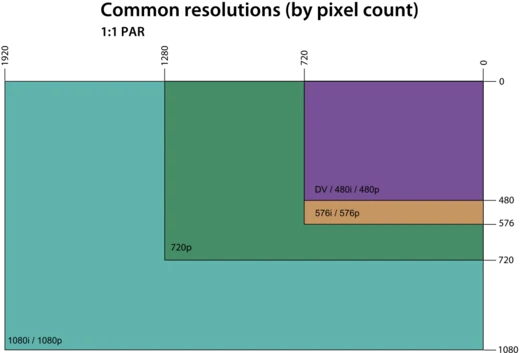
Hercules Graphics Card
Combined MDA text with bitmapped graphics, becoming a de facto standard.

Jörgen Nixdorf · CC BY-SA 3.0
The Hercules Graphics Card (HGC) was a graphics controller produced by Hercules Computer Technology, Inc. It merged IBM's text-only MDA display standard with a bitmapped graphics mode and included a parallel printer port, enabling a single card to deliver both sharp text and graphics. The HGC gained widespread popularity, becoming a de facto display standard on IBM PC compatibles, and remained in use even after more advanced systems appeared, particularly in dual-monitor configurations.
The card was introduced to address a gap in IBM's video offerings. When the IBM PC debuted in 1981, its two available graphics adapters—the Color Graphics Adapter (CGA) and the Monochrome Display And Printer Adapter (MDA)—had clear limitations. CGA offered low-resolution color (320×200) or medium-resolution monochrome (640×200) graphics, while MDA provided sharper text (equivalent to 720×350) but lacked per-pixel addressing and relied on a fixed character set. The market soon demanded a card combining high-resolution graphics and text. Van Suwannukul, founder of Hercules Computer Technology, created the HGC to work on his doctoral thesis using the Thai alphabet on an IBM PC, which was impossible with CGA's low resolution or MDA's fixed character set. It initially sold for $499 in 1982.
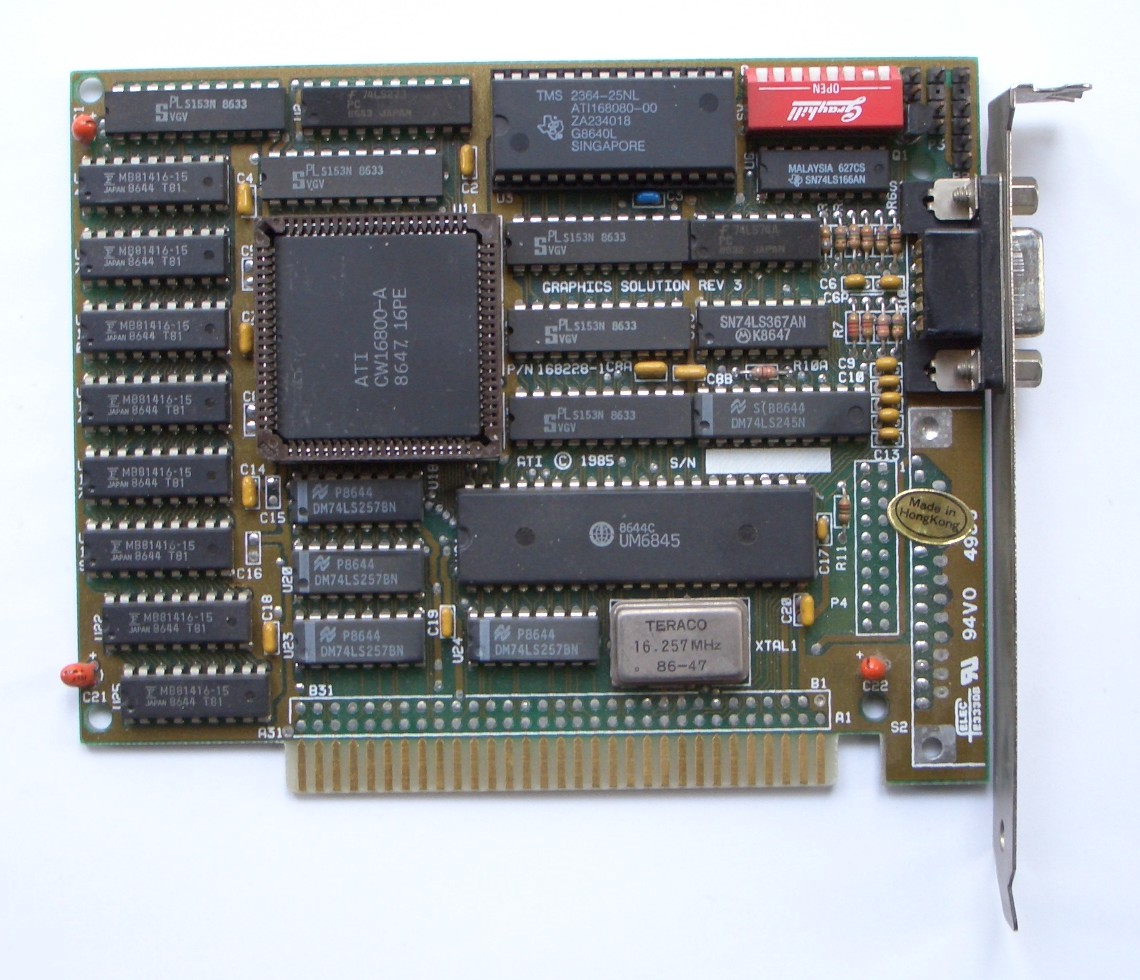
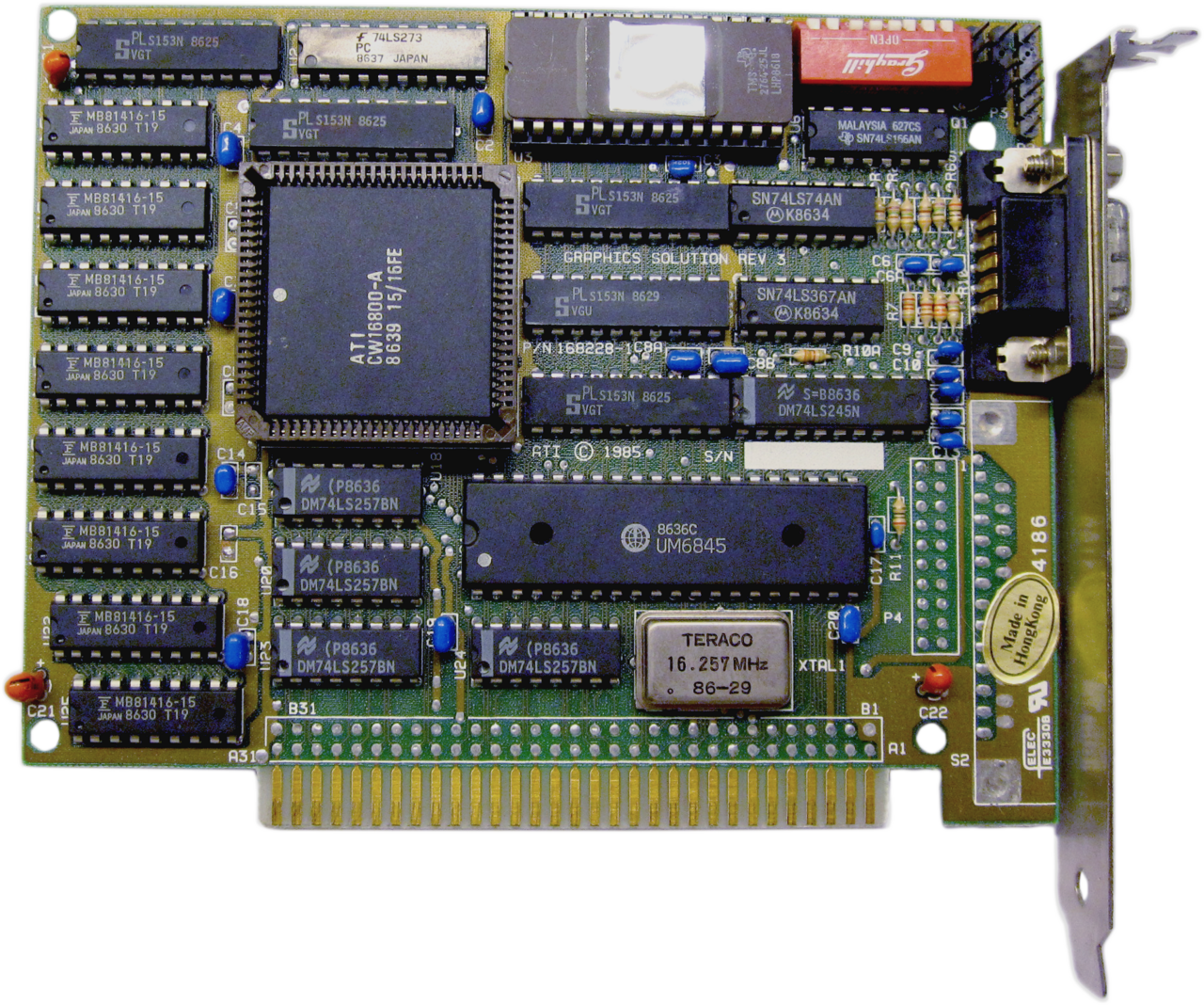
The original HGC was an 8-bit ISA card with 64 KB of RAM, visible as eight 4164 RAM chips, and a DE-9 output compatible with IBM monochrome monitors used with the MDA. Like the MDA, it included a parallel interface for a printer. Its video output was 5 V TTL, with a horizontal scanning frequency of 18.425 ± 0.500 kHz and a 50 Hz vertical refresh. The card operated at two slightly different frequency sets depending on whether it was in text or graphics mode, yielding different vertical refresh rates and aspect ratios due to changes in pixel clock and scanline count.
The HGC offered two modes: an 80×25 text mode with a 9×14 pixel font (effective resolution 720×350, MDA-compatible) and a 720×348 graphics mode with pixel-addressable graphics. The text mode used the same signal timing as MDA. The graphics mode resembled CGA's high-resolution (640×200) two-color mode; the video buffer held a packed-pixel bitmap (eight pixels per byte, one bit per pixel) with the same byte format and pixel-to-bit mapping as CGA's two-color graphics mode, and the buffer was split into interleaved banks.
Quick Facts
- Architecture
- Motorola 6845
- Entry
- Hercules Graphics Card
- Midrange
- Hercules Graphics Card Plus
- Highend
- Hercules InColor Card
- Predecessor
- MDA, CGA
- Successor
- Enhanced Graphics Adapter
Facts from the source article.
Lore & Background
The Hercules Graphics Card was released to fill a gap in the IBM video product lineup. When the IBM Personal Computer was launched in 1981, it had two graphics cards available: the Color Graphics Adapter (CGA) and the Monochrome Display And Printer Adapter (MDA). CGA offers low-resolution (320 × 200) color graphics and medium-resolution (640 × 200) monochrome graphics, while MDA offers a sharper text mode (equivalent to 720 × 350) but has no per-pixel addressing modes and is limited to a fixed character set. These adapters were quickly found to be inadequate by the market, creating a demand for a card that offers high-resolution graphics and text. The founder of Hercules Computer Technology, Van Suwannukul, created the Hercules Graphics Card so that he could work on his doctoral thesis on an IBM PC using the Thai alphabet, impossible with the low resolution of CGA or the fixed character set of MDA.
The original HGC is an 8-bit ISA card with 64 KB of RAM, visible on the board as eight 4164 RAM chips, and a DE-9 output compatible with the IBM monochrome monitor used with the MDA. Like the MDA, it includes a parallel interface for attaching a printer. The video output is 5 V TTL, as with the MDA card. Nominally, the Hercules card provides a horizontal scanning frequency of 18.425 ± 0.500 kHz and 50 Hz vertical. It runs at two slightly different sets of frequencies depending on whether in text or graphics mode, providing a different vertical refresh rate and a different aspect ratio via a different pixel clock and number of scanlines.
The Hercules card provides two modes: 80 × 25 text mode with 9 × 14 pixel font (effective resolution of 720 × 350, MDA-compatible) and 720 × 348 graphics mode (pixel-addressable graphics). The text mode uses the same signal timing as the MDA text mode. The graphics mode is similar to the CGA high-resolution (640 × 200) two-color mode; the video buffer contains a packed-pixel bitmap with the same byte format and byte order as the CGA two-color graphics mode, and the video buffer is also split into interleaved banks. However, because there are more than 256 scanlines and the display buffer size is nearly 32 KB, four interleaved banks are used instead of two. Each scanline has 90 bytes of pixel data instead of 80. The 64 KB RAM can hold two graphics display pages.
Reader's Guide
The Hercules Graphics Card was very successful, especially after Lotus 1-2-3 supported it, with one-half million units sold by 1985. As of June 1986 Hercules-compatible graphics cards shipped as standard hardware with most PC clones. As a de facto standard, support in software was widespread; InfoWorld in March 1986 named Hercules one of four industry standards along with IBM's MDA, CGA, and Enhanced Graphics Adapter (EGA), despite Hercules's inability, unlike IBM, to sell cards with its own computers. Not until EGA did an industry standard exist combining color graphics and high-quality text. Popular IBM PC programs such as Lotus 1-2-3 spreadsheet, AutoCAD computer-aided drafting, PageMaker and Xerox Ventura desktop publishing, and Microsoft Flight Simulator 2.0 came with their own drivers to use the Hercules graphics mode. Though the graphics mode is not CGA-compatible, it is similar enough that with third-party terminate-and-stay-resident programs it can also work with programs written for the CGA card's standard graphics modes. As the Hercules card does not actually have color-generating circuitry, nor can it connect to a color monitor, color appears as simulated grayscale in varying dithering patterns. Clones of the Hercules appeared, including generic models at very low prices, usually without the printer port. Hercules advertisements implied that use of generic Hercules clones can damage the monitor, and illicitly copied Hercules technology.
Did You Know?
- The Hercules Graphics Card was created by Van Suwannukul so he could work on his doctoral thesis using the Thai alphabet.
- The HGC's graphics mode uses four interleaved banks of video memory, unlike the two banks used in CGA modes.
- The HGC was named one of four industry standards by InfoWorld in March 1986, alongside IBM's MDA, CGA, and EGA.
- The original HGC retailed in 1982 for $499.
A Personal Need That Became an Industry Standard
The Hercules Graphics Card originated not from a corporate product roadmap but from a single engineer's academic frustration. Van Suwannukul, who would go on to found Hercules Computer Technology, needed to work on his doctoral thesis using the Thai alphabet on an IBM PC. The two video options IBM shipped with its 1981 Personal Computer simply could not accommodate this task. The Color Graphics Adapter delivered color but at a coarse 320-by-200 resolution, while the Monochrome Display Adapter offered sharper text through a fixed character set that had no room for Thai script. Suwannukul's solution was to build a card that married MDA's crisp text rendering with a true bitmapped graphics mode, all on a single board. The result debuted in 1982 at a retail price of $499, and it immediately addressed a gap that IBM's own lineup had left open. What began as a personal workaround for a non-Latin alphabet quickly resonated far beyond its creator's laboratory, setting the stage for one of the most widely adopted display standards in early PC history.
Engineering a Dual-Mode Display
The original Hercules board was an 8-bit ISA card carrying 64 KB of video memory, physically visible as eight 4164 RAM chips soldered to the board. It presented a DE-9 connector matching the IBM monochrome monitor used with the MDA, and like its MDA predecessor it included a parallel printer port. The card operated in two distinct modes. In text mode it produced an 80-by-25 grid using a 9-by-14 pixel font, yielding an effective 720-by-350 resolution with signal timing identical to the MDA. In graphics mode it delivered a pixel-addressable 720-by-348 bitmap. The graphics buffer stored packed pixels—eight per byte, one bit per pixel—using the same byte format and pixel-to-bit mapping as CGA's two-color mode. However, because the Hercules display exceeded 256 scanlines and required nearly 32 KB of buffer space, the memory was organized into four interleaved 8 KB banks rather than CGA's two. Each scanline carried 90 bytes of pixel data instead of CGA's 80. The full 64 KB of RAM could hold two complete graphics pages, switchable via a single bit in the Mode Control Register.
Software Ecosystem and Market Dominance
Because the PC BIOS offered no native support for the Hercules graphics mode, developers had to build their own pathways. Hercules itself shipped HBASIC extensions for IBM Advanced BASIC and a software library called Graph X that provided graphical primitives. Major applications followed suit: Lotus 1-2-3, AutoCAD, PageMaker, Xerox Ventura, and Microsoft Flight Simulator 2.0 each bundled dedicated Hercules drivers. The card's graphics format was close enough to CGA's two-color modes that third-party terminate-and-stay-resident programs could bridge the gap, letting CGA-targeted software run on Hercules hardware. Color, naturally, was absent—the card had no color-generating circuitry—so any color output appeared as dithered grayscale. The commercial impact was enormous. By 1985, half a million units had sold, a figure accelerated by Lotus 1-2-3's adoption. By mid-1986, most PC clone manufacturers shipped Hercules-compatible hardware as standard. InfoWorld named it one of only four industry display standards that year, alongside IBM's MDA, CGA, and EGA, a remarkable achievement for a company that sold no computers of its own.
Iterations, Clones, and Enduring Presence
Hercules refined its original design across several revisions: the 1982 GB100 board was followed by the GB101 in 1983, the GB102 in 1984, and the GB102Z in 1988. A more substantial leap came in June 1986 with the Hercules Graphics Card Plus, priced at $299. The HGC+ introduced RAMFONT, a redefinable font capability in MDA-compatible text mode, and was built around a specialty chip designed in-house by Hercules rather than the standard components of the original card. Software such as Lotus 1-2-3 version 2, Symphony 1.1, Framework II, and Microsoft Word 3 supported the enhanced text features. The card's success also spawned a wave of low-cost generic clones, typically omitting the printer port. Hercules's advertising warned that these unlicensed copies could damage monitors and constituted theft of proprietary technology. Despite the arrival of more capable standards like EGA, which finally combined color graphics with high-quality text, the Hercules format persisted well beyond its technical prime, finding a lasting niche in dual-monitor configurations where its reliable monochrome text output remained a practical choice.
Gallery

Frequently Asked Questions
What is the Hercules Graphics Card?
The Hercules Graphics Card (HGC) is a video controller manufactured by Hercules Computer Technology, Inc., released in 1982. It was designed to fill a gap in IBM's display lineup by combining sharp MDA-style text rendering with a dedicated bitmapped graphics mode on a single board.
What made the HGC different from IBM's MDA and CGA?
Unlike MDA, which handled text only, and CGA, which offered color graphics at the expense of text clarity, the HGC delivered both crisp monochrome text at 720×350 and a 720×348 graphics mode using 64 KB of onboard RAM. It also bundled a parallel printer port, so one card covered both display and printing.
How much did the Hercules Graphics Card cost at launch?
The HGC hit the market in 1982 at a retail price of $499. By 1985, roughly half a million units had been sold, cementing its status as a go-to display option for IBM PC compatibles.
Why did the Hercules Graphics Card become a de facto standard?
Because it paired the clean, high-contrast text users expected from MDA with usable graphics in a single, affordable package, it became the default choice for many PC builders. Its popularity persisted well beyond its introduction, as it filled a niche that neither MDA nor CGA addressed on its own.
Is the Hercules Graphics Card still used today?
Although it was eventually superseded by more advanced adapters, the HGC lingered in niche setups, most notably as a secondary monitor in dual-display configurations where its simple, reliable text mode remained handy. Its legacy endures as one of the earliest examples of a combined text-and-graphics display standard on the IBM PC platform.
More in Display Standards 1-24
Spotted an error? Know more?
Reader corrections go straight into our review queue. Suggest an edit · How this site is sourced