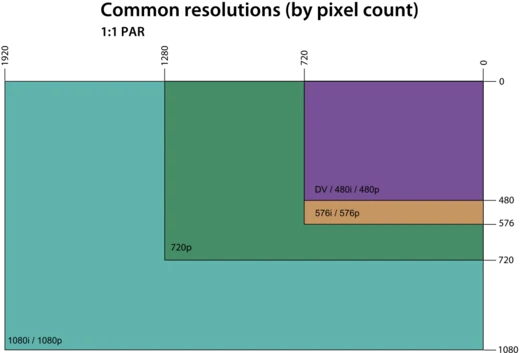
Enhanced Graphics Adapter
IBM's 1984 color graphics standard superseding CGA and preceding VGA.

Muhammad Avdol · CC BY-SA 4.0
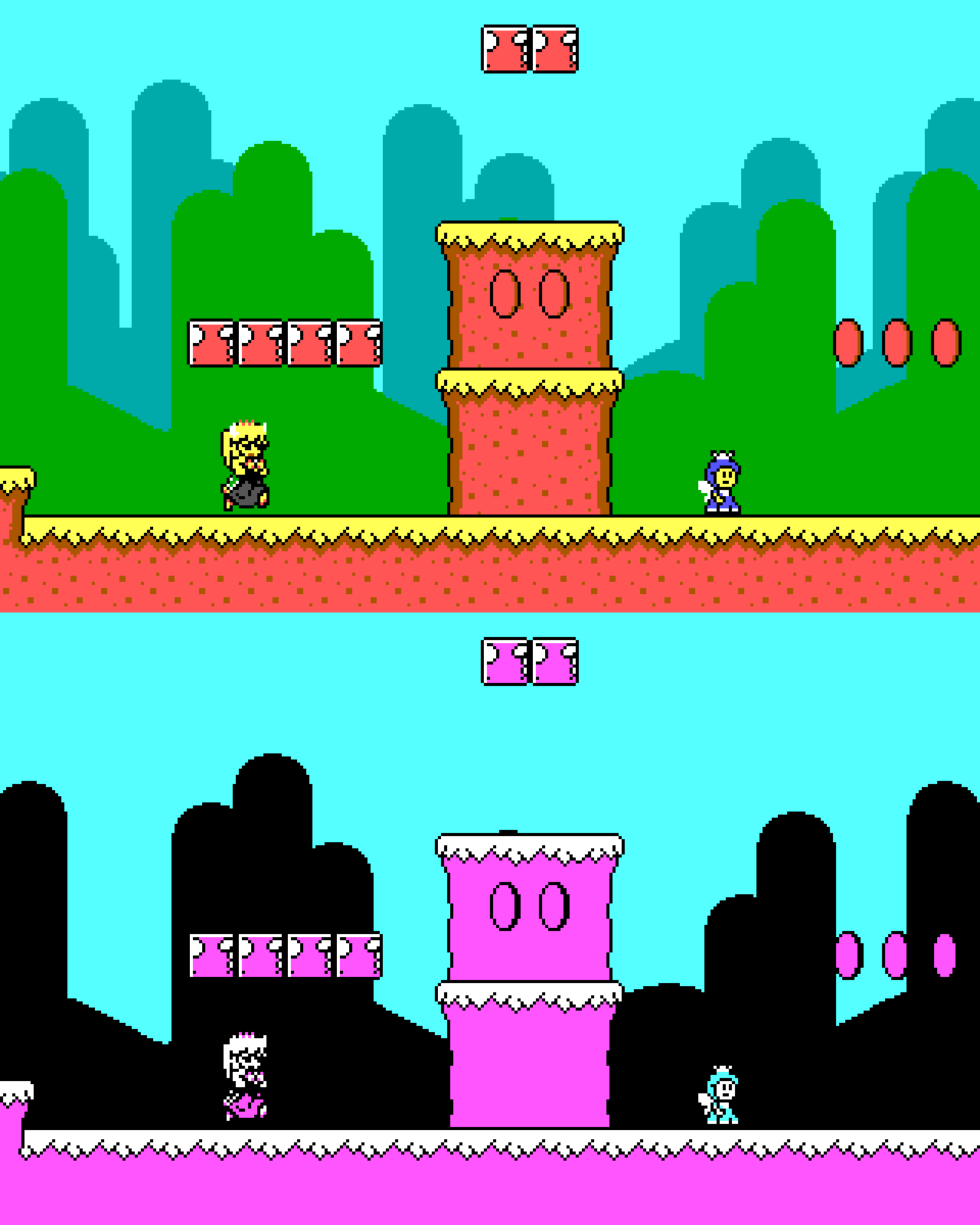
The Enhanced Graphics Adapter (EGA) is an IBM PC graphics adapter and de facto computer display standard introduced in 1984. It superseded the CGA standard and was itself superseded by VGA in 1987. EGA was notable as the first industry standard to include color graphics, offering up to 16 colors from a palette of 64 at resolutions up to 640×350 pixels.
Quick Facts
- Created
- October 1984
- Architecture
- Motorola 6845; Chips and Technologies 82C431, 82C432, 82C433, 82C434
- Entry
- IBM EGA card, Chips and Technologies, ATI EGA Wonder
- Midrange
- ATI EGA Wonder 800
- Highend
- ATI EGA Wonder 800+
- Predecessor
- Monochrome Display Adapter, Color Graphics Adapter
- Successor
- IBM 8514, Video Graphics Array
Facts from the source article.
Lore & Background
IBM introduced the Enhanced Graphics Adapter in October 1984, shortly after its new PC/AT. The IBM EGA card could be installed in earlier IBM PCs but required a ROM upgrade on the mainboard. Chips and Technologies' first product, announced in September 1985, was a four-chip EGA chipset that handled the functions of 19 of IBM's proprietary chips. By that November's COMDEX, more than a half dozen companies had announced EGA-compatible boards based on C&T's chipset. The first EGA-compatible board was Vega in December 1985, released by Video Seven and using C&T's chipset; it was half the length of the original IBM EGA board.
Between 1984 and 1987, several other third-party manufacturers produced compatible cards, such as the Autoswitch EGA or Genoa Systems' Super EGA chipset. The EGA standard was superseded in 1987 by the introduction of MCGA and VGA with the PS/2 computer line. The original IBM EGA is an 8-bit PC ISA card with 64 KB of onboard RAM; an optional daughterboard provided additional RAM up to 192 KB. Output was via direct-drive RGB, with no composite video output. MDA and CGA monitors could be driven, as well as newly released enhanced color monitors for use specifically with EGA.
EGA-specific monitors used a dual-sync design that could switch from 15.7 kHz for 200-line modes to 21.8 kHz for 350-line modes. Many EGA cards had DIP switches to select the monitor type. Some third-party cards were sold with 128 KB or up to 256 KB of RAM. A few third-party cards, such as the ATI Technologies EGA Wonder, expanded on the standard to offer extended graphics modes as high as 800×560 and automatic monitor type detection.
Reader's Guide
The EGA standard was significant as the first color graphics standard for the IBM PC, bridging the gap between the limited CGA and the later VGA. While Hercules graphics existed as an industry standard combining high-quality text and monochrome graphics, EGA was the first such standard including color graphics. By 1985 InfoWorld described EGA as the 'next graphics standard,' but with 'sluggish sales' because of high cost and lack of software support. Developers complained that the graphics technology was slow, but commercial software began supporting EGA soon after its introduction, with The Ancient Art of War in 1984 and several titles in 1985 including Microsoft Flight Simulator v2.12 and Windows 1.0.
The first clone boards appeared in late 1985, lowering EGA's cost. By mid-1986, EGA was the most popular standard for business graphics; by 1987, EGA software support was commonplace. Most software through the early 1990s could run in EGA, although the vast majority of commercial games used 320×200 with 16 colors for backward compatibility. EGA's 16-color graphic modes used bit planes and mask registers together with CPU bitwise operations for accelerated graphics, techniques that went on to be used in VGA. The standard's legacy includes its palette of 64 colors, which VGA later expanded upon by mapping each of the 64 colors from a larger customizable palette of 256.
Did You Know?
- The first EGA-compatible board, the Vega, was released in December 1985 by Video Seven and was half the length of the original IBM EGA board.
- EGA-specific monitors used a dual-sync design that could switch between 15.7 kHz for 200-line modes and 21.8 kHz for 350-line modes.
- The EGA palette consists of 64 colors, using two bits each for red, green, and blue.
- Some third-party EGA cards offered extended graphics modes as high as 800×560.
Origins & Market Introduction
IBM unveiled the Enhanced Graphics Adapter in October 1984, timing its debut alongside the new PC/AT platform. The card could be retrofitted into earlier IBM PC machines, though doing so demanded a ROM upgrade on the existing mainboard. Despite this flexibility, initial market response was notably tepid. InfoWorld, writing in 1985, characterized EGA as the 'next graphics standard' while simultaneously flagging slow uptake driven by the adapter's high price tag and a thin library of compatible software. Developers voiced frustration over the technology's sluggish performance, and the adapter's complexity reportedly slowed vendors' willingness to write supporting code. Nevertheless, commercial software began appearing within months: The Ancient Art of War shipped in 1984 with EGA support, and by 1985 titles like Microsoft Flight Simulator v2.12, Jet, Silent Service, and Cyrus all included EGA modes. Windows 1.0 also offered support that year, signaling that the platform was gaining genuine traction even before clone boards arrived to drive prices down.
The Clone Revolution & Third-Party Ecosystem
The EGA specification's true commercial breakthrough came not from IBM but from the broader third-party ecosystem. Chips and Technologies announced its first product in September 1985: a four-chip EGA chipset that consolidated the functions of nineteen proprietary IBM chips onto a single integrated package. By the following November's COMDEX show, more than half a dozen companies had announced compatible boards built around C&T's design. Video Seven's Vega, released in December 1985, became the first EGA-compatible board, measuring roughly half the physical length of IBM's original card. Other manufacturers followed with their own offerings, including the Autoswitch EGA and Genoa Systems' Super EGA chipset. The flood of clone boards dramatically reduced the adapter's cost, and by mid-1986 EGA had become the dominant standard for business graphics. By 1987, software support was so widespread that EGA had effectively become the baseline expectation for any color-capable PC, just before VGA arrived to supplant it.
Technical Capabilities & Display Modes
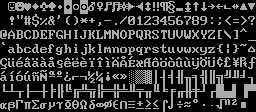
At its core, the EGA card was an 8-bit ISA board carrying 64 KB of onboard video RAM, with an optional daughter-board expanding capacity to as much as 192 KB. The adapter's custom CRT controller supported a range of resolutions: 320×200 and 640×200 for CGA-compatible displays, and 720×350, 640×350, and 320×350 for EGA-specific monitors. The flagship 640×350 mode offered 16 selectable colors drawn from a 64-color palette built from two bits per channel, though cards with only the base 64 KB of RAM were limited to four colors per pixel in that mode. EGA monitors employed a dual-sync design, switching between 15.7 kHz for 200-line modes and 21.8 kHz for 350-line modes, both at a 60 Hz vertical refresh. The adapter also used bit planes and mask registers with CPU bitwise operations to accelerate graphics rendering—a technique that would later carry directly into VGA. Output was direct-drive RGB, compatible with MDA, CGA, and the new enhanced EGA monitors, though composite video was not provided.
Legacy & Longevity in Software
Although IBM replaced EGA with MCGA and VGA in 1987 alongside the PS/2 line, the adapter's influence persisted far beyond its commercial lifespan. VGA and subsequent standards continued to support EGA graphics modes, ensuring that the resolution and palette combinations remained accessible to developers for years. Throughout the early 1990s, most PC software could still run in EGA modes, and the 320×200 resolution with 16 colors became a de facto convention for commercial games, chosen specifically for backward compatibility with CGA and Tandy machines and for users lacking an enhanced EGA monitor. The 350-line modes found a home primarily in freeware and shareware titles, with SimCity standing out as a notable commercial exception that utilized the 640×350, 16-color mode. The bit-plane acceleration techniques pioneered on EGA hardware became foundational to VGA's own graphics pipeline, embedding the adapter's architectural philosophy into every subsequent PC display standard that followed.
Gallery
Frequently Asked Questions
What is Enhanced Graphics Adapter and when was it introduced?
EGA is a graphics adapter standard that IBM launched in 1984 to replace the older CGA specification. It quickly became the de facto display baseline for IBM-compatible PCs throughout the mid-1980s.
What were EGA's maximum resolution and color capabilities?
The adapter supported up to 640 × 350 pixels and could display 16 colors simultaneously, chosen from a 64-color palette. That was a major leap over CGA's four-color limitation.
What display standard replaced Enhanced Graphics Adapter?
IBM's VGA standard, released in 1987, succeeded EGA and became the new baseline for PC graphics.
How much video memory did EGA carry?
It shipped with 64 KB of onboard video RAM, and an optional daughterboard could expand that total to 192 KB to support additional display modes.
Why do display-standards fans consider EGA a milestone?
It was the first widely adopted industry standard to deliver true color graphics to the PC, bridging the gap between CGA's crude palette and VGA's later 256-color support. Its 15.7 kHz and 21.8 kHz horizontal scan rates also set timing expectations for the monitors of that era.
More in Display Standards 1-24
Spotted an error? Know more?
Reader corrections go straight into our review queue. Suggest an edit · How this site is sourced