Extended Graphics Array
IBM's 1990 graphics card that defined the 1024×768 resolution.

Å ñtóñSûsî (Ð) · CC BY 3.0 de
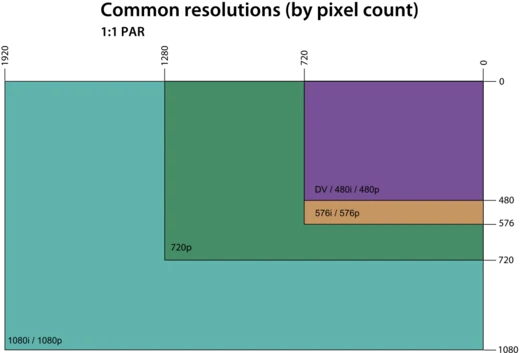
IBM’s eXtended Graphics Array, or XGA, debuted in 1990 as the follow-up to the 8514/A graphics card, built for the company’s PS/2 line of personal computers. It could drive a 1024×768 display with 256 colors in interlaced mode at 43.5 Hz, or a 640×480 screen with up to 65,536 colors in non-interlaced mode at 60 Hz. The XGA name later became shorthand for the 1024×768 resolution itself—much like VGA came to mean 640×480—even though the 8514/A and PGC cards had already supported those resolutions before the terms stuck.
The original XGA launched at $1,095 with 512 KB of VRAM; adding another 512 KB cost $350 extra (roughly $2,700 and $860 in 2025 dollars). Like the 8514/A, it required a Micro Channel Architecture bus at a time when ISA slots were the norm, but because IBM provided thorough documentation and licensing, ISA-based clones eventually appeared. XGA was also integrated directly onto the motherboard of the PS/2 Model 95 XP 486. An improved version, XGA-2, arrived in 1992 priced at $360 (about $830 today), adding an 800×600 mode with 65,536 colors and a non-interlaced 1024×768 mode at 60 Hz.
The card used the same standardized “Adapter Interface” (AI) API that the 8514/A had introduced—a system also adopted by IBM’s Image Adapter/A and clones like the ATI Mach 32 and IIT AGX. This API let software offload common 2D drawing tasks (line drawing, color fills, and block copies via a blitter) to the graphics hardware, freeing the host CPU and speeding up redraws for things like pie charts or CAD illustrations. Unlike the 8514/A, IBM released full hardware-level documentation for the XGA. It also introduced a 64×64 hardware sprite, typically used for the mouse pointer.
Key differences from the 8514/A included full register compatibility with VGA, a 132-column text mode, high-color support at 640×480, a minimum requirement of an 80386 host CPU, a 3D drawing space called a “bitmap” that could reside anywhere in system memory, a hardware cursor sprite, an Adapter Interface driver stored as a .SYS file instead of a TSR program, provisions for multitasking, bus-mastering capability to access system memory directly, and the aforementioned hardware documentation.
The XGA-2 upgrade made 1 MB of VRAM standard and added a programmable PLL circuit with pixel clocks up to 90 MHz, enabling a 75 Hz refresh rate at 1024×768.
Quick Facts
- Predecessor
- 8514/A
- Successor
- XGA-2
Facts from the source article.
Lore & Background
The XGA was introduced for the IBM PS/2 line of personal computers in 1990 as a successor to the 8514/A. It required a Micro Channel architecture bus at a time when ISA systems were standard, however due to more extensive documentation and licensing ISA clones of XGA were made. XGA was integrated into the motherboard of the PS/2 Model 95 XP 486. An improved version called XGA-2 was introduced in 1992 at $360.
The 8514 had used a standardised API called the 'Adapter Interface' or AI, which is also used by XGA, IBM Image Adapter/A, and clones such as the ATI Technologies Mach 32 and IIT AGX. The interface allows computer software to offload common 2D-drawing operations (line-draw, color-fill, and block copies via a blitter) onto the hardware. XGA introduced a 64x64 hardware sprite which was typically used for the mouse pointer. Hardware-level documentation of the XGA was also made, which had not been available for the 8514/A.
XGA-2 added support for non-interlaced 1024 × 768 and made 1MB VRAM standard. It had a programmable PLL circuit and pixel clocks up to 90 MHz, enabling a 75 Hz refresh rate at 1024 × 768. The 800 × 600 resolution was added with 16 bit high color support. The DAC was increased to 8 bits per channel, and the accelerated functions were enabled at 16 bit color depth. Faster VRAM also improved performance.
Reader's Guide
The XGA is notable for giving its name to the 1024 × 768 resolution, a standard that persisted for many years. Unlike its predecessor the 8514/A, IBM fully documented the hardware interface to XGA and licensed the design to SGS-Thomson (inmos) and Intel, enabling clones such as the IIT AGX014. The Adapter Interface API allowed software to offload 2D drawing operations, freeing the host CPU and improving redraw speed for graphics like pie charts or CAD illustrations. XGA also introduced a hardware sprite for the mouse cursor and could act as a bus master, accessing system memory directly. The VESA Group later introduced a common standardized way to access such features with VBE/accelerator functions (VBE/AF) in August 1996, which, along with standardised device drivers for operating systems such as Microsoft Windows, eliminated the need for a hardware standard for graphics. Later clone boards offered additional resolutions including 1280 × 1024 with 65,536 and 16.7M colors.
Did You Know?
- XGA was introduced at $1095 with 512K VRAM, equivalent to about $2700 in 2025.
- XGA required a Micro Channel architecture bus, though ISA clones were later made due to extensive documentation.
Hardware Acceleration & the Adapter Interface
The XGA's most distinctive architectural contribution was its reliance on the Adapter Interface, a standardized API inherited from the 8514/A that allowed software to delegate routine two-dimensional drawing tasks—line rendering, color fills, and block transfers via a hardware blitter—directly to the graphics card. By offloading these operations, the host processor was freed to handle other work, producing dramatic speed gains when redrawing complex visuals such as CAD illustrations or statistical charts. Beyond the AI, the card introduced a 64-by-64 hardware sprite, most commonly employed as the on-screen mouse cursor, and a three-dimensional drawing space termed a "bitmap" that could be placed anywhere in system memory. The XGA could also act as a bus master, reading and writing system memory without CPU mediation. IBM required a minimum 80386 processor, maintained register-level compatibility with VGA, added a 132-column text mode, and shifted the driver from a terminate-and-stay-resident program into a .SYS file with explicit provisions for multitasking environments.
Market Position, Licensing & the Clone Ecosystem
Launched in 1990 as the successor to the 8514/A, the XGA was priced at $1,095 with 512 KB of VRAM, and an additional 512 KB expansion cost another $350—roughly $2,700 and $860 in 2025 dollars. A significant barrier to adoption was its dependency on the Micro Channel Architecture bus, which at the time was far less common than the Industry Standard Architecture that dominated the PC market. However, IBM took a markedly different approach from its earlier 8514/A by publishing full hardware-level documentation and actively licensing the XGA design to third parties, including SGS-Thomson (inmos) and Intel. This openness spawned a wave of ISA-based clone boards, among them the ATI Technologies Mach 32 and the IIT AGX014, the latter offering XGA-2-level compatibility with extra enhancements. The card was also embedded directly into the motherboard of the PS/2 Model 95 XP 486, making it a built-in option for that high-end workstation rather than a purely add-on product.
The XGA-2: A Two-Year Leap Forward
In 1992 IBM released the XGA-2 at a considerably lower price of $360, roughly $830 in today's currency, signaling both maturation of the design and competitive pressure. The revision made 1 MB of VRAM standard and introduced a programmable phase-locked loop capable of generating pixel clocks up to 90 MHz, which unlocked a 75 Hz refresh rate at 1024 × 768—eliminating the interlaced-only limitation of the original. A new 800 × 600 mode with 16-bit high-color support was added, and the digital-to-analog converter was upgraded to 8 bits per channel, expanding the 640 × 480 palette from 262,144 to a full 16.7 million colors. Crucially, the hardware acceleration functions that had previously been restricted to 8-bit depth were now active at 16-bit color, and the faster VRAM delivered measurable performance gains. Clone manufacturers pushed the envelope further, with later boards offering true-color 640 × 480, 800 × 600 in 16.7 million colors, and even 1280 × 1024 at both 65,536 and 16.7 million color depths.
Naming a Resolution & the End of Hardware Standards
The XGA's most enduring cultural footprint is linguistic: just as IBM's VGA lent its name to the 640 × 480 resolution, the XGA became the common shorthand for 1024 × 768, even though the earlier 8514/A and PGC cards had already supported those pixel counts before the eponymous hardware existed. This naming convention persists in display specifications to this day. The broader technical legacy is more subtle. The Adapter Interface that powered XGA acceleration was shared across a family of cards—including the IBM Image Adapter/A, the ATI Mach 32, and the IIT AGX—establishing a pattern of hardware-offloaded 2D graphics that influenced subsequent generations. Yet by August 1996, the VESA Group had introduced VBE/AF, a standardized software layer for accessing hardware cursors, bit-block transfers, off-screen sprites, panning, and drawing functions. Combined with mature operating-system device drivers for platforms like Microsoft Windows, this software standardization effectively rendered the need for a dedicated hardware graphics standard obsolete, closing the era in which the XGA had been a defining force.
Gallery

Frequently Asked Questions
What is Extended Graphics Array (XGA)?
XGA is a graphics card that IBM released in 1990 for its PS/2 personal computers. It served as the direct successor to the 8514/A card and required the Micro Channel bus architecture to function.
What display modes does XGA support?
In interlaced mode at 43.5 Hz, it drives a 1024×768 panel with 256 colors. In non-interlaced mode at 60 Hz, it outputs 640×480 with up to 65,536 colors.
How much did the original XGA card cost at launch?
It carried a $1,095 price tag that included 512 KB of VRAM. An additional 512 KB memory expansion cost another $350 on top.
Why does the term 'XGA' still mean 1024×768 today?
The name became a convenient shorthand for that resolution, much the way 'VGA' came to stand for 640×480. This happened even though earlier IBM cards like the 8514/A and PGC already handled those pixel counts before the label stuck.
What made XGA a notable step for IBM's PS/2 line?
It gave PS/2 users a dedicated, higher-resolution graphics option that went beyond what the 8514/A had offered. By packaging 1024×768 as a branded standard, IBM helped cement that resolution as a recognizable tier in PC display terminology.
More in Display Standards 1-24
Spotted an error? Know more?
Reader corrections go straight into our review queue. Suggest an edit · How this site is sourced