
Pan-Nigerian alphabet
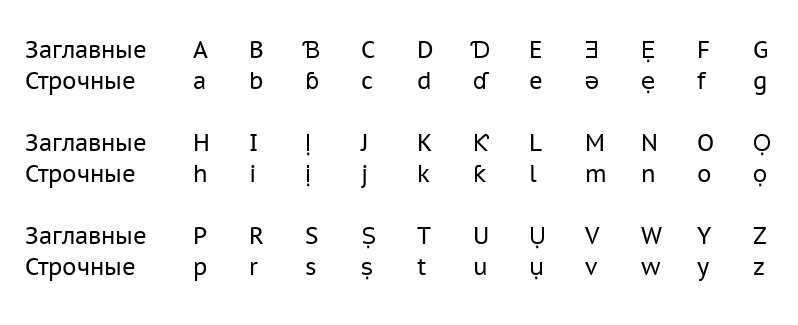
A 33-letter Latin alphabet for all Nigerian languages.

Slashme · CC BY-SA 4.0
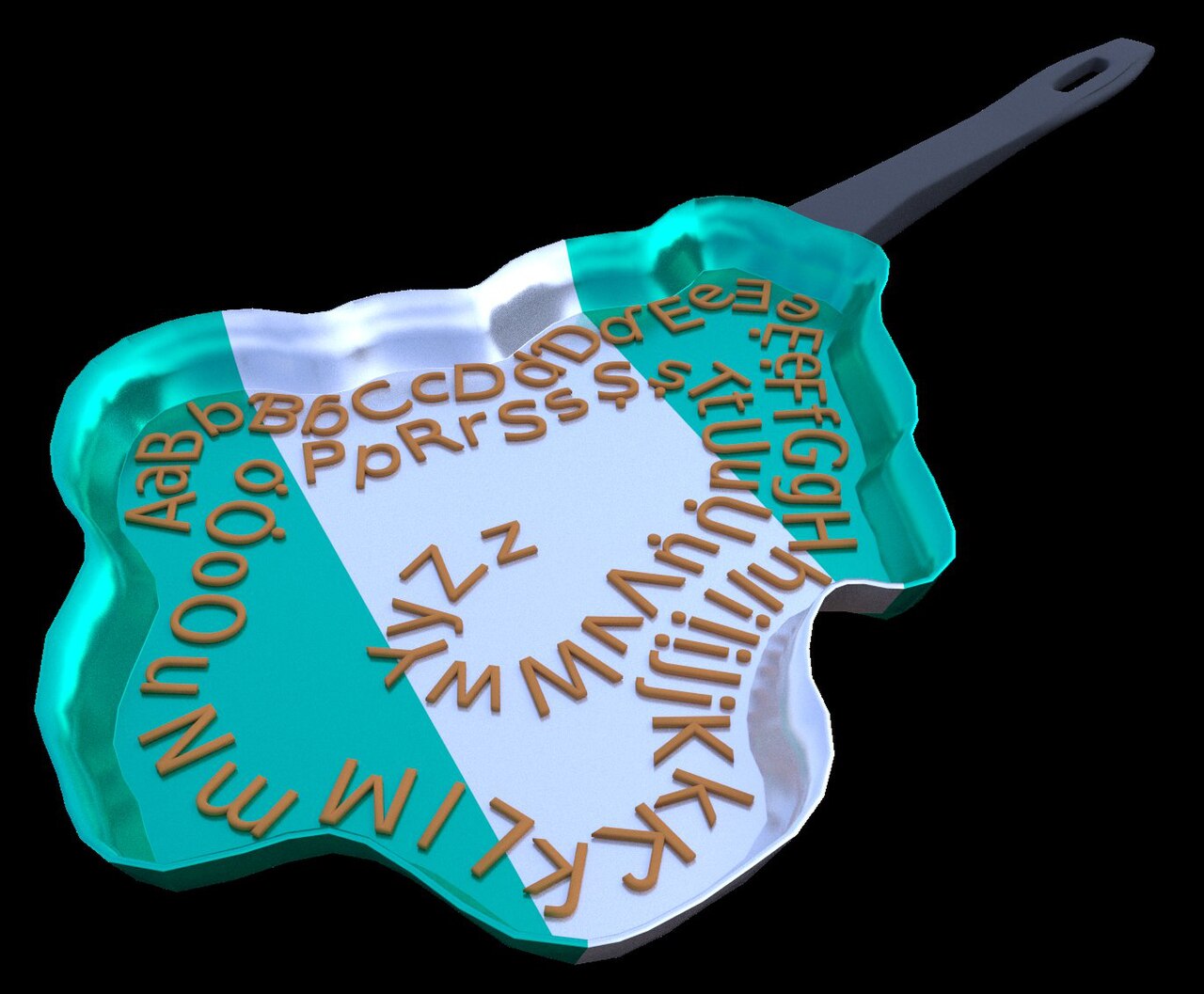
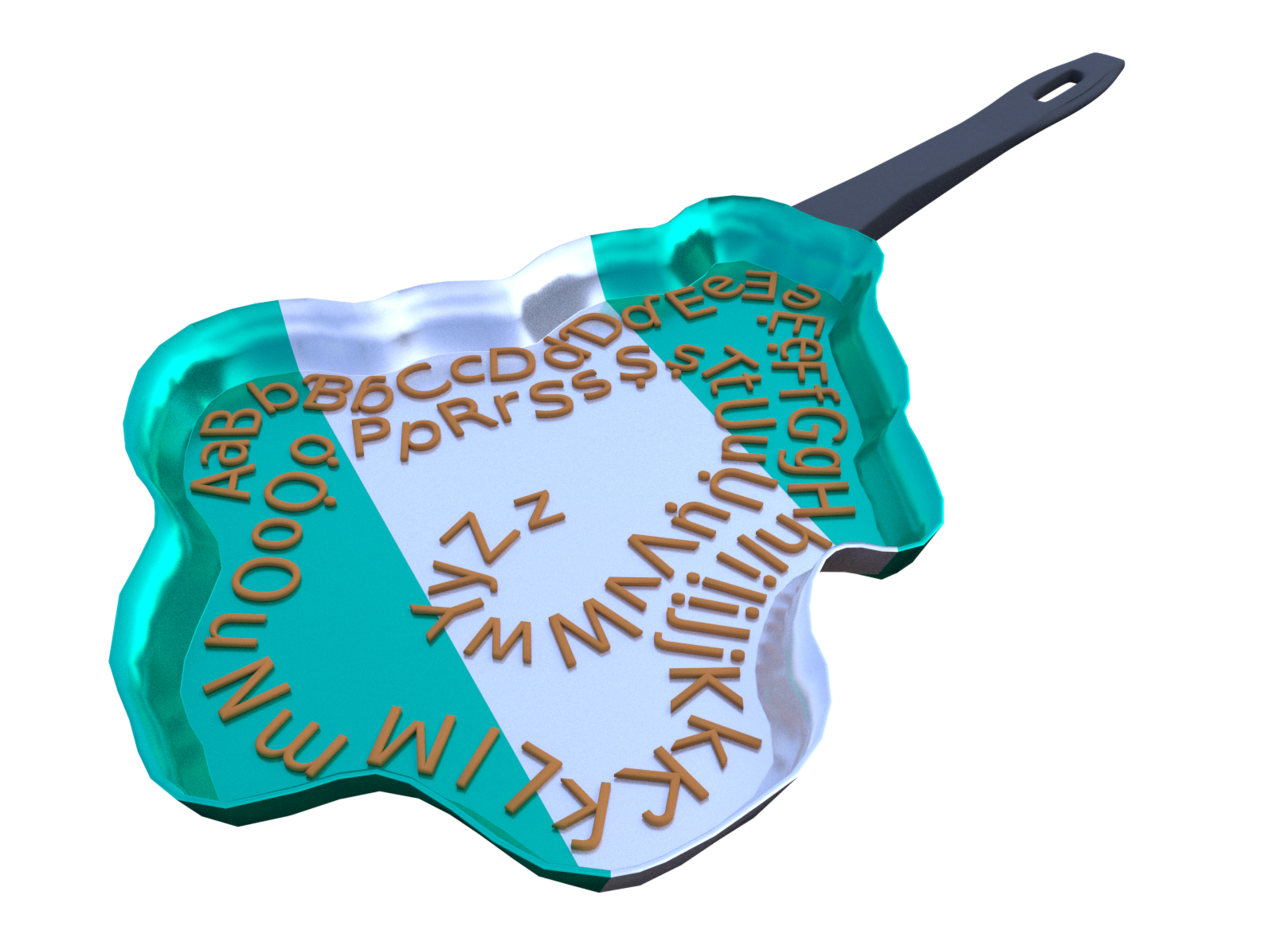
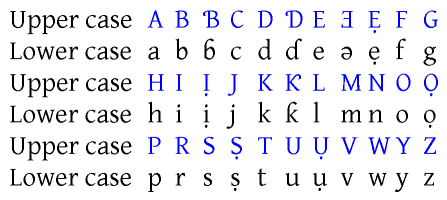
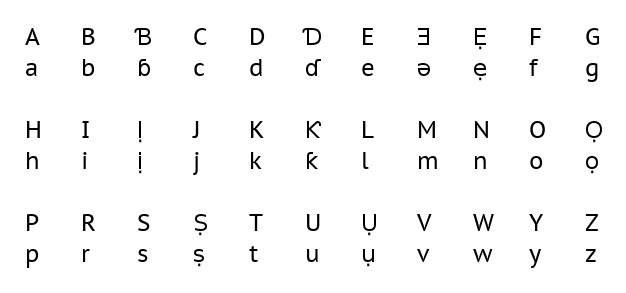
The Pan-Nigerian alphabet is a collection of 33 Latin letters, standardized during the 1980s by Nigeria’s National Language Centre. Its goal is to provide a single writing system for all of the country’s languages, eliminating the need for digraphs.
Nigeria is home to several hundred languages, each previously using its own Latin alphabet. This variety made it impractical to produce typewriters for the Nigerian market. In the 1980s, the National Language Centre set out to create a unified alphabet that could handle all local languages and replace the use of Arabic script. Their work began with a model proposed by linguist Kay Williamson in 1981. A typeface was later developed between 1985 and 1986 by Edward Oguejofor and Victor Manfredi, working with the NLC and with technical help from Hermann Zapf.
To indicate tone, three diacritics are used: the acute accent (´) for High tone, the grave accent (`) for Low tone, and the circumflex (ˆ) for Falling tone. Mid tone—in languages that distinguish High, Mid, and Low—is left unmarked.
A typewriter keyboard for the alphabet was produced by Olivetti for the NLC. On that layout, the letters Q and X were omitted because they are not part of the alphabet, and the digits 0 and 1 had to be typed using the capital letters O and I. Keys that were missing on the typewriter are shown in grey on modern computer keyboards. On a modern computer keyboard, the digits 0 and 1 are placed on the unshifted positions of the top row, like other digits, and the letter Q is mapped as on standard QWERTY layouts. However, dead keys originally at the start of the first and second rows need to be moved to the 102nd key at the start of the first row (which reduces the width of the left Shift key) and to the shifted position of the new key assigned to digit 0 on the first row. In all cases, the Enter key may be either an L-shaped key spanning two rows or a horizontal key on the third row only (which moves the key for the letter Ǝ to the end of the second row).
Several onscreen smartphone keyboards—including Swiftkey, Touchpal, Multiling, and African keyboards—offer full support for the Pan-Nigerian alphabet.
- Standardised by
- National Language Centre of Nigeria
- Decade of standardisation
- 1980s
- Number of letters
- 33
- Typeface developed by
- Edward Oguejofor and Victor Manfredi
- Typeface developed with technical assist
- Hermann Zapf
- Typeface development period
- 1985–1986
- Keyboard produced by
- Olivetti
Lore & Background
The Pan-Nigerian alphabet was developed because several hundred different languages are spoken in Nigeria, and the different Latin alphabets made it impractical to create Nigerian typewriters. In the 1980s the National Language Centre undertook to develop a single alphabet suitable for writing all the languages of the country, replacing use of Arabic script, taking as its starting point a model proposed by linguist Kay Williamson in 1981. A typeface was developed in 1985–1986 by Edward Oguejofor and Victor Manfredi, in co-operation with the NLC, with technical assistance from Hermann Zapf.
The alphabet uses the acute, grave, and circumflex accents to mark High, Low, and Falling tone respectively; Mid tone is left unmarked. A typewriter keyboard was produced for the NLC by Olivetti. On that layout the letters Q and X were not mapped as they were not part of the alphabet, and digits 0 or 1 had to be entered as capital letters O and I. Keys in grey (for modern computers) were missing.
On modern keyboards for computers, the distinctive digits 0 and 1 are placed on the unshifted positions of keys of the first row, the letter Q is mapped like on standard QWERTY layouts, but dead keys at the start of the first and second row need to be moved to the 102nd key on the start of the first row (reducing the width of the left shift key), and to the shifted position of the new key assigned to digit 0 on the first row. In all cases, the Enter key may vary between an L-shaped key on two rows, and the horizontal key on the third row only (moving the key assigned to letter Ǝ to the end of the second row).
Reader's Guide
The Pan-Nigerian alphabet is notable for being a standardised set of 33 Latin letters developed by the National Language Centre of Nigeria in the 1980s, intended to write all the languages of Nigeria without digraphs. Its creation addressed the impracticality of producing typewriters for the country's several hundred languages, which previously used different Latin alphabets. The alphabet replaced use of Arabic script and was based on a model by linguist Kay Williamson from 1981. A typeface was developed in 1985–1986 by Edward Oguejofor and Victor Manfredi with technical assistance from Hermann Zapf. A typewriter keyboard was produced by Olivetti, omitting Q and X and requiring digits 0 and 1 to be entered as capital O and I. Modern computer keyboards adapted the layout by placing 0 and 1 on the first row, mapping Q as on QWERTY, and moving dead keys. The Enter key could be either L-shaped or horizontal. Some onscreen smartphone keyboards like Swiftkey, Touchpal, Multiling and African keyboards have full support for the alphabet. The alphabet's legacy lies in its attempt to unify writing across Nigeria's linguistic diversity, though the article does not state its current adoption or usage.
Origins and the Drive Toward Unity
Nigeria is home to several hundred distinct languages, and for decades this linguistic diversity created a practical headache: the various Latin alphabets in use made it nearly impossible to design a single typewriter that could serve the whole country. In the 1980s, the National Language Centre (NLC) took on the ambitious task of crafting one unified writing system capable of representing every Nigerian language. The project also carried a cultural dimension, aiming to phase out the use of Arabic script in favor of a Latin-based standard. The NLC did not start from scratch; instead, it built upon a model first proposed in 1981 by the linguist Kay Williamson. The outcome was a compact set of thirty-three Latin letters, deliberately designed so that no writer would ever need to resort to digraphs—combinations of two letters standing in for a single sound. This single-alphabet vision was meant to give every Nigerian language, from the largest to the smallest, an equal and practical path to literacy and print.
Tone Marking and Typeface Craft
Beyond its thirty-three base letters, the Pan-Nigerian alphabet incorporates a small but crucial set of diacritical marks to handle the tonal nature of many Nigerian languages. An acute accent signals a High tone, a grave accent indicates a Low tone, and a circumflex denotes a Falling tone. In languages that distinguish three tones—High, Mid, and Low—the Mid tone is simply left unmarked, keeping the written form as clean as possible. Giving this system a physical, printable form was no small feat. Between 1985 and 1986, type designers Edward Oguejofor and Victor Manfredi, working in close cooperation with the National Language Centre, developed a dedicated typeface. They received technical assistance from the renowned type designer Hermann Zapf, lending the project an extra layer of typographic expertise. The result was a fully realized font that could render every letter and tone mark accurately, making the alphabet not just a theoretical chart but a tool ready for books, newspapers, and classroom materials across the country.
From Olivetti Typewriters to Modern Keyboards
Putting the Pan-Nigerian alphabet into the hands of typists required careful hardware engineering. The National Language Centre commissioned Olivetti to build a dedicated typewriter keyboard. On that layout, the keys for Q and X were simply absent, since neither letter belongs to the thirty-three-letter set. Entering the digits zero and one posed a special challenge: they had to be typed as the capital letters O and I. Moving into the computer era, the keyboard design evolved. Modern layouts place the distinctive digits 0 and 1 on the unshifted positions of the top row, just like other numbers. The letter Q returns, mapped as on a standard QWERTY board. The dead keys that produce accented characters are relocated to the 102nd key at the start of the first row, which trims the width of the left Shift key, and also to the shifted position of the new key assigned to digit 0. The Enter key itself can take two forms: an L-shaped key spanning two rows, or a horizontal key on the third row, in which case the Ǝ key shifts to the end of the second row.
Smartphone Support and a Pan-African Family
The Pan-Nigerian alphabet has not been left stranded in the typewriter era. Several popular onscreen keyboard applications for smartphones—including Swiftkey, Touchpal, Multiling, and dedicated African keyboards—now offer full support for the script, meaning a speaker of any Nigerian language can type in their mother tongue on a phone with the correct letters and tone marks at their fingertips. This digital accessibility places the alphabet firmly in the twenty-first century. It also belongs to a wider family of standardized writing systems developed for African languages. Related projects and reference frameworks include the General Alphabet of Cameroon Languages, the Africa Alphabet, the African Reference Alphabet, and the Dinka alphabet. International standards such as ISO 6438 and the Lepsius Standard Alphabet provide further reference points, and the Vietnamese alphabet is listed among related scripts. Together, these initiatives reflect a broad effort to give diverse languages practical, modern writing systems grounded in the Latin tradition.
Gallery

Frequently Asked Questions
What is the Pan-Nigerian alphabet?
It is a 33-letter Latin-based writing system created to serve as one unified script for all of Nigeria's hundreds of indigenous languages, removing the need for multi-letter digraphs.
Who standardized the Pan-Nigerian alphabet?
Nigeria's National Language Centre developed and standardized the alphabet during the 1980s, with the explicit goal of replacing both the patchwork of local Latin alphabets and the use of Arabic script across the country.
How many letters does the Pan-Nigerian alphabet have and why that number?
It contains exactly 33 Latin letters, a count chosen so that every Nigerian language's phonetic inventory could be covered with single characters rather than digraph combinations.
Who designed the dedicated typeface for the Pan-Nigerian alphabet?
Edward Oguejofor and Victor Manfredi built the typeface between 1985 and 1986, working with technical assistance from Hermann Zapf to render all 33 glyphs in a single, cohesive design.
Why was the Pan-Nigerian alphabet important for keyboard and typewriter design?
Before its introduction, the sheer variety of local alphabets made it commercially impractical to produce a single typewriter or keyboard for the Nigerian market; the unified 33-letter set finally gave manufacturers one standard character set to build a layout around.
More in Computer Keyboards, Part 3 1-24
Spotted an error? Know more?
Reader corrections go straight into our review queue. Suggest an edit · How this site is sourced