
Khmer keyboard
Keyboards for Khmer script, from typewriters to Unicode.

The Microsoft Corporation (MSFT). · Public domain
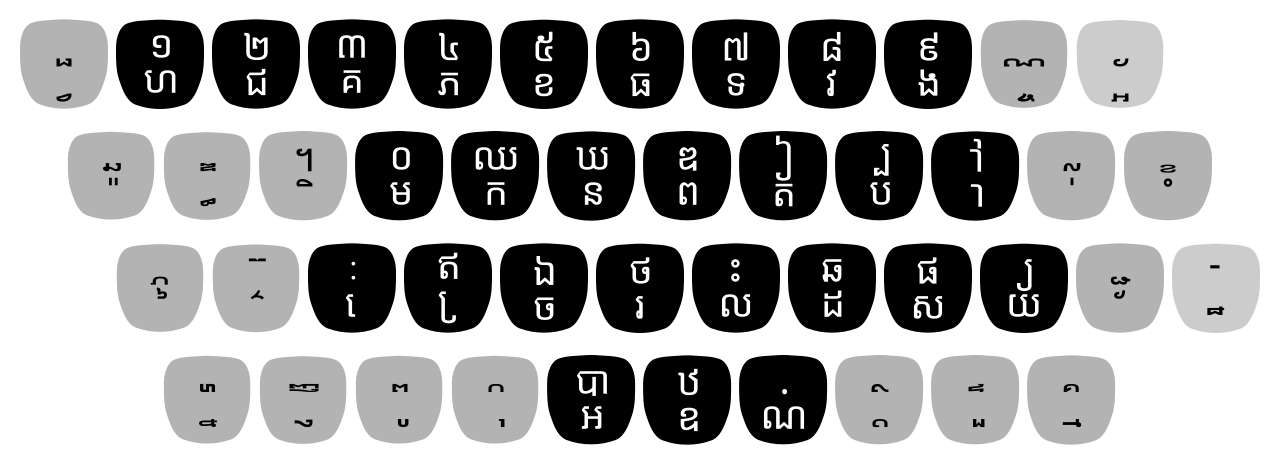
The Khmer keyboard (Khmer: ក្តារចុចជាភាសាខ្មែរ) covers multiple layouts designed for the Khmer script. Its development has long been tied to national identity, beginning with early prototypes created after Cambodia gained independence.
In 1947, Khmer nationalist Ieu Koeus built a prototype typewriter keyboard for the script, publishing the two-volume *Pheasa Khmer* on the Cambodian language. While some saw this as a symbol of postcolonial nationalism relegated to a secondary status in language and print, adapting the typewriter also served as a cultural assertion—a tool for independence rather than the machine guns used by the Issarak. Shortly after, Keng Vannsak invented a commercial Khmer-script keyboard for typewriters, later adapted for computers, in 1952. Industrial production began in 1955 at Adler factories in West Germany, while a similar machine was made by Remington in the United States. Fitting the script’s over 120 elements—including consonants, vowels, and punctuation—onto a standard typewriter’s 46 keys and 96 positions proved extremely difficult.
Following the Cambodian Civil War, computer scientists and linguists outside Cambodia worked on a new input system in the 1980s, using the Qwerty keyboard to take advantage of similar phonetic frequencies between Khmer and English. They faced challenges, particularly with the subscript feet used for consonants and phonetic clusters. Unlike related Thai script, which writes clusters in line, Khmer places the second member of a consonant cluster under the first, adding complexity to coding. After communism fell, few data entry clerks had ever typed in Khmer. A specially designed UNTAC keyboard was created but saw little use.
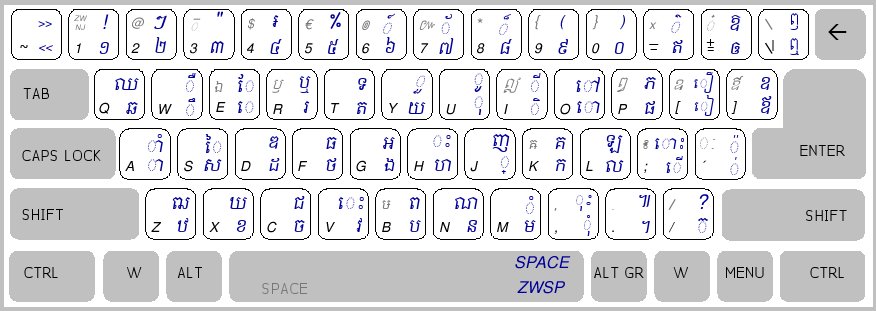
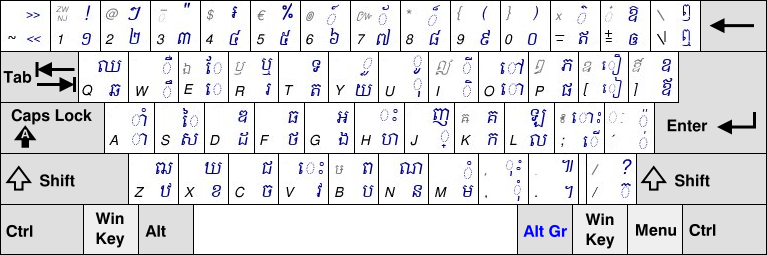
In 1997, Michael Everson wrote the first proposal to encode Khmer script in ISO 10646. Tensions arose over responsibility between national and international parties; the Cambodian government wanted full ownership of all aspects of Khmer in Unicode. In 2000, the government formed the Committee for the Standardization of Khmer Characters for Computers, alongside the National ICT Development Authority (NiDA) and the Government Administrative Information System (GAIS). A keyboard was developed mainly due to printing demand, though working with Khmer Unicode fonts still required experienced technicians.
- First prototype typewriter keyboard
- 1947
- Inventor of commercial khmer keyboard
- Keng Vannsak
- Industrial production began
- 1955
- Manufacturers
- Adler factories of West Germany and Remington in the United States
- Number of elements in script
- more than 120
- Standard typewriter keys
- 46
- Standard typewriter positions
- 96
- Khmer unicode block added in version
- 3.0
- Year of unicode 3.0 release
- 1999
- Initial defined code points
- 103
Lore & Background
Khmer nationalist Ieu Koeus designed a prototype typewriter keyboard for the Khmer script and published the two-volume Pheasa Khmer book in 1947. Soon after, Keng Vannsak invented a commercial Khmer-script keyboard for typewriters and later computers in 1952. Industrial production began in 1955 in the Adler factories of West Germany, while a similar machine was produced by Remington in the United States. The layout for more than 120 elements of Cambodian script and punctuation was difficult because of the limitation to 46 keys and 96 positions on a standard typewriter.
In the 1980s, computer scientists and linguists outside Cambodia began working on a new input system using the Qwerty keyboard, taking advantage of comparable phonetic frequencies between Khmer and English. Difficulties arose from the Khmer writing system's use of subscript consonants, which put a second member of a consonant cluster under the initial consonant. After the fall of communism, few data entry clerks had ever typed in Khmer before; a specially designed UNTAC Khmer keyboard was used by very few.
In 1997, Michael Everson wrote a first proposal for encoding Khmer in ISO 10646. Tensions arose over responsibilities between national and international parties, with the Cambodian government wanting international ownership of all aspects of Khmer in Unicode. In 2000, an official Committee for the Standardization of Khmer Characters for Computers was set up by the Cambodian government along with NiDA and GAIS. Danh Hong programmed Khmer Unicode in 2001. Few hardware Khmer keyboards were produced; instead stickers or paper models were used. By 2010, Khmer script was considered widely used and adopted by modern technology in Cambodia.
Reader's Guide
The Khmer keyboard's significance lies in its role as a cultural and political symbol, from the postcolonial era to the digital age. The article notes that adapting the typewriter was a powerful way to affirm Khmer culture as a weapon for independence. The development process for Unicode was marked by tension: the Cambodian government expressed frustration that no appropriate official representative participated in discussions leading to the adoption of the code table by ISO/IEC, and that the code table had never been officially endorsed within Cambodia. Mark Davis acknowledged that the Cambodian government may not have been in a position to be involved due to circumstances beyond their control. The Government Administrative Information System project eventually led to modification and adoption of the Khmer Unicode standard and an update of the keyboard. The Nida Unicode Khmer keyboard became the most widely used in Cambodia. Legacy fonts required complex shortcut keystrokes and added up to more than 30 different encoding methods. Unicode demonstrations showed that typing speed increased dramatically compared to legacy fonts. In 2016, the Khmerism keyboard was developed to reduce the frequent use of the shift key by redesigning the layout based on letter frequency. The KhmerLang keyboard uses deep learning for Roman to Khmer script input with automatic word division.
Did You Know?
- The first Khmer typewriter keyboard prototype was designed by nationalist Ieu Koeus in 1947.
- The Khmer Unicode block was added in Unicode version 3.0 in September 1999 with 103 code points.
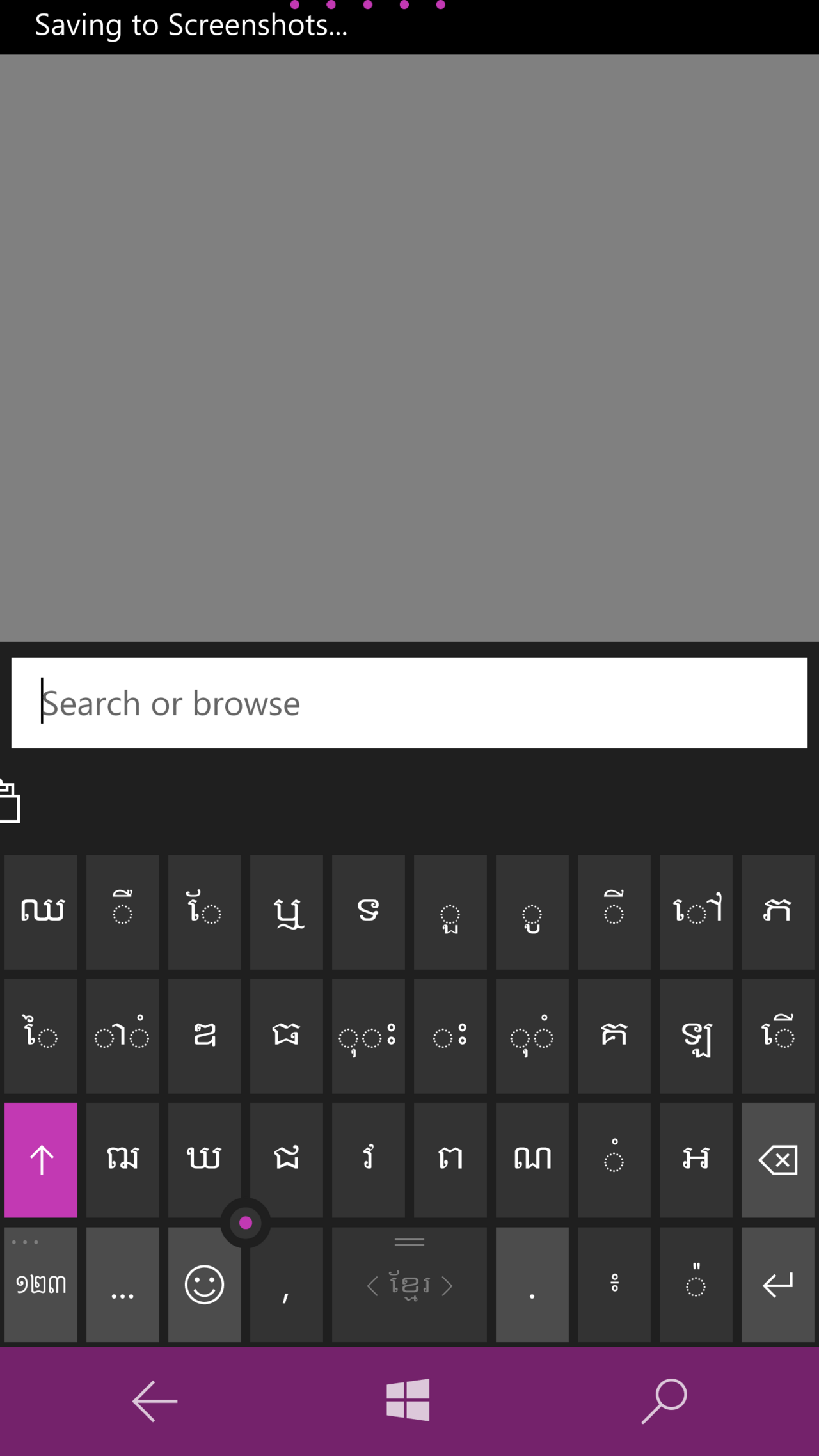
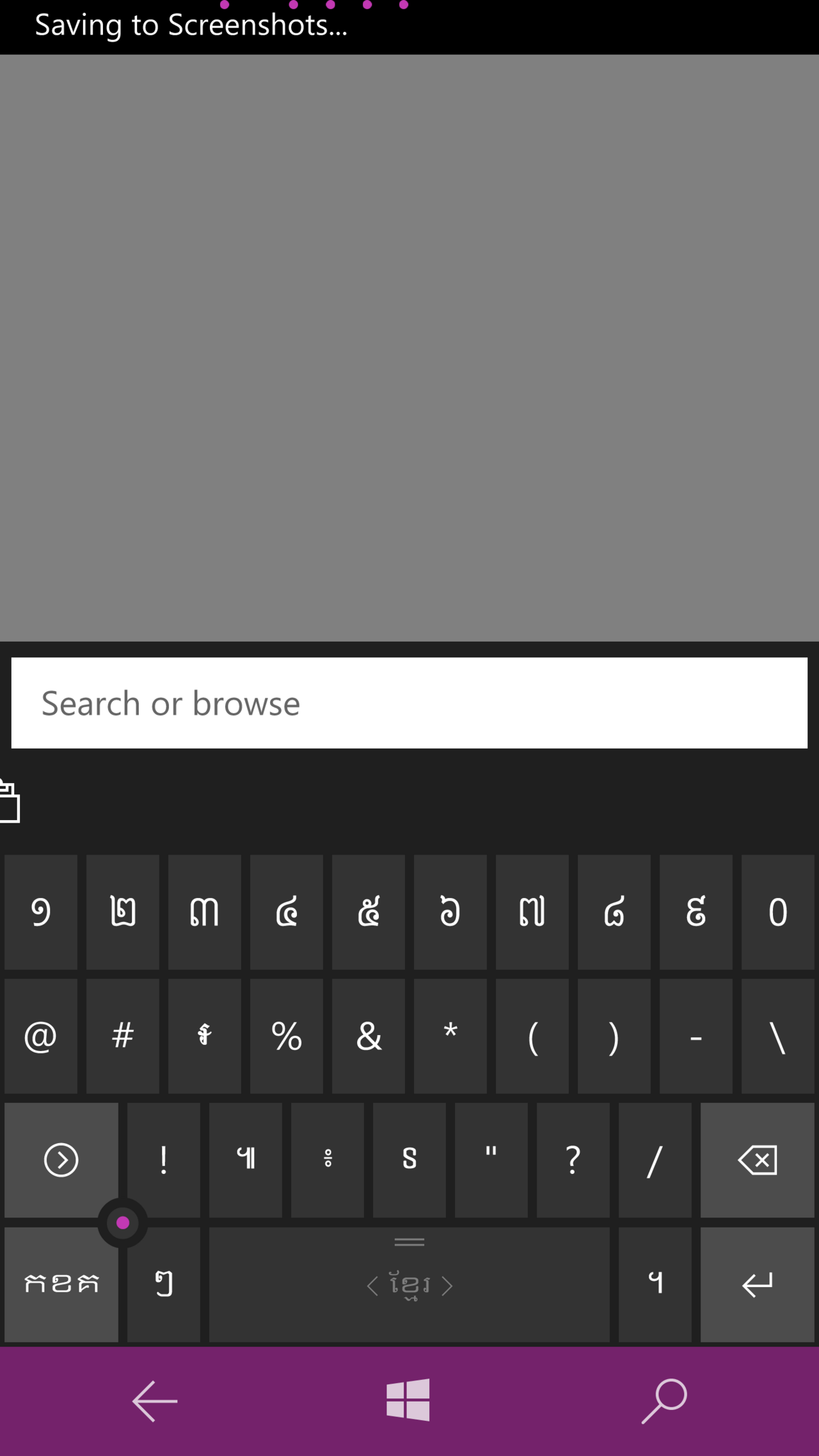
- In 2012, Nokia developed a Khmer Unicode smartphone keyboard called KhmerMeego.
Postcolonial Identity and the First Keyboards
The story of the Khmer keyboard begins in the charged atmosphere of Cambodian independence. In 1947, nationalist Ieu Koeus designed a prototype typewriter keyboard for the Khmer script and published his two-volume Pheasa Khmer treatise on the language. Adapting the typewriter was not merely a technical exercise; it served as a cultural assertion, a way to wield Khmer identity as a weapon for sovereignty rather than relying on the machine guns of the Issarak resistance. Keng Vannsak followed in 1952 with a commercial Khmer-script keyboard for typewriters and later computers. Industrial production commenced in 1955, with Adler factories in West Germany and Remington in the United States each producing similar machines. The engineering challenge was formidable: fitting more than 120 elements of Cambodian script and punctuation into the mere 46 keys and 96 positions of a standard typewriter demanded extraordinary ingenuity.
The Unicode Dispute and National Frustration
The path to a standardized digital Khmer script was fraught with political tension. In 1997, Michael Everson drafted the first proposal for encoding Khmer in ISO 10646, but the process exposed deep friction between international bodies and the Cambodian government, which sought to claim ownership over all aspects of Khmer in Unicode. By 2000, the government established an official Committee for the Standardization of Khmer Characters for Computers alongside NiDA and GAIS, yet a Cambodian official later protested that no appropriate national representative had participated in the ISO/IEC discussions that produced the code table, and that this table had never been officially endorsed within Cambodia. Mark Davis acknowledged the frustration while noting the government had had roughly a decade of opportunity to engage. In 2001, Danh Hong, a webmaster and graphic designer from the Kampuchea Krom region of Vietnam, programmed Khmer Unicode. Practical adoption remained difficult: few physical Khmer keyboards existed, so users resorted to stickers on Roman-character keyboards or even paper models taped beside their machines.
Encoding Complexity and the Legacy-to-Unicode Transition
The Khmer writing system posed exceptional challenges for digital encoding. Pre-Unicode legacy fonts required typists to execute complex sequences of shortcut keystrokes to produce a single character, and these legacy systems accumulated more than 30 different encoding methods for the script. A particularly stubborn problem involved consonant clusters: while the related Thai script arranges cluster members linearly, Khmer places the second consonant beneath the initial one, creating a spatial complexity that made coding considerably harder. The Khmer Unicode block, first introduced in Unicode version 3.0 in September 1999, initially defined 103 code points. Version 4.0, released in April 2003, expanded this to 114 and added a separate Khmer Symbols block containing 32 signs used for writing lunar dates. Demonstrations showed that typing speed in Khmer improved dramatically once Unicode replaced the cumbersome legacy shortcuts, transforming what had been a multi-keystroke ordeal into a far more fluid input experience.
From Stickers to Swipe: The Smartphone Era
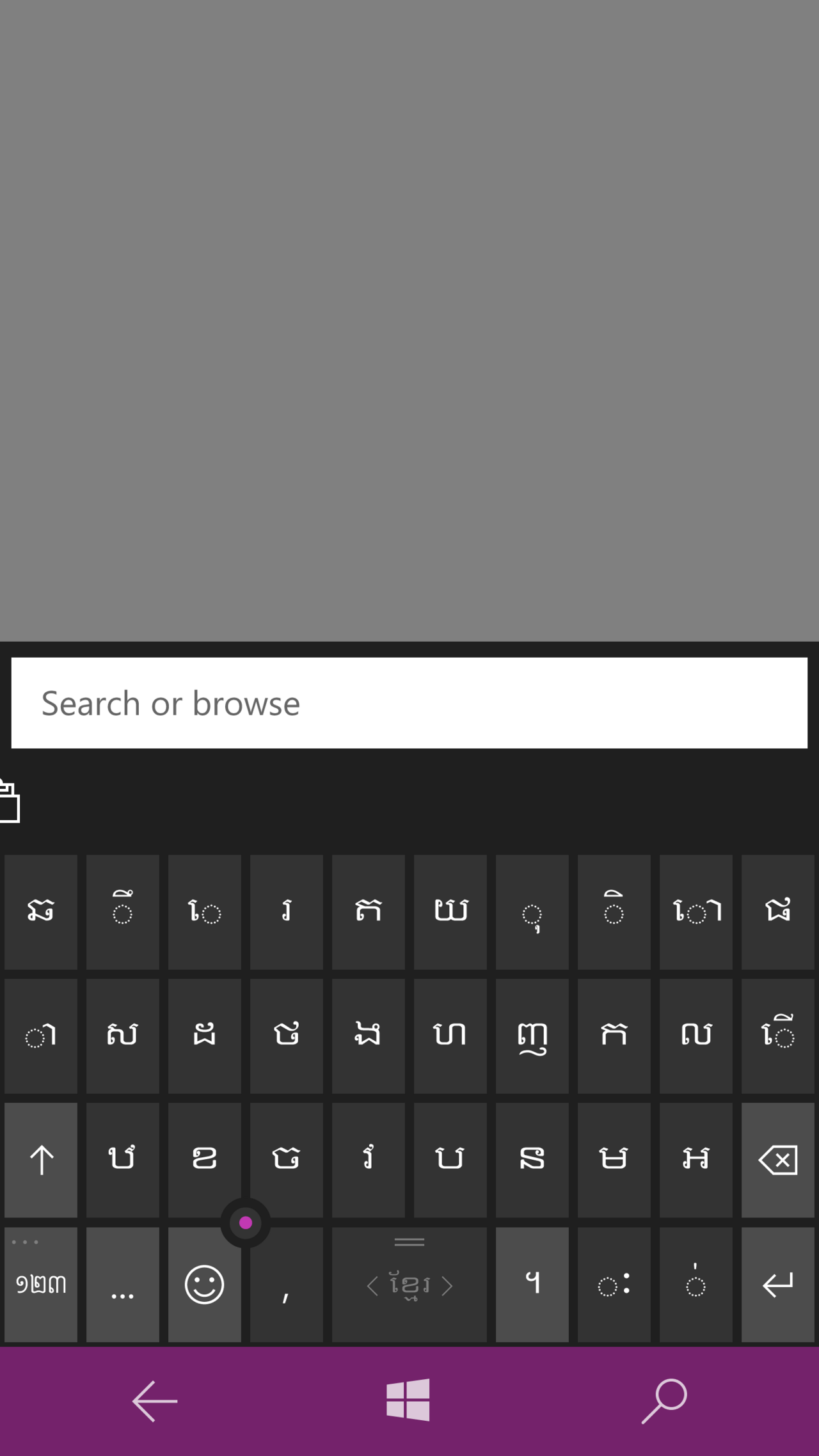
By 2010, an outside observer noted that Khmer script had become widely used and adopted by modern technology in Cambodia, a remarkable transformation from the era of paper keyboard models taped to desks. In 2012, Nokia developed a Khmer Unicode keyboard specifically adapted for smartphones, called KhmerMeego. The landscape shifted further in 2015, when the growing prevalence of romanization in Cambodia inspired a new smartphone application featuring a swipe function that gave users access to every Khmer letter. Touchscreen technology opened the door to more adaptive typing methods, and the project received financial backing through a crowdfunding drive launched by telecom company Cellcard. The Nida Unicode Khmer keyboard emerged as the most widely used layout in the country. In 2016, Ly Heang introduced the Khmerism Keyboard, a redesigned layout aimed at preserving the Khmer language in digital form by making typing easier, moving away from the Qwerty-based arrangements that had dominated since the 1980s.
Gallery
Frequently Asked Questions
Who built the very first Khmer keyboard prototype?
Khmer nationalist Ieu Koeus constructed a prototype typewriter layout for the script in 1947, just after Cambodia's independence. He also authored the two-volume *Pheasa Khmer*, a foundational work on the Cambodian language.
Who is credited with inventing the commercial Khmer keyboard?
Keng Vannsak is recognized as the designer of the first commercially produced Khmer keyboard layout. His work laid the groundwork for the industrial manufacturing that followed in the mid-1950s.
When and where did mass production of Khmer keyboards begin?
Industrial manufacturing started in 1955, with the Adler factories in West Germany and Remington in the United States producing the keyboards. This marked the transition from hand-built prototypes to widely available hardware.
Why is the Khmer keyboard considered important to Cambodian national identity?
Its development is closely tied to Cambodia's postcolonial struggle, serving as a tangible assertion of linguistic and cultural independence. For many, adapting the typewriter was less about convenience and more about claiming a primary place in print and public life.
How many keys does a standard Khmer typewriter have, and why is that a challenge?
A standard Khmer typewriter carries only 46 keys, yet the script contains more than 120 distinct elements. This mismatch forced designers to develop multi-key combinations and special layouts to represent the full range of Khmer characters.
More in Computer Keyboards, Part 3 1-24
Spotted an error? Know more?
Reader corrections go straight into our review queue. Suggest an edit · How this site is sourced