
EurKEY
A US-based multilingual layout for European programmers and translators.

Wikirofl · CC BY-SA 4.0
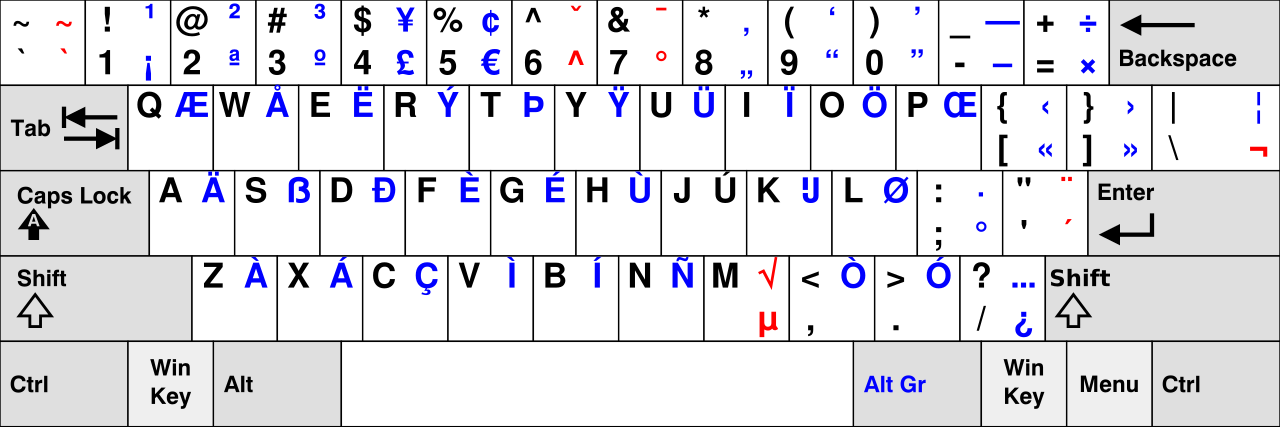
EurKEY is a multilingual keyboard layout designed for Europeans, programmers, and translators. It was developed by Steffen Brüntjen and published under the GPL free software license, and is available for Windows, Mac OS X, and Linux. Its notability stems from its combination of the US keyboard layout—advantageous for programming—with extended support for European languages, special characters, the Greek alphabet, and mathematical symbols via the AltGr key.
- Developer
- Steffen Brüntjen
- License
- GPL free software license
- Operating systems
- Windows, Mac OS X, Linux
- Xkeyboard config version
- 2.12
- Xkeyboard config release date
- May 2014
- Petition year
- 2017
- Coleman dh version year
- 2020
Lore & Background
The original motivation behind EurKEY was to allow non-native English-speaking programmers to use the US layout, which places programming symbols like { and } closer to the home row than many national layouts do, while still enabling them to write in their native language without switching layouts. The US layout serves as the base, extended with symbols for many European languages, special characters, the Greek alphabet, and common mathematical symbols accessible via the AltGr key.
In 2017, a petition was started to promote EurKEY as a European standard. The initiators argued that national layouts hinder the free movement of goods (notebooks) within the European Union, that software is optimized for the US market and its main keyboard layout, and that learning touch typing is made difficult by studying or working abroad.
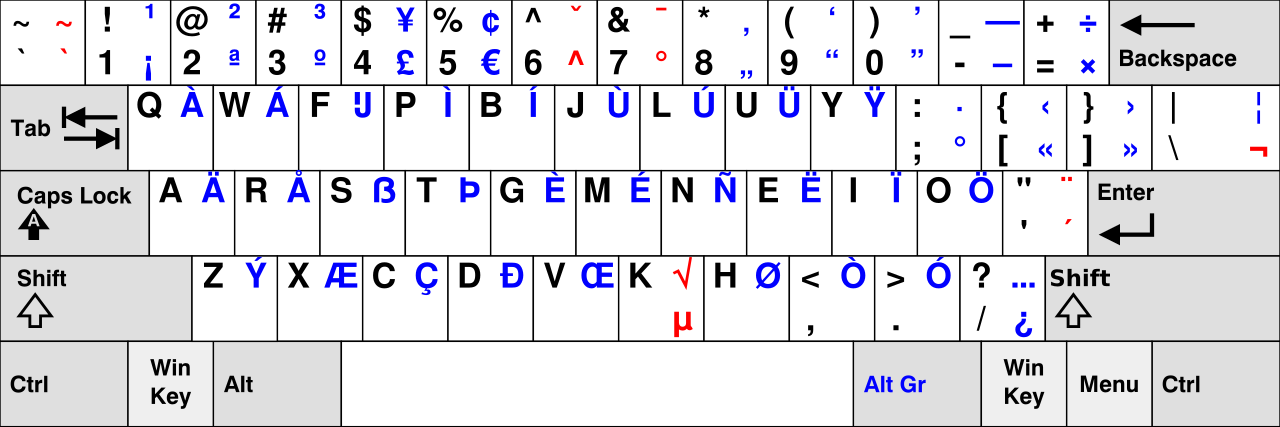
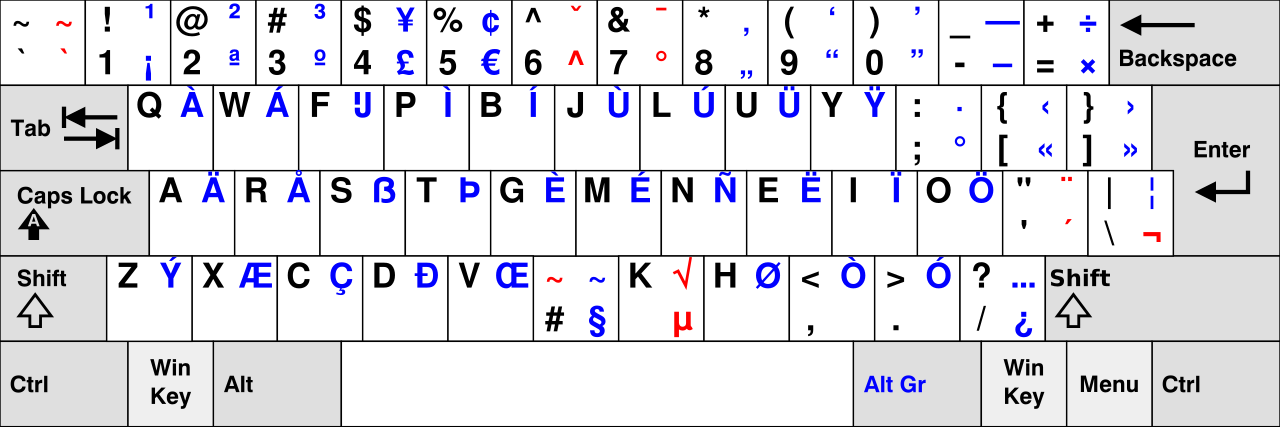
Besides the original EurKEY, a version called EurKEY Colemak-DH was developed in 2020. It combines EurKEY's multilingual support with the ergonomic Colemak (US) layout using the DH-Mod, which addresses criticism that Colemak focuses too much on the middle row and that D and H can cause awkward lateral hand movements. The Colemak basis is intended to be nearly as easy for programmers as the original EurKEY, and simple usability is maintained by not changing common shortcuts like Ctrl+Z/X/C/V.
Reader's Guide
EurKEY's significance lies in its attempt to bridge the gap between the US keyboard layout—preferred by programmers for its convenient placement of programming symbols—and the need for multilingual support among European users. By using the US layout as a base and adding European characters via the AltGr key, it offers a single layout that serves both programming and native-language typing without requiring layout switching. The 2017 petition to make EurKEY a European standard highlights perceived issues with national layouts, such as hindering the free movement of notebook goods within the EU and complicating touch typing for those studying or working abroad. The development of EurKEY Colemak-DH in 2020 further extends the concept by incorporating ergonomic principles from Colemak, aiming to reduce hand strain while retaining multilingual capabilities. The article notes that Colemak's ergonomic advantages apply primarily to English users, but it suggests an advantage for Germanic languages due to their similarity to English, and notes that English is the most widely spoken foreign language in the EU (38% of the population), with 54% of the EU population able to speak at least one other language besides their mother tongue.
Did You Know?
- Since xkeyboard-config version 2.12 (May 2014), EurKEY is directly selectable in many Linux distributions without additional packages.
- A petition to promote EurKEY as a European standard was started in 2017.
- EurKEY Colemak-DH, developed in 2020, uses Colemak (US) with the DH-Mod as its basis.
Gallery
Frequently Asked Questions
What exactly is EurKEY?
EurKEY is a multilingual keyboard layout built for European programmers and translators who want a US-style base layout without losing access to accented characters, Greek letters, and math symbols. It layers extended language support on top of the standard US arrangement using the AltGr modifier key.
Who is behind EurKEY?
Steffen Brüntjen designed and maintains the layout, releasing it under the GPL free software license so anyone can use, modify, and redistribute it. That open licensing has made it easy for the community to adopt and adapt the layout across different distros and platforms.
Which operating systems does EurKEY support?
The layout is available on Windows, Mac OS X, and Linux. On Linux it was integrated into the xkeyboard-config package, with version 2.12 shipping in May 2014.
How does EurKEY handle European characters and symbols?
Rather than replacing home-row keys, it keeps the familiar US QWERTY positions for programming and adds a second layer of accented letters, Greek alphabet characters, and mathematical symbols accessible through AltGr. This lets users type code and multilingual text in one layout instead of constantly switching between national variants.
Why is EurKEY considered notable in the keyboard community?
It fills a gap that standard national layouts leave open: a single US-based arrangement that still covers dozens of European languages plus Greek, all in one install. A 2017 petition and its cross-platform availability cemented its reputation as the go-to pick for polyglot developers who refuse to compromise on typing speed.
More in Computer Keyboards, Part 3 1-24
Spotted an error? Know more?
Reader corrections go straight into our review queue. Suggest an edit · How this site is sourced