
Meitei input methods
Methods for inputting Meitei script across multiple platforms.

Haoreima · Public domain
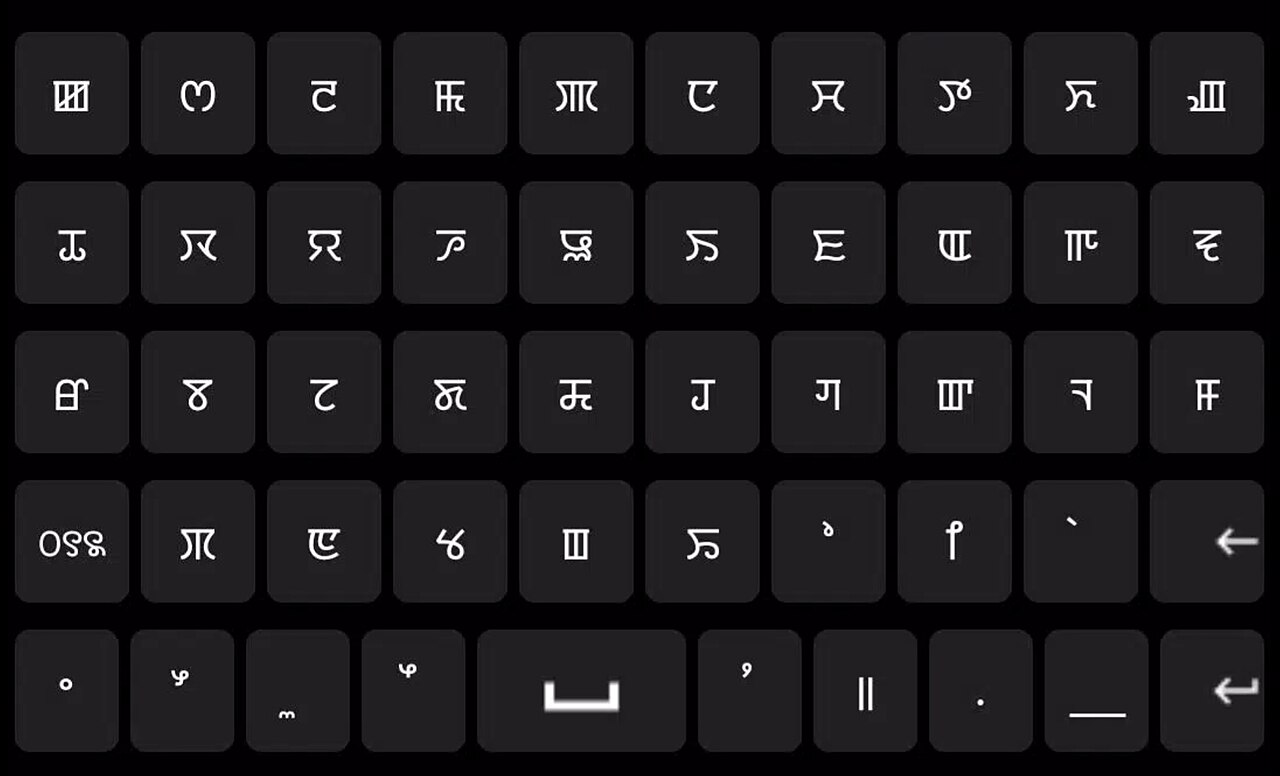
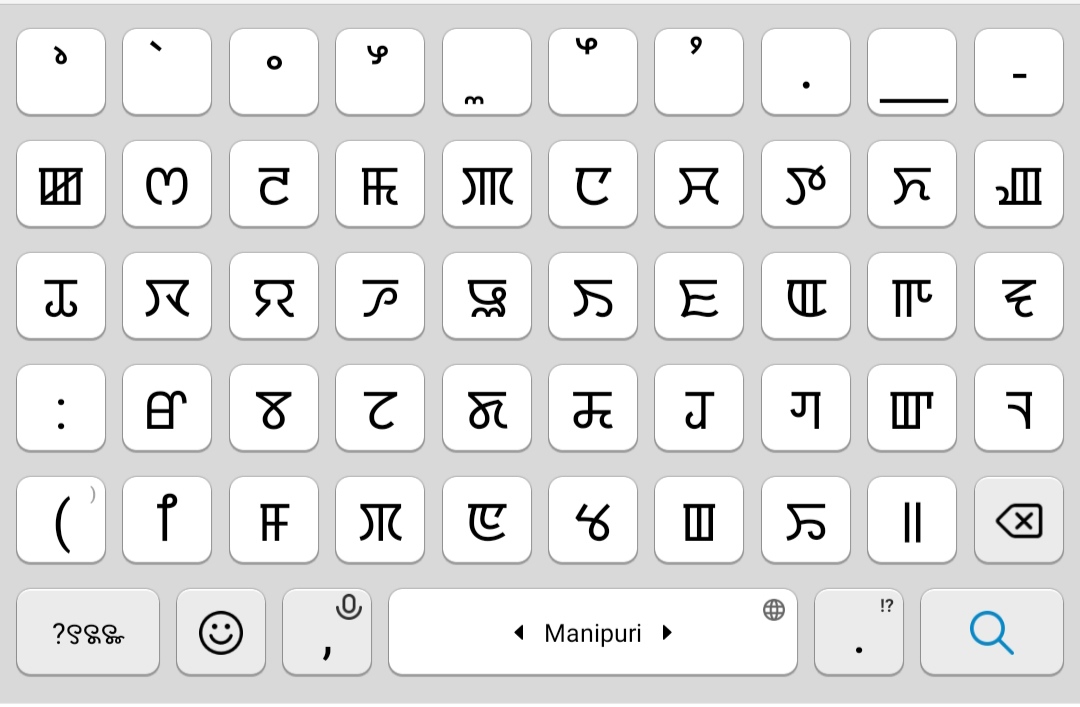
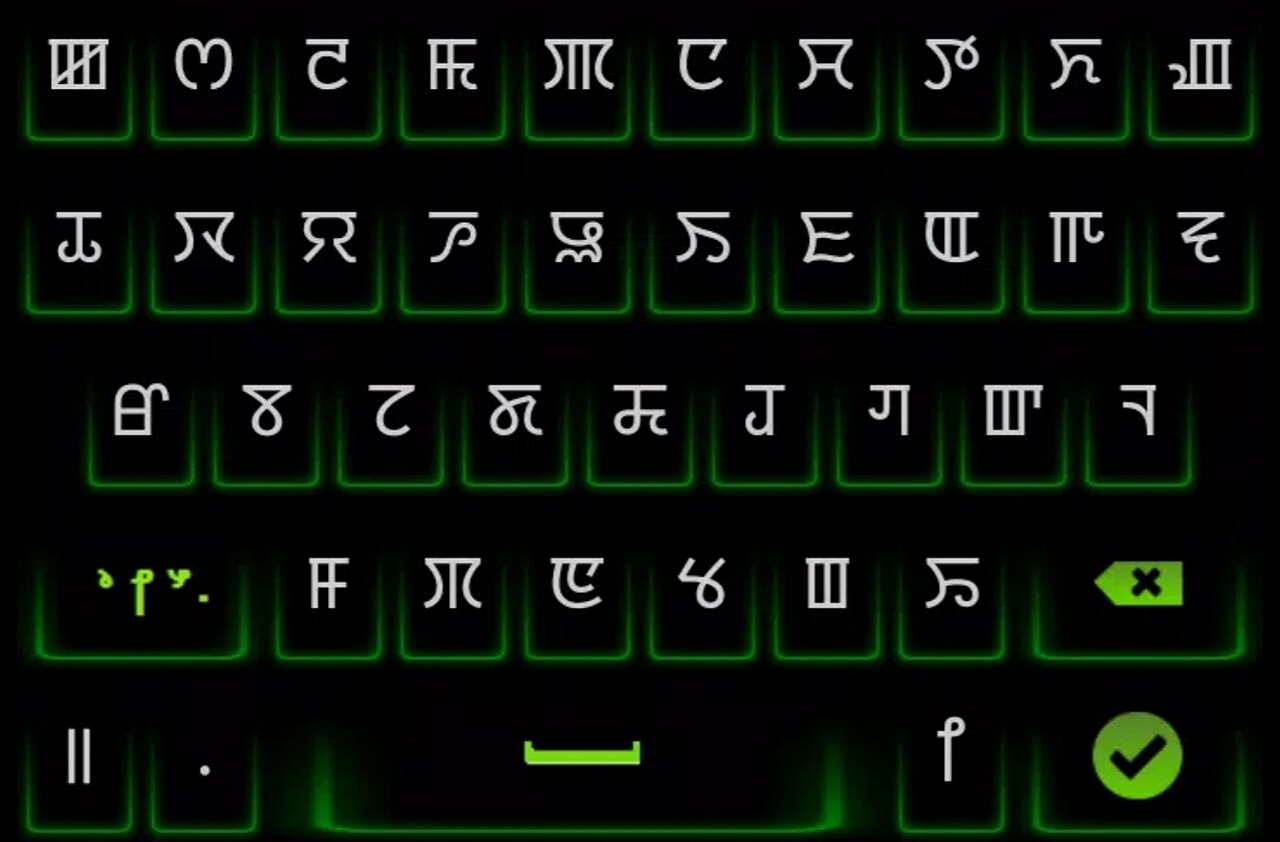
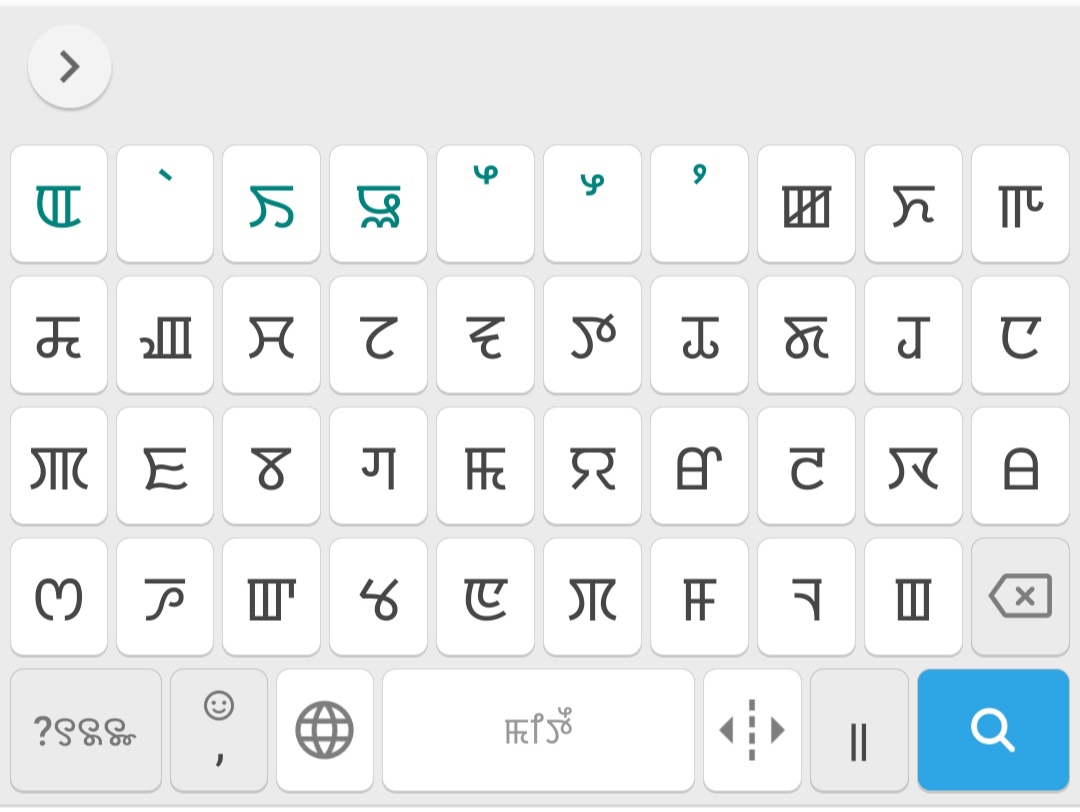
Meitei input methods let people type in the Meitei script (also called Manipuri script) on computers, laptops, and keyboards, specifically for the Meitei language (officially known as Manipuri). These methods support the Meetei Mayek script, which includes 56 standard characters and 23 extension characters. The standard set is made up of 27 mapi characters, 8 lonsum characters, 8 cheinap characters, 3 khudam characters, and 10 cheising characters (digits). Unicode charts for the script are available in two PDFs.
On Gboard, the Meitei Mayek keyboard includes most Unicode characters but is missing a few, such as apun, onap, eenap (or inap), and lum. It also mixes standard and historical characters. Apple’s iOS 13 keyboard supports Manipuri in both Meetei Mayek and Bengali script; users can add it through Settings > General > Keyboards > Keyboards > Add New Keyboard. Google Translate offers a phonetic keyboard for typing Meitei script characters.
Linux systems can render the Meitei Mayek keyboard by copying the font file EPAOMAYEK.ttf to fonts:/// in the File Manager. On Macintosh operating systems, the same font file can be installed by placing it in /Library/Fonts (for all users) or /Users/Your_username/Library/Fonts (for personal use). If Font Book is available, double-clicking the font file shows a preview with an “Install font” button. For Mac OS 9 or earlier, font suitcases should be dragged into the System folder and added to the Fonts folder.
Microsoft SwiftKey keyboard added support for Meitei (Manipuri) in 2015, along with nine other Indian languages. On Windows, the Manipuri or Meitei Mayek Keyboard (version 1.6.0) was developed by Nongthonbam Tonthoi. It can be installed using Android app players like BlueStacks, Nox, or KOPlayer. For Windows Vista, select the font file EPAOMAYEK.ttf, right-click, and choose Install. For any Windows version, place the font file in the Fonts folder (usually C:\Windows\Fonts or C:\WINNT\Fonts), or go through Start Menu > Control Panel > Appearance and Themes > Fonts.
- Total characters
- 56 standard characters, 23 extension characters
- Standard characters breakdown
- 27 mapi characters, 8 lonsum characters, 8 cheinap characters, 3 khudam characters, 10 cheising digits
- Windows keyboard version
- 1.6.0
- Windows developer
- Nongthonbam Tonthoi
- Microsoft swiftkey support year
- 2015
Lore & Background
The Unicode charts for Meetei Mayek script are provided in two PDFs: https://unicode.org/charts/PDF/UABC0.pdf and https://unicode.org/charts/PDF/UAAE0.pdf. The script comprises 56 standard characters (27 mapi, 8 lonsum, 8 cheinap, 3 khudam, and 10 cheising digits) plus 23 extension characters. Various platforms have implemented input methods: Gboard includes most Unicode characters but is missing some such as apun, onap, eenap/inap, and lum, and mixes standard and historical characters. Apple iOS 13 supports Manipuri in both Meetei Mayek and Bengali script, accessible via Settings > General > Keyboards > Keyboards > Add New Keyboard. Google Translate offers a phonetic keyboard for the script. Linux requires copying the font file EPAOMAYEK.ttf to fonts:/// in the File Manager. Macintosh operating systems can install the font via /Library/Fonts or /Users/Your_username/Library/Fonts, or by double-clicking the font file and using Font Book. Microsoft SwiftKey keyboard added Meitei (Manipuri) in 2015 as part of 9 new Indian languages. The Windows keyboard, version 1.6.0 developed by Nongthonbam Tonthoi, can be installed using Android App Players like BlueStacks, Nox, or KOPlayer, or by placing EPAOMAYEK.ttf into the Fonts folder (e.g., C:\Windows\Fonts).
Reader's Guide
The significance of Meitei input methods lies in their systematic support for the Meitei language (Manipuri) in the Meetei Mayek script across diverse computing environments. The article documents implementations on Gboard, Apple iOS 13, Google Translate, Linux, Macintosh operating systems, Microsoft SwiftKey keyboard, and Windows, each with specific installation procedures. Notably, Gboard has missing characters and mixes standard with historical ones, indicating ongoing development. The Windows keyboard, version 1.6.0 by Nongthonbam Tonthoi, can be installed via Android emulators or direct font placement. The Mac OS X installation involves copying the EPAOMAYEK.ttf font file to system or user font directories, with an alternative method for older Mac OS 9 systems. Linux users copy the same font file to fonts:///. The legacy of these methods is their role in enabling digital communication in a language with a distinct script, supported by Unicode blocks (Meetei Mayek and Meetei Mayek Extensions) and external resources such as font installation guides and keyboard help files. The article also references related topics like Meitei inscriptions and newspapers, underscoring the cultural and linguistic context.
Did You Know?
- The Meetei Mayek script has 56 standard characters and 23 extension characters.
- Gboard for Meitei Mayek is missing characters including apun, onap, eenap/inap, and lum.
- Microsoft SwiftKey keyboard added Meitei (Manipuri) in 2015 along with 9 other Indian languages.
- The Windows keyboard for Meitei Mayek, version 1.6.0, was developed by Nongthonbam Tonthoi.
Structural Identity and Typological Distinctiveness
Burmese occupies a distinctive position among Southeast Asian languages, combining features that set it apart from its regional neighbors. As a tonal, pitch-register, and syllable-timed language, it carries meaning through subtle shifts in vocal pitch and rhythmic timing. The language is largely monosyllabic and agglutinative, meaning words are built by stacking morphemes together, and it follows a subject–object–verb word order. What truly distinguishes Burmese from other major languages in the region is its extensive case marking system and a rich morphological inventory that allows speakers to encode grammatical relationships directly within word forms. Taxonomically, Burmese sits within the Lolo-Burmese grouping of the broader Sino-Tibetan family, specifically in the Southern Burmish branch. Its script ultimately traces back to a Brahmic origin, whether Kadamba or Pallava, linking it to a much older family of writing systems that spread across South and Southeast Asia.
Dialectal Mosaic and Regional Divergence
The spoken landscape of Burmese is far more varied than a single standard variety might suggest. Most speakers concentrated along the Irrawaddy River Valley use variants of standard Burmese, but as one moves toward the country's periphery, distinctive dialects emerge. In the Tanintharyi Region, varieties such as Merguese, Tavoyan, and Palaw display particularly conservative features, including the preservation of an /l/ medial that survives only in Old Burmese inscriptions. The Arakanese variety of Rakhine State retains a [ɹ] sound that standard Burmese has shifted to [j], and it merges certain vowel distinctions found in the standard. Within the Irrawaddy basin itself, Upper Burmese and Lower Burmese speakers differ primarily in vocabulary rather than pronunciation, with Upper Burmese maintaining a gender-neutral first-person pronoun and distinguishing maternal from paternal kinship terms. Southern dialects show stronger Mon-language influence, including a colloquial permissive causative use of the verb for giving that is considered sub-standard in the north. Despite these differences, mutual intelligibility generally holds across most dialects.
Historical Stratification and Phonological Drift
The Burmese language can be divided into three broad historical stages, each aligned with major dynastic periods. Old Burmese, attested in the stone inscriptions of Pagan dating to the eleventh and twelfth centuries, spans the Pagan through Ava dynasties and covers roughly the eleventh to sixteenth centuries. Middle Burmese follows, running from the sixteenth through the eighteenth century across the Toungoo and early Konbaung periods. Modern Burmese emerges from the mid-eighteenth century onward. Across these transitions, the language's phonology has undergone significant change, yet its fundamental word order, grammatical architecture, and core vocabulary have remained remarkably stable. Only functional words and other lexical items have shifted noticeably over time. This pattern of phonological fluidity paired with structural constancy gives Burmese a deep continuity: a speaker today can still recognize the grammatical skeleton visible in a Pagan-era inscription, even though the sounds of individual syllables have drifted considerably over a millennium.
Written Heritage Among Tibeto-Burman Languages
Among the Tibeto-Burman language family, the practice of maintaining a sustained written tradition is notably rare. According to research associated with Tribhuvan University and the University of Michigan, Burmese stands as one of only four Tibeto-Burman languages to possess an old written tradition, alongside Tibetan, Meitei (also known as Manipuri), and Newar. Within the broader Sino-Tibetan family, Burmese was the fifth language to develop a writing system, following Classical Chinese, Pyu, Old Tibetan, and Tangut. This places it in a small but significant group of languages that have carried written records across centuries. The Burmese alphabet itself descends from a Brahmic script, most likely the Kadamba or Pallava alphabet, connecting it to the ancient Indian writing traditions that seeded scripts across the subcontinent and beyond. As the most widely spoken non-Sinitic Sino-Tibetan language, Burmese's written heritage carries particular weight in preserving the linguistic and cultural record of a region where written practice among Tibeto-Burman tongues remains the exception rather than the norm.
Gallery
Frequently Asked Questions
What are Meitei input methods and what do they do?
Meitei input methods are keyboard systems that let users type in the Meetei Mayek script (the Manipuri script) on computers, laptops, and mobile devices. They exist specifically to support the Meitei language, officially known as Manipuri, by mapping its unique characters to standard keyboard layouts.
How many characters does the Meetei Mayek script contain, and how are they broken down?
The script has 56 standard characters plus 23 extension characters. The standard set is divided into 27 mapi characters, 8 lonsum characters, 8 cheinap characters, 3 khudam characters, and 10 cheising digits.
Who created the Windows keyboard for Meitei input?
The Windows Meitei keyboard, currently at version 1.6.0, was developed by Nongthonbam Tonthoi. His work made it possible for Windows users to produce Meetei Mayek text directly from a physical or on-screen keyboard.
When did Microsoft SwiftKey gain Meitei script support?
Microsoft added Meitei script support to SwiftKey in 2015. This brought the Meetei Mayek keyboard to mobile platforms that use SwiftKey as their input engine.
Where can I find the official Unicode charts for the Meetei Mayek script?
The Unicode charts for the script are published as two separate PDF documents. These charts lay out all 56 standard and 23 extension characters with their code points, serving as the reference that every input method—Gboard, the Windows keyboard, SwiftKey, and others—relies on for correct glyph mapping.
More in Computer Keyboards, Part 3 1-24
Spotted an error? Know more?
Reader corrections go straight into our review queue. Suggest an edit · How this site is sourced