
Pig's ear as food
Cooked pig ear is a versatile ingredient in global cuisines.

Him Him Leonmans · CC BY-SA 4.0
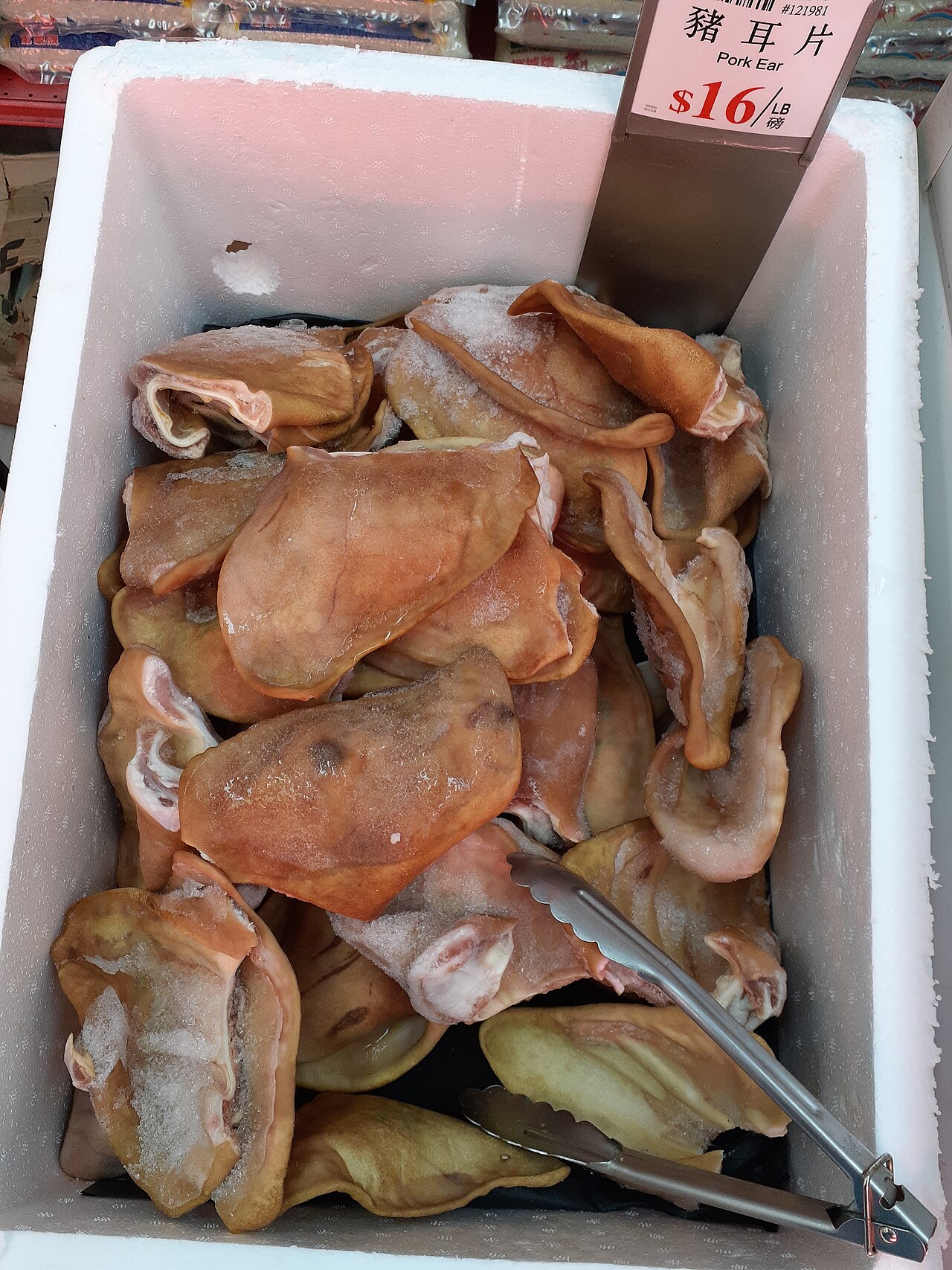
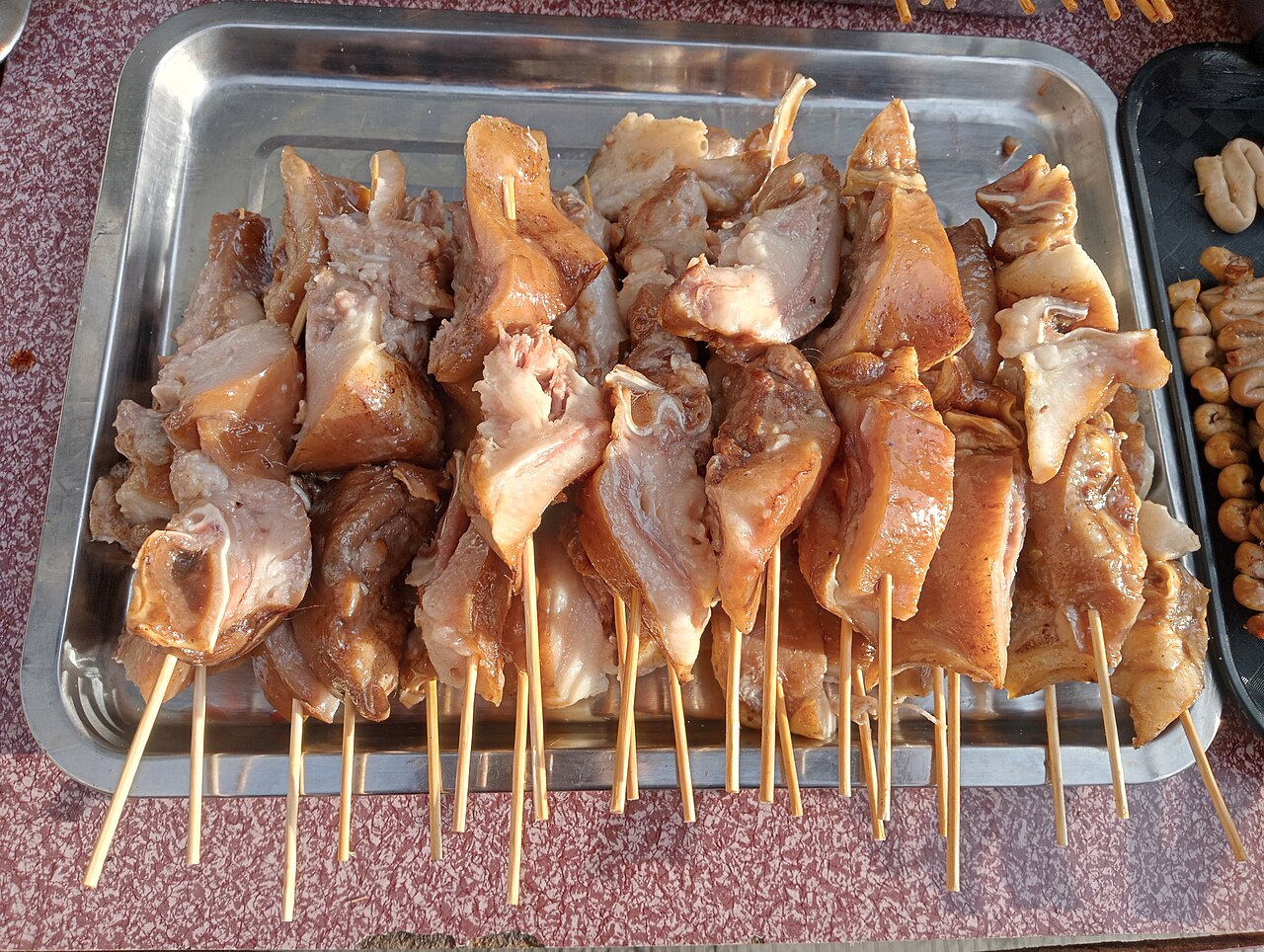
Pig's ear is a cooked pig part eaten by people in many cuisines. It often appears as an appetizer, side dish, or ingredient in stews and salads.
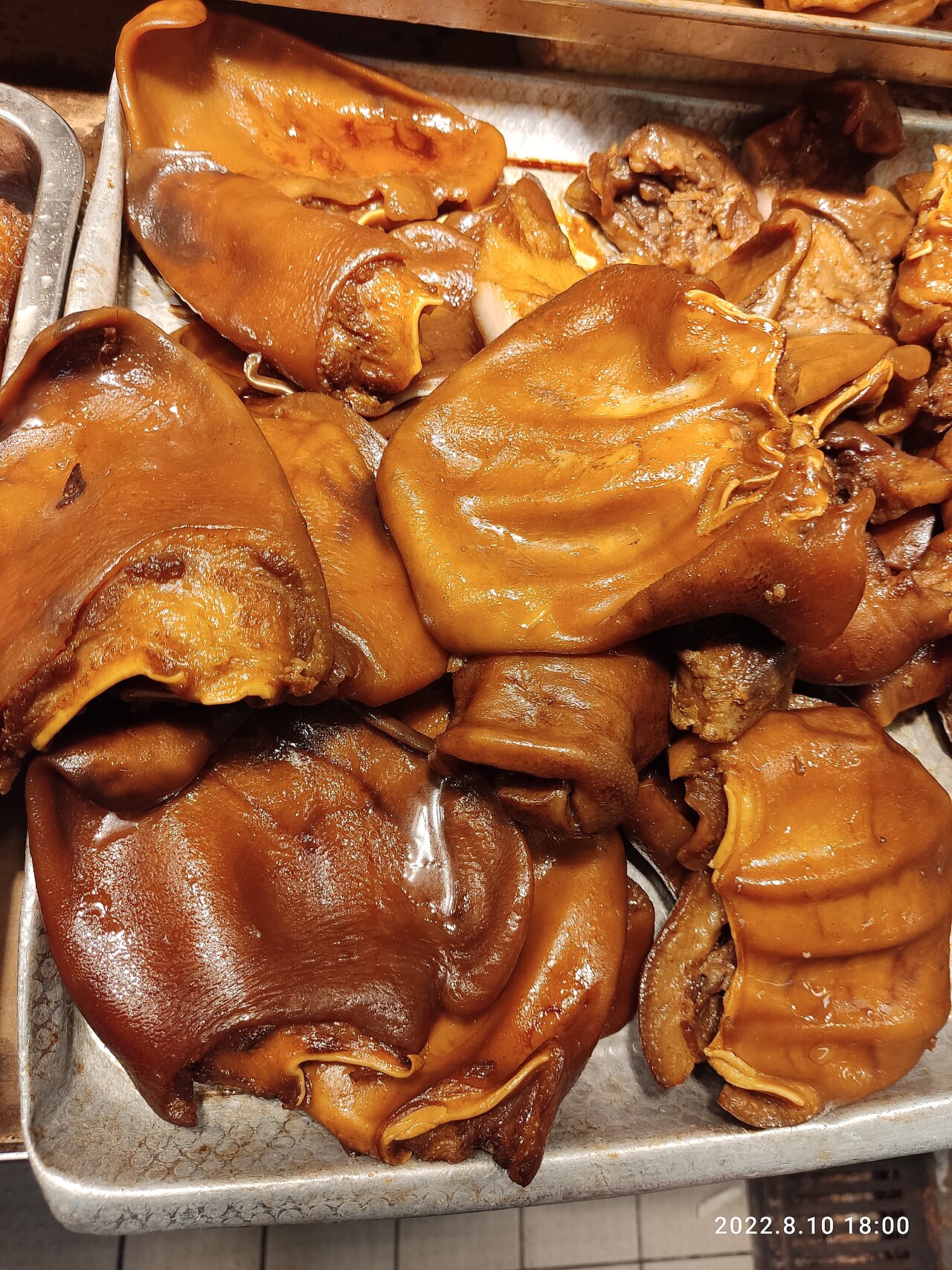
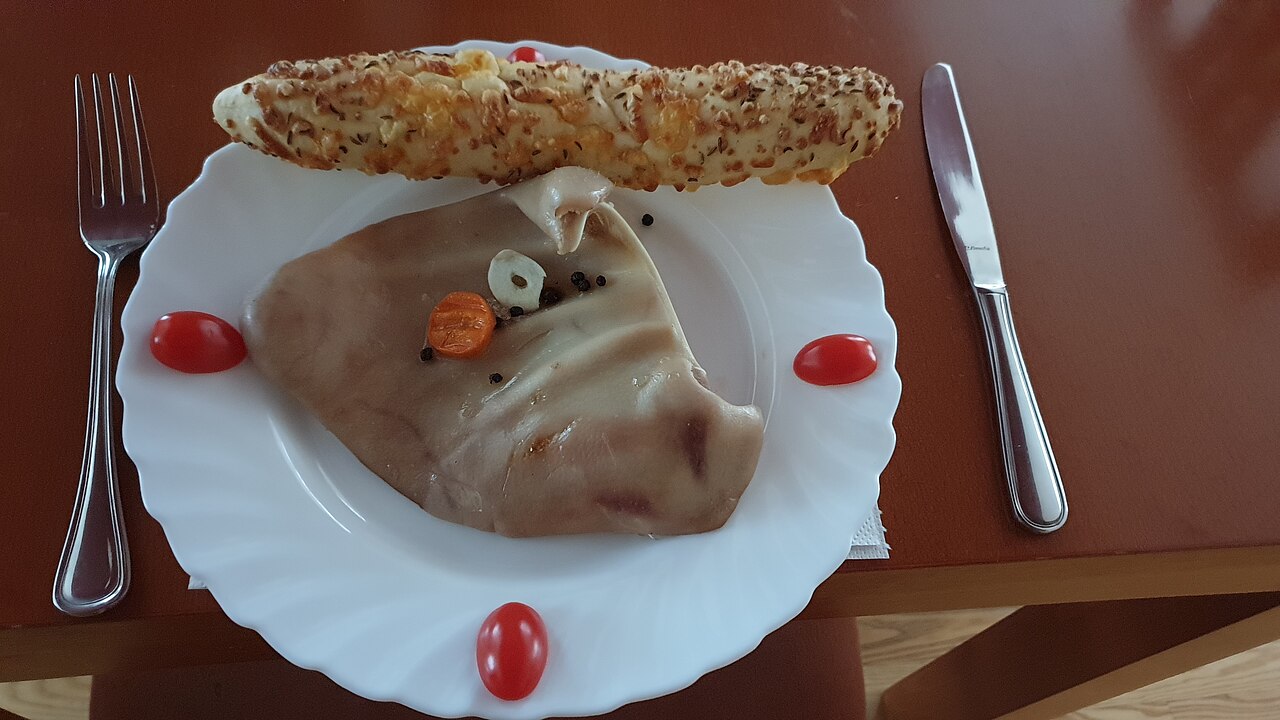
In Bulgaria, it is boiled, then grilled with simple seasonings like salt, paprika, or garlic, and served as a snack with beer or wine. Chinese cuisine uses it as an appetizer or side dish, known as zhū ěr duo or zhū ěr. In some regions, it is called ceng ceng cui, meaning "layers of crunch." It is boiled or stewed, sliced thin, and served with soy sauce or chili paste. The outer part is gelatinous like tofu, while the center cartilage is crunchy. It can be eaten warm or cold. In Cantonese cooking, it is an ingredient in lou mei (braised dishes), where using all edible pig parts is emphasized, though pig's ears are not considered a delicacy.
Filipino cuisine sometimes includes pig's ears in sisig, along with the animal's tail and cheeks. In Lithuania, kiaulės ausis is either smoked and cut into thin strips as a beer snack, or boiled whole and served as a main dish with horseradish and fresh vegetables or pickles. Okinawan cuisine calls it mimigā, prepared by boiling or pickling, and served with vinegar or as sashimi. The whole pig's face, chiragā, is also eaten there.
Spanish cuisine serves it fried or grilled as oreja de cerdo, a tapa, or boiled in stews and cocido. Portuguese cuisine boils and then roasts it with garlic and fresh coriander as Orelha de Porco de Coentrada. In Thai cuisine, pig's ears appear in dishes like yam hu mu (a salad with boiled, sliced ears).
In the United States, pig's ears are part of soul food from African-Americans in the South. The term "pig's ears" also refers to a boiled pastry: a pie-crust-like dough cut into 3-inch circles, filled with sweet fruit or savory cheese, folded, sealed with fork tines, and boiled. They can be finished by baking, deep frying, or pan frying, often with powdered sugar. Livermush, common in western North Carolina, uses pig livers, ears, and snouts with cornmeal and spices. Vietnamese cuisine slices pig's ear thin and mixes it with roasted, finely-ground rice flour, eaten alone or wrapped in rice paper with herbs and dipping sauce.
- Cuisines
- Bulgarian, Chinese, Cantonese, Filipino, Lithuanian, Okinawan, Spanish, Portuguese, Thai, United States, Vietnamese
- Common preparations
- Boiled, grilled, fried, smoked, pickled, stewed, or served raw as sashimi
- Texture
- Outer gelatinous, center cartilage crunchy
- Notable dishes
- Sisig (Philippines), Lou mei (Cantonese), Mimigā (Okinawan), Oreja de cerdo (Spanish), Yam hu mu (Thai)
Lore & Background
In Bulgarian cuisine, pig's ear is used as an appetizer for beer or wine, first boiled then grilled with simple seasonings like salt, paprika, or garlic. Chinese cuisine often serves it as an appetizer or side dish, called zhū ěr duo, boiled or stewed then sliced thin with soy sauce or chili paste; the outer texture is gelatinous and the center cartilage crunchy. Cantonese cuisine includes it in lou mei (braised dishes), emphasizing use of all edible pig parts, though not considered a delicacy.
Reader's Guide
Pig's ear appears in diverse culinary traditions, from Filipino sisig (using ears, tail, and cheeks) to Lithuanian smoked strips as a beer snack or boiled whole with horseradish. Okinawan cuisine prepares it as mimigā, boiled or pickled with vinegar or as sashimi. Spanish and Portuguese cuisines serve it fried, grilled, or boiled in stews. Thai cuisine uses it in fermented dishes and salads. In the United States, pig's ears are part of soul food and also refer to a boiled pastry with sweet or savory fillings; Livermush in Western North Carolina includes pig's ears. Vietnamese cuisine slices it thinly with roasted rice flour, eaten alone or wrapped in rice paper. The ingredient's global presence highlights resourcefulness and cultural adaptation.
Did You Know?
- In Chinese cuisine, pig's ears are sometimes called ceng ceng cui, meaning 'layers of crunch'.
- In Okinawan cuisine, the entirety of the pig's face is also eaten, known as chiragā.
- In the United States, 'pig's ears' is also a regional colloquial name for a boiled pastry with sweet or savory filling.
- Livermush, common in Western North Carolina, is prepared using pig livers, pig's ears and snouts, cornmeal, and spices.
A Truly Global Ingredient
Pig's ear as a food ingredient defies the notion that it belongs to any single culinary tradition. From the beer halls of Bulgaria, where boiled and grilled ears are seasoned with lemon, soy sauce, salt, and pepper, to the tapas bars of Spain where oreja de cerdo appears fried or grilled alongside other small plates, the ingredient spans continents and continents of flavor. In the Philippines, it finds its way into sisig alongside the animal's tail and cheeks. In Portugal, it is boiled then roasted with garlic and fresh coriander under the name Orelha de Porco de Coentrada. Thailand offers fermented sliced ears grilled in banana leaf as chin som mok, while also featuring them in the salad yam hu mu. Even in the southern United States, pig's ears anchor the soul food tradition and appear in the distinctive pork product known as livermush in Western North Carolina. This widespread adoption, from East Asia to the Balkans to the American South, underscores how a single cut of pork can become a beloved staple across vastly different food cultures.
East Asian Mastery of Texture and Technique
In East Asian kitchens, pig's ear is treated with a sophistication that highlights its remarkable dual texture. In Chinese cuisine, the dish known as zhū ěr duo—or simply zhū ěr—often goes by the evocative nickname ceng ceng cui, meaning layers of crunch. After boiling or stewing, the ear is sliced paper-thin and served with a simple soy sauce or a bold chili paste. The cooked exterior takes on a gelatinous quality reminiscent of tofu, while the central cartilage retains a satisfying snap. It can be enjoyed warm or cold, making it adaptable to different seasons. In Cantonese cooking, the ear joins the broader category of lou mei, braised dishes reflecting a philosophy of using every edible part of the pig, though it is not elevated to the status of a delicacy. Across the strait, Okinawan cooks prepare mimigā by boiling or pickling the ear, serving it with vinegar or even as sashimi, while the entire pig's face is consumed as chiragā. In Vietnam, thinly sliced ears are tossed with roasted, finely ground rice flour and wrapped in rice paper with herbs and dipping sauce.
From Appetizer to Main Event
The role pig's ear plays at the table varies dramatically by region, shifting from a casual snack to a centerpiece of the meal. In Bulgaria, it functions as an appetizer meant to accompany beer or wine, first boiled and then grilled with a seasoning of lemon, soy sauce, salt, and ground pepper. Lithuania offers two distinct presentations: smoked ears cut into thin strips as a beer snack, or the ear boiled whole and served as the main dish alongside horseradish, fresh vegetables, or pickles. In Spain, oreja de cerdo appears as a tapas snack when fried or grilled, yet also finds its way into numerous variants of stew and cocido. Portugal takes a two-step approach, boiling the ear before roasting it with garlic and fresh coriander. In the southern United States, pig's ears are a recognized component of soul food, a cuisine born among African-Americans, and they also feature in livermush, a pork product from Western North Carolina that combines livers, ears, and snouts with cornmeal and spices. This range, from a quick bar snack to a hearty main course, demonstrates the ingredient's remarkable flexibility.
Names, Nicknames, and Cultural Identity
Few food ingredients carry as many names and cultural associations as pig's ear. In Lithuania, it is simply kiaulės ausis, a straightforward descriptor that nonetheless anchors both a smoked beer snack and a boiled main course. In Okinawa, the ear is called mimigā, while the broader pig's face is known as chiragā, reflecting a regional commitment to consuming the whole animal. In the southern United States, the phrase pig's ears takes on an entirely different meaning: it is a regional colloquial name for a boiled pastry made from a pie-crust-like dough rolled into three-inch circles, filled with sweet fruit or savory cheese, folded, sealed with a fork, and boiled until done. These pastries can be finished by baking, deep frying, or pan frying, often dusted with powdered sugar. Meanwhile, in the Philippines, the ear is one ingredient among several, tail and cheeks included, that goes into sisig. In Cantonese kitchens, the ear is part of lou mei, a category defined by the principle of using all edible parts of the pig rather than by any claim to delicacy. These varied names and contexts reveal how a single cut of meat can become deeply embedded in local identity across the globe.
Gallery
More in Bulgarian cuisine 1-24
Spotted an error? Know more?
Reader corrections go straight into our review queue. Suggest an edit · How this site is sourced