Lukanka Troyanska
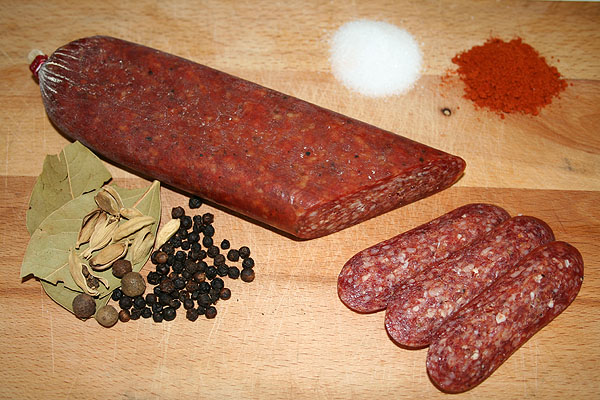
A Bulgarian semi-dried salami with a flattened shape and white fungus.

EvelinaRibarova · CC BY-SA 4.0
Lukanka Troyanska is a variety of the Bulgarian salami known as lukanka, a semi-dried, flattened cylindrical sausage unique to Bulgarian cuisine. It is similar to sujuk but often stronger flavored, with a brownish-red interior covered by a white fungus and a grainy structure from small pieces of meat and fat.
Quick Facts
- Country
- Bulgaria
- Course
- Sausage
- Main Ingredient
- Pork, Veal
Facts from the source article.
Lore & Background
Lukanka Troyanska is a regional variety of lukanka, a traditional Bulgarian salami. Like all lukanka, it is made from minced pork, veal, and spices such as black pepper, cumin, and salt, stuffed into a dried cow's intestine casing. The sausage is then hung to dry for 40 to 50 days in a well-ventilated location, during which it is pressed to acquire its characteristic flat form. The taste qualities of lukanka depend on the natural characteristics of the region where it is produced, influenced by the typical microflora of the local geographic environment.
Reader's Guide
Lukanka Troyanska represents the regional diversity of Bulgarian lukanka production. While the source article does not specifically mention Troyan, it notes that several regions in central Bulgaria at the foot of the Balkan mountain range are well known for lukanka, including Smyadovo, Panagyurishte, and Karlovo. The name 'Lukanka Troyanska' likely follows the pattern of other protected regional names like 'Karlovska lukanka' and 'Lukanka panagyurska,' the latter having obtained EU and UK-wide Traditional specialities guaranteed (TSG) denomination. Lukanka is typically finely sliced and served cold as an appetizer or starter, and its semi-dried, flattened form with a white fungus-covered skin distinguishes it from other sausages. The grainy interior comes from the mix of small pieces of meat and fat.
Did You Know?
- Lukanka is semi-dried and has a flattened cylindrical shape.
- The interior of lukanka is brownish-red and has a grainy structure from small pieces of meat and fat.
- Lukanka is traditionally made with pork, veal, and spices including black pepper, cumin, and salt.
- The salami is pressed during drying to acquire its typical flat form.
Physical Form & Texture
Lukanka presents a distinctive visual identity among cured meats. Its semi-dried body takes a flattened cylindrical shape rather than the round profile of many other sausages. The interior reveals a brownish-red hue, and the surface is typically encased in a white fungal bloom that develops naturally during the drying process. The texture is notably grainy, a result of the small pieces of meat and fat that make up the mixture. This granular structure sets it apart from smoother, more homogeneous cured products. The white exterior fungus, while perhaps unexpected to some palates, is a hallmark of authentic preparation and signals the natural aging process. The flattened form is not accidental but the result of deliberate pressing during maturation, giving lukanka its signature silhouette on the cutting board.
Traditional Craft & Production
The making of lukanka follows a method rooted in Bulgarian culinary tradition. The base mixture combines pork and veal with a spice blend of black pepper, cumin, and salt, all minced together before being stuffed into a casing of dried cow's intestine. Once filled, the long cylindrical form is suspended in a well-ventilated space where it undergoes a lengthy drying period of roughly 40 to 50 days. During this maturation, the salami is periodically pressed, a step that shapes its characteristic flattened profile. The entire process relies on natural air-drying rather than smoking or artificial dehydration, allowing the local environment to play a direct role in the final product. The result is a semi-dried salami that carries the imprint of its specific place of origin in both flavor and texture.
Regional Identity & Protected Status
Lukanka's flavor is not uniform across Bulgaria; it is shaped by the natural microflora of the region where it is produced. Several areas in central Bulgaria, situated at the foot of the Balkan mountain range, have earned particular renown for their versions. The Smyadovo, Panagyurishte, and Karlovo regions stand out as notable production zones. This regional distinction has received formal recognition: "Karlovska lukanka" from the Karlovo area holds a name protected at the local level by the Patent Office of the Republic of Bulgaria. Meanwhile, "Lukanka panagyurska" from Panagyurishte has secured a Traditional Speciality Guaranteed designation recognized across the European Union and the United Kingdom. These protections underscore that lukanka is not merely a generic sausage but a product whose identity is inseparable from its geographic and microbial terroir.
Culinary Role & Flavor Profile
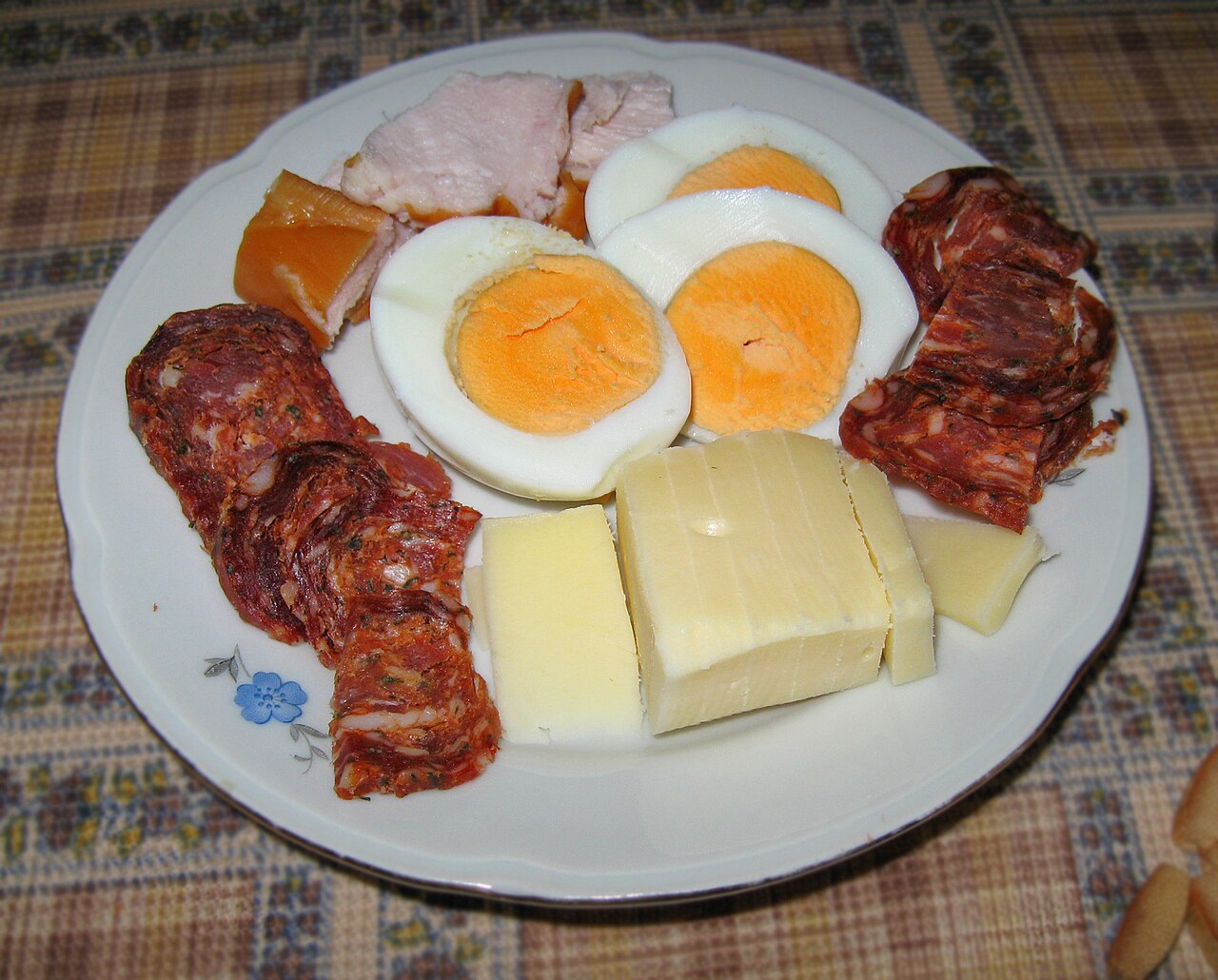
In the Bulgarian kitchen, lukanka occupies a specific and cherished place at the table. It is most commonly served cold, sliced into thin pieces, and presented as an appetizer or starter course. Its flavor profile is often described as stronger and more assertive than that of sujuk, a similar cured meat from other traditions, though the two share a general family resemblance. The spiciness can vary, and some preparations lean toward a notably piquant character. The taste is a product of both the spice blend—black pepper, cumin, and salt—and the living microbial community of the region where the salami dried. This means that two lukanke made from identical recipes in different valleys can taste meaningfully different, each carrying the invisible signature of its local air and microflora.
Gallery
More in Bulgarian cuisine 1-24
Spotted an error? Know more?
Reader corrections go straight into our review queue. Suggest an edit · How this site is sourced