
Mish-mash (food)
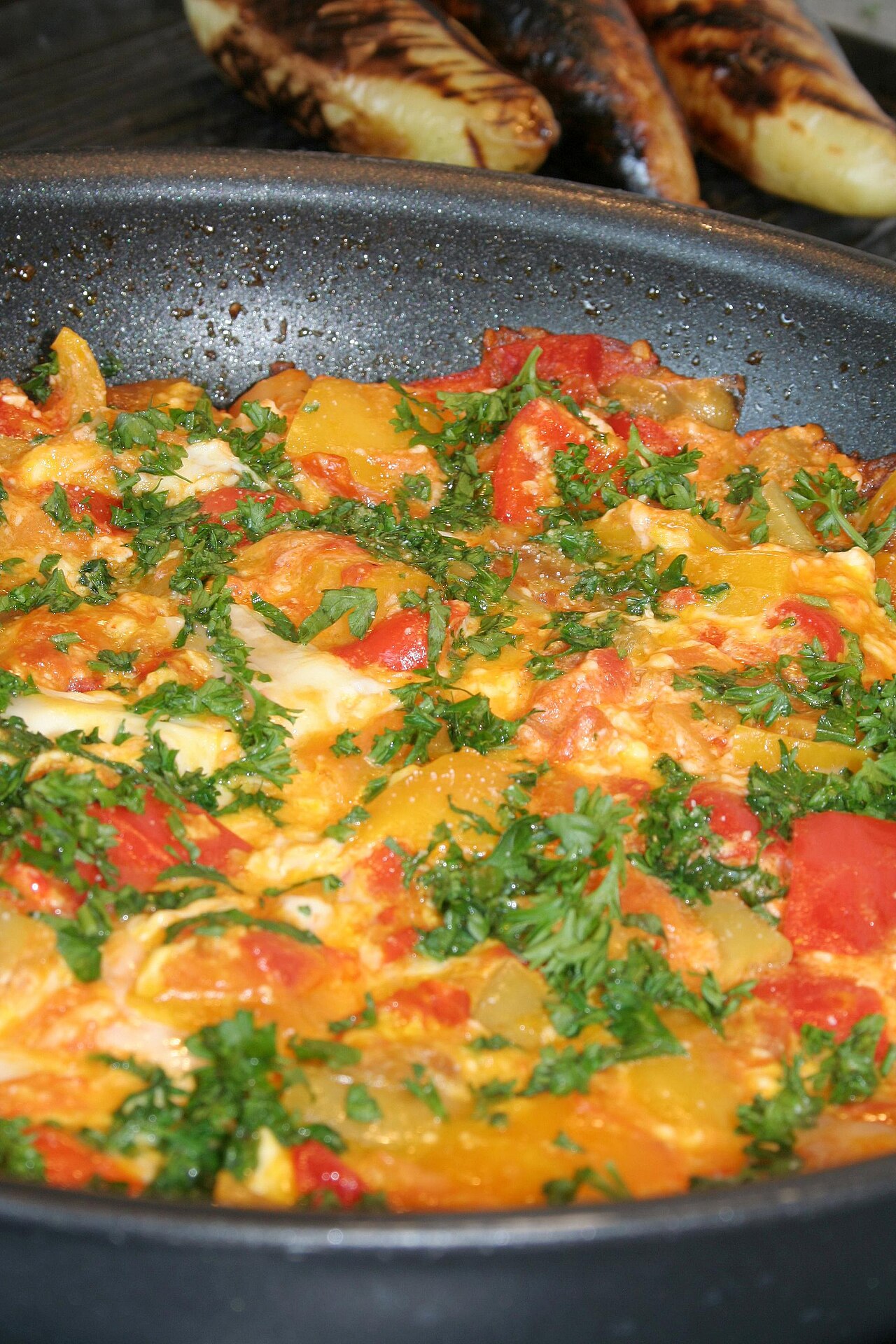
Bulgarian spring dish of vegetables, eggs, and brined cheese.

Ikonact · Public domain
Mish-mash (in Bulgarian: Миш-маш) is a Bulgarian spring dish made with fresh vegetables, eggs, and sirene, a type of Balkan brined cheese. It is typically served warm as an appetizer or main dish, often with fresh bread.
- Type
- Dish
- Origin
- Bulgaria
- Main ingredients
- Eggs, sirene, onions, tomatoes, bell peppers, sunflower oil/vegetable oil/butter, garlic, parsley, black pepper, salt
- Serving temperature
- Warm
- Common roles
- Appetizer or main dish
Lore & Background
Mish-mash is traditionally made from chopped peppers and tomatoes stewed in hot oil over medium heat. Peppers may be pre-roasted and peeled or cut raw. After stewing, eggs and feta cheese are added to thicken the mixture, with parsley added last just before removing from heat. The dish can also be prepared in the oven. It is sometimes convenient to prepare the stewed vegetables beforehand and add eggs and cheese just before consumption.
Reader's Guide
Mish-mash is a versatile Bulgarian dish with no single recipe, allowing many variations. Common ingredients include eggs, sirene, onions, tomatoes, bell peppers, oil or butter, garlic, parsley, black pepper, and salt. Variations may add garlic, scallions, eggplant, okra, or carrots, and some versions omit sirene or onion. The dish is typically served warm as an appetizer or main dish, often accompanied by fresh bread. Its significance lies in its representation of Bulgarian spring cuisine, using fresh vegetables and simple preparation methods. The dish's adaptability and use of local ingredients like sirene highlight regional culinary traditions.
Did You Know?
- There are variations without sirene and without onion.
- The dish is usually served warm, as an appetizer or a main dish, often with fresh bread.
- Peppers can be pre-roasted and peeled or cut raw for the dish.
A Springtime Signature of Bulgarian Kitchens
Mish-mash, known in Bulgarian as Миш-маш, stands as a defining spring dish in the culinary landscape of Bulgaria. At its heart, the preparation draws on the freshest seasonal produce: ripe tomatoes, sweet peppers, and onions form the vegetable foundation. These are joined by eggs and sirene, a traditional Balkan brined cheese that lends the dish its characteristic richness and body. A generous scattering of freshly cut parsley crowns the finished plate, adding a bright herbal note. The dish belongs firmly to the category of vegetable-forward cooking, sitting comfortably alongside other egg-based preparations in Bulgarian cuisine. Its seasonal timing—spring—speaks to a kitchen that celebrates the first tender harvests of the year, when tomatoes and peppers are at their peak and the palette of the plate is dominated by vivid reds, greens, and the pale gold of the cheese.
From Stovetop to Oven: The Method
The traditional method calls for chopping peppers and tomatoes, then stewing them in hot oil over medium heat. Cooks have a choice with the peppers: they can be pre-roasted and peeled for a smoky depth, or simply cut raw for a crisper, fresser bite. Once the vegetables have softened and released their juices, eggs and feta-style cheese are folded into the mixture, serving to thicken and bind everything into a cohesive, creamy whole. Parsley enters the pot at the very last moment, just before the heat is turned off, preserving its delicate flavor and vivid color. For those who prefer a hands-off approach, the dish can also be assembled and finished in the oven. A practical twist worth noting: the stewed vegetables can be prepared well in advance, and the eggs and cheese added only at the moment of serving, making mish-mash a remarkably flexible dish for busy households or gatherings.
A Recipe Without a Single Rule
What makes mish-mash particularly fascinating is that no single authoritative recipe governs it. While eggs, sirene, onions, tomatoes, bell peppers, a cooking fat (sunflower oil, vegetable oil, or butter), garlic, parsley, salt, and black pepper represent the most commonly cited ingredients, the dish is far from fixed. Home cooks and regional traditions introduce a wide array of additions: scallions for a sharp allium punch, eggplant for a meaty texture, okra for its distinctive body, or carrots for a touch of sweetness. Equally important, some versions deliberately omit sirene or even onion entirely, proving that the dish's identity rests on technique and spirit rather than a rigid ingredient list. This openness to variation means that every family table, every village kitchen, and every restaurant in Bulgaria may offer a slightly different interpretation, all equally valid under the broad umbrella of mish-mash.
The Table and the Bread
Mish-mash is most often encountered served warm, occupying a dual role on the Bulgarian table: it can open a meal as a hearty appetizer or anchor the entire plate as a main course. In either capacity, it is typically accompanied by fresh bread, which diners use to scoop up the saucy, cheesy vegetable mixture—a simple pairing that elevates the dish's rustic character. The warmth of the serving is important; the dish is not a cold salad but a gently stewed preparation that benefits from being eaten at the temperature it leaves the pan. Its position within Bulgarian cuisine is that of a reliable, comforting staple rather than an elaborate showpiece. It sits alongside other vegetable and egg dishes in the national repertoire, valued for its accessibility, its reliance on humble seasonal ingredients, and its ability to transform a handful of chopped vegetables and a few eggs into something that feels both nourishing and celebratory.
Gallery
More in Bulgarian cuisine 1-24
Spotted an error? Know more?
Reader corrections go straight into our review queue. Suggest an edit · How this site is sourced