Lukanka Panagyurska
A Bulgarian semi-dried salami with EU and UK protected status.

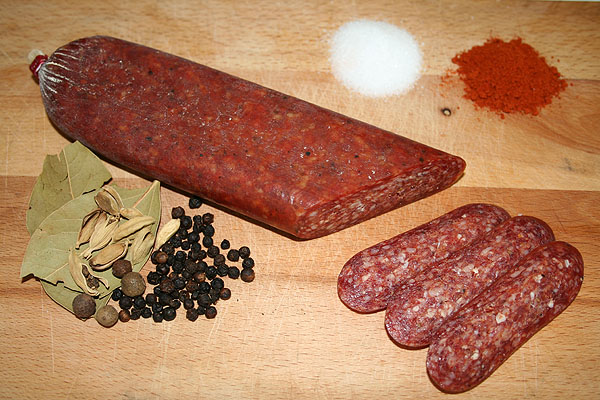
EvelinaRibarova · CC BY-SA 4.0
Lukanka Panagyurska is a traditional Bulgarian semi-dried salami from the Panagyurishte region, protected as a Traditional specialities guaranteed (TSG) product by the EU and UK. It is a variant of lukanka, a Bulgarian salami similar to sujuk but often stronger flavored, made from pork, veal, and spices.
Quick Facts
- Country
- Bulgaria
- Course
- Sausage
- Main Ingredient
- Pork, Veal
Facts from the source article.
Lore & Background
Lukanka Panagyurska is produced in the Panagyurishte region, located at the foot of the Balkan mountain range in central Bulgaria. The taste qualities of this salami depend on natural characteristics of the region and are formed under the influence of the typical microflora of the local geographic environment. Like other lukanka, it is made by mincing pork, veal, and spices together and stuffing the mixture into a length of dried cow's intestine as a casing.
Reader's Guide
Lukanka Panagyurska represents a protected regional food heritage within Bulgaria and the European Union. Its TSG status, obtained from the EU and UK, recognizes its traditional production methods and geographic specificity. The salami is semi-dried, with a flattened cylindrical shape and a brownish-red interior covered by a white fungus. It is typically finely sliced and served cold as an appetizer or starter. The product is one of several regional lukanka varieties in Bulgaria, alongside those from Smyadovo and Karlovo, but Panagyurska is distinguished by its legal protection. This designation helps preserve traditional Bulgarian culinary practices and supports local producers in the Panagyurishte area.
Did You Know?
- Lukanka Panagyurska has obtained EU and UK-wide Traditional specialities guaranteed (TSG) denomination.
- It is made from pork, veal, and spices including black pepper, cumin, and salt.
- The salami is dried for 40 to 50 days and pressed to acquire its typical flat form.
- Its taste is influenced by the typical microflora of the local geographic environment in Panagyurishte.
The Artisanal Craft Behind the Salami
Lukanka is a semi-dried salami that distinguishes itself from other cured meats through its distinctive preparation. The traditional recipe begins with pork and veal, ground together alongside black pepper, cumin, and salt. The resulting blend is packed into a casing made from dried cow's intestine. Once filled, the cylindrical sausage is suspended in a well-ventilated space to dry for roughly forty to fifty days. During this extended curing period, the salami is physically pressed so that it settles into its characteristic flattened cylindrical shape. The finished product reveals a brownish-red interior with a grainy texture created by the small fragments of meat and fat suspended throughout. The outer skin is typically coated with a layer of white fungus, a natural byproduct of the slow drying process. This method of making lukanka is unique to Bulgarian cuisine, and while it shares a family resemblance with sujuk, it tends to carry a noticeably stronger and more assertive flavor profile.
Terroir and the Mountain-Foothill Producers
The taste of lukanka varies from one area to another, shaped by the inherent qualities of the local landscape. The particular microorganisms present in each environment contribute directly to the flavor that develops during the lengthy drying period. Several areas within Bulgaria have earned recognition for their lukanka production, and the majority of these are concentrated in central Bulgaria, nestled at the foot of the Balkan mountain range. Three regions stand out in particular: Smyadovo, Panagyurishte, and Karlovo. Each of these foothill communities has cultivated its own reputation for crafting the salami, with the surrounding environment contributing subtle distinctions to the final product. The connection between place and flavor means that a lukanka from one valley will taste different from one made just a short distance away, making the geographic origin an essential part of the salami's identity.
Legal Protection and Designated Status
Lukanka production in Bulgaria is not entirely unregulated; certain regional varieties have received formal legal protection to safeguard their identity. In the Karlovo area, the designation 'Karlovska lukanka' is shielded at the national level through the country's Patent Office, restricting the use of that name to salami genuinely originating from that locale. At a broader international level, the 'Lukanka panagyurska' from the town of Panagyurishte has been granted a Traditional Speciality Guaranteed (TSG) denomination recognized across the entire European Union as well as the United Kingdom. This TSG status acknowledges that the product's qualities derive from its traditional recipe and method of production, distinguishing it from generic salami. These protections reflect the cultural importance of lukanka within Bulgarian food heritage and serve to prevent unauthorized producers from diluting the reputation built by the small communities in the Balkan foothills.
Flavor Profile and the Table
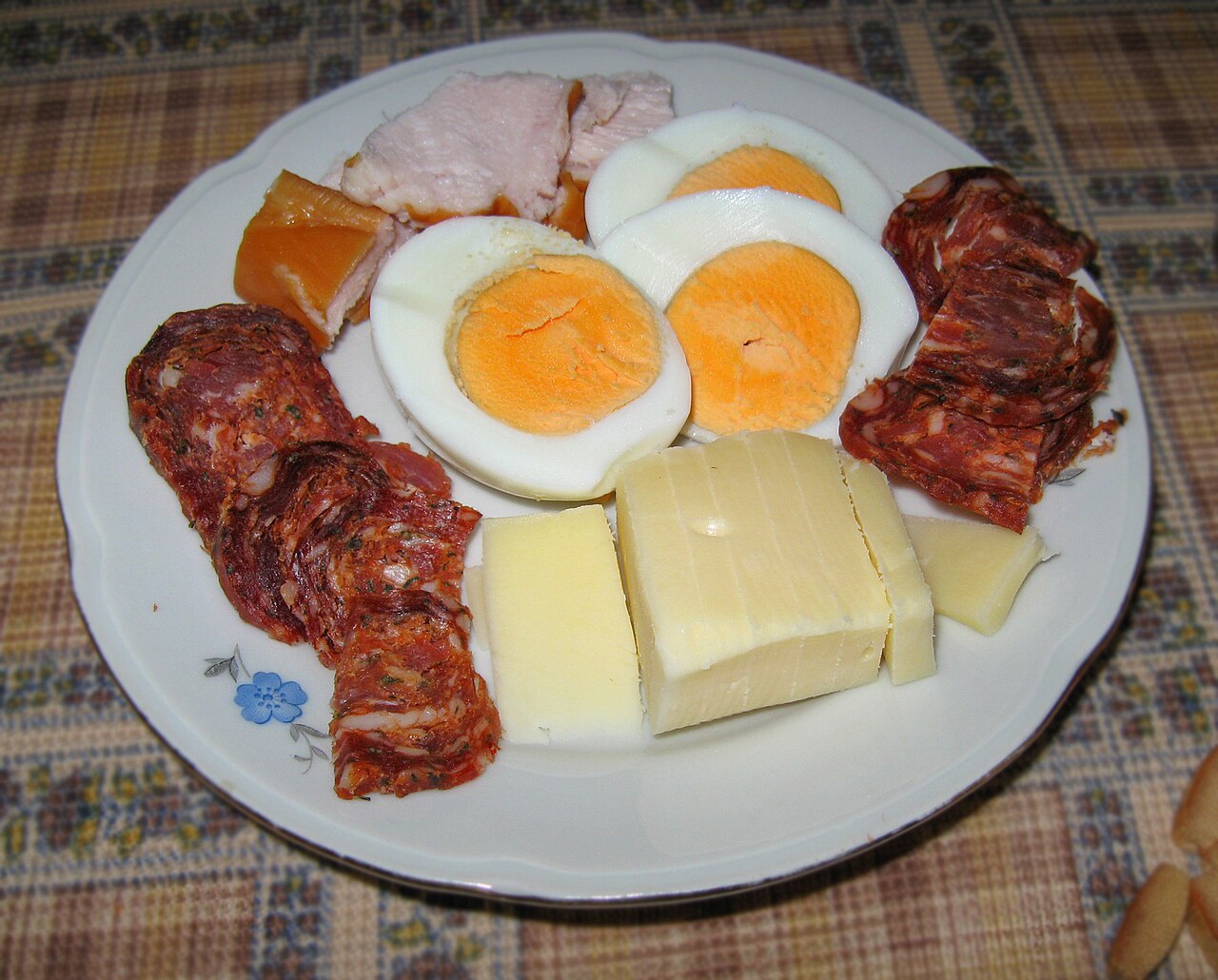
On the plate, lukanka presents as a cold appetizer or starter, typically sliced into thin pieces that reveal its brownish-red interior and grainy cross-section. The texture is distinctive: small fragments of meat and fat are distributed throughout, giving each bite a slightly coarse, layered quality rather than a smooth, uniform one. The flavor is often described as stronger and more assertive than that of sujuk, its closest relative among cured sausages, and some versions carry a spicy edge. The white fungal coating on the outer skin is a natural sign of proper aging rather than a defect. As a uniquely Bulgarian product, lukanka occupies a specific niche in the country's culinary tradition, bridging the gap between a simple snack and a regional specialty. Its preparation from pork, veal, and a straightforward spice blend of black pepper, cumin, and salt keeps the focus on the quality of the meat and the patience of the drying process, allowing the terroir of the Balkan foothills to shine through in every slice.
Gallery
More in Bulgarian cuisine 1-24
Spotted an error? Know more?
Reader corrections go straight into our review queue. Suggest an edit · How this site is sourced