Tusayan Ruins
800-year-old Pueblo site with museum and self-guided trail.
Last updated

via Wikipedia: Tusayan Ruins · see source
Where it is
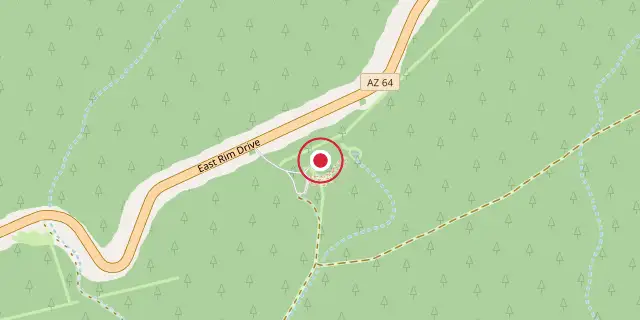
Coordinates: 36°00′50″N 111°51′58″W (36.0140, -111.8660) · Open in OpenStreetMap
Coordinates and connected clubs: the infobox of Wikipedia: Tusayan Ruins (CC BY-SA 4.0). Map: drawn by Codexery from OpenStreetMap tiles.
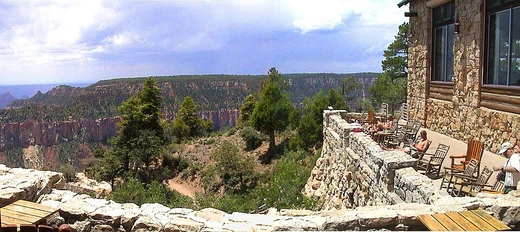
Tucked away in Grand Canyon National Park, the Tusayan Ruins—also known as Tusayan Pueblo—are an 800-year-old Pueblo Indian site that the National Park Service ranks among Arizona’s most important archaeological finds. The small, u-shaped pueblo includes a living area, storage rooms, and a kiva. Tree-ring dating shows it was inhabited for roughly two decades starting around 1185. Located on Desert View Drive, three miles west of the Desert View Watchtower, the site earned a spot on the National Register of Historic Places in 1974.
Background
The Tusayan Ruins were excavated in 1930 by members of the Gila Pueblo of Globe, Arizona. Preservation work took place in 1948 and 1965. The site represents the survival of an isolated Pueblo II culture into the Pueblo III era. The Tusayan Museum was built in 1928 to a design by National Park Service architect Herbert Maier and sponsored by Laura Spelman Rockefeller as a trailside museum.
It was expanded in 1934, and represents an interpretation of a Hopi structure. The Tusayan Ruin and Museum is an NPS interpreted location, which includes a trail from the museum through part of the ruin. Tours may be ranger-led or self-guided.
More in Buildings and Structures in Grand Canyon National Park
Related in Buildings and Structures in Grand Canyon National Park
Links follow this subject's own source article.
Sources
Compiled from Wikipedia and the sources listed below. Text from Wikipedia is available under CC BY-SA 4.0; this entry is adapted from it.
- Wikipedia: Tusayan Ruins (CC BY-SA 4.0).
Spotted an error? Know more?
Reader corrections go straight into our review queue. Suggest an edit · How this site is sourced