São Paulo
One of Brazil's most successful clubs, never relegated, with three world titles.

via Wikipedia: São Paulo FC · see source
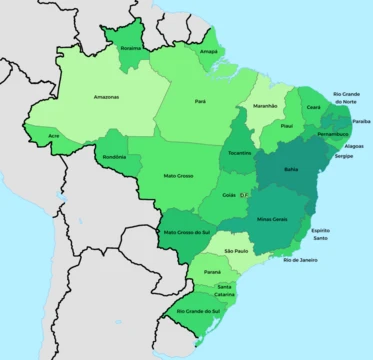
São Paulo is the capital city of the state bearing the same name and stands as the most populous city in Brazil, South America, the Americas, and both the Western and Southern Hemispheres. Its name honors Paul the Apostle, and its residents are called *paulistanos*, while *paulistas* refers to people from the broader state. The city’s Latin motto, *Non ducor, duco*, means “I am not led, I lead.” Founded in 1554 by Jesuit priests, it is one of the oldest continuously inhabited cities in the Americas. During the colonial era, it served as a strategic base for the *bandeirantes*, pioneers who expanded Brazil’s territory and economy. Its economic rise was cemented during the 19th-century coffee cycle, and it later became the stage for landmark events such as the Cry of Ipiranga, the Modern Art Week, the 1932 Revolution, and the Diretas Já movement. Industrialization in the 20th century turned São Paulo into a cosmopolitan melting pot, hosting the world’s largest Arab, Italian, and Japanese diasporas, with ethnic neighborhoods like Bixiga, Bom Retiro, and Liberdade, and people from over 200 other countries. Its metropolitan area, Greater São Paulo, holds more than 20 million inhabitants, and the broader São Paulo Macrometropolis forms the first megalopolis in the Southern Hemisphere, with over 30 million people.
Economically, São Paulo is Latin America’s largest urban economy and a major global financial center, representing roughly 10% of Brazil’s GDP and over a third of the state’s GDP. It is the only Brazilian city to surpass one trillion reais in GDP and hosts B3, Latin America’s largest stock exchange by market capitalization. Key financial districts cluster around Paulista, Faria Lima, and Berrini avenues. The city is home to 63% of multinationals established in Brazil and produces about one-third of the nation’s scientific output, ranking among the world’s top 50 science and technology clusters. Its main university, the University of São Paulo, is often considered the best in Brazil and Latin America, and the city regularly appears among the best globally for university students. São Paulo also boasts many of Brazil’s tallest skyscrapers, including Alto das Nações, Platina 220, and Figueira Altos do Tatuapé. It leads state capitals in basic sanitation, ranks second in the FIRJAN Municipal Development Index (2025), sixth in the Social Progress Index, and n
- Country
- Brazil
Verified Timeline
Quick Facts
- Official Name
- Municipality of São Paulo / Município de São Paulo
- Settlement Type
- Municipality
- Named For
- Paul the Apostle
- Founder
- Manuel da Nóbrega and Joseph of Anchieta
- Blank Emblem Alt
- Wordmark
- Nicknames
- Selva de Pedra (Concrete Jungle); Terra da Garoa (Drizzle Land); Sampa; "Pauliceia Desvairada" (Crazy Pauliceia)
- Motto
- "Non ducor, duco" 2 / (Latin) / "I am not led, I lead"
- Mapframe
- yes
- Mapframe-Frame-Height
- 300
- Mapframe-Zoom
- 9
- Subdivision Type
- Country
- Subdivision Name
- Brazil
Facts from the source article.
Lore & Background
Founded on 25 January 1930 by 60 former officials, players, members, and friends of Club Athletico Paulistano and Associação Atlética das Palmeiras. Club Athletico Paulistano, founded in 1900 and 11-time champions of São Paulo, abandoned football due to professionalization. Associação Atlética das Palmeiras, founded in 1902 and three-time champions, intended to set up a professional team but failed. The new club's jerseys derived from AA das Palmeiras (white with a black ring), adding red-and-white from Paulistano, making the ring red, white, and black. Star players Arthur Friedenreich and Araken Patusca came from Paulistano; the stadium Estádio da Floresta came from Palmeiras. In August 1930, São Paulo beat the United States national team 5-3 at Chácara da Floresta wearing Palmeiras' uniform. Internal arguments led to financial problems; the club merged with Clube de Regatas Tietê and disbanded football on 14 May 1935. Just after, founders created Grêmio Tricolor, then Clube Atlético São Paulo on 4 June 1935, and finally São Paulo Futebol Clube on 16 December 1935. The new club's first game was against Portuguesa Santista on 25 January 1936. Another merger in 1938 with Clube Atlético Estudantes Paulista saw the club finish runners-up in the Campeonato Paulista.
Reader's Guide
In 1940, Estádio do Pacaembu inaugurated a new era. São Paulo paid 200 contos de réis (about R$162,000 today) to acquire Leônidas from Flamengo, plus Argentinian António Sastre and Brazilians Noronha, José Carlos Bauer, Zezé Procópio, Luizinho, Rui, and Teixeirinha. With these additions, Tricolor became known as the 'Steam Roller', winning the Paulista championship five times: 1943, 1945, 1946, 1948, and 1949. The club sold its Canindé training ground to Portuguesa to raise money for Estádio do Morumbi, construction beginning in 1952. After a dry spell in the early 1950s, the club won state championships in 1953 and 1957, the latter with 35-year-old Brazilian international Zizinho and Hungarian manager Béla Guttmann, who popularized the 4–2–4 formation later used by Brazil in the 1958 FIFA World Cup. The club then entered its longest period without a title, lasting 13 years, as budget focused on Morumbi construction. In 1960, Estádio do Morumbi was inaugurated, named after chairman Cícero Pompeu de Toledo. In 1970, the stadium was completed; the club purchased Gérson from Botafogo, Uruguayan midfielder Pedro Rocha from Peñarol, and striker Toninho Guerreiro from Santos. Managed by Zezé Moreira, they won the Paulista Championship after beating Guarani 2–1 in Campinas. In 1971, they beat Palmeiras 1–0 with a goal from Toninho Guerreiro to capture another state title. In 1977, São Paulo secured the Brazilian Championship for the first time with a penalty shoot-out victory over Atlético Mineiro at Mineirão. In the 1980s, the club won four Paulista and one Brazilian titles, helped by central defenders Oscar and Dario Pereyra. In 1985, head coach Cilinho introduced the 'Menudos of Morumbi' including Paulo Silas, Müller, and Sidney, winning the Paulista Championship with striker Careca and midfielder Falcão. In 1986, manager Pepe led the club to its second Brazilian Championship title, defeating Guarani in a penalty shoot-out. The 'Tricolor Decade' ended with the 1989 Paulista title and a second-place finish in the Brazilian Championship, losing to Vasco da Gama in the final.
Did You Know?
- São Paulo is one of the only two clubs that have never been relegated from Brazil's top division, the other being Flamengo.
- The club's home kit of white with one red and one black horizontal stripe has been used since its inception, honoring the colors of its parent clubs and the state of São Paulo.
- All five FIFA World Cups won by Brazil contained at least one São Paulo player, an honour shared with cross-city rivals Palmeiras.
- São Paulo is the only club in Brazil to have won all available titles, earning the nickname 'Champions of All' after winning the 2024 Supercopa do Brasil.
- The club's first international match was a 5-3 win against the United States national team in August 1930 at Chácara da Floresta.
More in Brazilian States 1-24
Spotted an error? Know more?
This is a living reference — every entry is fact-audited, and reader corrections feed straight into our audit queue. Suggest an edit · See this site's audit record