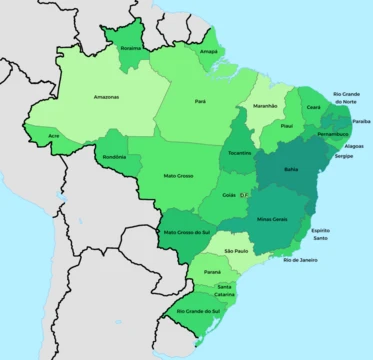
Rio de Janeiro
Brazilian city that was capital of a European colonial power.

Rio de Janeiro, often called Rio, is the capital and largest city of the state of Rio de Janeiro and the second-largest city in Brazil, trailing only São Paulo. As of 2025, the city proper has a population of 6 million, while its metropolitan area is home to 13 million people, making it the sixth-most-populous city in the Americas. It also attracts more international tourists than any other Brazilian city.
Founded on 1 March 1565 by the Portuguese, the city was originally named São Sebastião do Rio de Janeiro. It began as the seat of the Captaincy of Rio de Janeiro within the Portuguese Empire. In 1763, it became the capital of the State of Brazil, replacing Salvador. A pivotal shift occurred in 1808 when the Portuguese royal court, fleeing Napoleon’s invasion of Portugal, relocated to Rio de Janeiro. Under Queen Maria I and her son, Prince Regent John of Braganza, Brazil was elevated to a kingdom within the United Kingdom of Portugal, Brazil, and the Algarves, making Rio the only European colonial capital ever to be moved to a colony. The city remained the seat of this pluricontinental monarchy until the Brazilian War of Independence began in 1822. It then served as the capital of the Empire of Brazil until 1889 and of republican Brazil until 1960, when Brasília took over.
Economically, Rio boasts the second-largest municipal GDP in Brazil and ranked 30th globally in 2008, with an estimated value of R$343 billion. It hosts the headquarters of major corporations such as Petrobras, Vale, and Grupo Globo, Latin America’s largest telemedia conglomerate. The city is also a major research and development hub, accounting for 17 percent of national scientific output as of 2005, and is home to numerous universities and institutes. Despite perceptions, its crime rate is lower than that of most Brazilian state capitals.
Rio is renowned for its natural beauty, including beaches like Copacabana, Ipanema, Leblon, and Barra da Tijuca. Iconic landmarks include the Christ the Redeemer statue atop Corcovado, a New Seven Wonder of the World; Sugarloaf Mountain with its cable car; the Sambódromo parade avenue; and Maracanã Stadium, one of the world’s largest football venues. The city hosted the 2016 Summer Olympics and Paralympics—the first South American and Portuguese-speaking city to do so—and the 2007 Pan American Games. Maracanã has held finals for the 1950 and 2014 FI
- country
- Brazil
- former_capital_of
- Portugal, Brazil, and the Algarves; Empire of Brazil; republican Brazil
Lore & Background
Rio de Janeiro, often called simply Rio, is the capital of the state of Rio de Janeiro and Brazil’s second-largest city after São Paulo, with roughly 6 million residents in the city proper and 13 million in its metropolitan area as of 2025. It is the sixth-most-populous city in the Americas and the most visited by international tourists in the country. The city was founded in 1565 by the Portuguese, led by Estácio de Sá, and named São Sebastião do Rio de Janeiro in honor of Saint Sebastian, the patron of King Sebastião. Its original inhabitants included the Tupi, Puri, Botocudo, and Maxakalí peoples. Rio became the colonial capital in 1763, replacing Salvador, and in 1808 it became the seat of the Portuguese royal court after the royal family fled Napoleon’s invasion of Portugal—the only instance in modern history of a colonizing power moving its capital to a colony. Rio remained the capital of the Empire of Brazil until 1889 and of republican Brazil until 1960, when Brasília took over. The city is a major economic hub, with the second-largest municipal GDP in Brazil and the 30th-largest in the world as of 2008, hosting headquarters of giants like Petrobras, Vale, and Grupo Globo. It is also the second-largest center of research and development in Brazil, accounting for 17% of national scientific output in 2005. Rio is globally famous for its natural landscapes, Carnival, samba, bossa nova, and iconic beaches such as Copacabana, Ipanema, and Leblon. Landmarks include Christ the Redeemer atop Corcovado, a New Seven Wonder of the World; Sugarloaf Mountain; the Sambódromo parade avenue; and Maracanã Stadium, one of the world’s largest football stadiums. The city hosted the 2016 Summer Olympics, the 2014 FIFA World Cup final, and the 2024 G20 summit.
Reader's Guide
As the capital of Brazil for nearly two centuries, it was the political and economic center of the country, home to major institutions such as the National Library of Brazil and the Botanical Garden. The city's economy is the second-largest municipal GDP in Brazil and 30th-largest in the world, hosting headquarters of major companies like Petrobras, Vale, and Grupo Globo. It is also the second-largest center of research and development in Brazil, accounting for 17 percent of national scientific output. Culturally, Rio is known globally for its Carnival, samba, bossa nova, and iconic landmarks like Christ the Redeemer and Sugarloaf Mountain. Despite perceptions, the city has a lower incidence of crime than most state capitals in Brazil.
Did You Know?
- Rio de Janeiro is the only instance in modern history where the capital of a colonizing country officially shifted to a city in one of its colonies.
More in Brazilian States 1-24
Spotted an error? Know more?
This is a living reference — every entry is fact-audited, and reader corrections feed straight into our audit queue. Suggest an edit · See this site's audit record