Jaguar
Largest American cat, keystone predator with a crushing bite.
Last updated

Giles Laurent · CC BY-SA 4.0
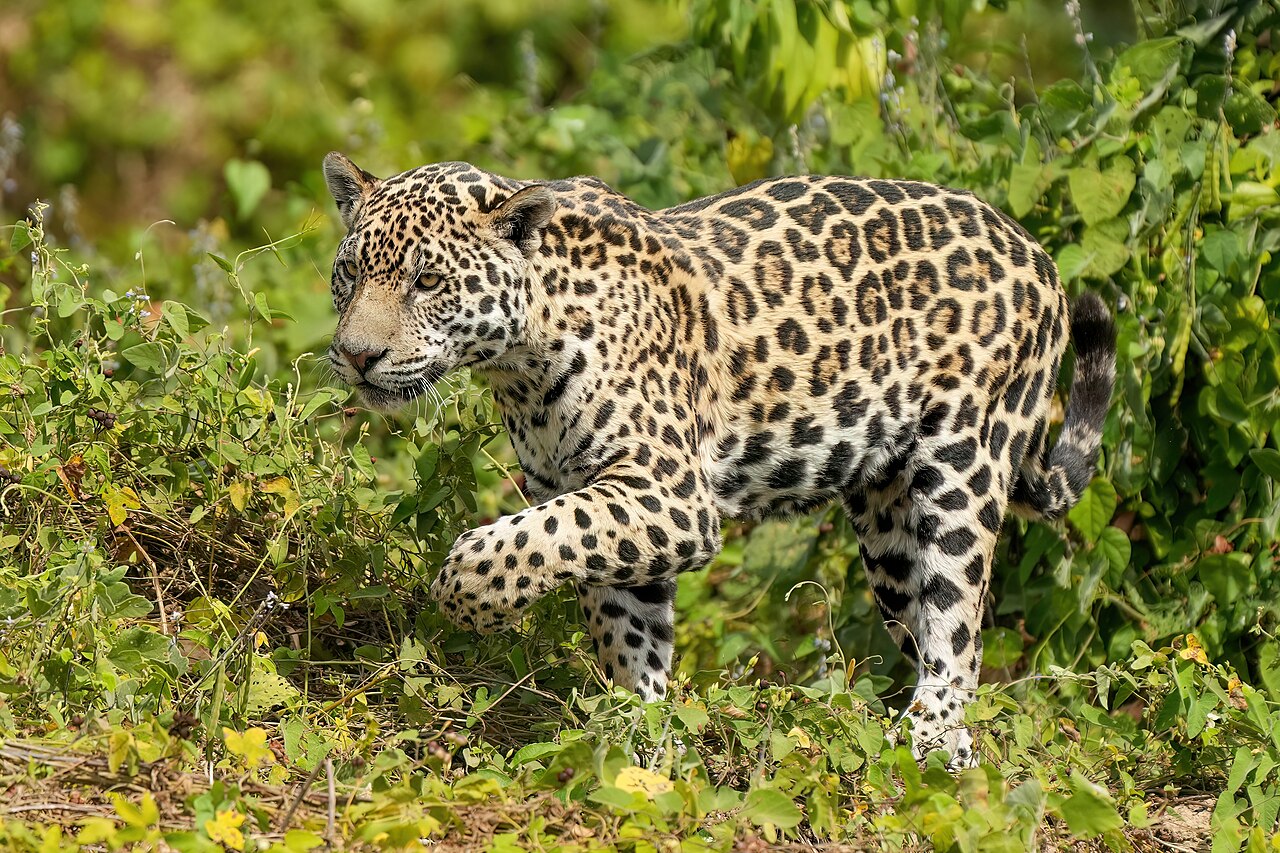
The jaguar (Panthera onca) is the only big cat of the genus Panthera found in the Americas. Its coat ranges from pale yellow to tan, covered with spots that become rosettes on the sides; some individuals are entirely black due to melanism. Reaching up to 1.85 meters (6 feet 1 inch) in length and 158 kilograms (348 pounds), it is the largest cat in the Americas and the third largest globally. Its exceptionally strong bite allows it to crack turtle and tortoise shells, and it kills mammalian prey by biting directly through the skull between the ears.
Evolution
The jaguar’s ancestors likely crossed from Eurasia into the Americas during the Early Pleistocene via the Bering Strait land bridge. The oldest known fossils in North America date to between 0.85 and 0.82 million years ago. Today, its range stretches from the southwestern United States through Mexico, Central America, the Amazon rainforest, and south to Paraguay and northern Argentina.
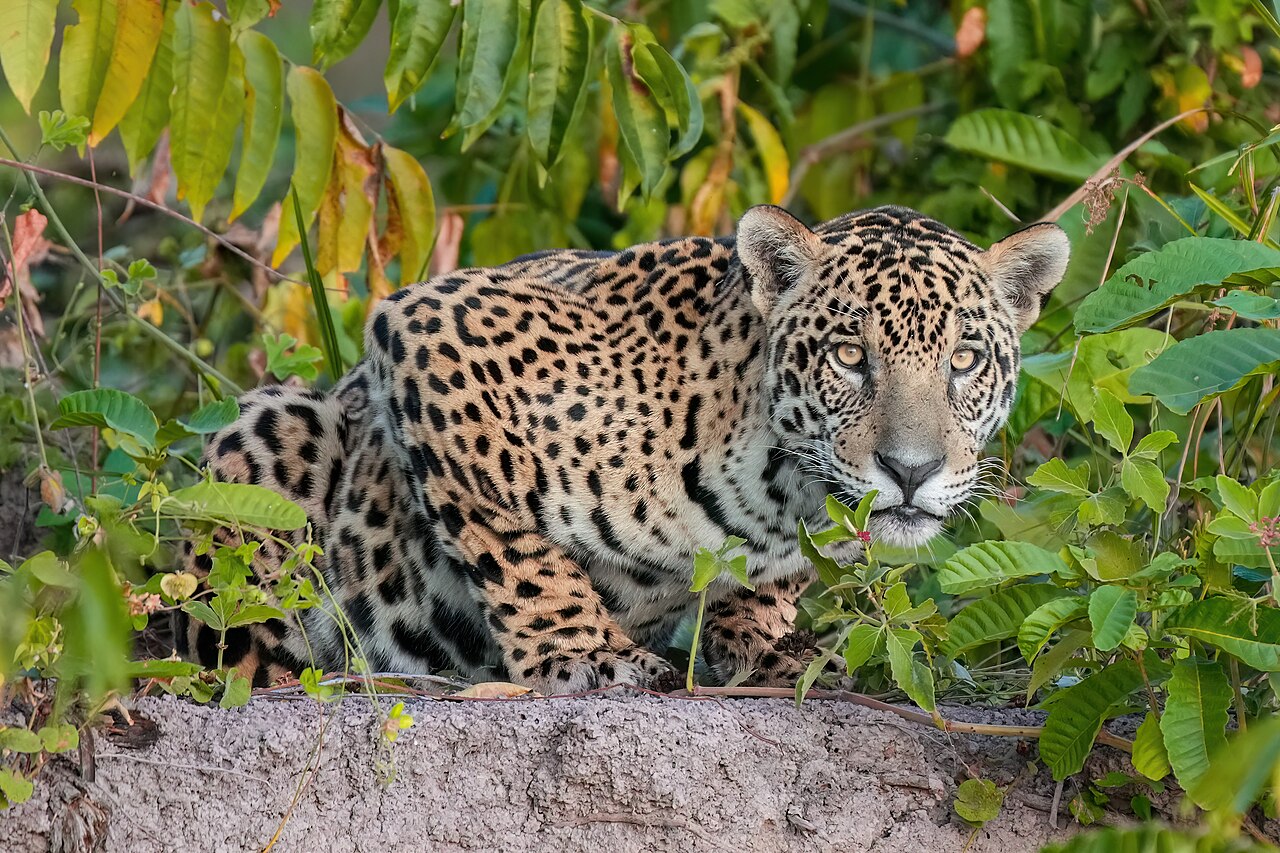
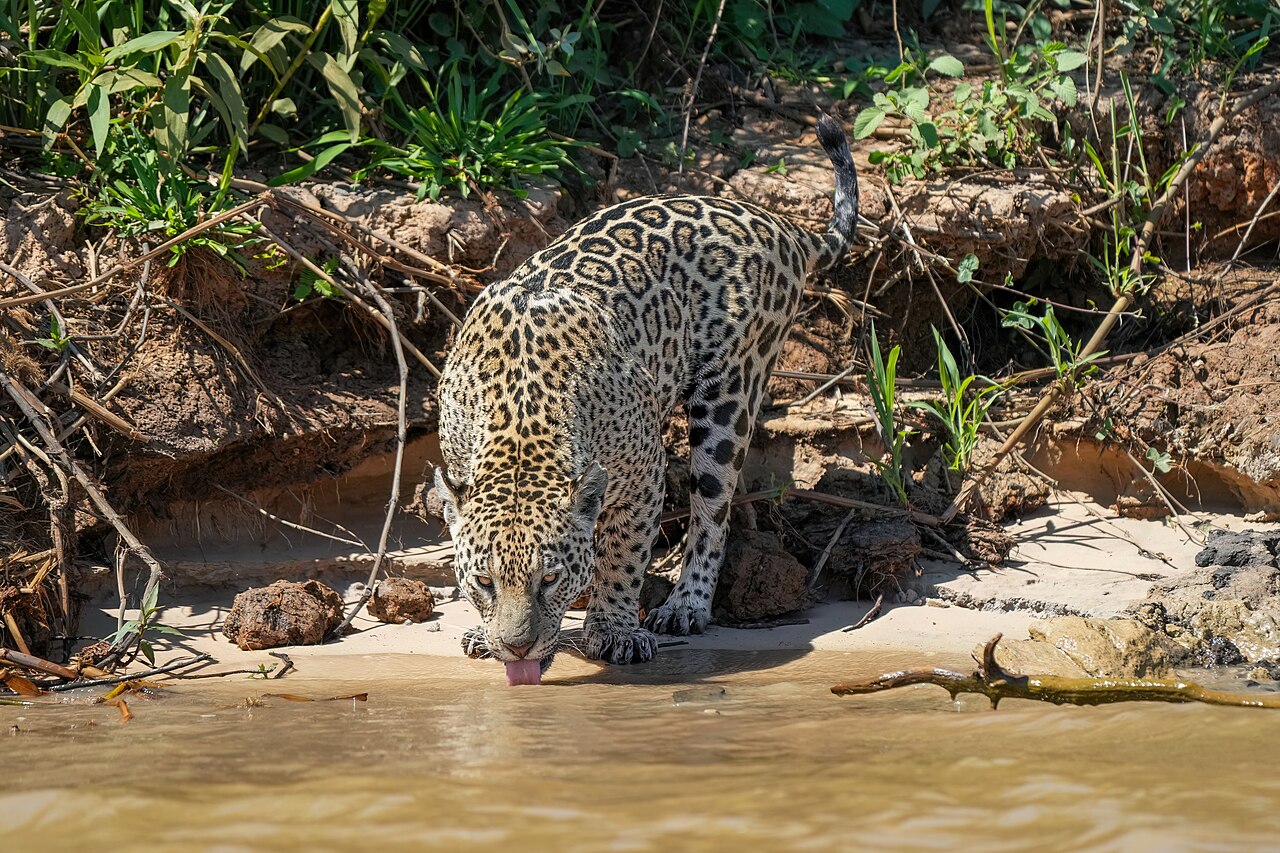
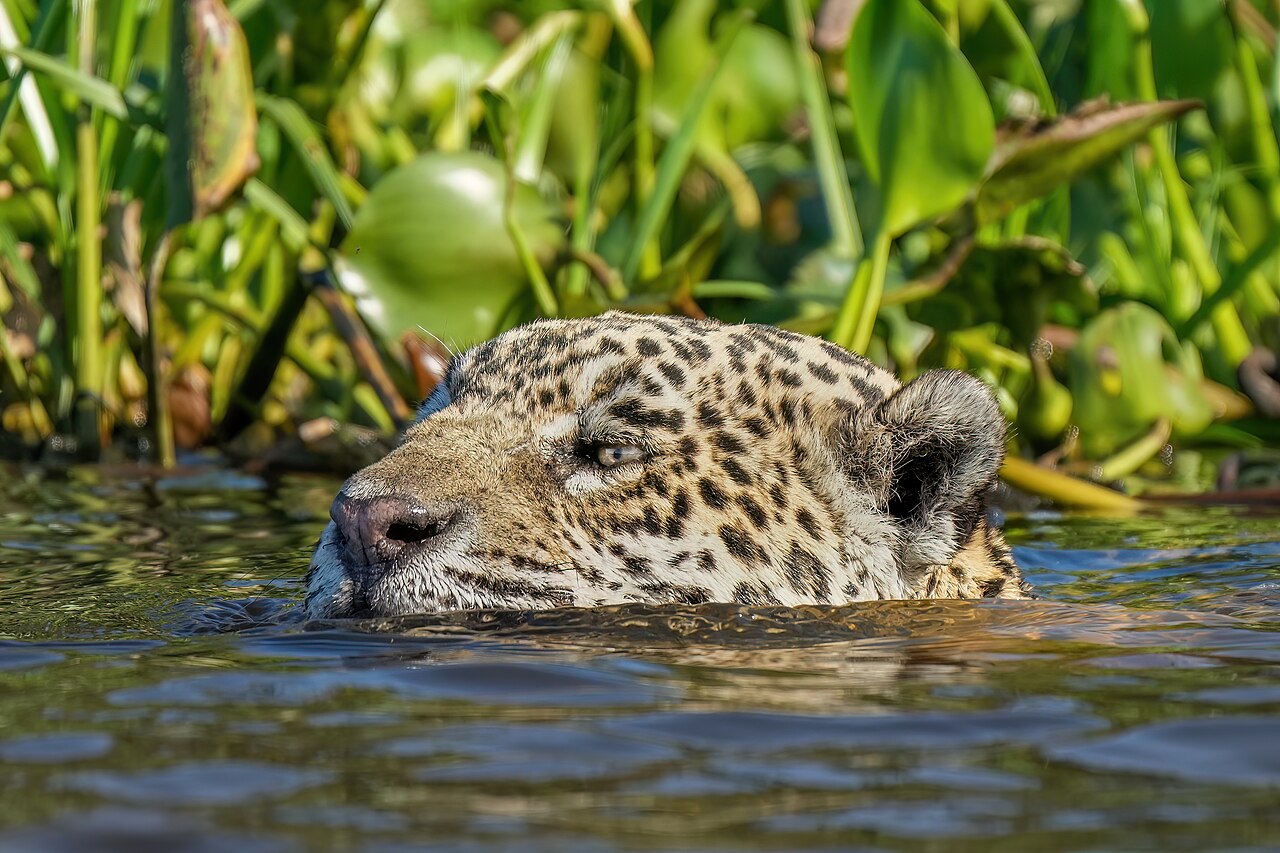
It lives in various forested and open habitats, preferring tropical and subtropical moist broadleaf forests, wetlands, and wooded areas. An excellent swimmer, it is a solitary, opportunistic, stalk-and-ambush apex predator. As a keystone species, it helps stabilize ecosystems and control prey populations.
Threats
Threats include habitat loss and fragmentation, poaching for body parts, and killings due to conflict with humans, especially ranchers in Central and South America. Listed as Near Threatened on the IUCN Red List since 2002, its wild population is believed to have declined since the late 1990s. Conservation focuses on 51 large Jaguar Conservation Units, each containing at least 50 breeding individuals, across 36 geographic regions from Mexico to Argentina.
The jaguar holds a prominent place in the mythology of Indigenous peoples, including the Aztec and Maya civilizations.
Etymology
The word “jaguar” likely comes from the Tupi-Guarani yaguara, meaning “wild beast that overcomes its prey at a bound.” In Guyana, Indigenous peoples call it jaguareté, adding eté (“true”) to distinguish it from other animals called jaguar. “Onca” comes from the Portuguese onça for a spotted cat larger than a lynx; “panther” derives from Latin panthēra and Greek πάνθηρ. In North America, the word is pronounced with two syllables; in British English, with three.
Taxonomy
Carl Linnaeus first described the jaguar as Felis onca in 1758. In the 19th and 20th centuries, various type specimens led to descriptions of multiple subspecies. In 1939, Reginald Innes Pocock recognized eight based on geography and skull shape, though he doubted some. Later work suggested only three, and by 2005 nine were considered valid: P. o. onca (Brazil), P. o. peruviana (Peru), P. o. hernandesii (Mexico), P. o. palustris (Argentina, based on a fossil), P. o. centralis (Costa Rica), P. o. goldmani (Mexico), P. o. paraguensis (Paraguay), P. o. arizonensis (Arizona), and P. o. veraecrucis (Mexico).
Pocock placed the jaguar in Panthera and noted its morphological similarity to the leopard. Genetic and morphological research shows clinal north–south variation but no clear subspecific differentiation; DNA from 84 South American samples indicates high past gene flow in Colombia. Since 2017, the jaguar is considered a monotypic taxon, though Panthera onca onca is still distinguished from two fossil subspecies, P. o. augusta and P. o. mesembrina. However, a 2024 study suggests their validity remains unresolved due to considerable morphometric variation in both fossil and living jaguars.
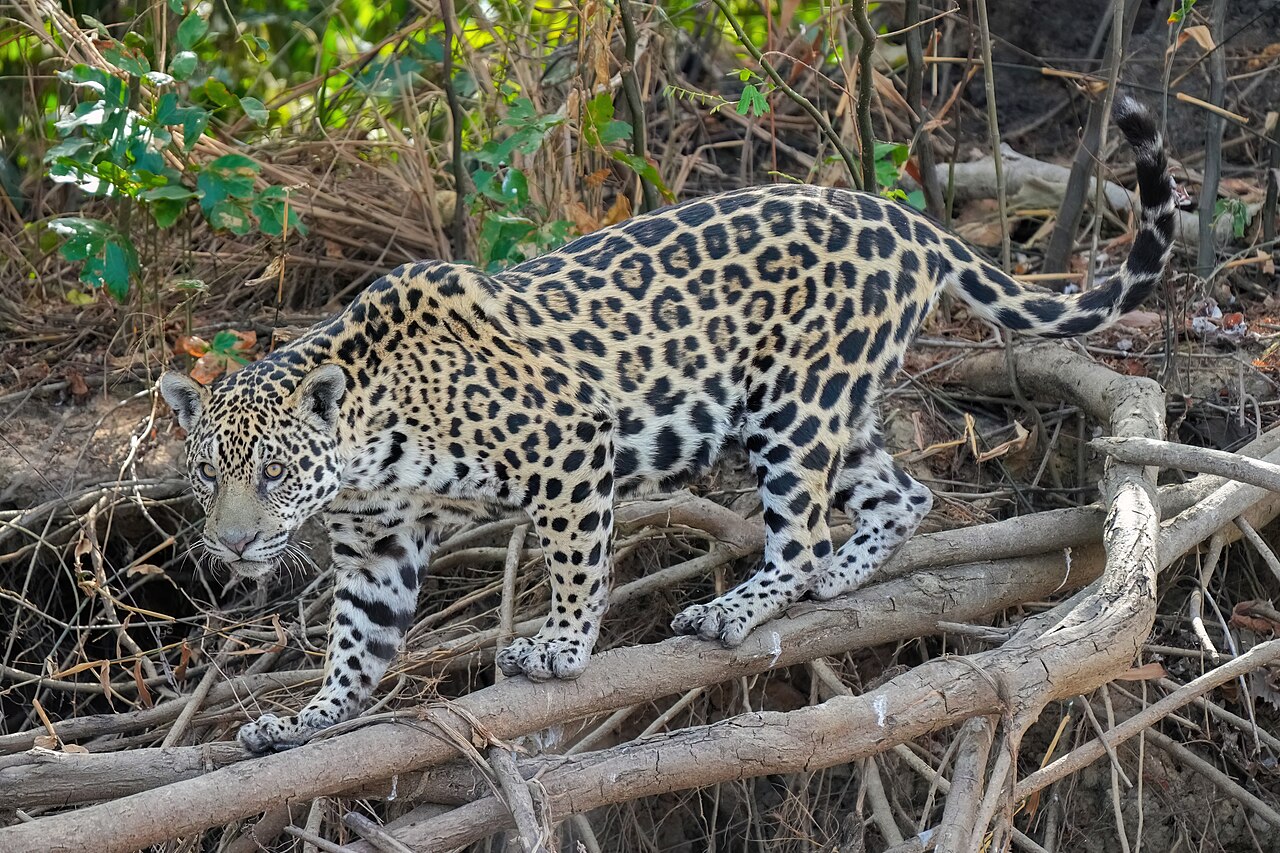
The Panthera lineage diverged from other felids roughly 9.32 to 4.47 million years ago (or 11.75 to 0.97 million years ago). Some genetic analyses place the jaguar as a sister species to the lion, diverging 3.46 to 1.22 million years ago; others place the lion closer to the leopard. The jaguar’s lineage likely originated in Africa and spread to Eurasia 1.95–1 million years ago.
Scientific classification
- KingdomAnimalia
- PhylumChordata
- InfraclassPlacentalia
- OrderCarnivora
- FamilyFelidae
- GenusPanthera
- SpeciesPanthera onca
Named by (Linnaeus, 1758)
Close relatives
Other species of Panthera with a Codexery entry.
- Leopard Panthera pardus
- Snow leopard Panthera uncia
- Lion Panthera leo
- Tiger Panthera tigris
Sources: Wikipedia taxobox: Jaguar (CC BY-SA 4.0)
Conservation status
Near Threatened (NT)
- LC
- NT▲ this species
- VU
- EN
- CR
- EW
- EX
Source: IUCN Red List assessment · GBIF copy of the Red List category
How big is it?
Largest length in the source, 1.85 m, next to a 1.8 m person.
Diagram: drawn by Codexery, schematic shapes to scale (not a likeness). Length: Wikipedia: Jaguar
Where the jaguar has been recorded
Each dot is a place where the species has been observed and reported (143,418 records, half-degree grid) — not a modelled range. 272 inland records left out (institution coordinates).
Map: drawn by Codexery. Data: GBIF occurrence search (records CC0 / CC BY) · Natural Earth basemap (public domain) · place coordinates: Wikipedia (CC BY-SA 4.0)
Lore & Background
The jaguar's ancestors likely entered the Americas from Eurasia during the Early Pleistocene via the Bering Strait land bridge. The oldest jaguar fossils in North America date to between 0.85 and 0.82 million years ago.
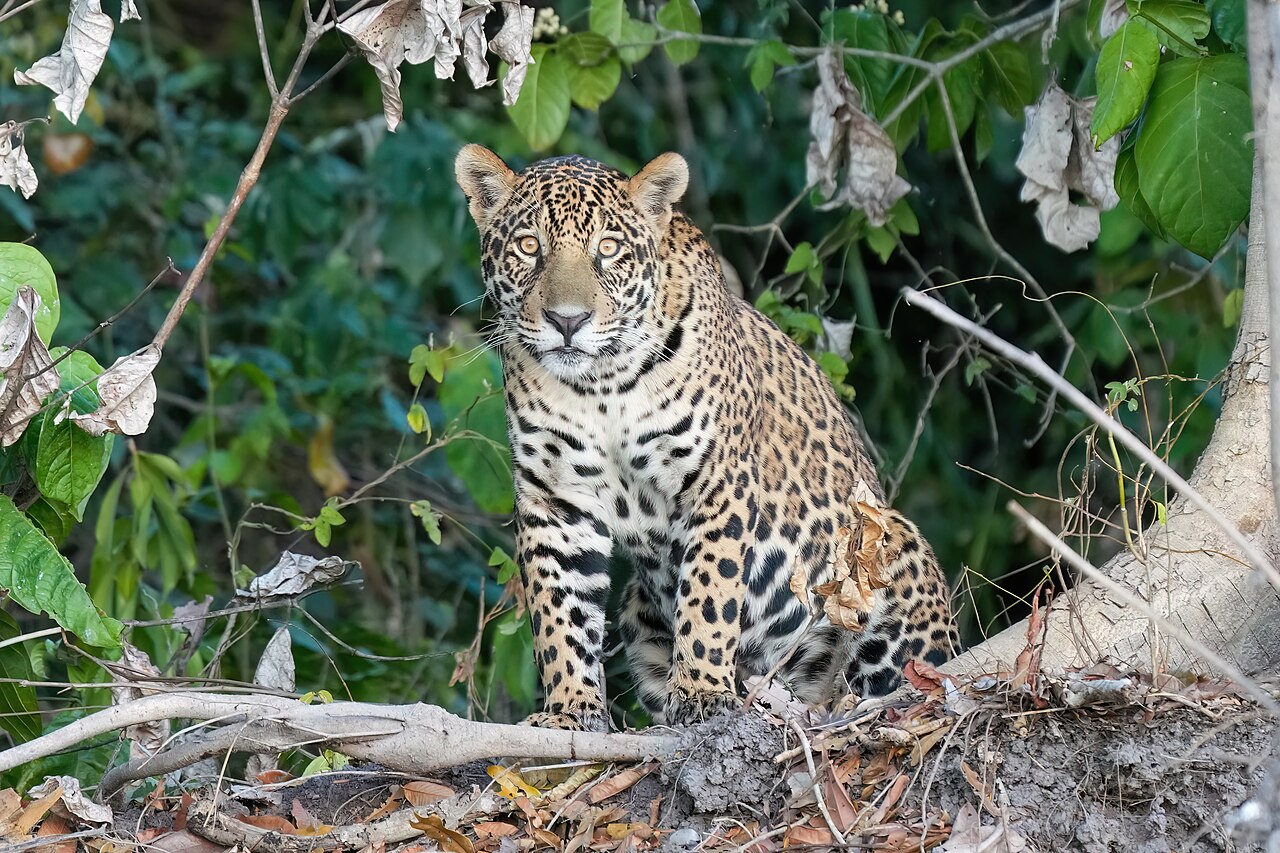
Today, its range extends from the Southwestern United States across Mexico, Central America, the Amazon rainforest, and south to Paraguay and northern Argentina. It inhabits forested and open terrains, but prefers tropical and subtropical moist broadleaf forest, wetlands, and wooded regions. It is adept at swimming and is a solitary, opportunistic, stalk-and-ambush apex predator.
Common Misconceptions (Editorial)
A common misconception is that jaguars are the largest cats in the world. In fact, they are the third largest, after tigers and lions. Another misconception is that jaguars kill prey mainly by suffocation or throat bites; however, they employ an unusual killing method by biting directly through the skull of mammalian prey between the ears.
Why It Matters (Editorial)
The jaguar matters not only as a formidable apex predator but as a keystone species that stabilizes entire ecosystems across the Americas. Its enduring cultural and ecological significance, from ancient indigenous reverence to its critical role in regulating prey populations, underscores why protecting this solitary and powerful cat is essential for biodiversity.
Reader's Guide
The jaguar is threatened by habitat loss, habitat fragmentation, poaching for trade with its body parts, and killings in human–wildlife conflict, particularly with ranchers in Central and South America. Priority areas for conservation comprise 51 large areas inhabited by at least 50 breeding individuals, called Jaguar Conservation Units, located in 36 geographic regions from Mexico to Argentina. The jaguar has featured prominently in the mythology of indigenous peoples of the Americas, including the Aztec and Maya civilizations. The word 'jaguar' possibly derives from the Tupi-Guarani word yaguara meaning 'wild beast that overcomes its prey at a bound.'
More in Big Cats
Test yourself
Three questions drawn from this entry’s sources. Pick an answer to check it.
Answers checked against the source article
Sources
Compiled from Wikipedia and the sources listed below. Text from Wikipedia is available under CC BY-SA 4.0; this entry is adapted from it.
- Wikipedia: Jaguar (CC BY-SA 4.0).
- Conservation status: IUCN Red List assessment.
- Occurrence records: GBIF (CC0 / CC BY). Basemap: Natural Earth (public domain).
- Word definitions: the Codexery glossary, each quoted from its Wikipedia article.
Spotted an error? Know more?
Reader corrections go straight into our review queue. Suggest an edit · How this site is sourced