Clouded leopard
A wild cat with cloud-like markings and the largest canines proportionally.
Last updated

Charles Barilleaux from Cincinnati, Ohio, United States of America · CC BY 2.0
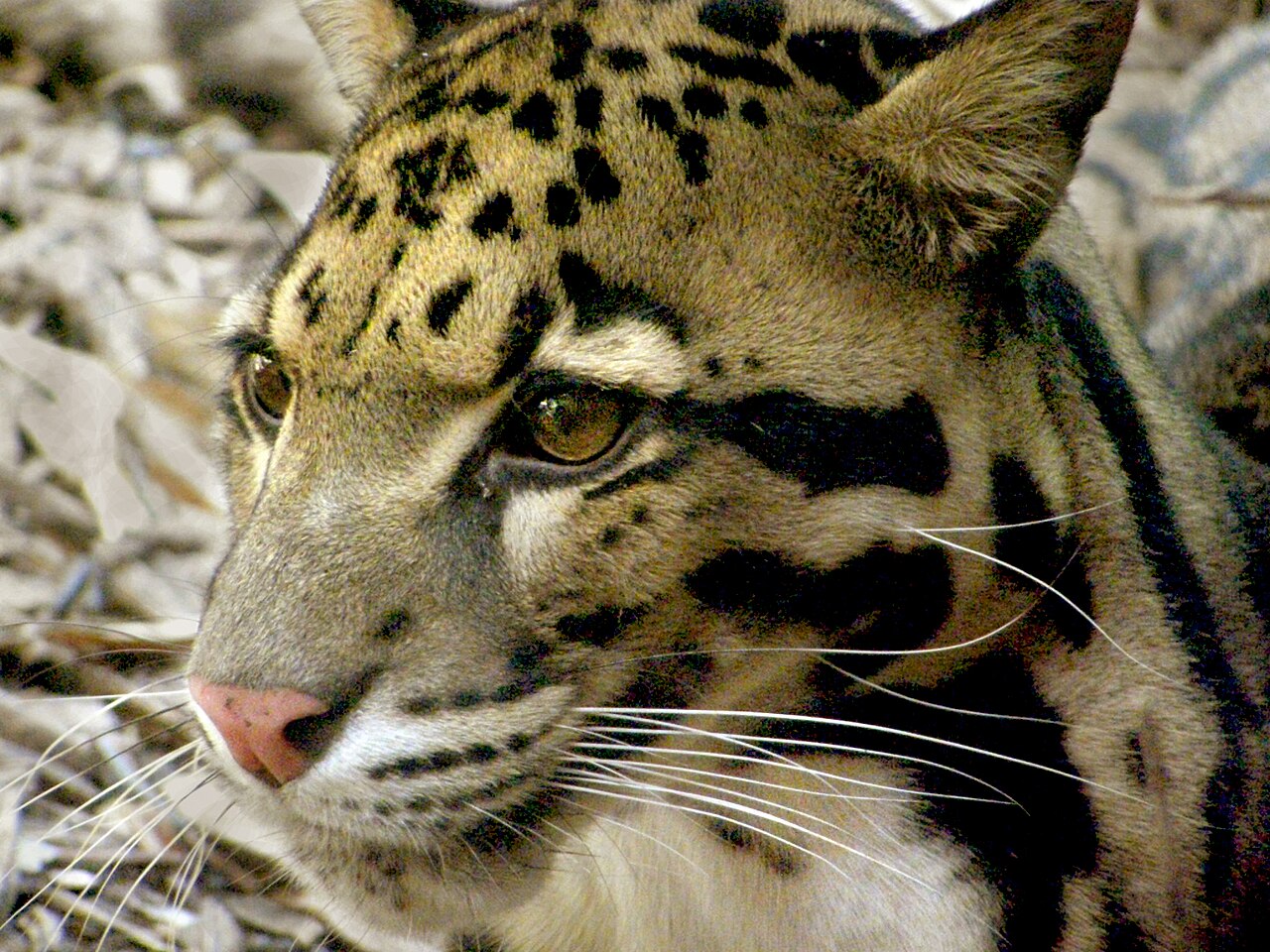
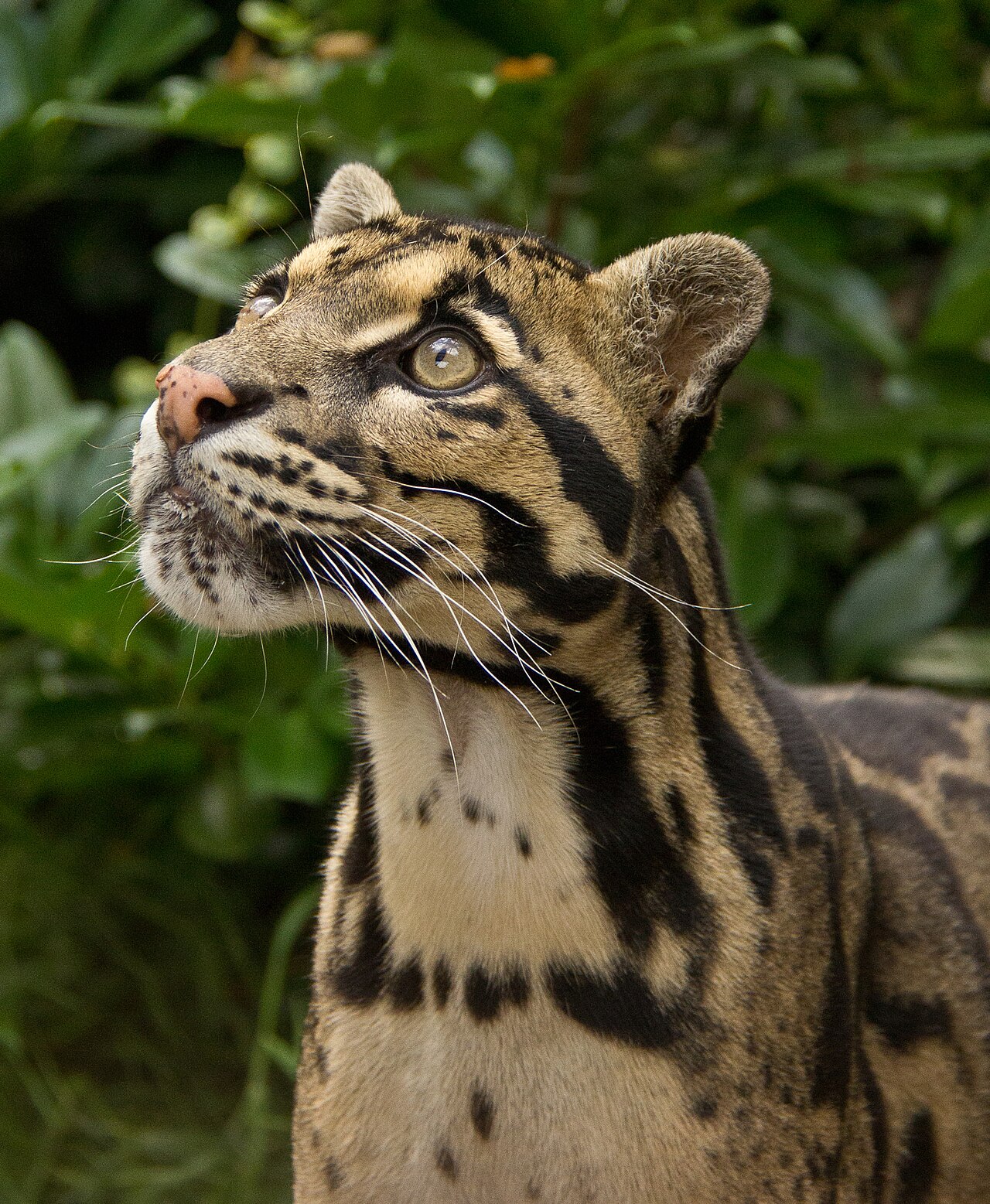
The mainland clouded leopard (Neofelis nebulosa) is a wild cat named for its coat: large, dusky-grey blotches and irregular spots and stripes that look like clouds. Its head and body together measure 68.6 to 108 cm (27.0 to 42.5 in), and its tail—used for balance when moving through trees—adds another 61 to 91 cm (24 to 36 in). This cat is the closest relative of all other pantherine cats, splitting from them genetically between 9.32 and 4.47 million years ago. It lives in dense forests stretching from the Himalayan foothills, through Northeast India and Bhutan, across mainland Southeast Asia, and into southern China.
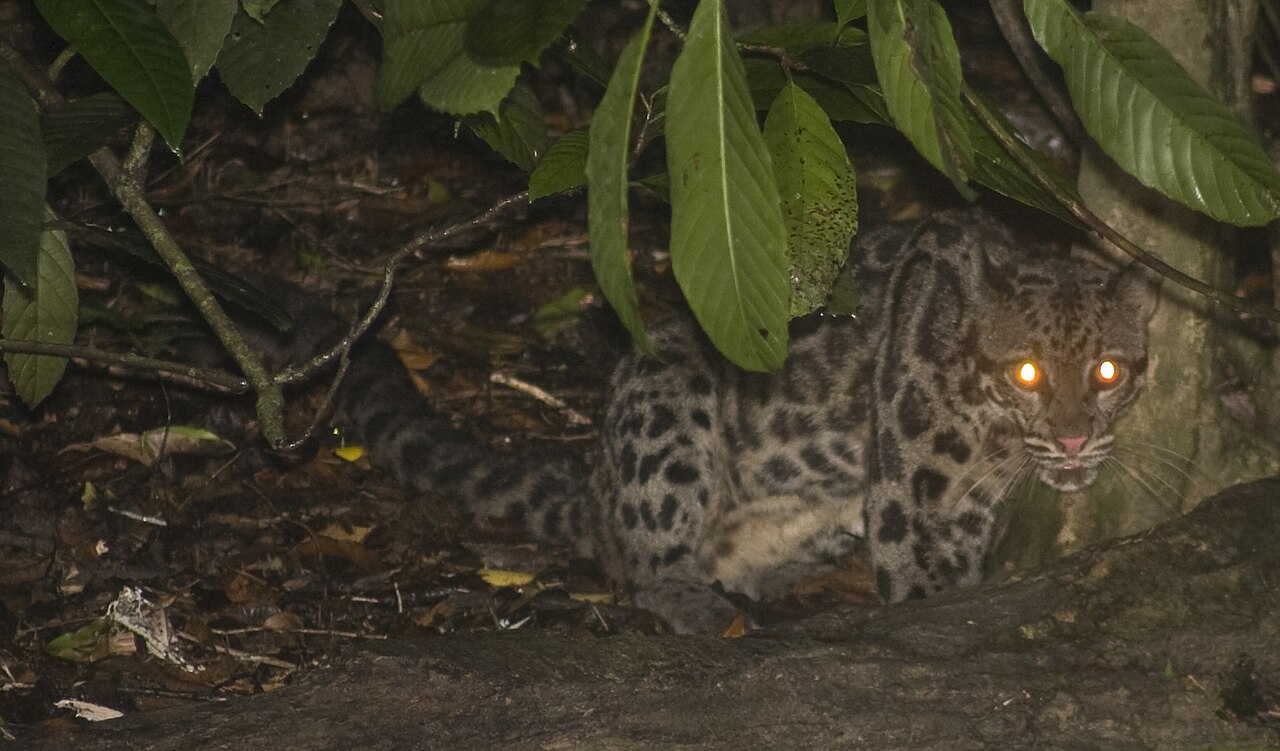
Clouded leopards can climb down vertical tree trunks headfirst, rest in trees during the day, and hunt on the forest floor at night. The wild population is thought to be shrinking, with fewer than 10,000 adults total and no more than 1,000 in any single subpopulation. The species is locally extinct in Singapore and Taiwan, and possibly also in Hainan Island and Vietnam.
Listed as Vulnerable on the IUCN Red List since 2008, it faces threats from large-scale deforestation and commercial poaching for the wildlife trade. Although legally protected in most countries where it lives, its body parts are still sold for decoration and clothing. Clouded leopards have been kept in zoos since the early 1900s, with captive breeding programs starting in the 1980s. In captivity, they live about 11 years on average.
Scientific classification
- KingdomAnimalia
- PhylumChordata
- InfraclassPlacentalia
- OrderCarnivora
- FamilyFelidae
- GenusNeofelis
- SpeciesNeofelis nebulosa
Named by (Griffith, 1821)
Close relatives
Other species of Neofelis with a Codexery entry.
- Sunda clouded leopard Neofelis diardi
Sources: Wikipedia taxobox: Clouded leopard (CC BY-SA 4.0)
Conservation status
Vulnerable (VU)
- LC
- NT
- VU▲ this species
- EN
- CR
- EW
- EX
Source: IUCN Red List assessment · GBIF copy of the Red List category
How big is it?
Largest length in the source, 0.91 m, next to a 1.8 m person.
Diagram: drawn by Codexery, schematic shapes to scale (not a likeness). Length: Wikipedia: Clouded leopard
Where the clouded leopard has been recorded
85 inland records left out (institution coordinates).
Map: drawn by Codexery. Data: Natural Earth basemap (public domain) · place coordinates: Wikipedia (CC BY-SA 4.0)
Lore & Background
It is the sister taxon to other pantherine cats, having genetically diverged 9.32 to 4.47 million years ago. It can climb down vertical tree trunks head first, rests in trees during the day and hunts by night on the forest floor.
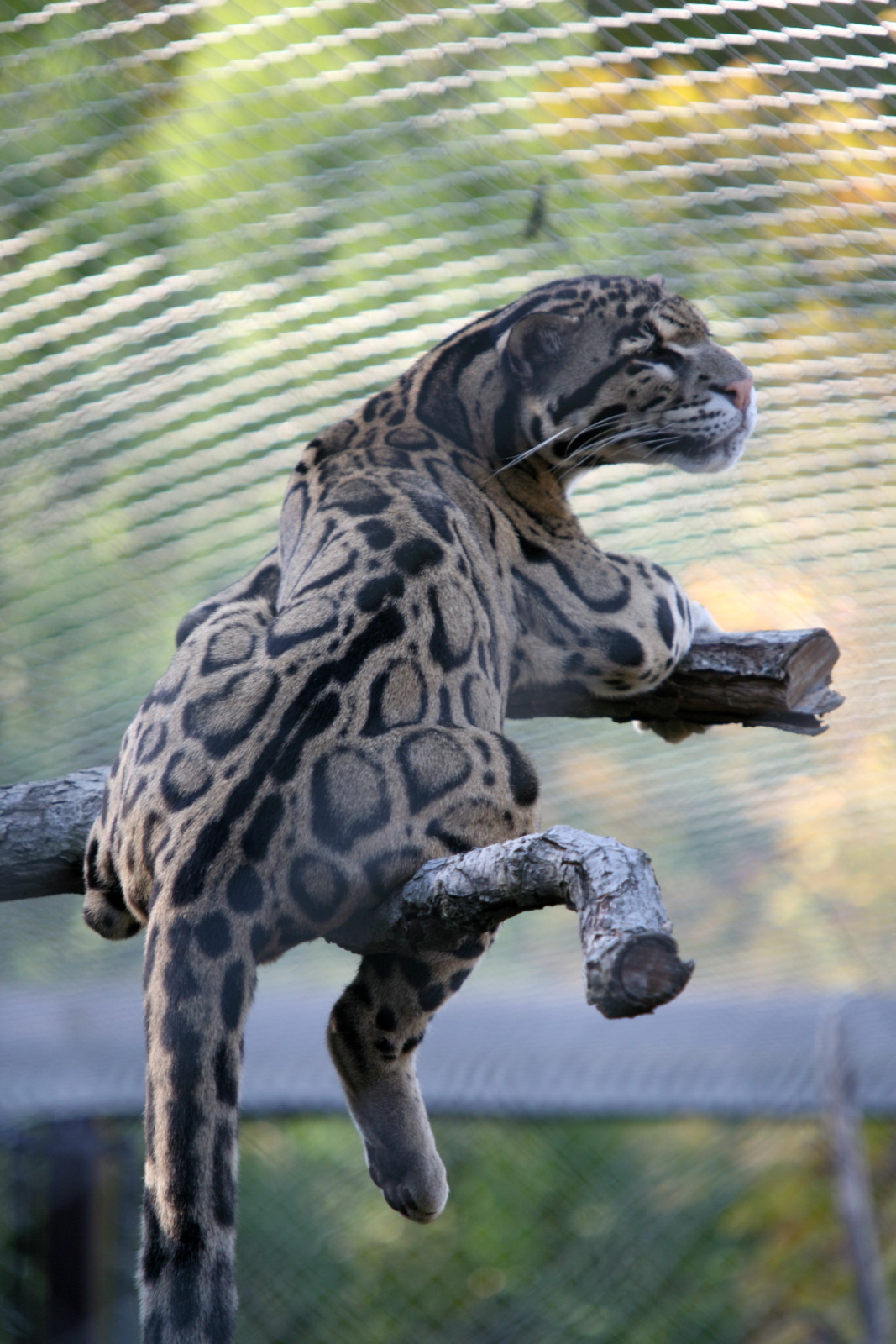
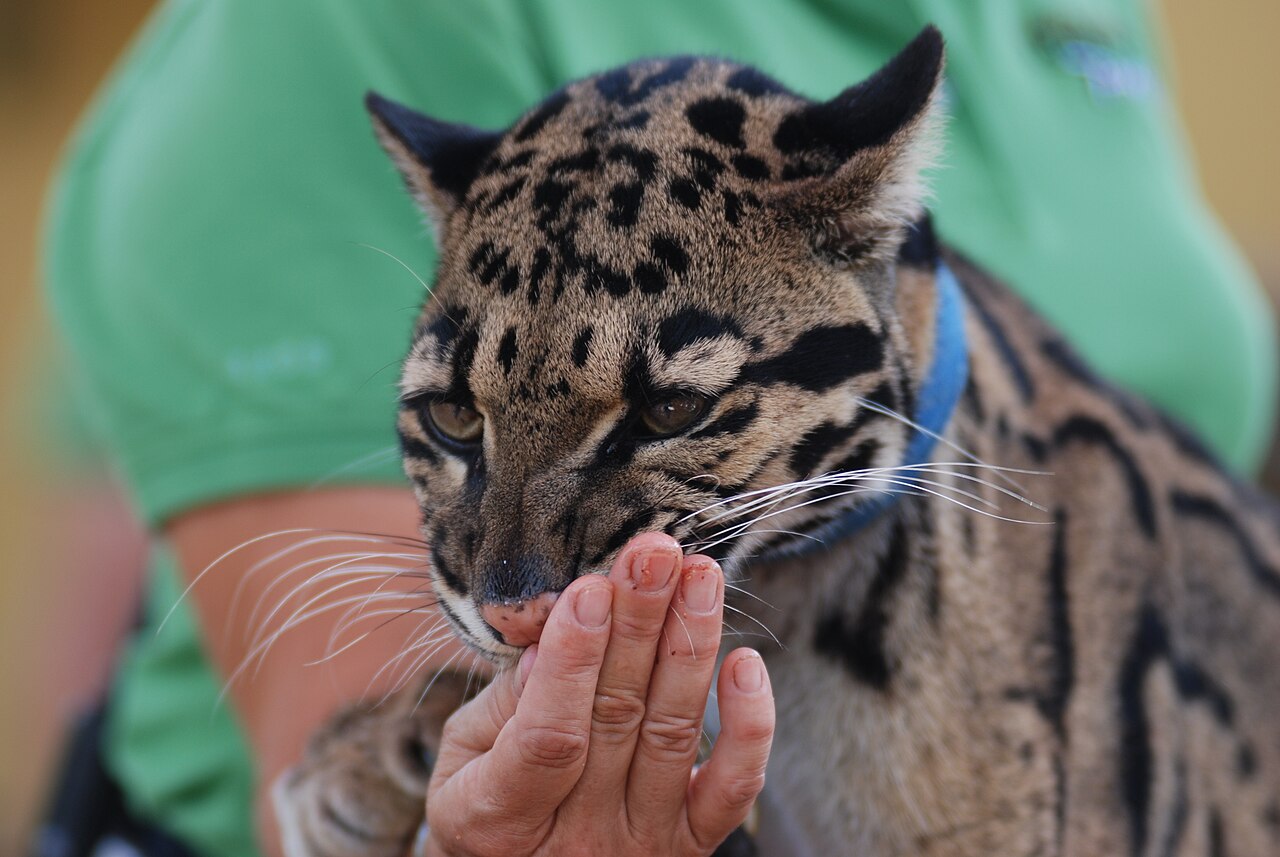
Its hyoid bone is ossified, making it possible to purr, and its pupils contract into vertical slits. Melanistic individuals are uncommon. The clouded leopard is often referred to as a 'modern-day sabre-tooth' because it has the largest canines in proportion to its body size.
Common Misconceptions (Editorial)
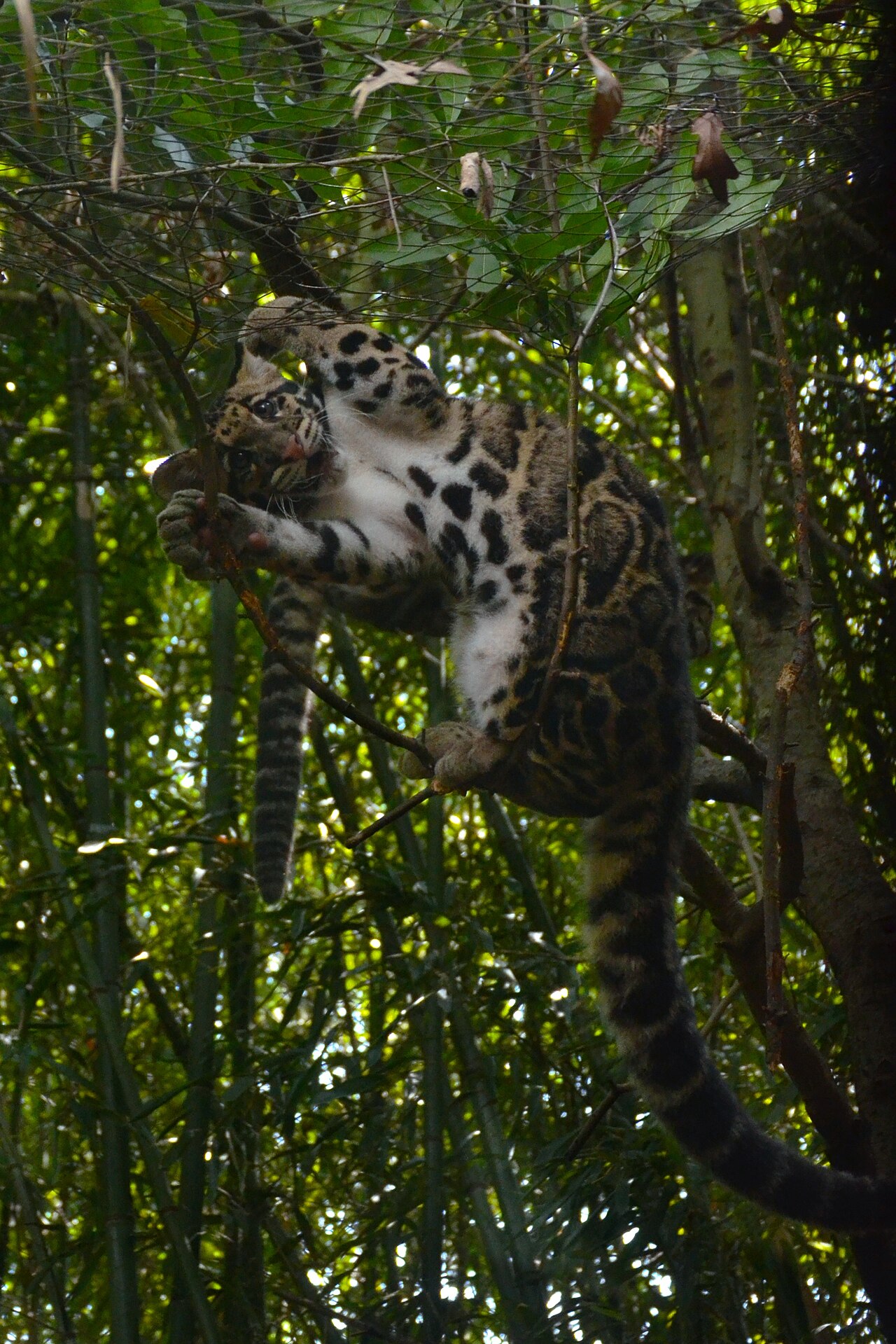
Some people think the clouded leopard is a big cat that roars, but its ossified hyoid bone allows it to purr instead. Others believe it is a close relative of the sabre-toothed tiger, but while it is called a “modern-day sabre-tooth” due to its large canines, it is actually the sister taxon to all other pantherine cats and not directly descended from prehistoric sabre-tooths. Another common misconception is that it primarily stays on the ground; in fact, it rests in trees during the day and hunts by night on the forest floor, and it can even climb down vertical tree trunks head first.
Why It Matters (Editorial)
The clouded leopard endures as a symbol of the elusive and ancient biodiversity of Southeast Asia’s dense forests. Its unique evolutionary position as the sister taxon to all other pantherine cats, combined with its remarkable adaptations like the ability to climb headfirst down trees and its proportionally huge canines, reminds us how much evolutionary wonder still lurks in shrinking wilderness—and how urgently those habitats need protection.
Reader's Guide
The clouded leopard is significant as a distinct evolutionary lineage within the Pantherinae, having diverged millions of years ago. Its unique morphology, including exceptionally long canine teeth and a flexible ankle joint, allows it to be an adept arboreal predator. The species is threatened by large-scale deforestation and commercial poaching for the wildlife trade, with its body parts offered for decoration and clothing.
It is legally protected in most range countries. Captive breeding programs were initiated in the 1980s, and it has been kept in zoological gardens since the early 20th century. The clouded leopard is locally extinct in Singapore and Taiwan, and possibly also in Hainan Island and Vietnam.
More in Big Cats
Test yourself
Three questions drawn from this entry’s sources. Pick an answer to check it.
Answers checked against the source article
Sources
Compiled from Wikipedia and the sources listed below. Text from Wikipedia is available under CC BY-SA 4.0; this entry is adapted from it.
- Wikipedia: Clouded leopard (CC BY-SA 4.0).
- Conservation status: IUCN Red List assessment.
- Occurrence records: GBIF (CC0 / CC BY). Basemap: Natural Earth (public domain).
- Word definitions: the Codexery glossary, each quoted from its Wikipedia article.
Spotted an error? Know more?
Reader corrections go straight into our review queue. Suggest an edit · How this site is sourced