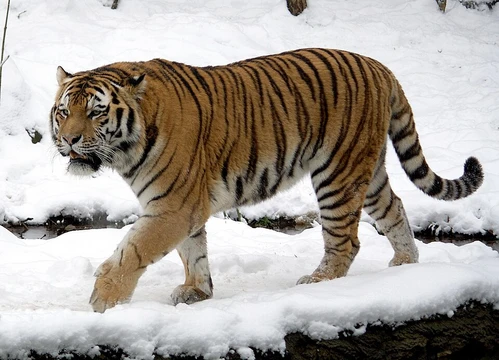
Cheetah
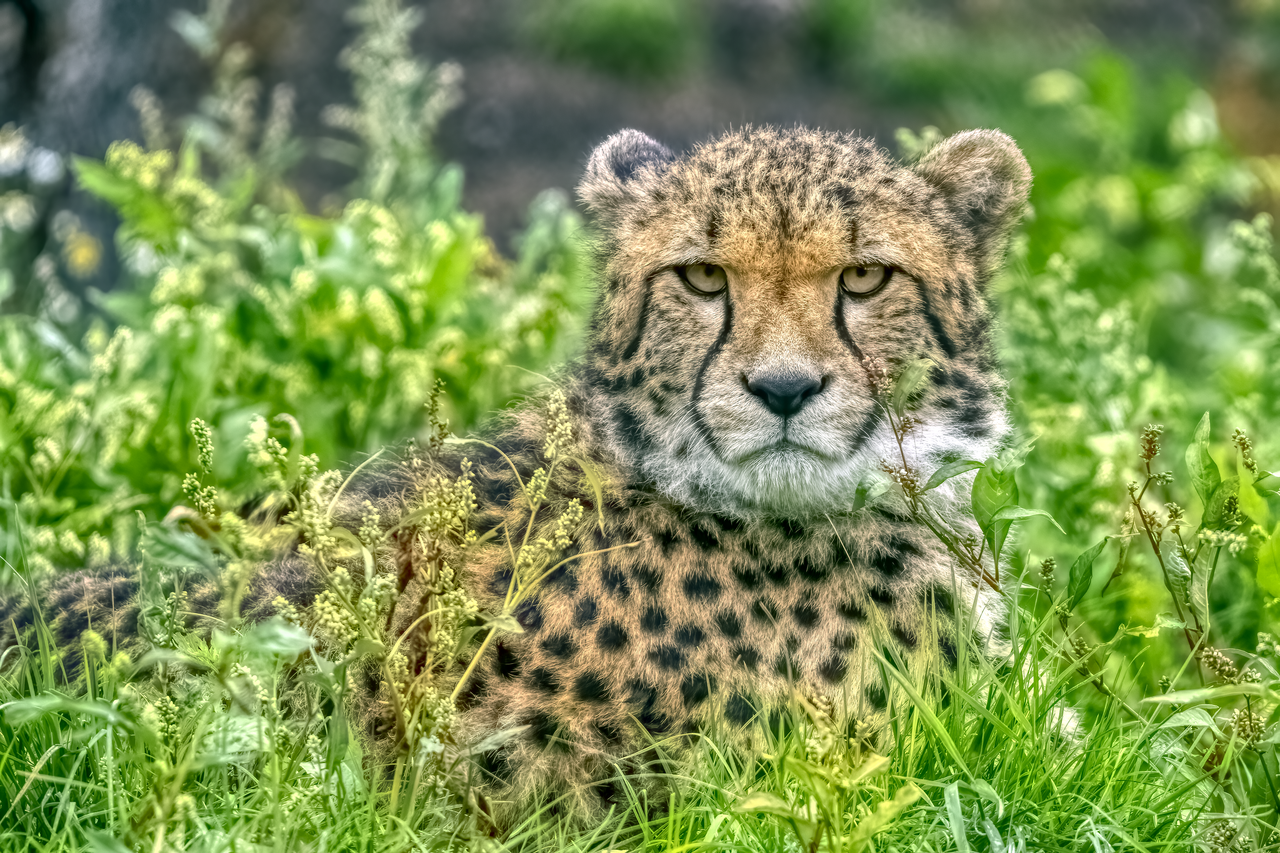
The fastest land animal, a pursuit predator with distinctive black tear-like facial streaks.
Last updated

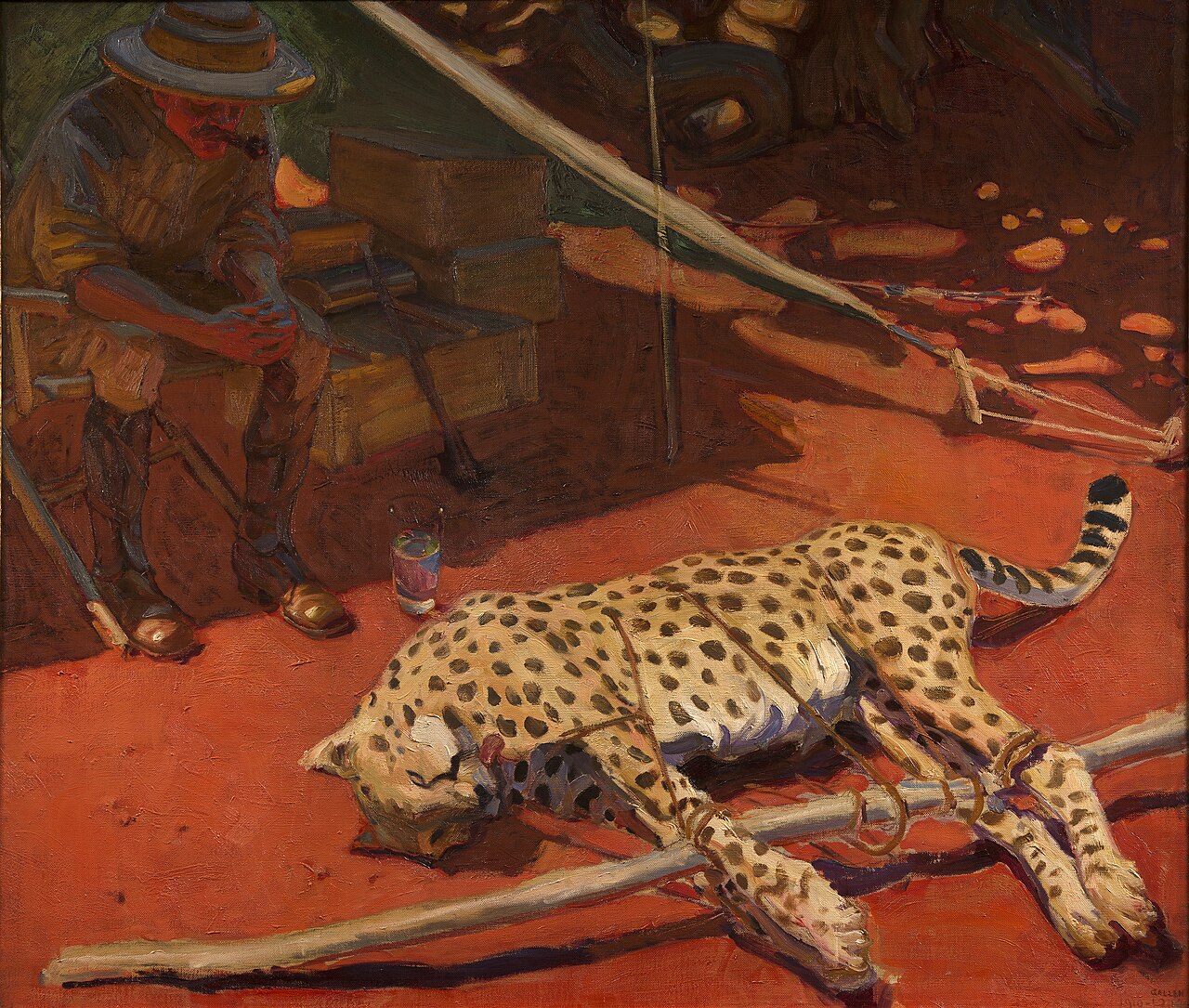
Akseli Gallen-Kallela · CC BY-SA 4.0
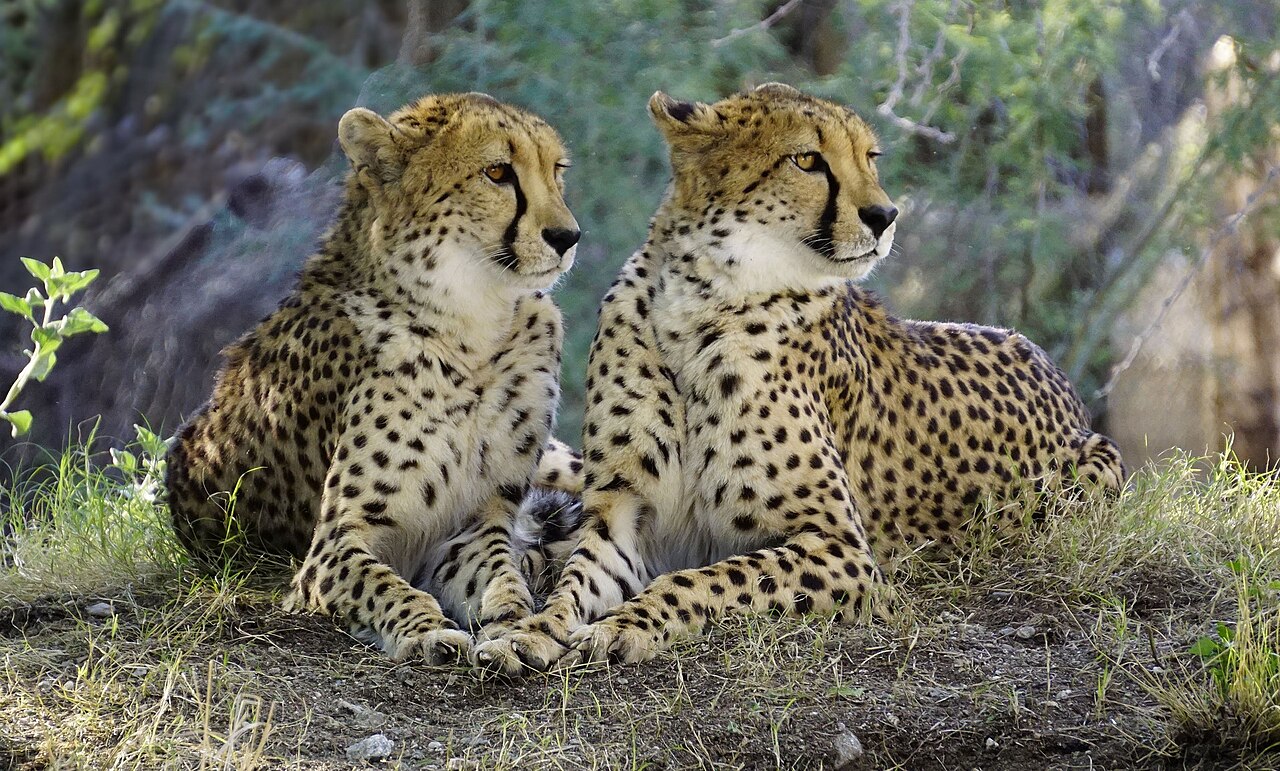
The cheetah, scientifically named Acinonyx jubatus, is a large cat and the sole surviving species within its genus. Built for speed as a pursuit predator, it holds the title of the fastest land animal, reaching 93 to 104 km/h. Its body is adapted for rapid acceleration, featuring strong hind leg muscles, elongated limbs, and a flexible backbone. The coat ranges from tawny to creamy white or pale buff, covered in evenly spaced, solid black spots.
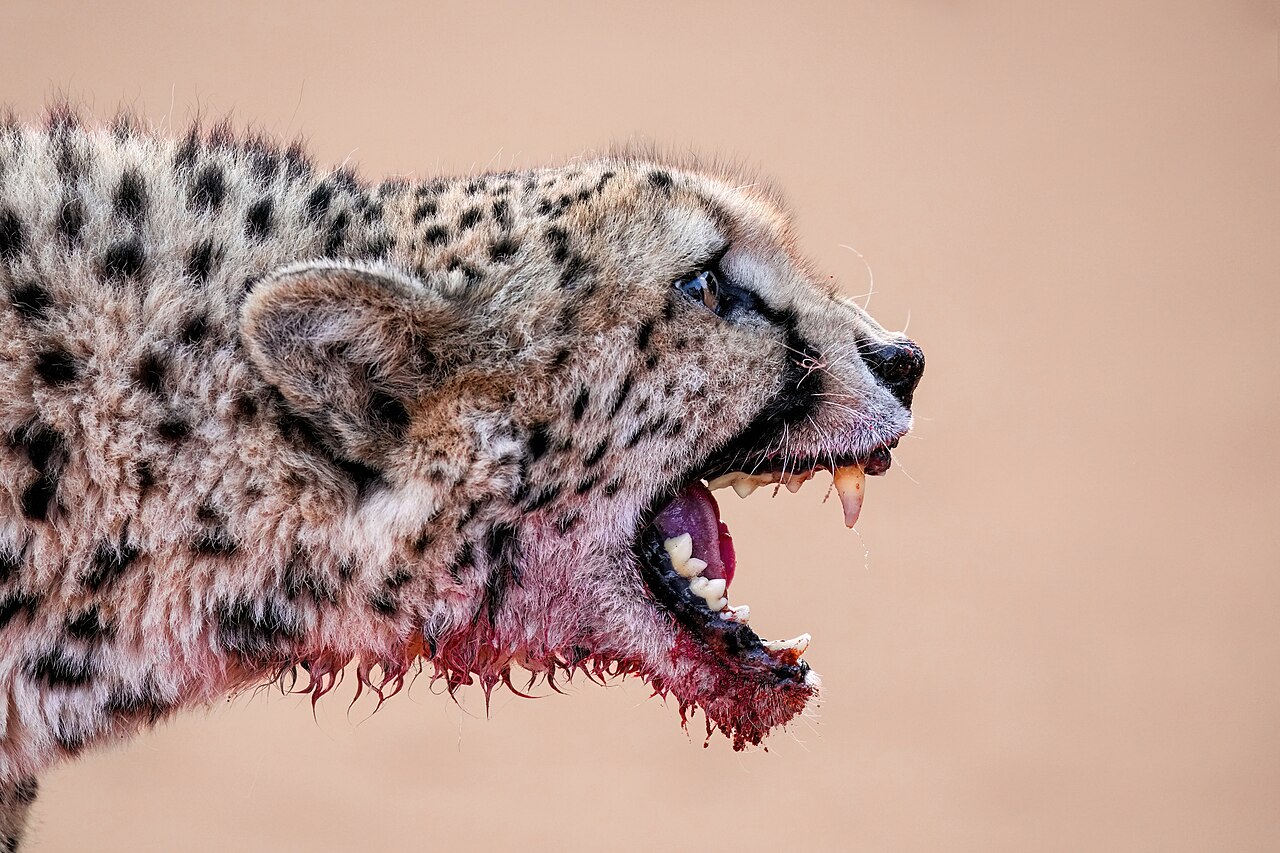
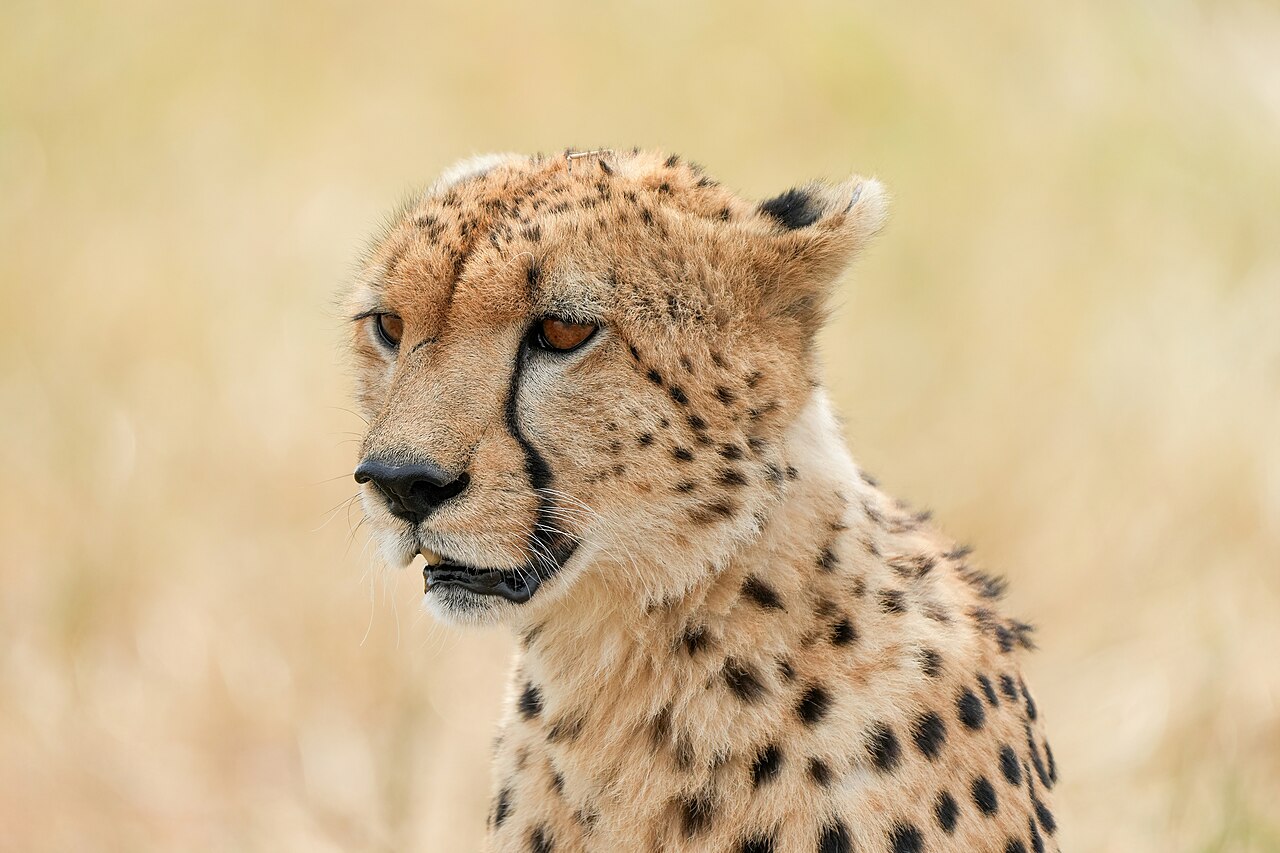
Its head is small and rounded, with a short snout and distinctive black tear-like markings on the face. Shoulder height measures 67–94 cm, head-and-body length spans 1.1 to 1.5 m, and adult weight falls between 21 and 65 kg. First formally described in the late 1700s, four subspecies are currently recognized, native to Africa and central Iran. In 2022, an African subspecies was introduced to India.
Scientific classification
- KingdomAnimalia
- PhylumChordata
- InfraclassPlacentalia
- OrderCarnivora
- FamilyFelidae
- GenusAcinonyx
- SpeciesAcinonyx jubatus
Named by (Schreber, 1775)
Sources: Wikipedia taxobox: Cheetah (CC BY-SA 4.0)
Conservation status
Vulnerable (VU)
- LC
- NT
- VU▲ this species
- EN
- CR
- EW
- EX
Source: IUCN Red List assessment · GBIF copy of the Red List category
How big is it?
Largest length in the source, 1.5 m, next to a 1.8 m person.
Diagram: drawn by Codexery, schematic shapes to scale (not a likeness). Length: Wikipedia: Cheetah
Where the cheetah has been recorded
Each dot is a place where the species has been observed and reported (8,995 records, half-degree grid) — not a modelled range. 190 inland records left out (institution coordinates).
Map: drawn by Codexery. Data: GBIF occurrence search (records CC0 / CC BY) · Natural Earth basemap (public domain)
Lore & Background
The vernacular name 'cheetah' is derived from Hindustani, which in turn comes from a word meaning 'variegated', 'adorned' or 'painted'. In the past, the cheetah was often called 'hunting leopard' because they could be tamed and used for coursing.
In 1777, Johann Christian Daniel von Schreber described the cheetah based on a skin from the Cape of Good Hope and gave it the scientific name Felis jubatus. Joshua Brookes proposed the generic name Acinonyx in 1828. The cheetah's closest relatives are the cougar (Puma concolor) and the jaguarundi (Herpailurus yagouaroundi).
Taxonomic Identity and the Big Cat Question
The cheetah occupies a taxonomic position that has long generated confusion in both scientific and popular discourse. While the phrase "big cat" is frequently used to describe the five living members of the genus Panthera—the tiger, lion, jaguar, leopard, and snow leopard—it can also encompass any member of the cat family broadly considered large in stature, a category that includes the cheetah and the cougar.
In formal classification, however, the cheetah (Acinonyx jubatus) belongs to the subfamily Felinae, not Pantherinae. The Felinae is a group that comprises mostly small to medium-sized cats, including our domestic companions, yet it also houses the cheetah and cougar as notably larger exceptions. This distinction matters: the cheetah, like all felines, belongs to the Felidae family and shares with its relatives a common architecture of muscle, cardiovascular system, skeletal structure, and behavioural repertoire, yet it physically diverges from both its Pantherinae counterparts and, to a greater extent, the smaller cats of its own subfamily.
Apex Predator Without Rivals
As an obligate carnivore, the cheetah sits at the very top of its regional food chain. Like its larger Pantherinae relatives, it functions as an apex predator—an animal with no natural predators of its own in the wild. This ecological position means the cheetah's survival is not threatened by predation from other species but rather by the availability of prey and the integrity of its habitat.
The cheetah's native range, shared broadly with other big cats, spans Africa, Asia, and the Americas, though the specific distribution of each species varies considerably. What unites all cats in the family is a shared evolutionary blueprint: similar musculature, cardiovascular systems, skeletal frames, and behavioural patterns refined over millions of years. The cheetah, while distinct in its physical form from both the Panthera genus and the smaller Felinae cats, still operates within this inherited feline architecture, channeling those shared traits into its own highly specialized predatory strategy.
Conservation Status and Declining Populations
The cheetah's current conservation standing is cause for serious concern. The International Union for Conservation of Nature (IUCN) classifies the species as Vulnerable on its Red List, placing it in the same category as the lion, leopard, and snow leopard, though below the tiger's more severe Endangered designation. What makes the cheetah's situation particularly troubling is that its population is actively decreasing, a trend shared across all big cat species currently assessed. The principal threats facing the cheetah vary depending on geographic location, meaning there is no single universal solution to its decline.
In some regions, habitat fragmentation and human-wildlife conflict may dominate, while in others, poaching or competition with larger predators may be the primary pressures. The cheetah's Vulnerable status underscores that while the species persists, it is far from secure. Without targeted, location-specific conservation interventions, the trajectory of decline could push the cheetah toward a more severe threat category in coming decades, erasing one of the most distinctive members of the Felinae subfamily from the wild.
Evolutionary Divergence and Deep Time
The cheetah's evolutionary story is one of ancient separation. The ancestors of the Pantherinae subfamily—the lineage that would produce the tiger, lion, jaguar, leopard, and snow leopard—split away from the Felinae approximately 6.37 million years ago. That means the cheetah's lineage and the Panthera lineage have been on independent evolutionary trajectories for roughly six and a half million years, a span encompassing the entire Pleistocene epoch and much of the Pliocene.
Within the Felinae, the cheetah occupies the genus Acinonyx, a lineage that, alongside the cougar (genus Puma), represents the larger-bodied members of a subfamily otherwise dominated by small and medium-sized cats. This deep divergence explains why the cheetah, despite being colloquially grouped with "big cats," lacks certain anatomical features found in Panthera members—most notably the elongated hyoid apparatus and specialized larynx that enable roaring. The cheetah's evolutionary path has produced a predator shaped by different selective pressures than its roaring cousins, resulting in a cat that is unmistakably its own.
Common Misconceptions (Editorial)
- A common misconception is that cheetahs are active mainly at night; in fact, they are active during the day, with peaks at dawn and dusk.
- Some people think cheetahs take down large prey like zebras or wildebeest, but they actually feed mostly on small- to medium-sized prey weighing under 40 kg (88 lb), such as impala, springbok, and Thomson’s gazelles.
- Another misconception is that cheetahs are a single, widespread species with many subspecies; in reality, only two subspecies are recognized today, native to Africa and central Iran.
Why It Matters (Editorial)
The cheetah endures as a symbol of speed and grace, but its precarious existence highlights the fragility of specialized predators in a changing world. Its low genetic variability and vulnerability to habitat loss, human conflict, and disease serve as a stark reminder of how human encroachment threatens even the most iconic wildlife. Protecting the cheetah means preserving the open landscapes and delicate ecological balances that allowed this unique feline to evolve.
Reader's Guide
The cheetah lives in three main social groups: females and their cubs, male 'coalitions', and solitary males. While females lead a nomadic life searching for prey in large home ranges, males are more sedentary and instead establish much smaller territories in areas with plentiful prey and access to females. The cheetah is active during the day, with peaks during dawn and dusk. It feeds on small- to medium-sized prey, mostly weighing under 40 kg, and prefers medium-sized ungulates such as impala, springbok and Thomson's gazelles.
The cheetah typically stalks and approaches its prey within 30–200 m before charging at high speed, striking down the prey with its dewclaw in full pursuit and killing it with a throat bite. It breeds throughout the year. After a gestation of nearly three months, females give birth to a litter of three or four cubs, who are weaned at around four months and are independent by around 20 months of age. Cheetah cubs are highly vulnerable to predation by other large carnivores such as lions and hyenas, who also routinely steal kills from adult cheetahs.
Frequently Asked Questions
How do you tell a cheetah apart from a leopard?
Cheetahs wear a tawny-to-cream coat dotted with solid black spots, plus distinctive black tear-mark streaks running down from the inner corners of their eyes. Leopards, by contrast, have hollow rosettes and lack those facial streaks, making the two species easy to distinguish at a glance.
What is the cheetah's scientific classification?
The cheetah's binomial name is Acinonyx jubatus, and it is the only living species in the genus Acinonyx. It sits within the family Felidae, so it is a true cat rather than a wild dog or any other type of predator.
How long is a cheetah's pregnancy?
A cheetah's gestation lasts nearly three months before a litter of kittens is born. This relatively short pregnancy is one of the features that lets cheetah populations rebound faster than those of larger felines, though habitat loss and human conflict still pose serious threats.
More in Big Cats
Test yourself
Three questions drawn from this entry’s sources. Pick an answer to check it.
Answers checked against the source article
Sources
Compiled from Wikipedia and the sources listed below. Text from Wikipedia is available under CC BY-SA 4.0; this entry is adapted from it.
- Wikipedia: Cheetah (CC BY-SA 4.0).
- Conservation status: IUCN Red List assessment.
- Occurrence records: GBIF (CC0 / CC BY). Basemap: Natural Earth (public domain).
- Word definitions: the Codexery glossary, each quoted from its Wikipedia article.
Spotted an error? Know more?
Reader corrections go straight into our review queue. Suggest an edit · How this site is sourced