Leopard
The leopard (Panthera pardus) is a solitary, spotted big cat adapted to diverse habitats across Africa and Asia.
Last updated

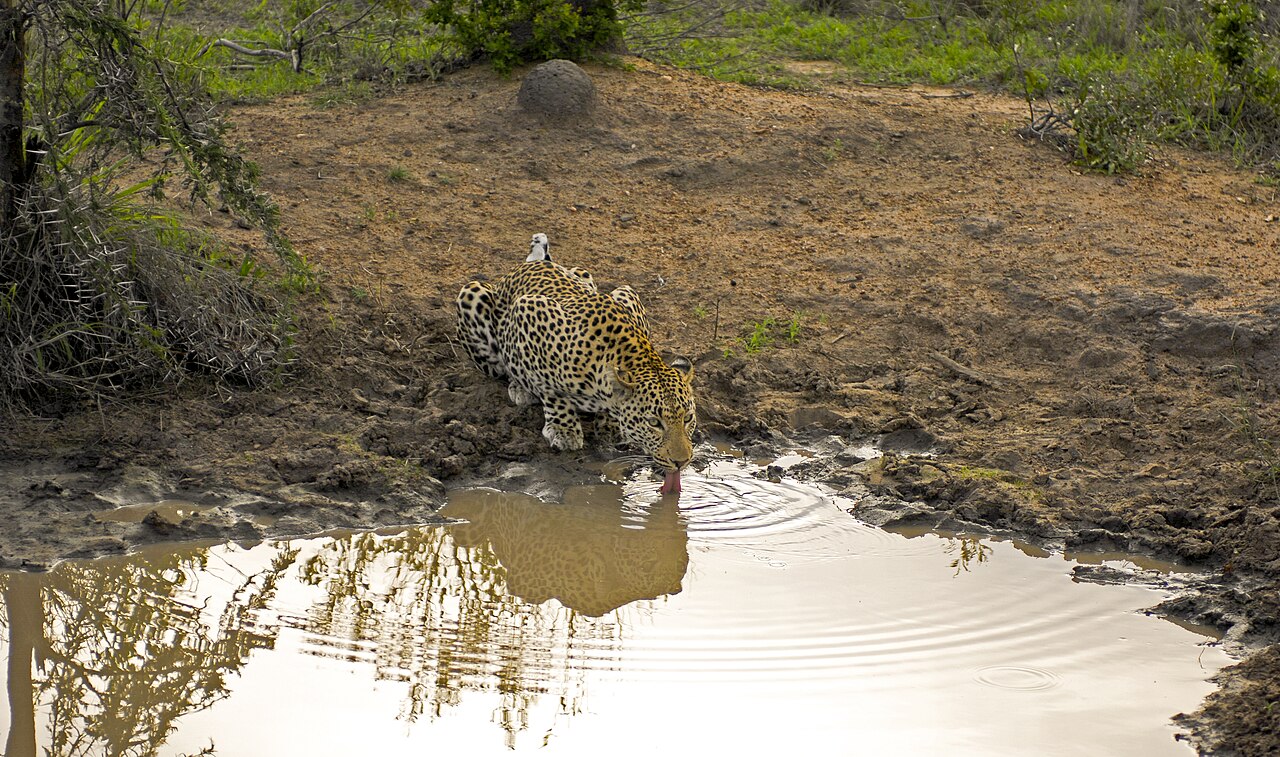
Thomas Fuhrmann · CC BY-SA 4.0
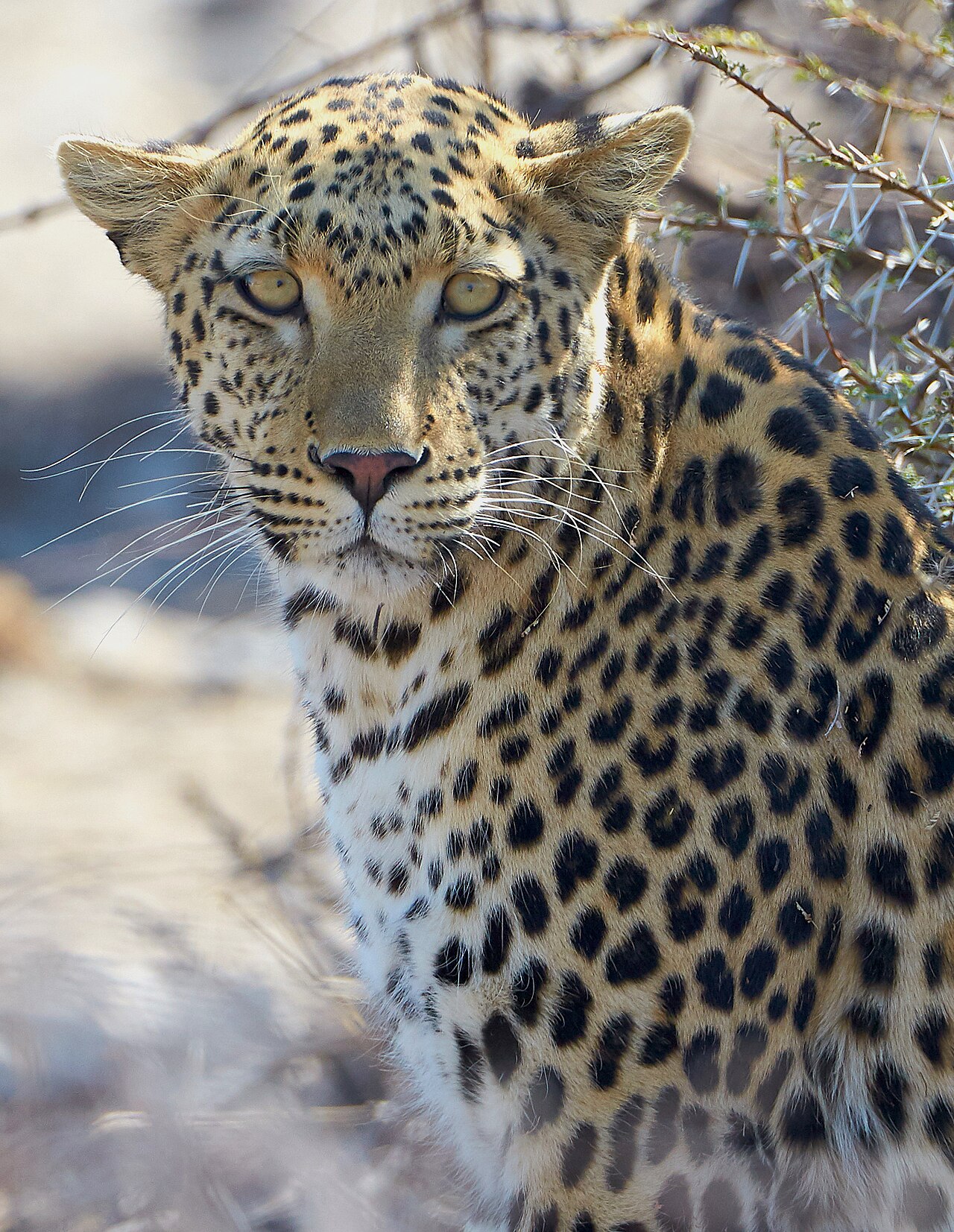
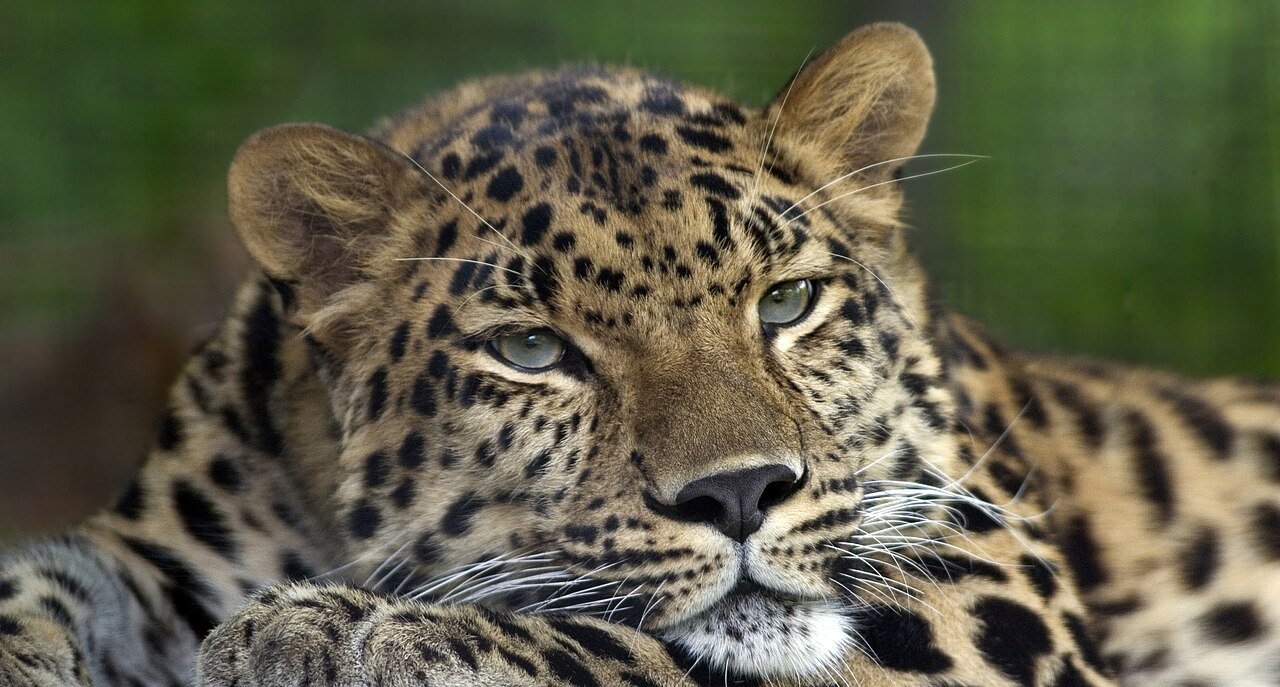
The leopard (Panthera pardus) is a member of the big cat genus Panthera, one of five species in that group. Its fur ranges from pale yellowish to dark golden, covered in dark spots that form rosettes. The body is slender and muscular, measuring 92–183 cm (36–72 in) in length, with a tail of 66–102 cm (26–40 in) and a shoulder height of 60–70 cm (24–28 in). Males weigh between 30.9 and 72 kg (68–159 lb), while females are lighter at 20.5–43 kg (45–95 lb).
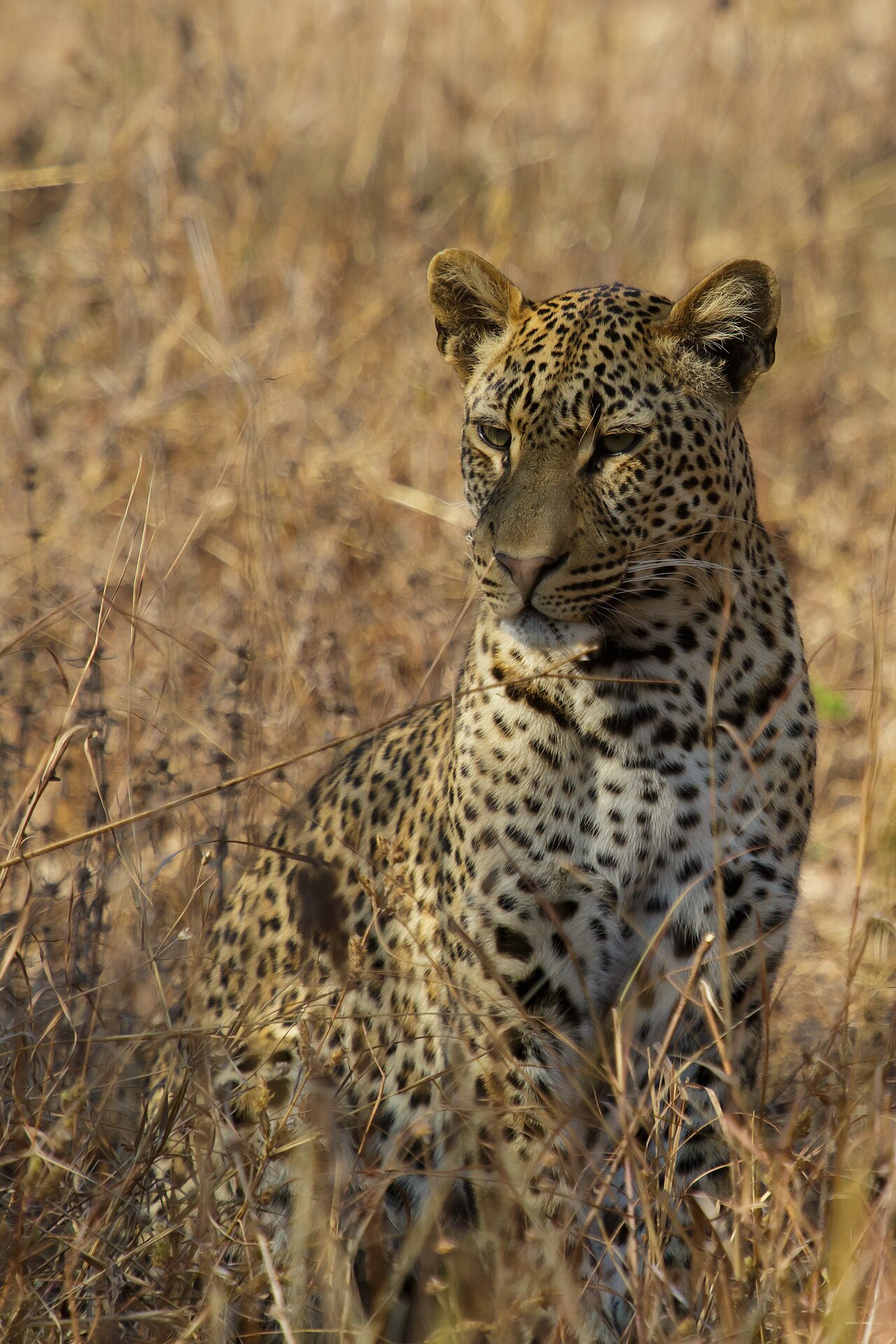
First described in 1758, the leopard now has eight recognized subspecies spread across Africa and Asia. It evolved in Africa during the Early Pleistocene and moved into Eurasia around the transition from the Early to Middle Pleistocene. Leopards once lived throughout Europe but died out there near the end of the Late Pleistocene or early Holocene. The species is listed as Vulnerable on the IUCN Red List, with populations declining due to habitat loss and fragmentation.
Scientific classification
- KingdomAnimalia
- PhylumChordata
- InfraclassPlacentalia
- OrderCarnivora
- FamilyFelidae
- GenusPanthera
- SpeciesPanthera pardus
Named by (Linnaeus, 1758)
Close relatives
Other species of Panthera with a Codexery entry.
- Jaguar Panthera onca
- Lion Panthera leo
- Snow leopard Panthera uncia
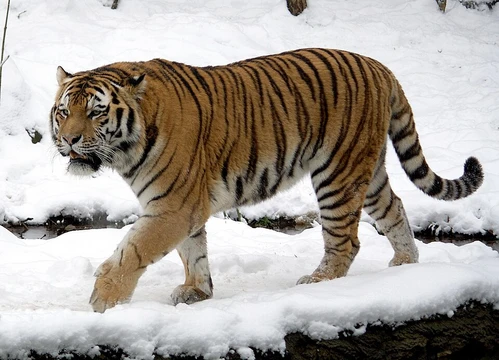
- Tiger Panthera tigris
Sources: Wikipedia taxobox: Leopard (CC BY-SA 4.0)
Conservation status
Vulnerable (VU)
- LC
- NT
- VU▲ this species
- EN
- CR
- EW
- EX
Source: IUCN Red List assessment · GBIF copy of the Red List category
Where the leopard has been recorded
Each dot is a place where the species has been observed and reported (10,091 records, half-degree grid) — not a modelled range. 312 inland records left out (institution coordinates).
Map: drawn by Codexery. Data: GBIF occurrence search (records CC0 / CC BY) · Natural Earth basemap (public domain) · place coordinates: Wikipedia (CC BY-SA 4.0)
Quick Facts
- Scientific name
- Panthera pardus
- Typical weight (female)
- 20.5–43 kg (45–95 lb)
- Conservation status
- Vulnerable (IUCN Red List)
Facts from the source article.
Lore & Background
The English name 'leopard' comes from Old French or Middle French, which derives from Latin and ancient Greek (λεόπαρδος); λεόπαρδος could be a compound of λέων (leon), meaning 'lion', and πάρδος (pardos), meaning 'panther'. The word λεόπαρδος originally referred to a cheetah (Acinonyx jubatus). 'Panther' is another common name, derived from Latin panthera and ancient Greek πάνθηρ (panther).
The generic name Panthera originates in Latin panthera, a hunting net for catching wild beasts. Leopards have had cultural roles in Ancient Greece, West Africa and modern Western culture. Leopard skins are popular in fashion.
Evolutionary Lineage & Classification
The leopard (Panthera pardus) occupies a well-defined position within the genus Panthera, the lineage that diverged from the Felinae subfamily roughly 6.37 million years ago. A 2010 molecular phylogenetics study clarified internal relationships among Panthera members, revealing that the lion, leopard, and jaguar form a tighter cluster than either does with the tiger or snow leopard.
The ancestor shared by lions, leopards, and jaguars separated from the rest of the genus between 4.3 and 3.8 million years ago. The jaguar then branched off from the lion-leopard ancestor line between 3.6 and 2.5 million years ago, and finally, lions and leopards split from one another approximately 2 million years ago. This places the leopard as a sister species to the lion, sharing a more recent common ancestor with it than with any other extant big cat, while the tiger and snow leopard represent a separate sister pair that diverged around 3.9 million years ago.
Ecological Role & Geographic Range
As an obligate carnivore and apex predator, the leopard sits at the top of its food chain with no natural predators of its own. It shares the Felidae family's characteristic musculature, cardiovascular architecture, and skeletal framework with all other cats, yet its position within Panthera sets it apart from the smaller Felinae members like domestic cats. The leopard's native range spans Africa and Asia, and notably extends into Europe, specifically into regions of Russia—a distribution that mirrors the tiger's range in that area.
This broad geographic presence across multiple continents underscores the species' adaptability. As a top-tier predator, the leopard plays a critical role in maintaining ecological balance within its habitats. Its classification as an apex predator distinguishes it from the cougar and cheetah, which, while sometimes grouped with big cats colloquially, belong to the Felinae subfamily and differ physically from the true Panthera members in both structure and behavior.
Common Misconceptions (Editorial)
Some people think the name "leopard" has a non-Greek origin, but it actually derives from the ancient Greek λεόπαρδος (leopardos). Others may believe black panthers are a separate species, but they are simply melanistic leopards caused by a recessive allele. Additionally, it is sometimes assumed that leopards are not an ancient presence in Europe, yet fossils from the Pleistocene have been found at over 40 European sites, and cave paintings in Chauvet Cave indicate their historical range there.
Why It Matters (Editorial)
The leopard endures as a symbol of adaptability and stealth, having survived across diverse habitats from rainforests to steppes for millions of years. Its vulnerability on the IUCN Red List underscores the ongoing tension between human expansion and wildlife preservation, reminding us that even the most resilient predators depend on the habitats we share.
Reader's Guide
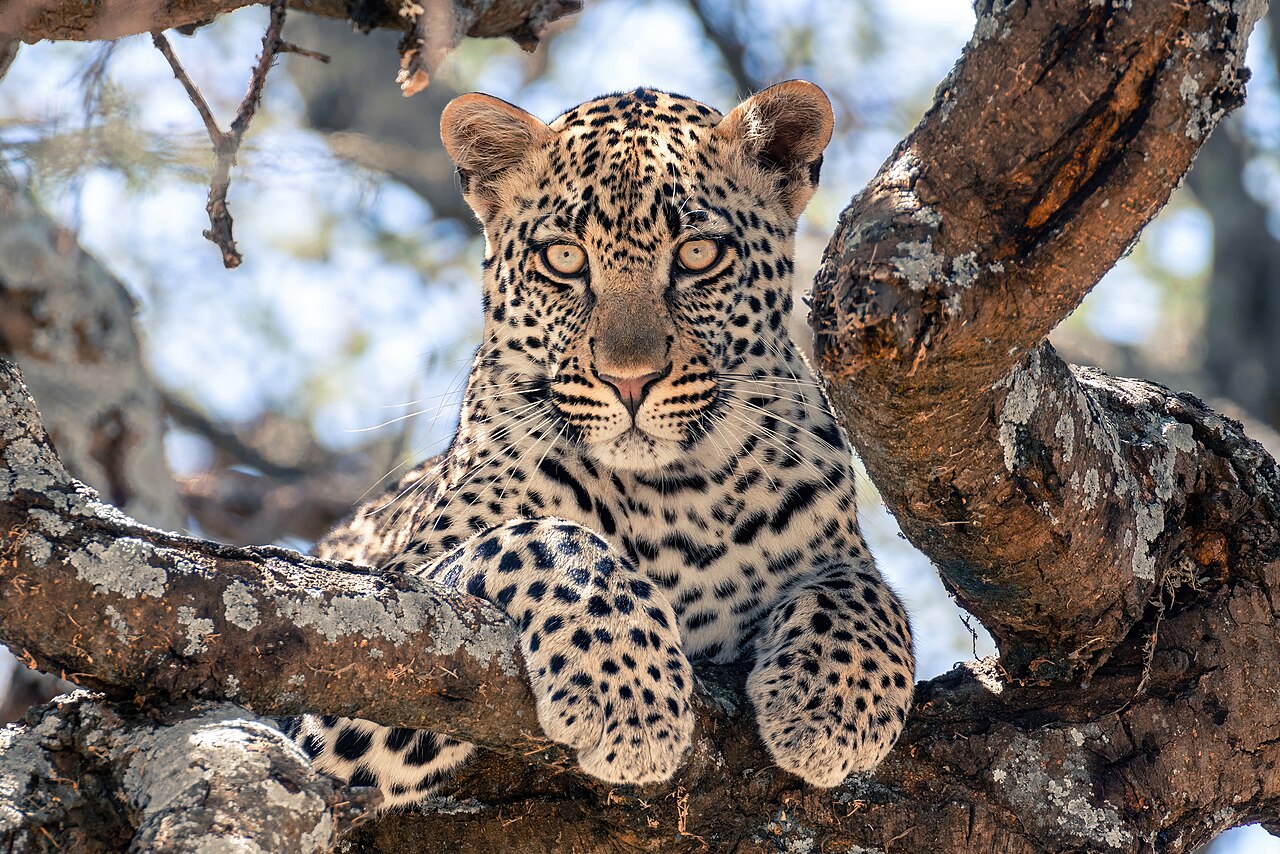
The leopard is adapted to a variety of habitats ranging from rainforest to steppe, including arid and montane areas. It is an opportunistic predator, hunting mostly ungulates and primates. It relies on its spotted pattern for camouflage as it stalks and ambushes its prey, which it sometimes drags up a tree. It is a solitary animal outside the mating season and when raising cubs.
Females usually give birth to a litter of 2–4 cubs once in 15–24 months. Both male and female leopards typically reach sexual maturity at the age 2–2.5 years. Melanistic leopards are also known as black panthers. Melanism in leopards is caused by a recessive allele and is inherited as a recessive trait.
Did You Know?
- The leopard has a diploid chromosome number of 38.
- Leopards exhibiting erythrism were recorded between 1990 and 2015 in South Africa's Madikwe Game Reserve and in Mpumalanga.
Frequently Asked Questions
Where do leopards live?
Leopards are remarkably adaptable, thriving in habitats that stretch from dense tropical rainforests to open grassland steppes. Their range spans sub-Saharan Africa and parts of South and Southeast Asia.
Are leopards endangered?
The IUCN currently classifies the leopard as Vulnerable, meaning wild populations face a significant risk of continued decline. Habitat destruction and fragmentation are the primary pressures pushing numbers down across their range.
More in Big Cats
Test yourself
Three questions drawn from this entry’s sources. Pick an answer to check it.
Answers checked against the source article
Sources
Compiled from Wikipedia and the sources listed below. Text from Wikipedia is available under CC BY-SA 4.0; this entry is adapted from it.
- Wikipedia: Leopard (CC BY-SA 4.0).
- Conservation status: IUCN Red List assessment.
- Occurrence records: GBIF (CC0 / CC BY). Basemap: Natural Earth (public domain).
- Word definitions: the Codexery glossary, each quoted from its Wikipedia article.
Spotted an error? Know more?
Reader corrections go straight into our review queue. Suggest an edit · How this site is sourced