Americas
The New World landmass spanning from Arctic tundra to tropical rainforests.

GrandEscogriffe · CC BY-SA 4.0
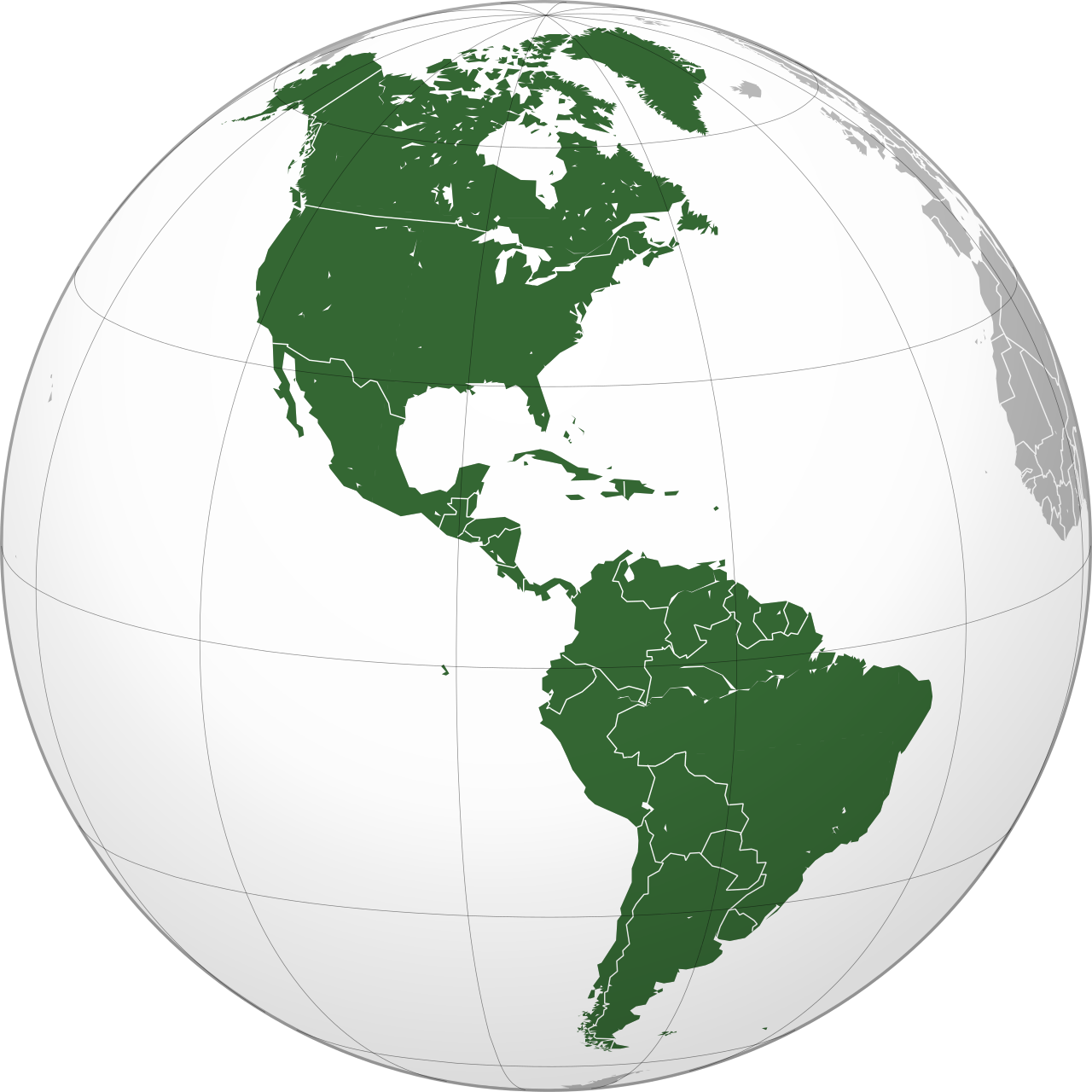
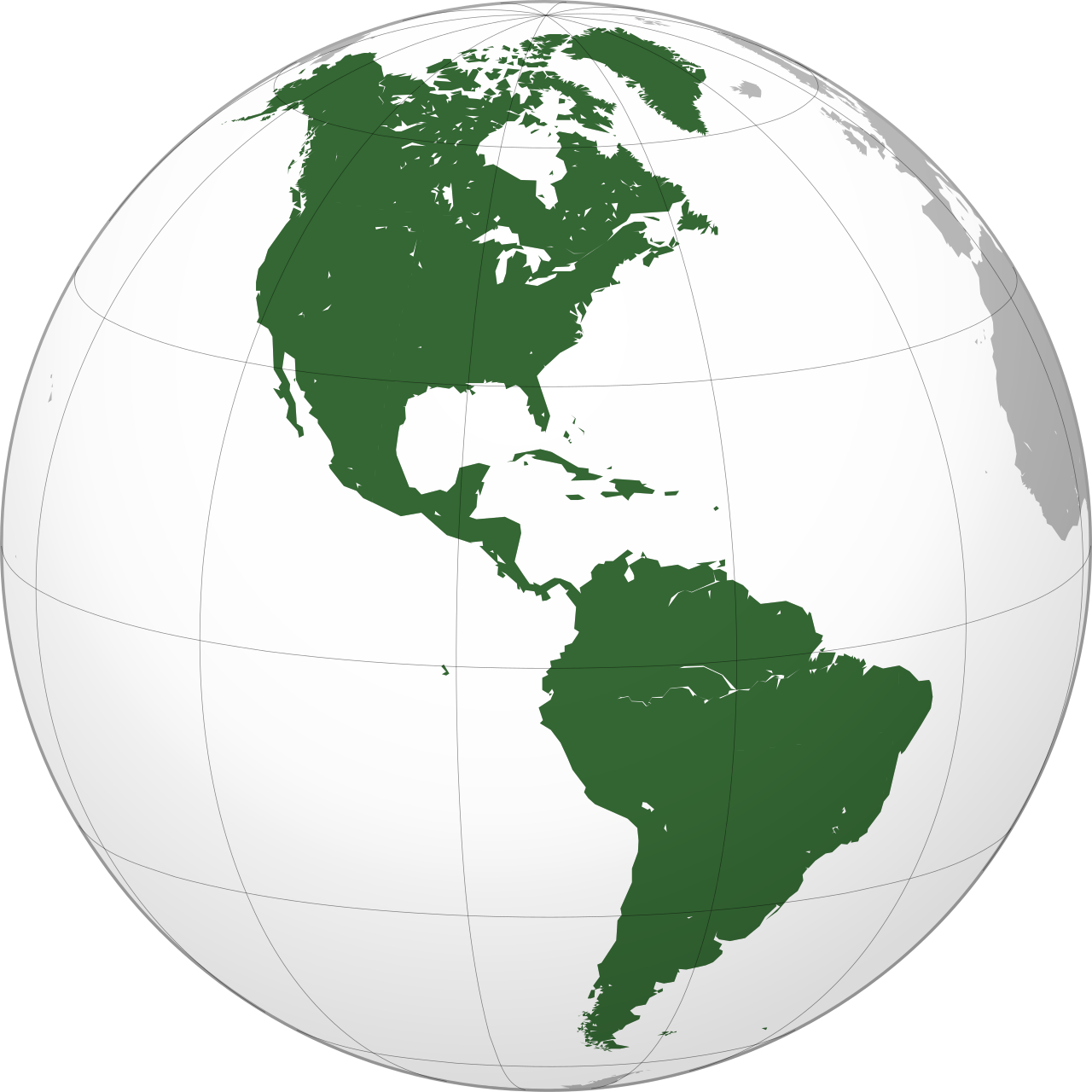
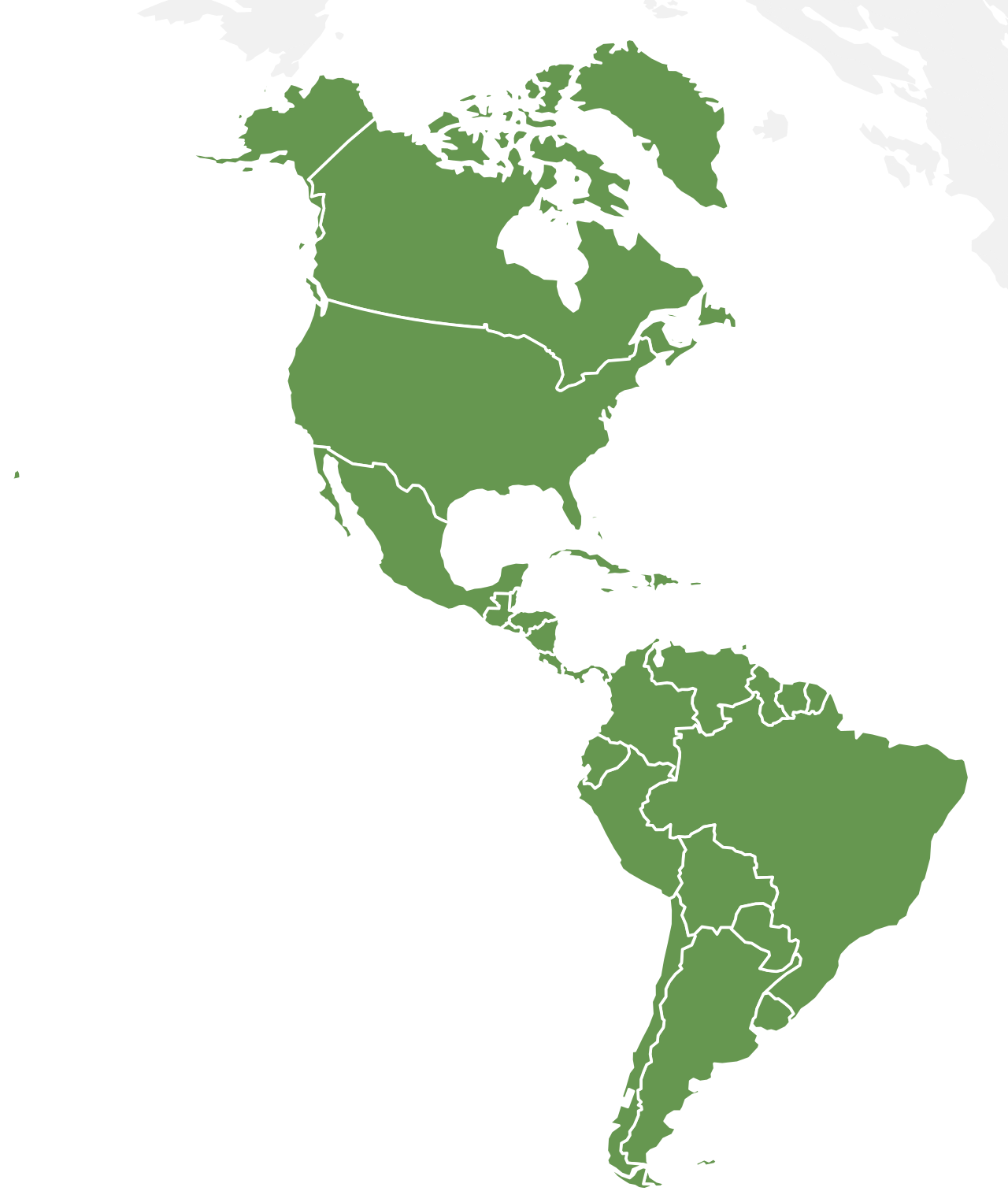
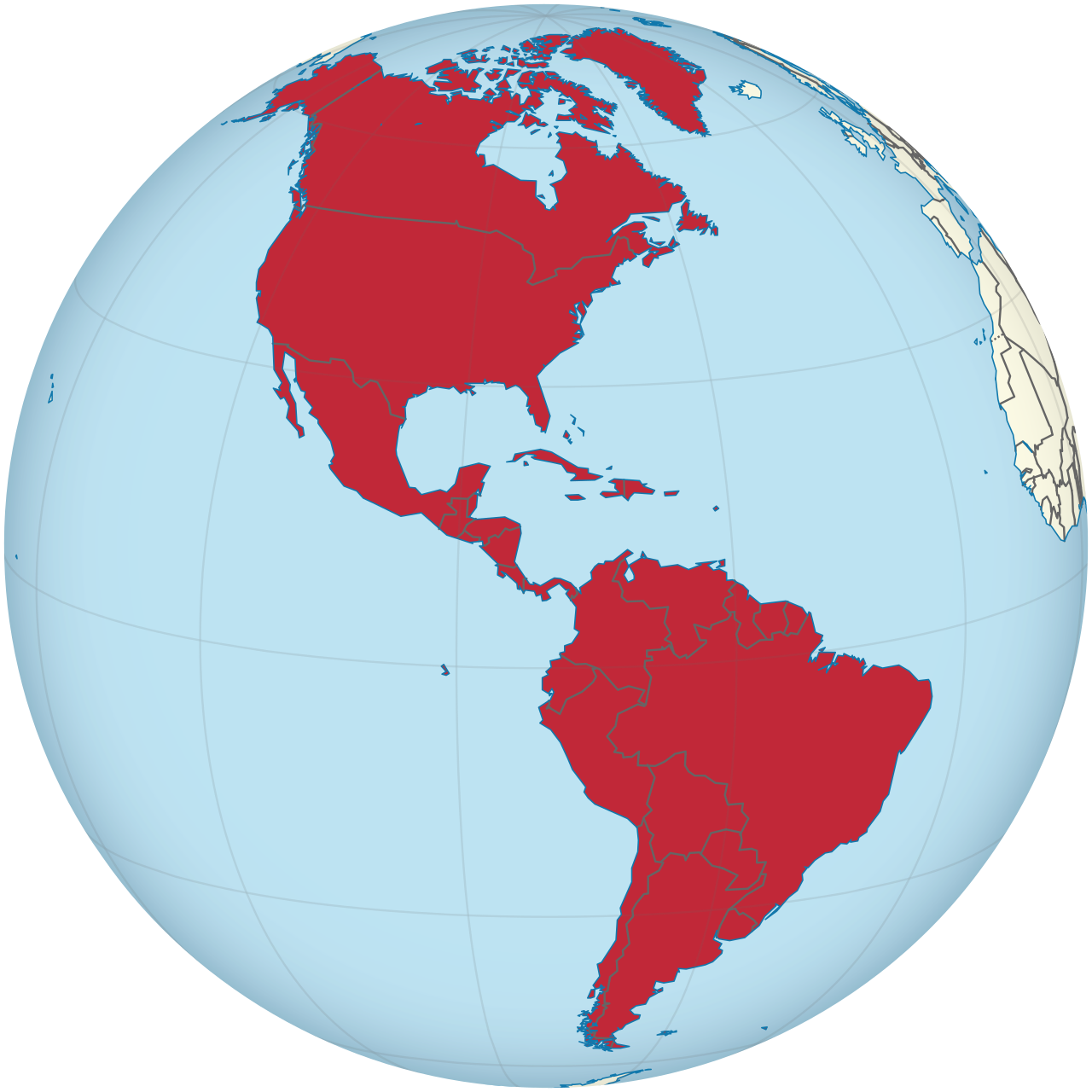
The Americas are a landmass comprising North America and South America, collectively sometimes called America. They constitute the New World, contrasting with the Old World of Afro-Eurasia, and make up most of the land in Earth's Western Hemisphere. As a single continent, they are the second largest by area after Asia and the third largest by population.
Quick Facts
- Area
- 42,549,000 km / 26,438,723 mi; 2 (16,428,000 sq mi)
- Population
- 1.02 billion
- Density
- 22.67/km; 2 (58.74/sq mi)
- [[hdi]]
- North America 0.733; South America 0.738
- Demonym
- American (see usage)
- Countries
- 35
- Dependencies
- 23
- Languages
- Spanish
- English
- Portuguese
- French
- Haitian Creole
- Quechua
- Guaraní
- Aymara
- Nahuatl
- Dutch
- and many others
Facts from the source article.
Lore & Background
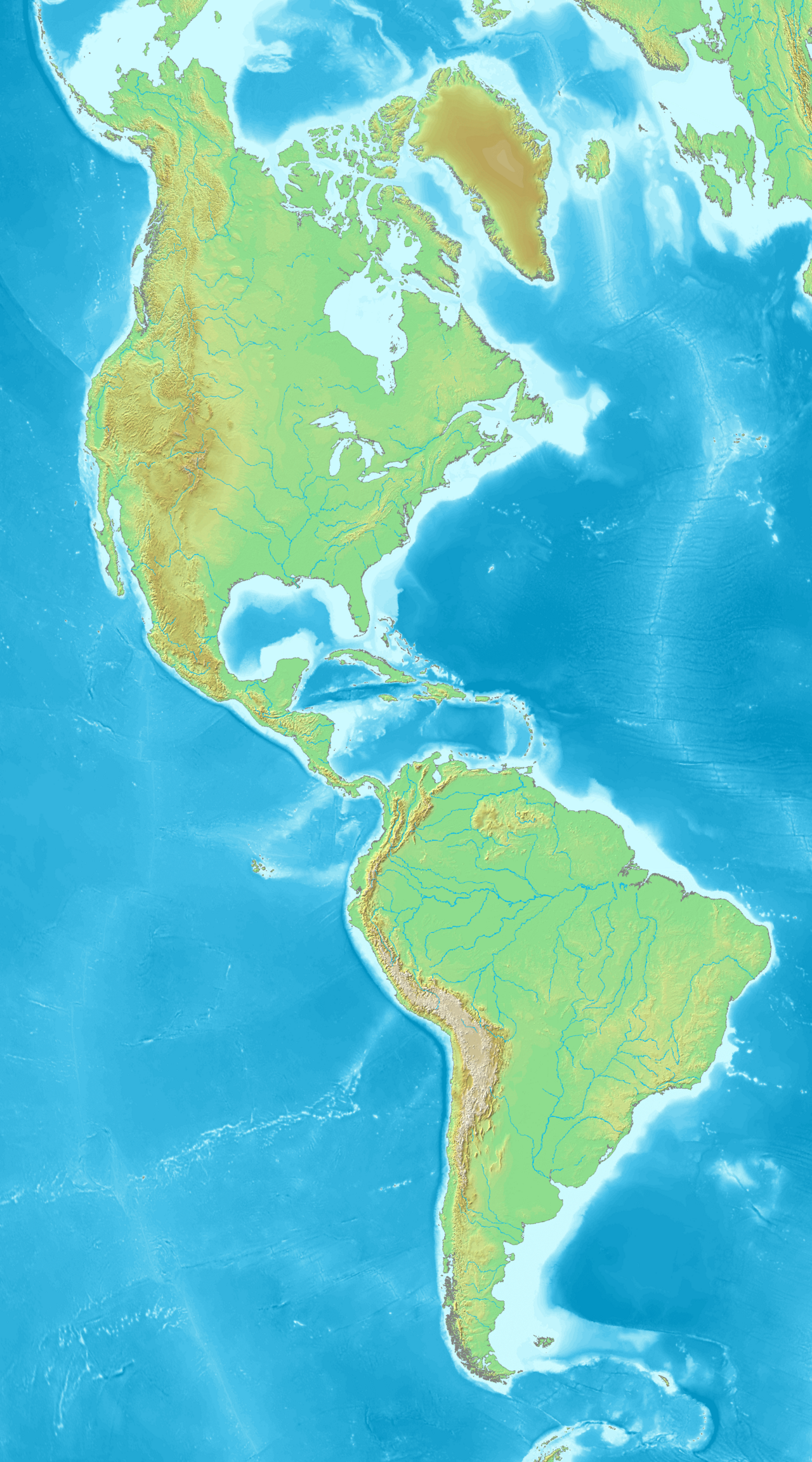
The topography is dominated by the American Cordillera along the west coast, while the eastern side features large river basins such as the Amazon, St. Lawrence–Great Lakes, Mississippi, and La Plata.
Reader's Guide
This period involved enslavement of indigenous populations, devastating disease introduction, and mass emigration from Europe and Africa. Decolonization began with the American Revolution in the 1770s and largely ended with the Spanish–American War in the late 1890s. Today, almost all of the Americas' population resides in independent countries, sharing common cultural traits such as Christianity and West European languages. The Americas are home to eight megacities with over 10 million inhabitants each, including Mexico City, São Paulo, New York City, and Los Angeles.
Indigenous Cultural Landscapes and Language Families
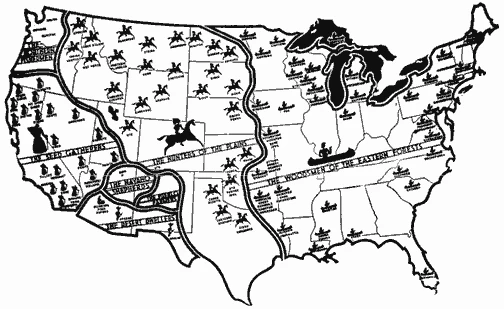
Within the broader Americas cultural area, indigenous peoples constitute a remarkable diversity of distinct cultural regions. The Indigenous languages of the Americas form a recognized language-family cultural area, while specific groups such as the Indigenous peoples of the Pacific Northwest Coast, Native Americans in the United States, and Indigenous peoples of South America each represent identifiable cultural areas with their own shared elements of environment and culture. These groups illustrate how a single continental cultural area can contain numerous smaller, relatively homogeneous cultural units. The vocabulary of cultural hearths, cores, and spheres of influence applies particularly well to these indigenous landscapes, where a dominant cultural core radiates influence into surrounding domains. Notably, the boundaries between these indigenous cultural areas are not fixed; they shift depending on whether one examines religion and folklore, dress, architecture, or language. This fluidity underscores that the Americas' indigenous cultural geography resists simple cartographic reduction.
Gallery

More in Regions & Cultural Spheres
Spotted an error? Know more?
Reader corrections go straight into our review queue. Suggest an edit · How this site is sourced