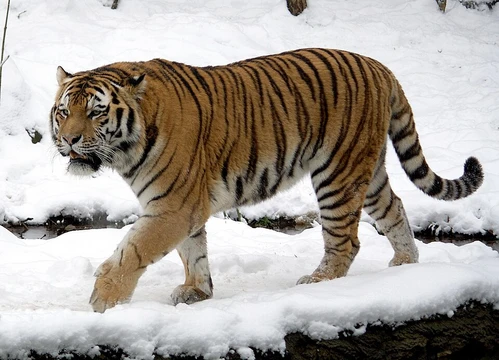
Tiger
Large Asian cat, apex predator, endangered by human activity.
Last updated

Photo (c)2007 Derek and Julie Ramsey ( Ram-Man ) edit by Chris_huh . · Public domain
The tiger (Panthera tigris) is a large cat and a member of the genus Panthera native to Asia. It is an apex predator that primarily hunts hooved mammals by ambush, lives a mostly solitary life, and occupies home ranges that males defend from other males. Since the early 20th century, tiger populations have lost at least 93% of their historic range and are now listed as Endangered on the IUCN Red List, with major threats including habitat destruction, poaching, and human–wildlife conflict.
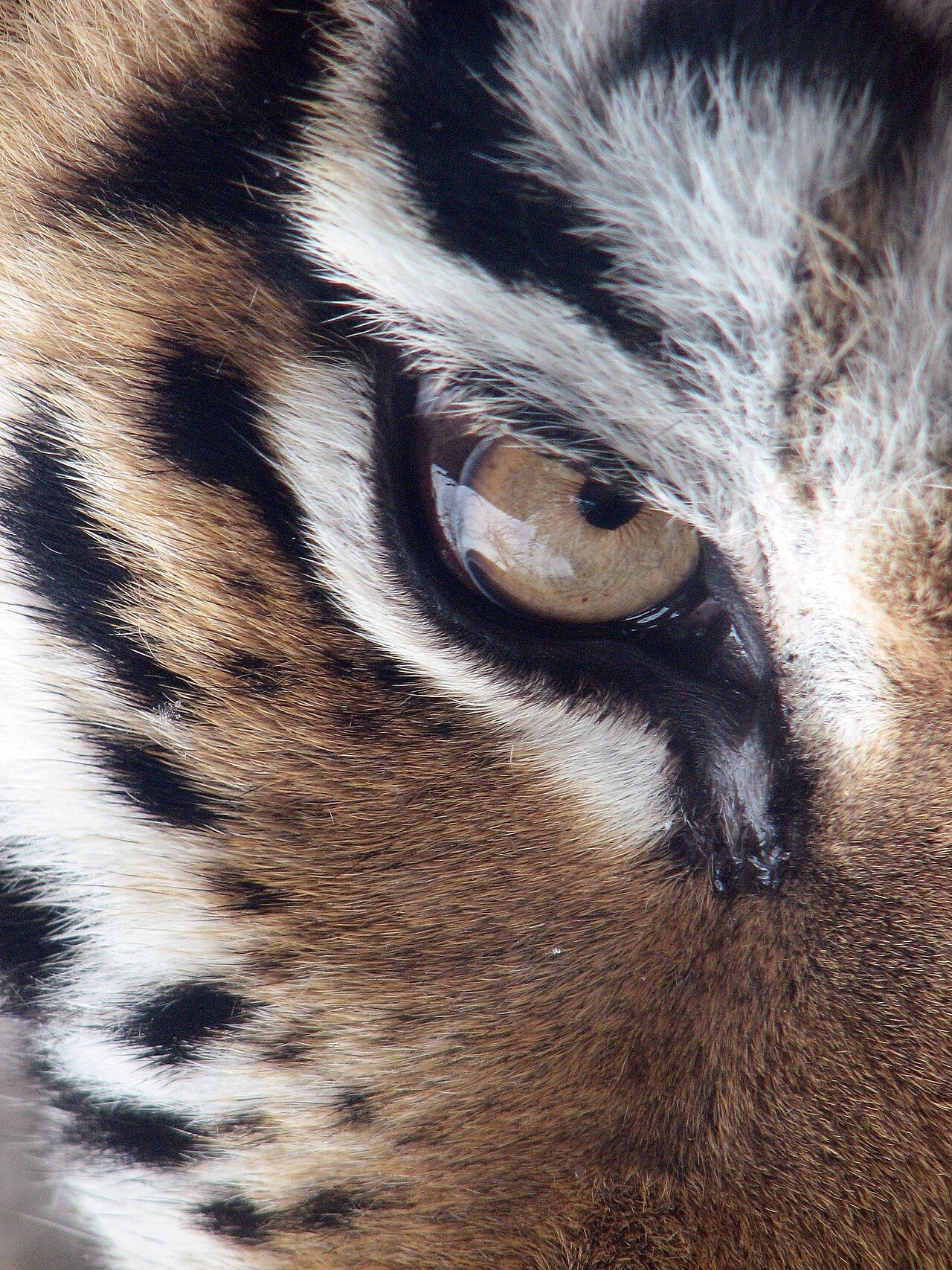
Scientific classification
- KingdomAnimalia
- PhylumChordata
- InfraclassPlacentalia
- OrderCarnivora
- FamilyFelidae
- GenusPanthera
- SpeciesPanthera tigris
Named by (Linnaeus, 1758)
Close relatives
Other species of Panthera with a Codexery entry.
- Jaguar Panthera onca
- Leopard Panthera pardus
- Lion Panthera leo
- Snow leopard Panthera uncia
Sources: Wikipedia taxobox: Tiger (CC BY-SA 4.0)
Conservation status
Endangered (EN)
- LC
- NT
- VU
- EN▲ this species
- CR
- EW
- EX
Source: IUCN Red List assessment · GBIF copy of the Red List category
How big is it?
Largest length in the source, 2.8 m, next to a 1.8 m person.
Diagram: drawn by Codexery, schematic shapes to scale (not a likeness). Length: Wikipedia: Tiger
Where the tiger has been recorded
Each dot is a place where the species has been observed and reported (5,726 records, half-degree grid) — not a modelled range. 141 inland records left out (institution coordinates).
Map: drawn by Codexery. Data: GBIF occurrence search (records CC0 / CC BY) · Natural Earth basemap (public domain)
Lore & Background
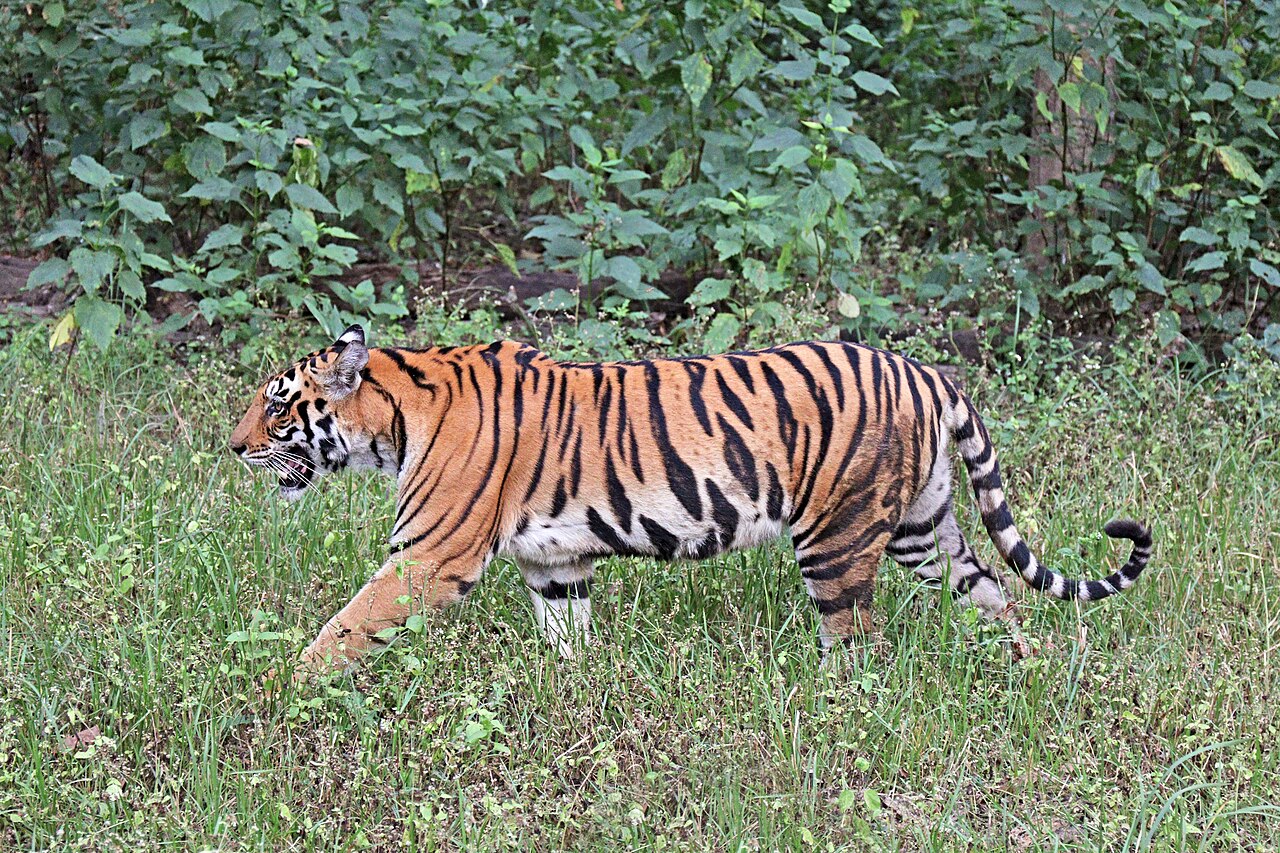
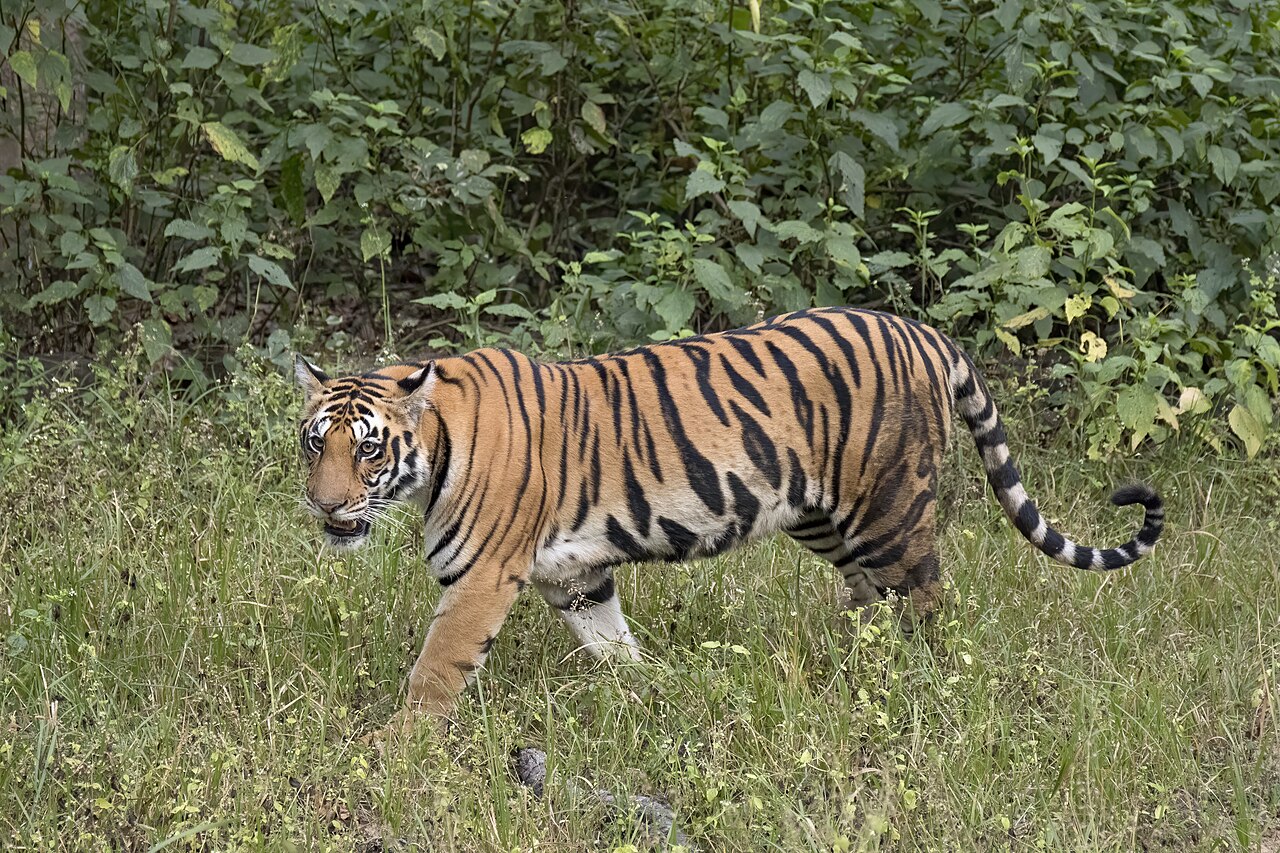
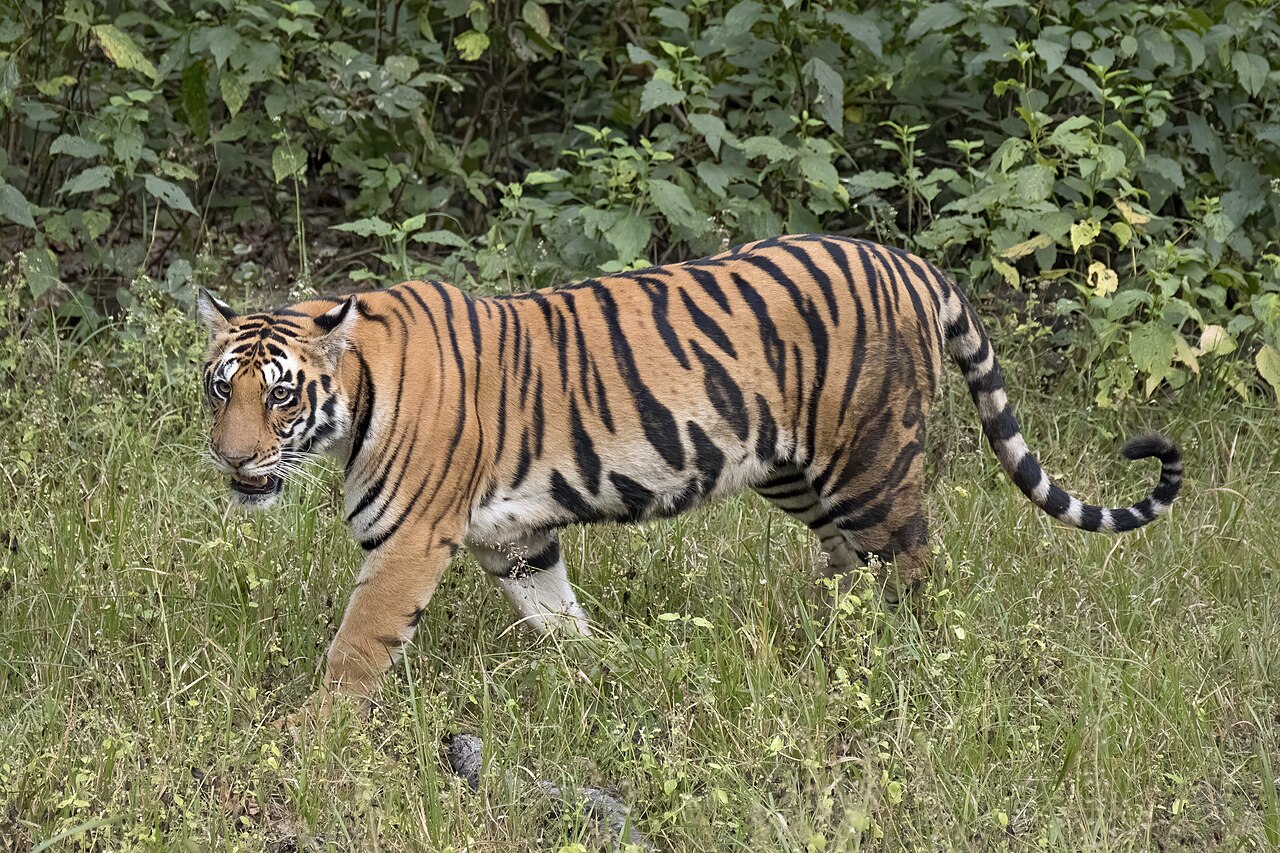
The tiger has a powerful, muscular body with a large head and paws, a long tail, and orange fur that fades to white in parts, with black, mostly vertical stripes. It inhabits mainly forests across Asia, from coniferous and temperate broadleaf forests in the Russian Far East to tropical and subtropical moist broadleaf forests in the Indian subcontinent and Southeast Asia. Females give birth to usually two or three cubs that stay with their mother for about two years before establishing their own home ranges.
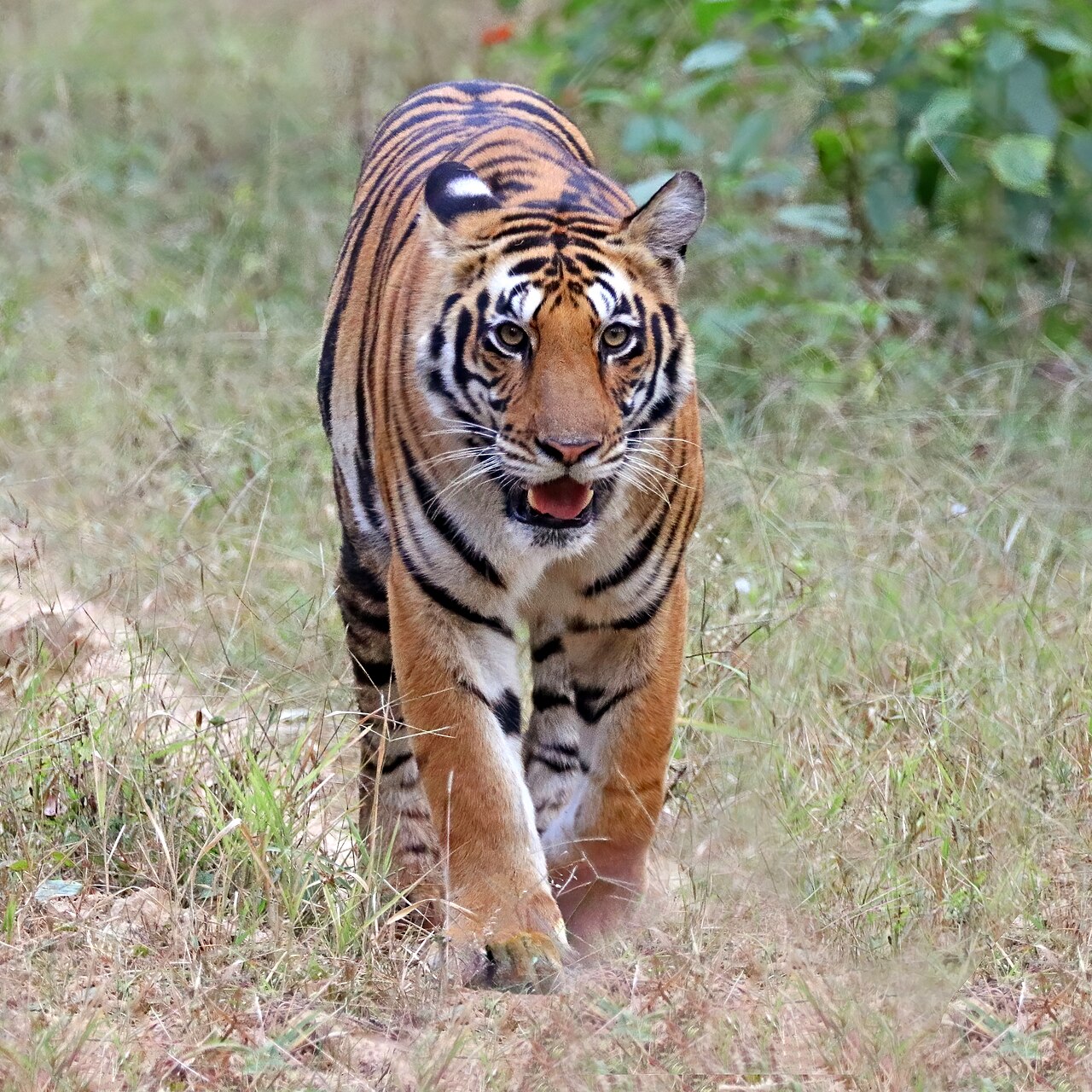
Evolutionary Lineage & Taxonomic Placement
The tiger's evolutionary story stretches back millions of years. Ancestors of the Panthera genus split from the Felinae subfamily roughly 6.37 million years ago. A 2010 molecular phylogenetics study clarified that the tiger and snow leopard are sister species, diverging from their common ancestor around 3.9 million years ago. The tiger then carved out its own unique evolutionary path toward the end of the Pliocene, approximately 3.2 million years ago.
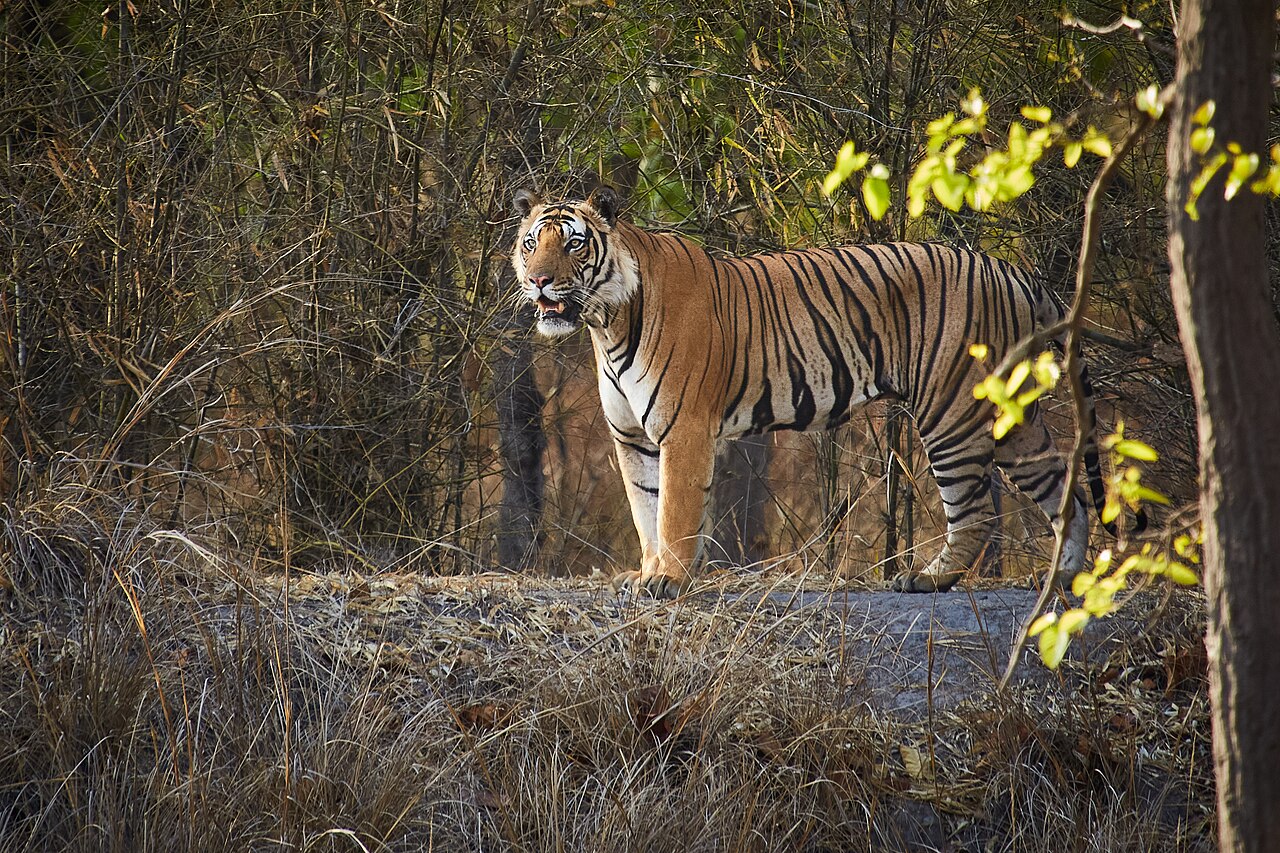
By contrast, the lion, leopard, and jaguar form a closer-knit group, with the jaguar splitting from the lion-leopard ancestor between 3.6 and 2.5 million years ago, and lions and leopards finally separating around 2 million years ago. An early fossil, P. blytheae from northern Central Asia, was once thought to be the oldest known Panthera, but later research reclassified it into a separate genus, Palaeopanthera. The tiger sits within the subfamily Pantherinae, genus Panthera, alongside the lion, jaguar, leopard, and snow leopard.
Common Misconceptions (Editorial)
A common misconception is that tigers live in Africa; in fact, the tiger is native only to Asia. Another is that all tigers belong to many separate subspecies; however, some authorities recognize only two subspecies: mainland Asian and Sunda Islands. Additionally, some people think tigers regularly hunt large prey without ambush, but the facts confirm they primarily take hooved mammals by ambush.
Why It Matters (Editorial)
The tiger endures as a powerful symbol of wilderness and ecological health, yet its continued existence hinges on urgent conservation action. With over 93% of its historic range lost and ongoing threats from poaching and habitat destruction, saving the tiger means protecting entire forest ecosystems that countless other species depend on. Its fate is a stark reminder that humanity’s choices determine whether such apex predators persist for future generations.
Reader's Guide
The tiger is among the most popular of the world's charismatic megafauna and has been kept in captivity since ancient times, trained to perform in circuses and other entertainment shows. It features prominently in the ancient mythology and folklore of cultures throughout its historic range and continues to appear in culture worldwide.
Conservation measures include action plans, anti-poaching patrols, monitoring schemes, wildlife corridors, and planned reintroductions. The tiger is legally protected in all range countries, but its range remains severely fragmented, and its population has declined by 53% to 68% since the late 1990s. The species' taxonomy is under review by the IUCN SSC Cat Specialist Group due to varied interpretations of genetic and morphological data.
Did You Know?
- Tigers can interbreed with other Panthera cats; ligers (male lion × female tiger) grow far larger than either parent due to genetic factors.
- The earliest fossil remains of the modern tiger are jaw fragments from Lantian County, China, dated to the early Pleistocene.
Frequently Asked Questions
What is a tiger?
The tiger (Panthera tigris) is the largest living member of the cat family, found across forests, mangroves, and grasslands in Asia. It sits at the top of its food web, taking down hooved prey through surprise attacks rather than prolonged chases.
How many tiger subspecies are there?
Classic taxonomy lists nine subspecies, but newer genetic work has narrowed the picture to just two broad lineages: mainland Asian tigers and Sunda Islands tigers. The exact number still sparks debate among taxonomists, so you may see different counts depending on the source.
How do tigers hunt and live?
Tigers are mostly solitary ambush predators that creep through dense cover and strike hooved mammals with a short, explosive lunge. Males patrol and defend large home ranges against rival males, while females enjoy more flexible territorial boundaries.
More in Big Cats
Test yourself
Three questions drawn from this entry’s sources. Pick an answer to check it.
Answers checked against the source article
Sources
Compiled from Wikipedia and the sources listed below. Text from Wikipedia is available under CC BY-SA 4.0; this entry is adapted from it.
- Wikipedia: Tiger (CC BY-SA 4.0).
- Conservation status: IUCN Red List assessment.
- Occurrence records: GBIF (CC0 / CC BY). Basemap: Natural Earth (public domain).
- Word definitions: the Codexery glossary, each quoted from its Wikipedia article.
Spotted an error? Know more?
Reader corrections go straight into our review queue. Suggest an edit · How this site is sourced