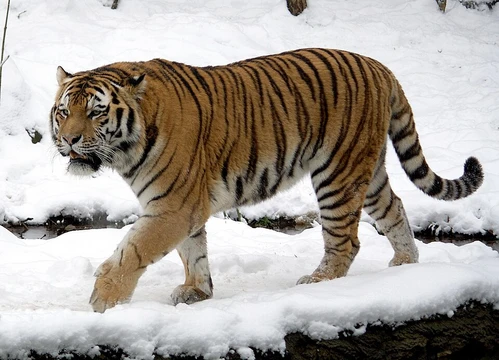
Snow leopard
A solitary, high-altitude carnivore of Asian mountain ranges.
Last updated

Gregory Moine · CC BY 2.0
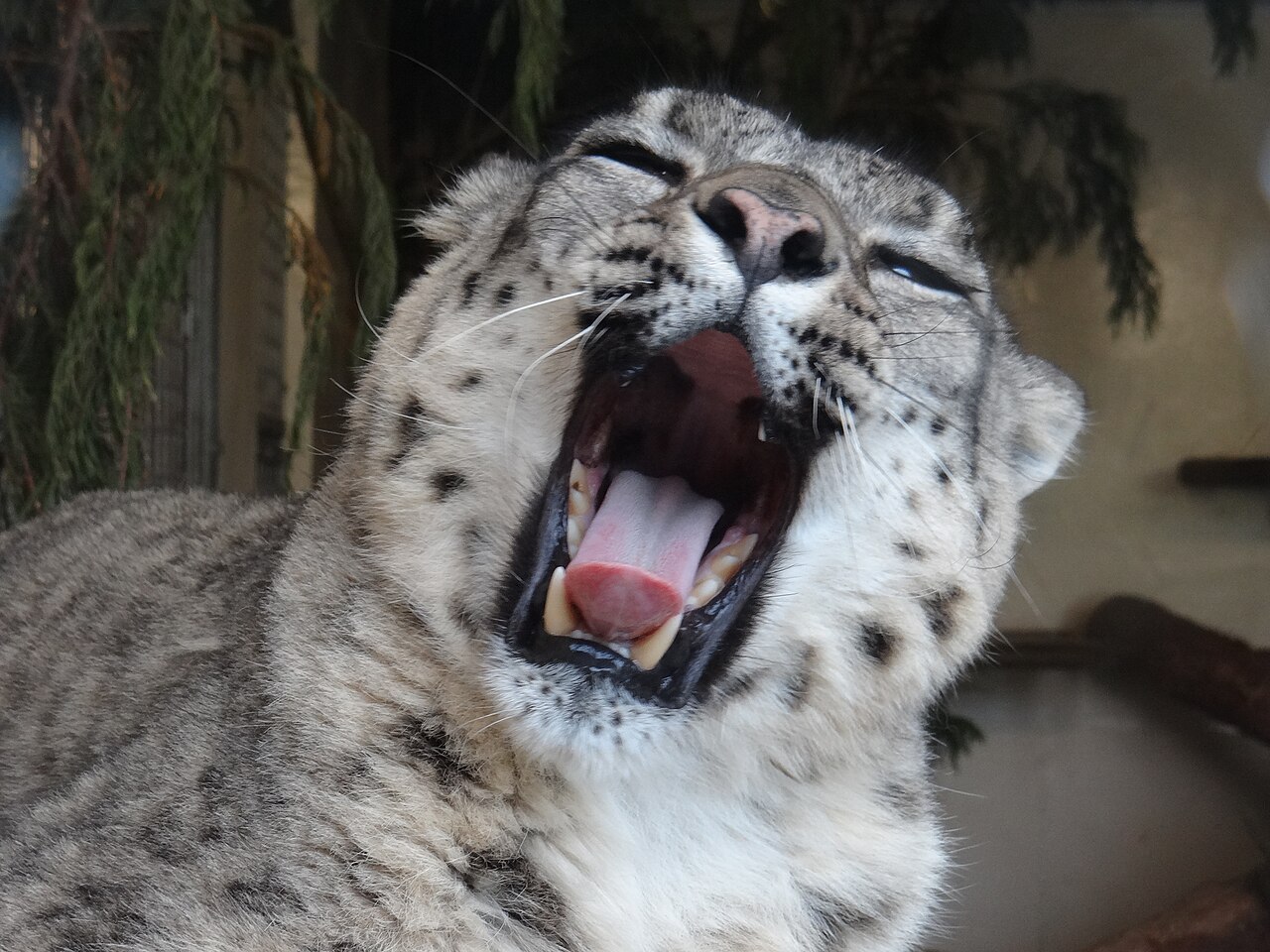
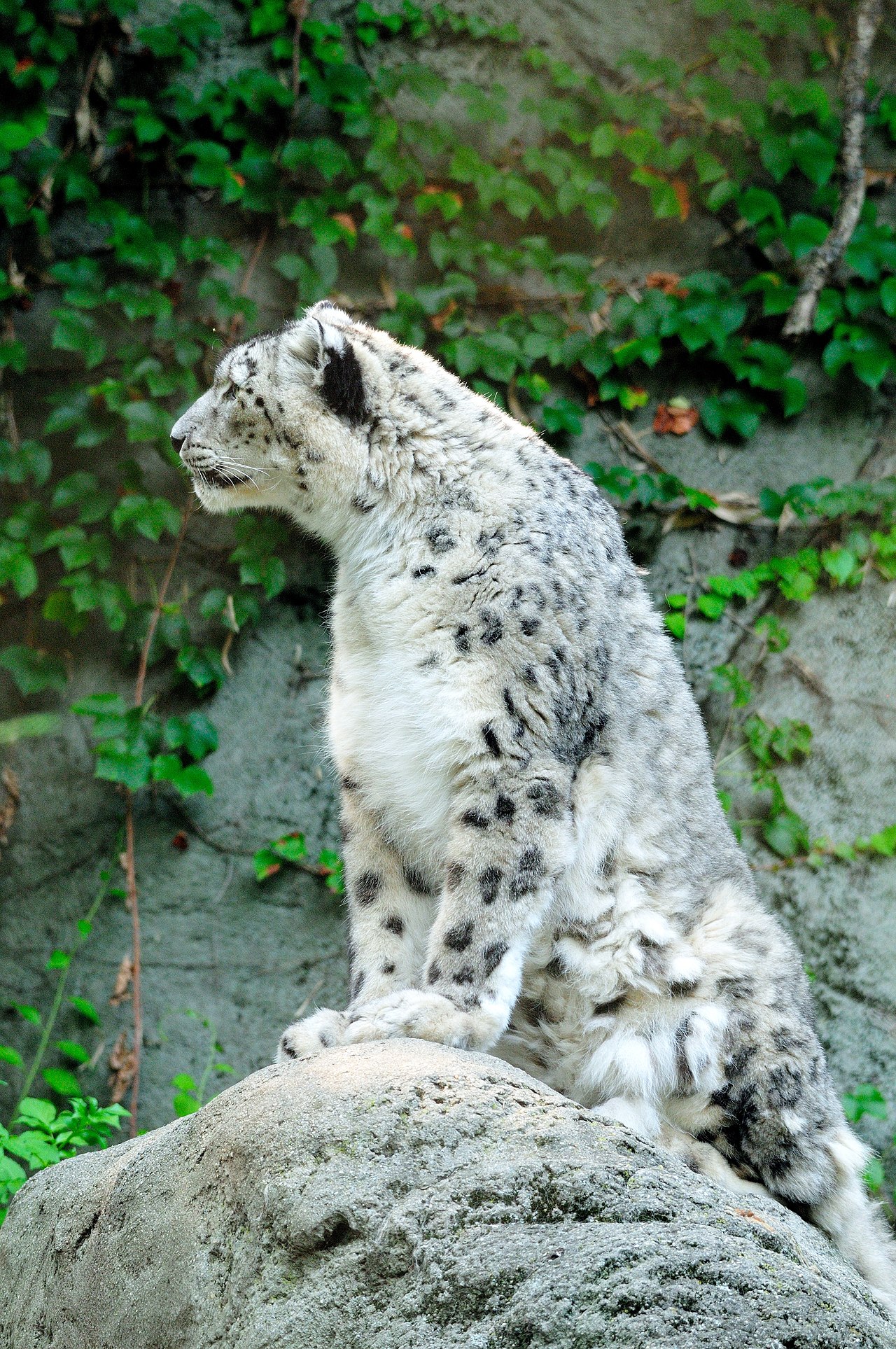
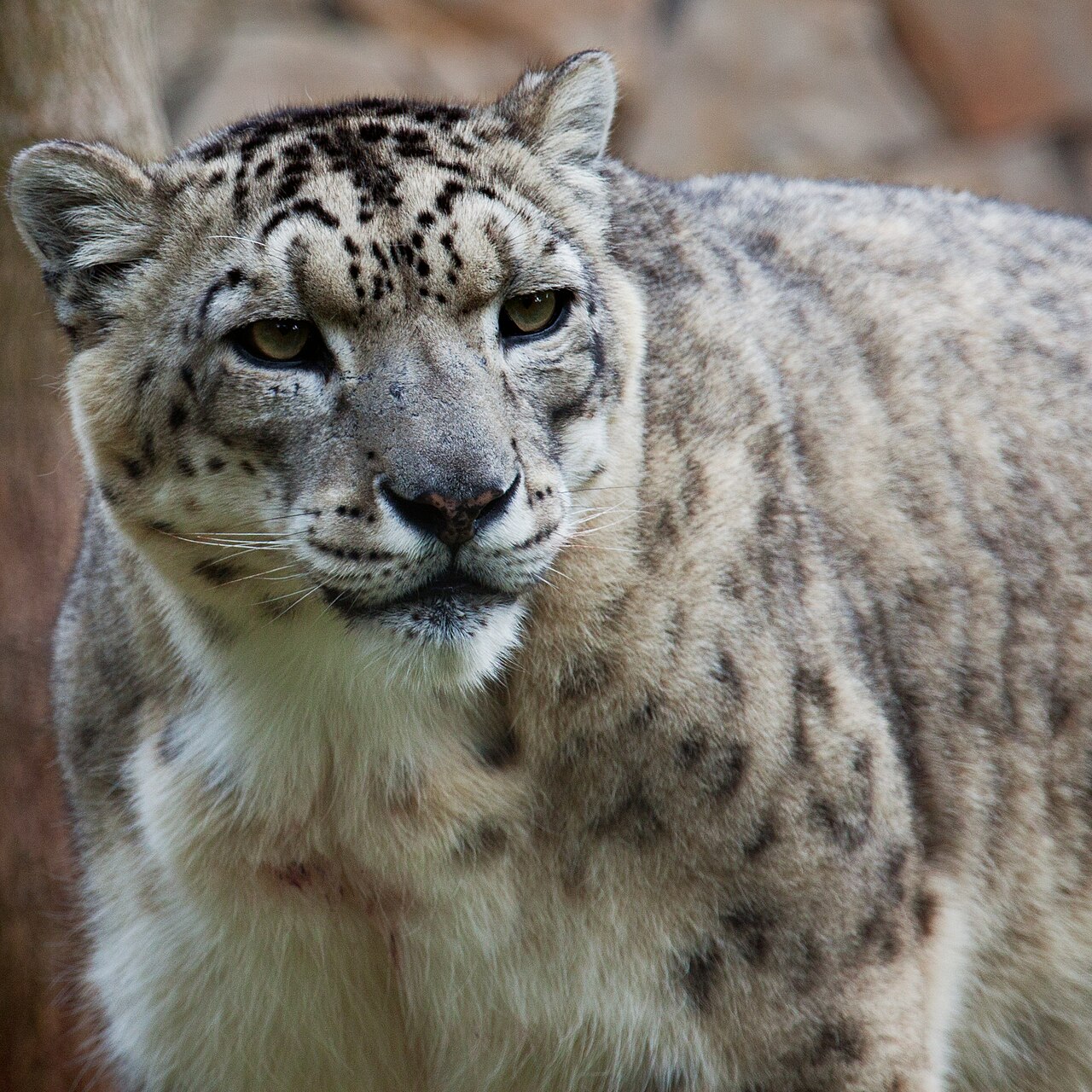
The snow leopard (Panthera uncia) is a felid species in the genus Panthera, native to the mountain ranges of Asia. It is known for its thick whitish to grey fur with black spots and rosettes, and its adaptations for cold, mountainous environments. The species is listed as Vulnerable on the IUCN Red List, threatened by poaching and habitat destruction, and is widely used in heraldry and as an emblem in Central Asia and parts of North India.
Scientific classification
- KingdomAnimalia
- PhylumChordata
- InfraclassPlacentalia
- OrderCarnivora
- FamilyFelidae
- GenusPanthera
- SpeciesPanthera uncia
Named by (Schreber, 1775)
Close relatives
Other species of Panthera with a Codexery entry.
Sources: Wikipedia taxobox: Snow leopard (CC BY-SA 4.0)
Conservation status
Vulnerable (VU)
- LC
- NT
- VU▲ this species
- EN
- CR
- EW
- EX
Source: IUCN Red List assessment · GBIF copy of the Red List category
How big is it?
Largest length in the source, 1.5 m, next to a 1.8 m person.
Diagram: drawn by Codexery, schematic shapes to scale (not a likeness). Length: Wikipedia: Snow leopard
Where the snow leopard has been recorded
86 inland records left out (institution coordinates).
Map: drawn by Codexery. Data: Natural Earth basemap (public domain) · place coordinates: Wikipedia (CC BY-SA 4.0)
Lore & Background
The snow leopard was long classified in the monotypic genus Uncia, but phylogenetic studies placed it within Panthera, forming a sister group with the tiger. Genetic divergence between the snow leopard and tiger is estimated at 4.62 to 1.82 million years ago. Two subspecies were described based on morphology, but genetic differences have not been confirmed, so it is regarded as a monotypic species.
Common Misconceptions (Editorial)
Some people mistakenly believe the snow leopard belongs to its own separate genus, but the facts confirm it is classified in the genus Panthera, forming a sister group with the tiger. It is sometimes thought that multiple subspecies of snow leopard exist, but genetic differences have not been confirmed, so it is regarded as a monotypic species with no recognized subspecies.
Why It Matters (Editorial)
The snow leopard endures as a powerful symbol of resilience in some of the harshest environments on Earth, from the mountains of Central Asia to parts of North India. Its vulnerable status highlights the ongoing tension between human development and wildlife conservation, while its presence in heraldry and emblems shows how a single species can unite cultural identity across borders.
Reader's Guide
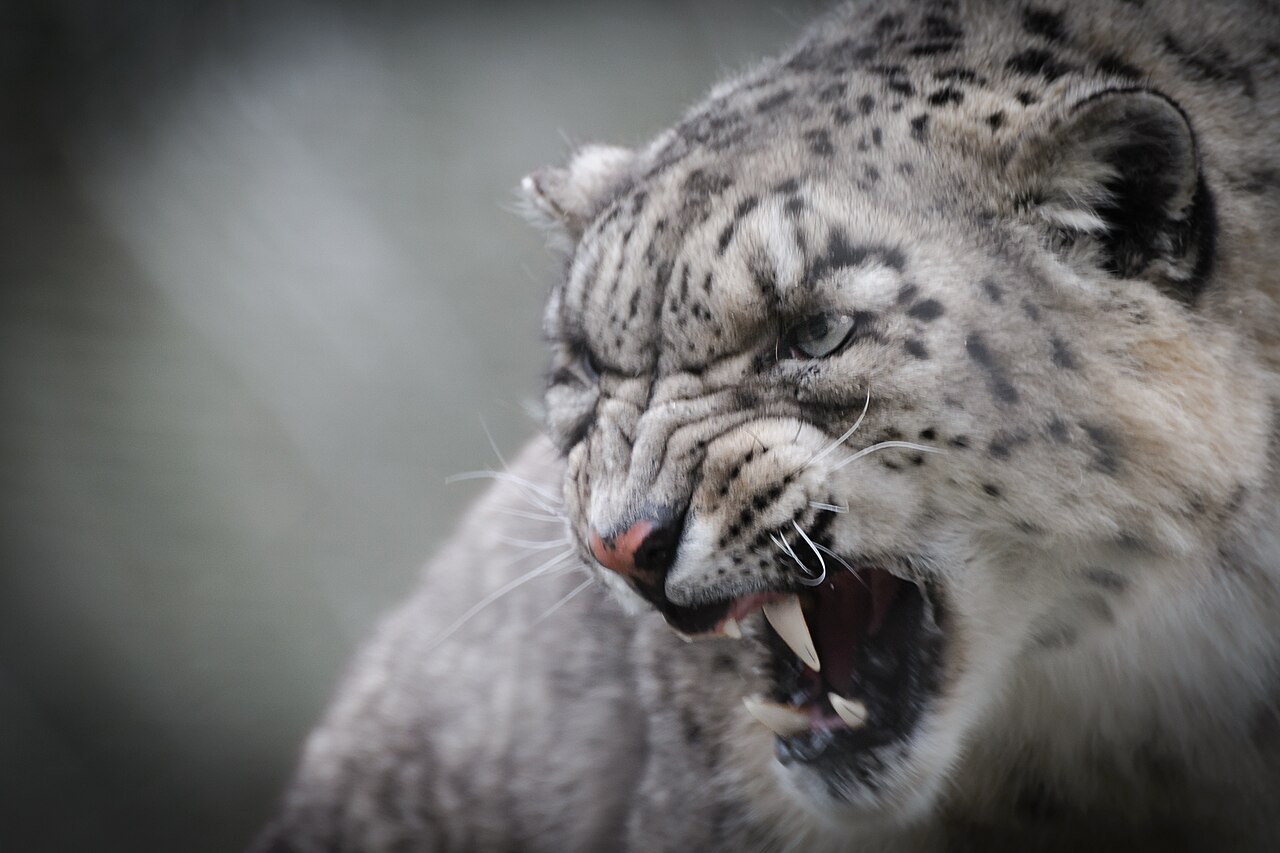
The snow leopard's significance lies in its role as an apex predator in alpine and subalpine zones across Asia, from the Hindu Kush and Himalayas to southern Siberia and western China. Its adaptations—small rounded ears, broad paws, and thick tail—enable survival in cold, rocky environments.
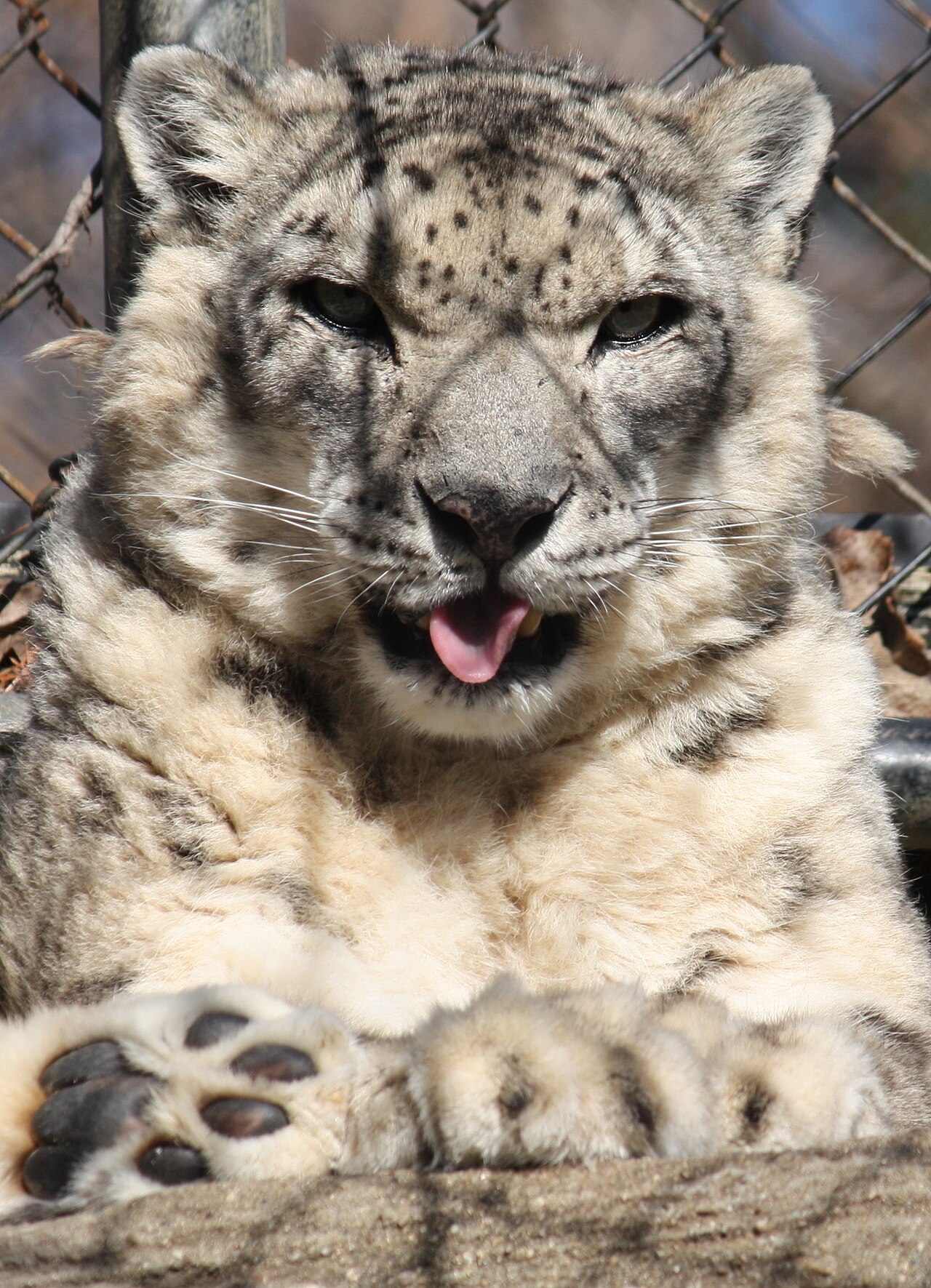
It is listed in CITES Appendix I and legally protected in most range countries. Its cultural importance is reflected in its use in heraldry and as an emblem in Central Asia and parts of North India. The snow leopard cannot roar due to short vocal folds, despite a partly ossified hyoid bone.
Did You Know?
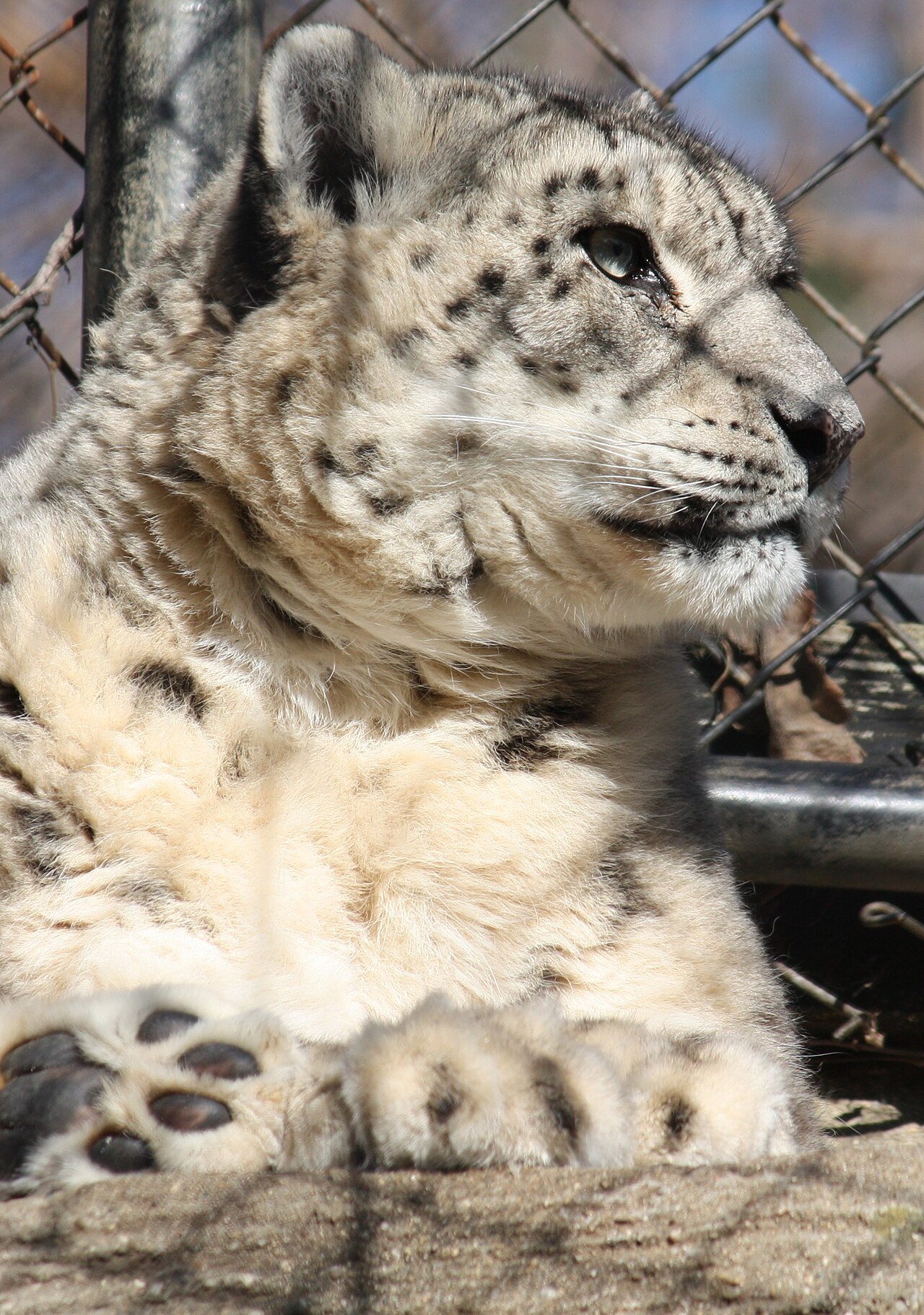
- Its canine teeth are 28.6 mm long and more slender than those of other Panthera species.
- The snow leopard and tiger diverged between 3.7 to 2.7 million years ago.
- The word 'ounce' for the snow leopard originates from the Old French 'once', ultimately from Ancient Greek 'λύγξ' (lynx).
More in Big Cats
Test yourself
Three questions drawn from this entry’s sources. Pick an answer to check it.
Answers checked against the source article
Sources
Compiled from Wikipedia and the sources listed below. Text from Wikipedia is available under CC BY-SA 4.0; this entry is adapted from it.
- Wikipedia: Snow leopard (CC BY-SA 4.0).
- Conservation status: IUCN Red List assessment.
- Occurrence records: GBIF (CC0 / CC BY). Basemap: Natural Earth (public domain).
- Word definitions: the Codexery glossary, each quoted from its Wikipedia article.
Spotted an error? Know more?
Reader corrections go straight into our review queue. Suggest an edit · How this site is sourced