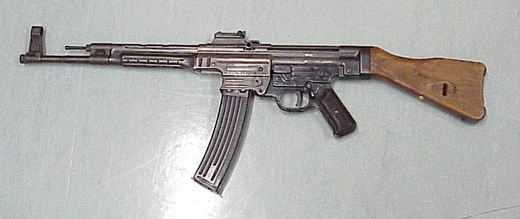
Featureless rifles
Modified rifles designed to comply with California assault weapon laws.

Featureless rifles are firearms that have been modified to remove prohibited features, most commonly to comply with gun laws in California. The term is primarily associated with Modern Sporting Rifles that have been altered or manufactured to avoid classification as assault weapons under state regulations.
- Jurisdiction
- California
- Common caliber conversion
- .22 Long Rifle
- Typical original caliber
- 5.56×45mm NATO / .223 Remington
- Companies producing featureless rifles
- Cobalt Kinetics, Hi-Point Firearms
- Organizations providing information
- California Rifle and Pistol Association (CRPA), National Rifle Association of America (NRA)
Lore & Background
Featureless rifles emerged as a response to California's assault weapons statute, which since July 1, 2018, has required formal registration for guns with a bullet button, pistol grip, flash suppressor, and folding stock. Rather than register their weapons, some gun owners chose to make modifications to keep their rifles compliant without registration. Common changes include replacing a flash suppressor with a muzzle brake or converting the rifle to use .22 Long Rifle cartridges, which are smaller and less expensive than the standard 5.56×45mm NATO / .223 Remington ammunition.
Some companies sell 'featureless grips' made of Kydex that can convert pistol grips so they no longer meet the statutory definition of prohibited features. With these modifications, high-capacity magazines can still be used. A few manufacturers, such as Cobalt Kinetics and Hi-Point Firearms, have released rifles designed from the outset to be 'featureless' under California's law. Both the California Rifle and Pistol Association and the National Rifle Association have published detailed information about 'featureless builds'.
Reader's Guide
Featureless rifles represent a significant adaptation within the firearms community to state-level regulatory frameworks, particularly in California. The concept allows gun owners to retain possession of Modern Sporting Rifles without undergoing formal assault weapon registration, which became mandatory for certain configurations after July 1, 2018. By replacing or removing features such as pistol grips, flash suppressors, and folding stocks, owners can legally use high-capacity magazines while avoiding registration. The availability of aftermarket parts like Kydex grip wraps and factory-built featureless models from companies like Cobalt Kinetics and Hi-Point Firearms has made compliance more accessible. The involvement of major advocacy organizations such as the California Rifle and Pistol Association and the National Rifle Association in disseminating information underscores the practical importance of this category for lawful gun ownership. Featureless rifles thus illustrate how legal definitions can shape firearm design and consumer choices, creating a distinct niche within the broader assault rifle market.
Did You Know?
- Featureless rifles are most commonly associated with compliance with California gun laws.
- Some featureless rifles are converted to use .22 Long Rifle cartridges instead of 5.56×45mm NATO / .223 Remington.
- Featureless grips made of Kydex can convert pistol grips so they no longer meet the legal definition of a prohibited feature.
What Makes a Rifle 'Featureless'
Featureless rifles represent a category of firearms defined not by their original design but by the deliberate removal of characteristics that trigger legal restrictions. The term is most frequently applied to Modern Sporting Rifles—platforms like the AR-15—that have been either manufactured or retrofitted to shed features deemed prohibited under state law. California is the jurisdiction where this concept carries the most weight, as its assault weapons statute specifically targets certain configurations of sporting rifles. Rather than abandoning a firearm entirely, owners and manufacturers work within a framework of compliance, stripping away the particular components that would otherwise classify the weapon as requiring formal registration. The result is a rifle that retains its fundamental utility while existing in a legal gray zone that sidesteps the more burdensome registration process. The concept is closely related to the broader practice of sporterising, where firearms are altered to meet regulatory standards.
The 2018 California Deadline and the Owner's Dilemma
On July 1, 2018, California's assault weapons regulations took effect, placing a specific set of rifle features under the requirement of formal registration. A Modern Sporting Rifle equipped with a bullet button, a pistol grip, a flash suppressor, or a folding stock would, from that date forward, be classified as an assault weapon unless the owner completed the registration process. Faced with this deadline, gun owners in the state essentially had two paths. Some chose to register their existing firearms, accepting the administrative and financial burden that accompanied it. Others took a different route, opting to physically alter their weapons so that the prohibited features were no longer present, thereby removing the need for registration altogether. This second group gave rise to the widespread practice of building what became colloquially known as 'featureless' configurations, a term that quickly became the standard shorthand in California gun culture for any rifle modified to fall outside the statute's definition.
Practical Modifications and Cartridge Conversions
The practical modifications that define a featureless build vary depending on which prohibited feature needs to be addressed. For rifles originally fitted with a flash suppressor, a common and straightforward solution is to swap that component for a muzzle brake, which serves a different ballistic function and falls outside the statutory definition. Another popular approach involves converting the rifle's chambering entirely. Some owners have reconfigured their AR-15-style platforms to fire .22 Long Rifle cartridges, a smaller and notably less expensive round compared to the 5.56×45mm NATO or .223 Remington ammunition that these rifles are most commonly chambered in. Beyond barrel and chamber work, aftermarket accessories play a significant role. Companies produce 'featureless grips' molded from Kydex, a thermoplastic material, that sleeve over a standard pistol grip and alter its profile enough to remove it from the prohibited category. Importantly, these grip modifications do not prevent the use of high-capacity magazines, preserving a degree of functional flexibility for the shooter.
Industry Response and Organizational Guidance
The featureless rifle phenomenon has attracted attention well beyond individual gun owners, drawing in both manufacturers and major firearms organizations. Companies such as Cobalt Kinetics and Hi-Point Firearms have gone so far as to design and release rifles from the factory floor that are already compliant with California's assault weapons statute, eliminating the need for any aftermarket modification. This represents a shift from retrofit culture to purpose-built manufacturing, where the featureless configuration is the product's default state rather than an afterthought. On the advocacy side, both the California Rifle and Pistol Association and the National Rifle Association of America have published detailed guidance documents aimed at helping consumers understand what constitutes a compliant build. These resources, alongside online guides and state-level frequently asked questions published by the California Department of Justice, form an informal but extensive body of information that guides owners through the often-confusing landscape of state firearms law.
Frequently Asked Questions
What is a featureless rifle?
A featureless rifle is a semi-automatic sporting rifle whose design has been stripped of specific elements—like a pistol grip, bayonet lug, or adjustable stock—so it no longer meets California's legal definition of an assault weapon. The term is most often applied to AR-platform rifles that have been altered or manufactured to stay within state restrictions.
Why do featureless rifles exist?
They exist so that California residents can legally own and shoot modern sporting rifles that would otherwise fall under the state's assault weapon ban. By removing the regulated features, the firearm remains a functional semi-automatic while complying with local law.
What calibers are featureless rifles typically chambered in?
The standard platform is built around 5.56×45mm NATO or .223 Remington, but a very common conversion is to .22 Long Rifle, which lowers cost and recoil. The .22 LR variant is especially popular among California shooters who want a legal, affordable option.
Which companies and organizations are associated with featureless rifles?
Manufacturers such as Cobalt Kinetics and Hi-Point Firearms produce rifles designed or modified to meet California's assault-weapon restrictions. Informational resources come from groups like the California Rifle and Pistol Association (CRPA) and the National Rifle Association of America (NRA).
How does a featureless rifle differ from a standard AR-15?
The key distinction is the absence of features that trigger California's assault-weapon classification, such as a collapsible stock, a pistol grip, or a detachable magazine in some configurations. The rifle still functions as a semi-automatic platform, but its external configuration is more simplified to stay legal in the state.
More in Assault Rifles 1-24
Spotted an error? Know more?
Reader corrections go straight into our review queue. Suggest an edit · How this site is sourced