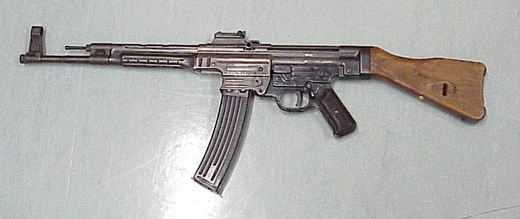
AEK-971
A balanced-recoil assault rifle developed for Soviet trials.

Vitaly V. Kuzmin · CC BY-SA 4.0
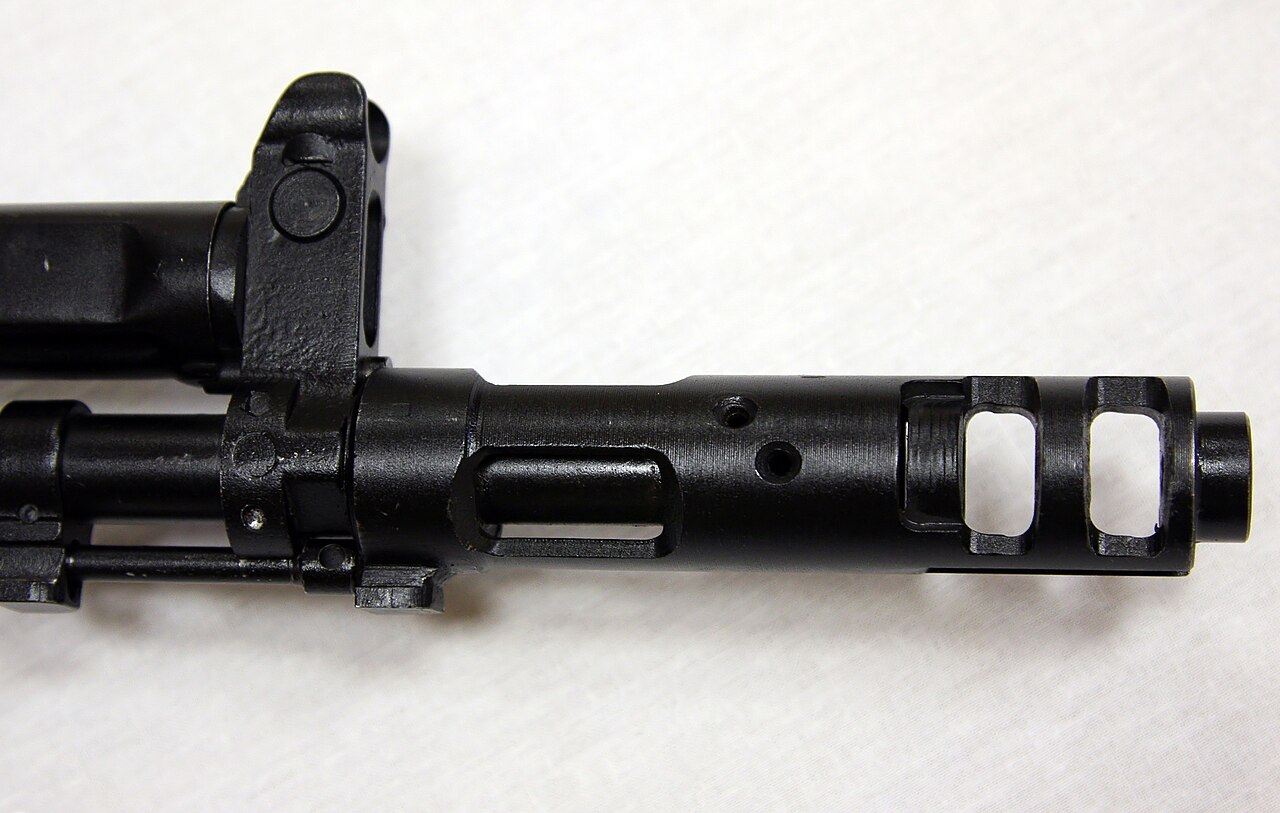
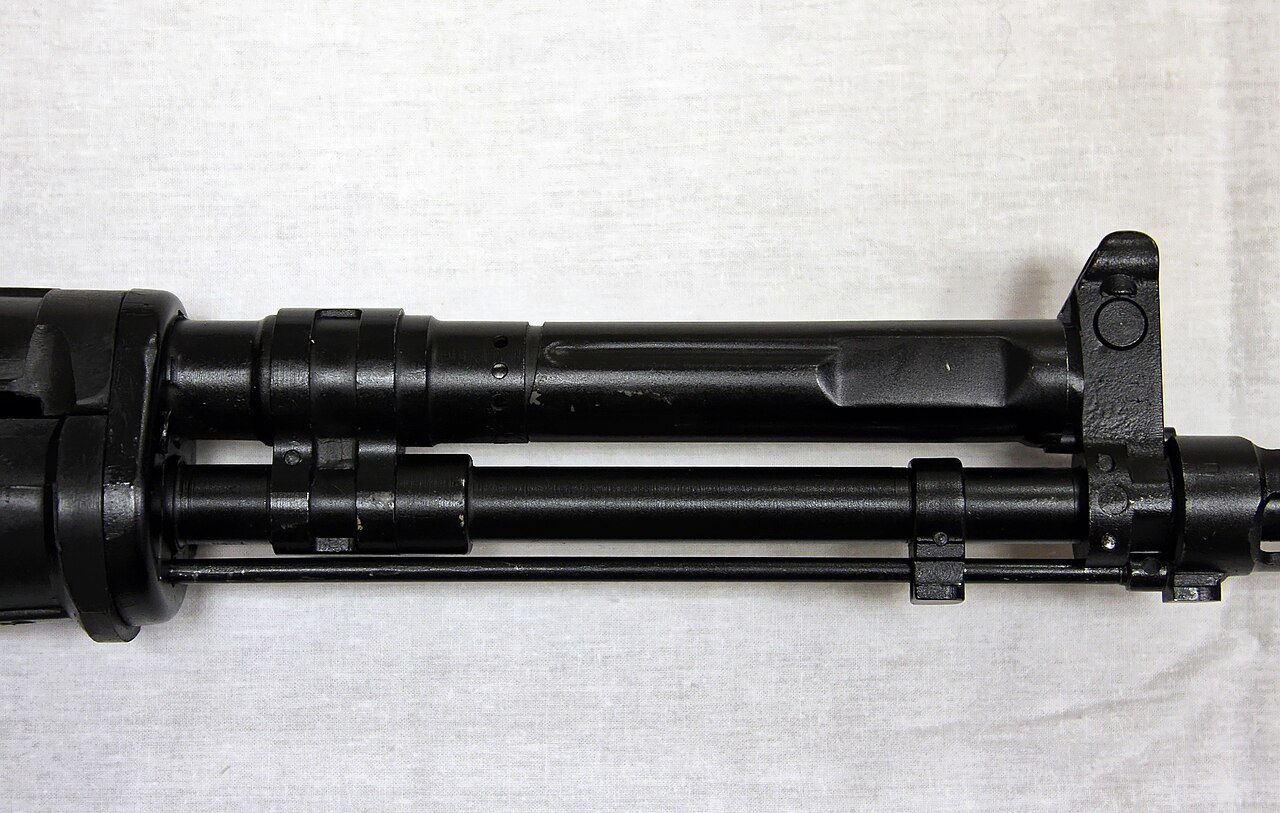
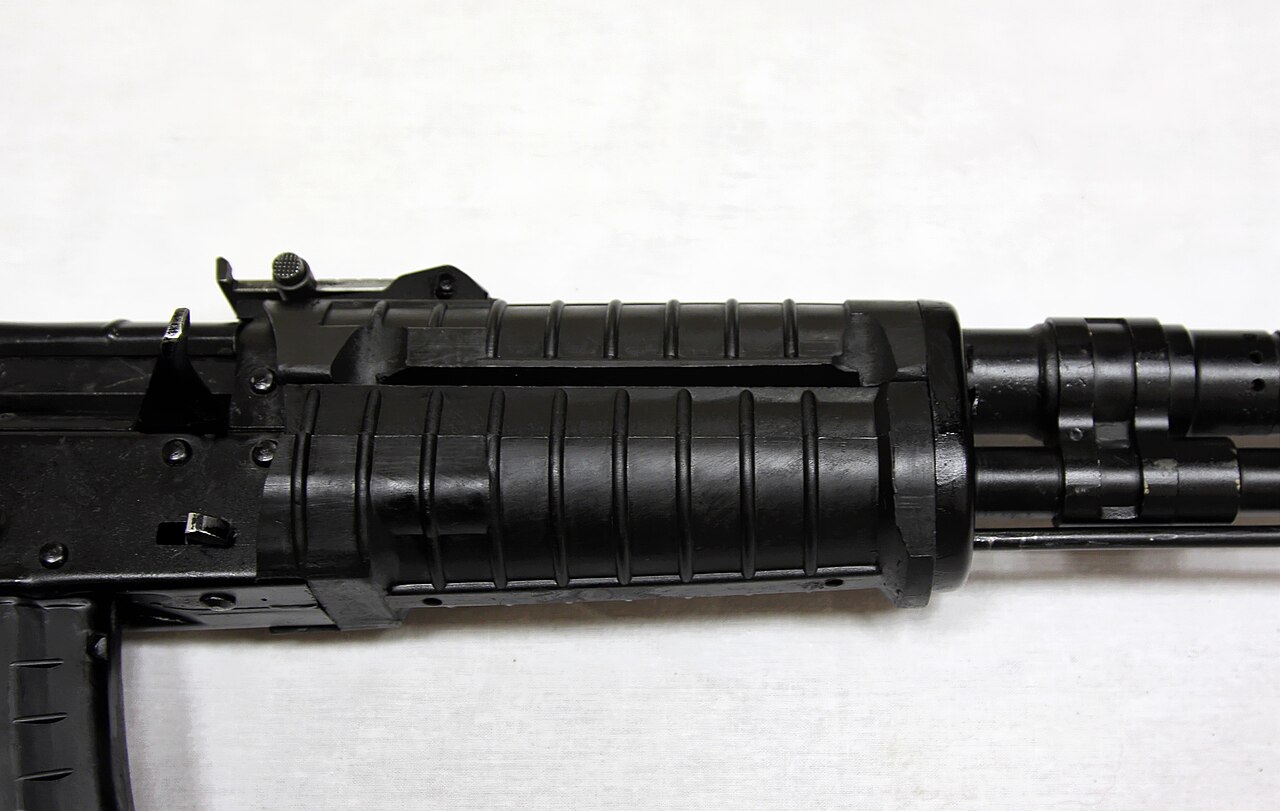
The AEK-971 is a selective fire 5.45×39mm assault rifle developed at the Kovrov Mechanical Plant by chief designer Stanislav Ivanovich Koksharov in the late 1970s and 1980s. It is notable for its balanced automatic recoil system, which improves automatic fire accuracy compared to conventional AK-pattern rifles.
Quick Facts
- Service
- 1980–present / 2018–present (KORD rifle)
- Wars
- Second Chechen war / 2022 Russian Invasion of Ukraine
- Designer
- Stanislav Koksharov
- Length
- 960 mm with stock unfolded / 720 mm with stock folded
- Action
- Gas-operated, rotating bolt, balanced recoil system (BARS)
- Origin
- Soviet Union
- Is Ranged
- Yes
- Design Date
- 1978
- Manufacturer
- Kovrovskiy Mekhanicheskiy Zavod (original) / Degtyarev plant (current)
- Production Date
- 1990–present
- Weight
- 3.3 kg unloaded (AEK-971) / 3.3 kg unloaded (AEK-972) / 3.25 kg unloaded (AEK-973)
- Part Length
- 420 mm
Facts from the source article.
Lore & Background
The AEK-971 was developed to participate in a competition announced by the USSR Ministry of Defense, during which preference was given to the AN-94. The prototype differed from the production model, as many innovations were perceived as unnecessary by the Ministry of Defence, leading to a simplification. Initially, the prototype featured a 2-round burst mode, later changed to a 3-round burst mode in the production model. The AEK-971 is approximately 0.5 kg lighter than the AN-94, simpler in design, and cheaper to manufacture. Although it lost the initial production contract to the AN-94 as a result of the Project Abakan assault rifle selection trials (1980–1994), the Russian Army still began field trials for the AEK-971. It has been combat proven in Chechnya, tested by naval infantry and interior forces, and prepared for mass production. Only a few small batches have been produced and adopted for service with units of the Ministry of Justice of the Russian Federation.
The design is based on previous AK-type rifles but features a Balanced Automatics Recoil System (BARS) that reduces the negative effects of recoil by using a counter-weight that negates the impulse of the gas piston and bolt carrier. This results in 15–20% improved automatic firing accuracy compared to the AK-74M. The travel distance of the reciprocating parts is less than non-balanced AK designs, increasing the cyclic rate of fire. The original prototype had a cyclic rate of 1,500 rounds per minute, later decreased to 900 rounds per minute for the production model. The iron sights consist of an adjustable notched rear tangent sight calibrated from 100 to 1,000 m and a hooded front post. Each rifle is fitted with a Warsaw Pact side-rail bracket for mounting optics.
Reader's Guide
The AEK-971's significance lies in its balanced recoil system, which offered a meaningful accuracy advantage over standard AK-pattern rifles in full automatic and longer bursts. Although it lost the initial Soviet competition to the AN-94, the design was not abandoned; it saw limited field use and continued development. Its legacy is most apparent in the 6P67 KORD and 6P68 KORD variants, which were developed for the Ratnik trials in 2014 and later adopted by Russian special forces (Spetsnaz) and other units. These improved variants incorporate numerous internal and external enhancements, including a Picatinny rail, ambidextrous controls, and a 2-round burst feature. The AEK-971 series thus represents a parallel line of Russian assault rifle development that, while never becoming the standard infantry weapon, found a niche with specialized forces. Its balanced recoil principle influenced later designs and remains a distinctive technical solution in the field of automatic rifles.
Did You Know?
- The AEK-971's prototype had a cyclic rate of 1,500 rounds per minute, later reduced to 900 rounds per minute in the production model.
- The 6P67 KORD variant was adopted by Russian special forces in January 2022.
- The AEK-971 uses AK-74 or RPK-74 pattern magazines.
From Prototype to Production: The Abakan Contest
The AEK-971 was conceived in the late 1970s and 1980s at the Kovrov Mechanical Plant, where chief designer Stanislav Ivanovich Koksharov—sometimes referenced as Sergey Koksharov—pursued a selective-fire assault rifle chambered in 5.45×39mm. The project entered the high-stakes Project Abakan selection trials, a competition organized by the Soviet Ministry of Defense that ultimately favored the AN-94. The original prototype carried a two-round burst mechanism and a suite of innovations that the Ministry deemed superfluous, prompting a streamlining of the design before production. The finalized rifle swapped the two-round burst for a three-round option, shed roughly half a kilogram compared to the AN-94, and came with a simpler, lower-cost build. Despite losing the main production contract, the Russian Army nonetheless launched field trials, and the weapon saw combat testing in Chechnya with naval infantry and interior-ministry forces. Only small batches have been manufactured to date, with adoption limited to Ministry of Justice units, while production responsibility has since shifted to the Degtyarev Plant.
The Balanced Recoil Philosophy
At the heart of the AEK-971 lies the Balanced Automatics Recoil System, a mechanism that builds upon the classic Kalashnikov long-stroke gas-piston layout while actively counteracting its recoil impulse. As the bolt and bolt carrier travel rearward, a counter-weight shifts mass toward the muzzle, effectively canceling the rearward kick that plagues conventional AK-pattern rifles. The result is a markedly shorter travel distance for the reciprocating components, which in turn raises the cyclic rate. The prototype originally cycled at 1,500 rounds per minute before the production model settled at 900. In practical terms, the system delivers a 15-to-20 percent improvement in full-automatic accuracy over the AK-74M, and in sustained bursts of three to ten rounds it outperforms the AN-94, which holds only a narrow edge in its own two-round-burst mode. The BARS concept is not unique to this rifle; it had earlier appeared in the AO-38, AL-7, and later the AK-107, AK-108, and AK-109 families, but the AEK-971 remains one of its most direct expressions.
The KORD Rebirth and Spetsnaz Adoption
On 23 December 2014, the Russian Army revealed the 6P67 KORD—known during its developmental phase as the A-545—alongside the 6P68 KORD, both built as heavily improved descendants of the AEK-971 and AEK-973 respectively. These rifles entered the Ratnik state trials and, together with the AK-12, passed evaluation and were recommended for initial batch production. The strategic division of roles was clear: the KORD series, with its more complex and costly engineering, was earmarked for special operations forces, border patrol regiments, and the national guard, while the AK-12 would outfit regular infantry. By March 2017, testing had concluded and the 6P67 KORD was formally accepted into service. A January 2018 announcement confirmed its adoption in both 5.45×39mm and 7.62×39mm chamberings across the Russian military. The KORD rifles carry numerous internal and external refinements over their AEK predecessors, cementing the platform's transition from a near-miss in the Abakan contest to a frontline weapon for Russia's most elite operators.
A Family of Calibers and Configurations
The AEK-971 platform was never a single-caliber affair. The base model feeds 5.45×39mm ammunition through standard AK-74 and RPK-74 pattern box magazines of 30 rounds or more. The AEK-972 adapts the same action to 5.56×45mm NATO, drawing magazines from the AK-101, AK-102, and AK-108 family, while the AEK-973 steps up to 7.62×39mm and accepts AK-47, AKM, and RPK magazines. Operators can distinguish the variants at a glance by the curvature of their respective magazines. The AEK-973S pushes further with a redesigned trigger mechanism relocated to a thumb safety-selector on the right side and an extended, padded, retractable lightweight stock that still permits firing in the collapsed position; its burst-fire accuracy is reported to be double that of the AKM. Every model in the line ships with an adjustable notched tangent rear sight graduated in 100-meter steps from 100 to 1,000 meters, a hooded front post, and a Warsaw Pact side-rail bracket for mounting optics.
Gallery
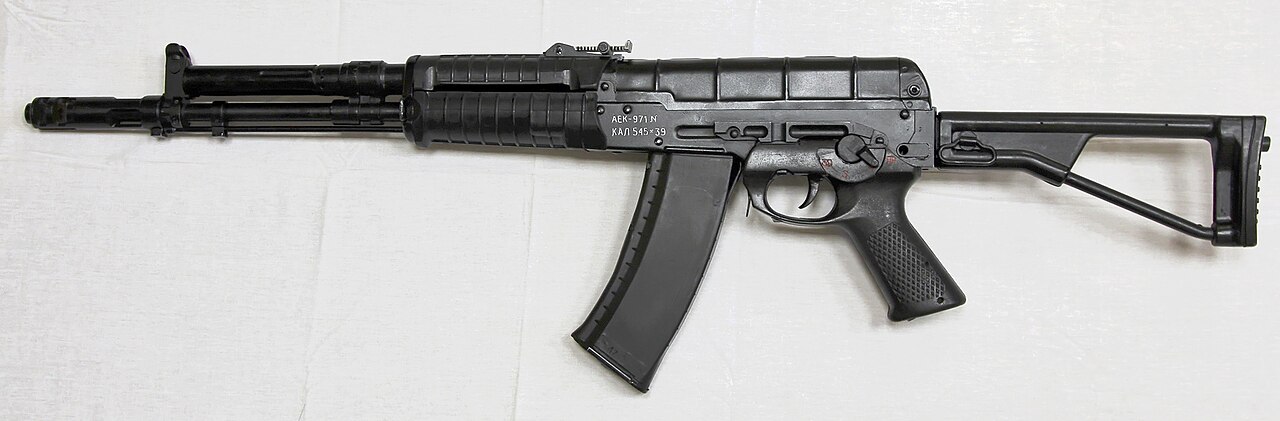
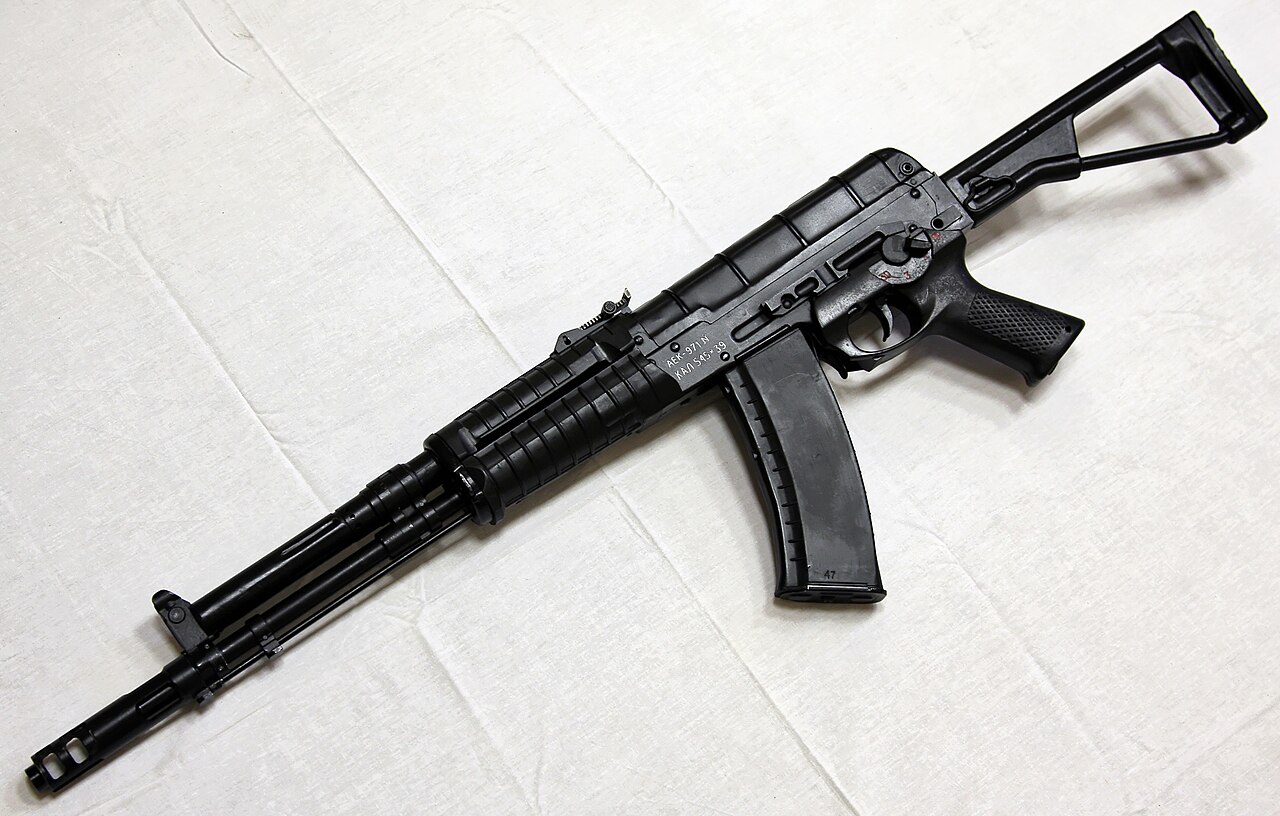
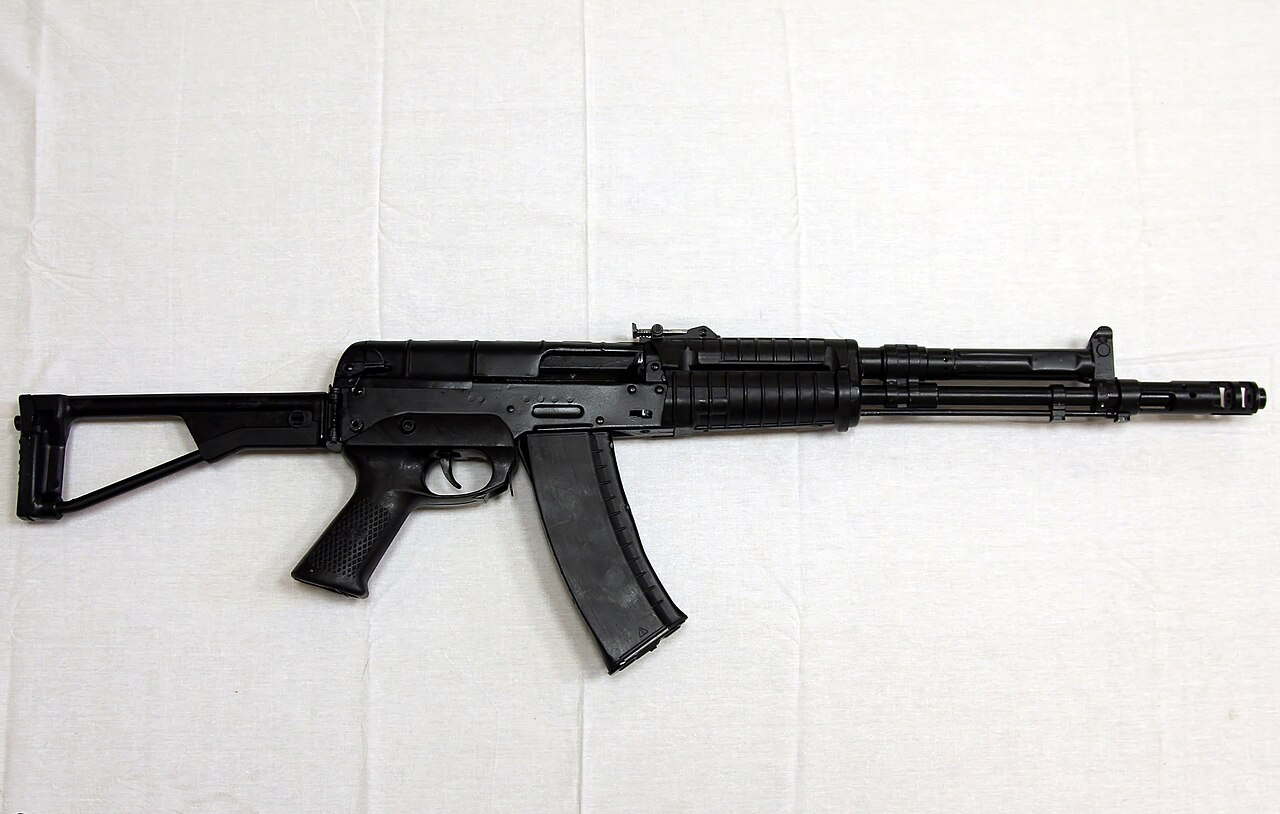
Frequently Asked Questions
What is the AEK-971?
The AEK-971 is a selective-fire assault rifle chambered in 5.45×39mm that was developed at the Kovrov Mechanical Plant during the late 1970s and 1980s. It was entered as a competitive candidate in Soviet rifle trials against the standard AK-74.
What makes the AEK-971 different from a standard AK-74?
Its defining innovation is a balanced automatic recoil mechanism that noticeably improves full-auto accuracy compared to conventional AK-pattern rifles. This recoil-moderating system was the rifle's core engineering contribution over the standard AK-74 layout.
Who designed the AEK-971 and where was it manufactured?
Chief designer Stanislav Ivanovich Koksharov led the development team at the Kovrov Mechanical Plant (KMZ). Production manufacturing later shifted to the Degtyarev Plant.
What are the key specifications of the AEK-971?
It cycles at 900 rounds per minute, accepts 30-round or larger box magazines in the AK-74 or RPK-74 pattern, and features an adjustable rear tangent sight with a usable range of 100 to 1,000 meters.
Why is the AEK-971 significant in assault rifle history?
Although it was never adopted as a standard-issue Soviet service weapon, it proved that balanced-recoil technology could meaningfully enhance automatic-fire accuracy in a compact 5.45mm platform. Its design philosophy left a lasting mark on subsequent Russian rifle development and remains a popular subject among firearms enthusiasts.
More in Assault Rifles 1-24
Spotted an error? Know more?
Reader corrections go straight into our review queue. Suggest an edit · How this site is sourced