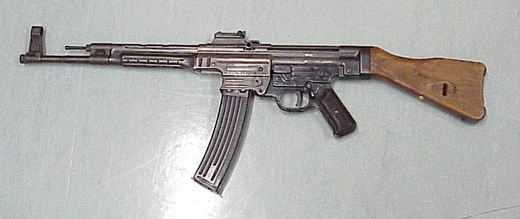
AK-12
Russian fifth-generation assault rifle adopted after Ratnik trials.

Vitaly V. Kuzmin · CC BY-SA 4.0
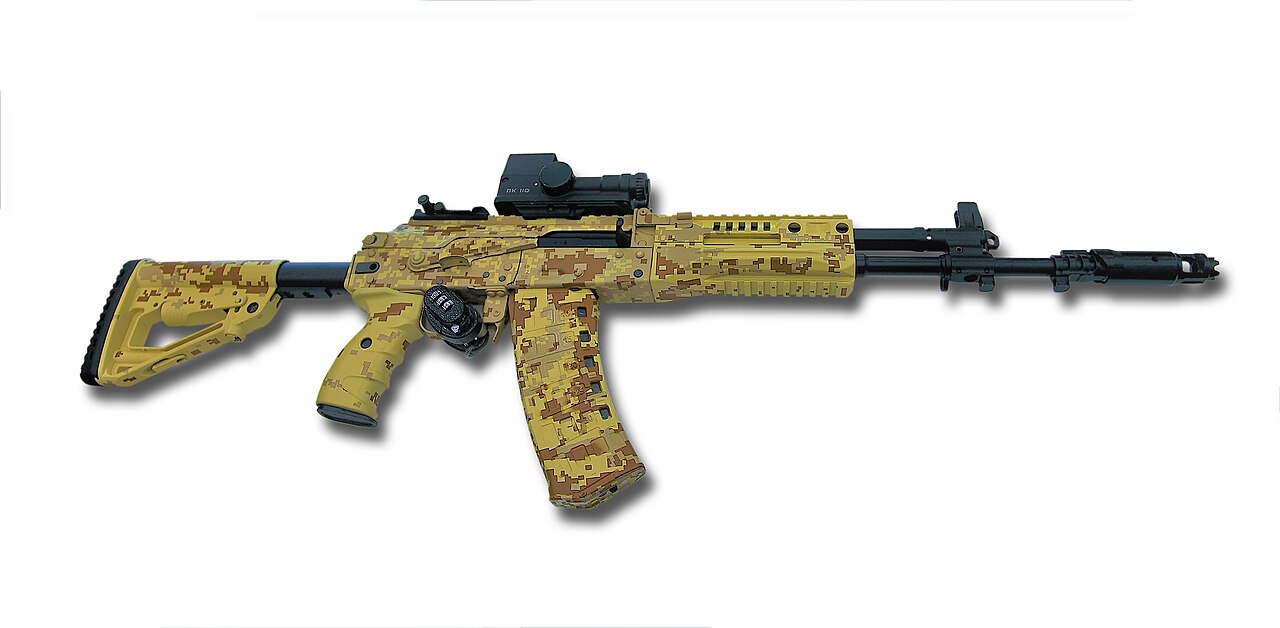
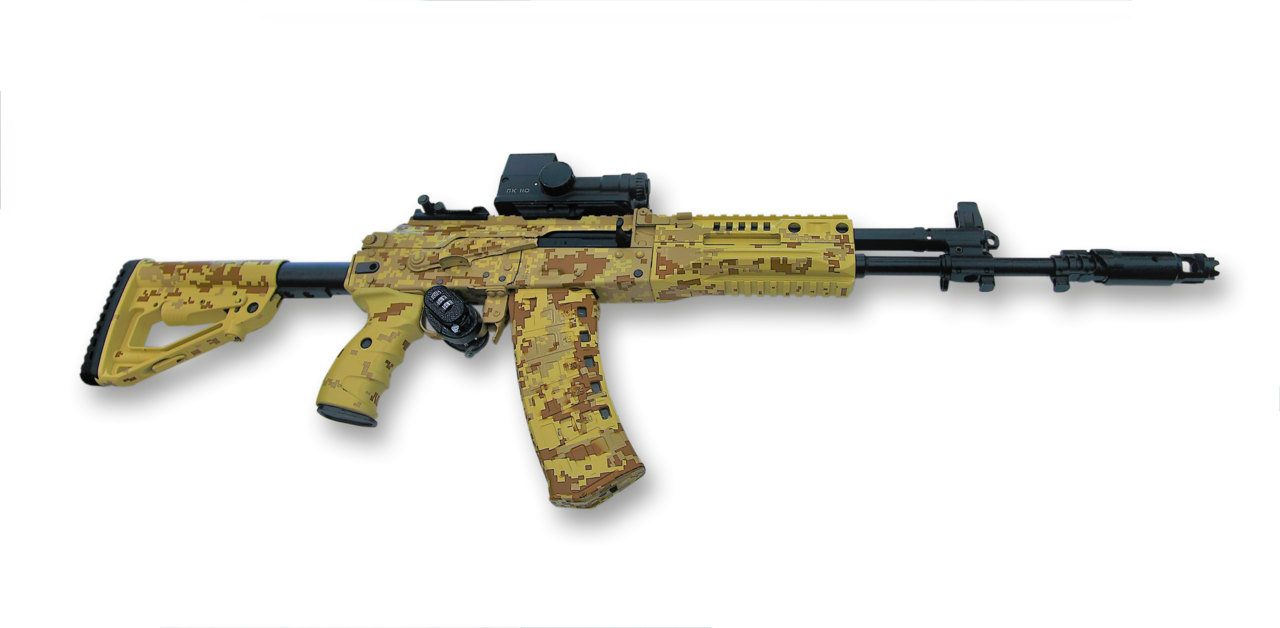
The AK-12 is a Russian gas-operated assault rifle chambered in 5.45×39mm, designed and manufactured by Kalashnikov Concern. It is the fifth generation of Kalashnikov rifles and was developed to participate in the Russian military's Ratnik trials.
Quick Facts
- Wars
- Syrian civil war / Russo-Ukrainian War / Russo-Ukrainian war (2022–present)
- Designer
- Mikhail Kalashnikov, Vladimir Zlobin, Sergey Urzhumcev
- Length
- 922 mm full length · 688 mm stock folded
- Part Length
- 415 mm / 290 mm (AK-12K, AK-15K) / 228 mm (AK-12SK, AK-15SK)
- Action
- Gas-operated long-stroke piston system, closed rotating bolt
- Origin
- Russia
- Is Ranged
- Yes
- Service
- 2018–present
- Design Date
- 2011
- Manufacturer
- Izhmash (now Kalashnikov Concern)
- Number
- 150,000+
- Weight
- 3.7 kg empty (AK-12) / 3.75 kg empty (AK-15) / 3.8 kg empty (AK-19) / 4.3 kg empty (AK-308)
Facts from the source article.
Lore & Background
The AK-12 project began in 2011 as a private venture by IZHMASH to compete in the Ratnik trials. The original design went through three prototype modifications to address defects, cost concerns, and issues with fully automatic fire. After Kalashnikov Concern took over, the earlier prototypes were abandoned in favor of the AK-400 prototype, which became the basis for the final production model. The first prototype was presented to Prime Minister Vladimir Putin in February 2012, fitted with a 60-round magazine. The AK-12 was publicly unveiled in June 2012 at the Engineer Technologies 2012 exhibition in Moscow. State trials were delayed, and in September 2013 reports indicated the rifle might not be adopted due to shortcomings in preliminary tests, though trials continued for law enforcement. In December 2014, the Russian Army announced the AK-12 had passed state trials and would be accepted for operational evaluation. The final production model, derived from the AK-400, was introduced in September 2016, featuring a free-floating barrel. The AK-12 completed operational testing in June 2017 and both the AK-12 and AK-15 finished testing in December 2017. In January 2018, they were adopted by Russian military forces. The AK-12 saw its first confirmed use during the Russian invasion of Ukraine, with some Russian units employing it and Ukrainian forces capturing and using limited numbers.
Reader's Guide
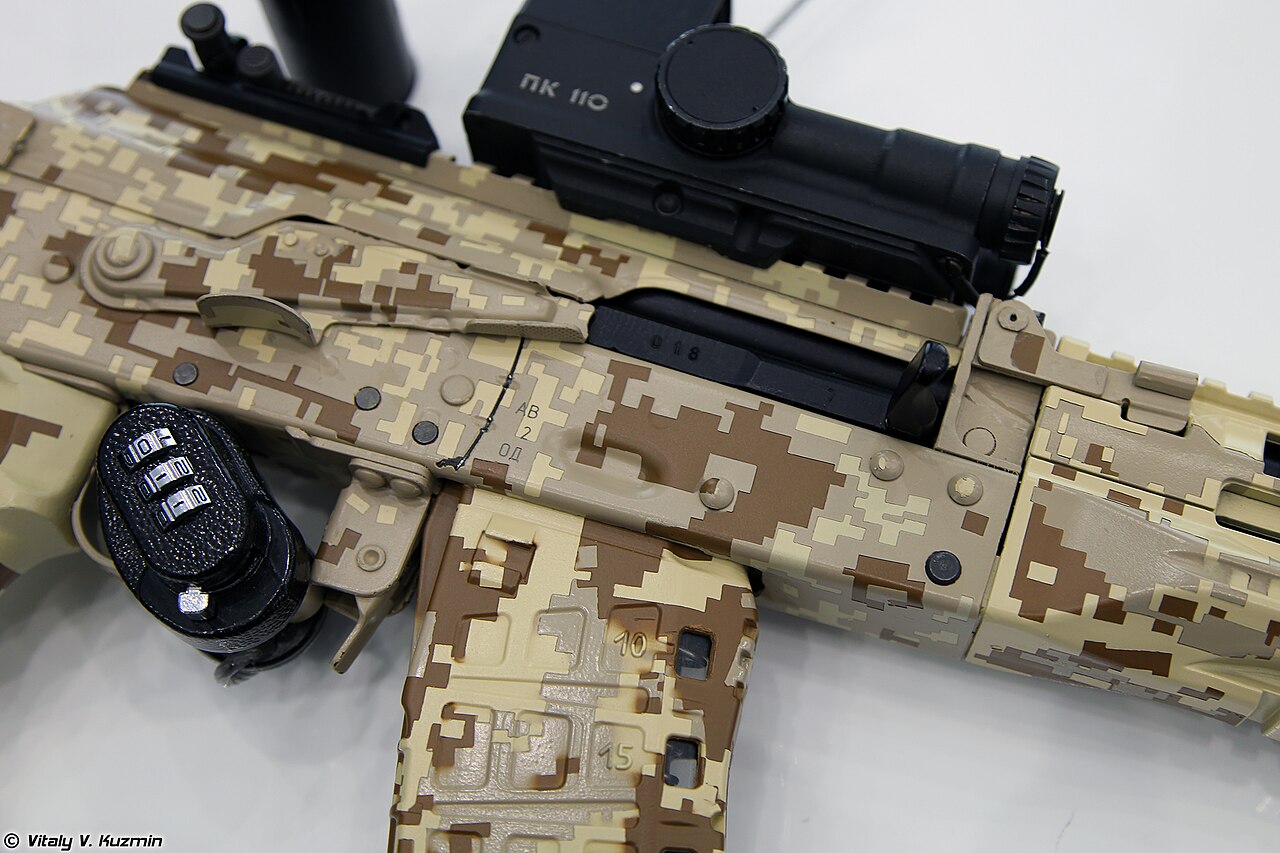
The AK-12 represents the culmination of decades of Kalashnikov development, transitioning from earlier prototypes to a production model based on the proven AK-400 design. Its adoption by the Russian military in January 2018 marked a significant modernization of Russian small arms, intended to standardize and replace earlier AK generations. The platform spawned multiple variants, including the AK-15 in 7.62×39mm, compact K and SK models, the export-oriented AK-19 in 5.56×45mm NATO, the AK-308 battle rifle in 7.62×51mm NATO, and the RPK-16 light machine gun. The AK-12's design incorporates ergonomic improvements such as an ambidextrous fire selector, telescoping stock, and Picatinny rails, while retaining the reliable long-stroke gas piston system. Its first combat use in the Russian invasion of Ukraine demonstrated its field deployment, though the conflict also saw captured examples used by Ukrainian forces. The rifle's development path—from private venture through multiple redesigns to official adoption—illustrates the iterative process of military procurement and the balancing of innovation with proven reliability.
Did You Know?
- The AK-12 is the fifth generation of Kalashnikov rifles.
- The final production model is based on the AK-400 prototype, not the earlier AK-12 prototypes.
- A 60-round quad-stack magazine was developed for the early prototype.
- The AK-12 was first used in combat during the Russian invasion of Ukraine.
From Prototype to Production: The Design Journey
The AK-12's path to becoming Russia's fifth-generation Kalashnikov was anything but straightforward. The project kicked off in 2011 when Izhmash, operating as a private venture within what would become Kalashnikov Concern, sought to enter the Ratnik trials organized by the Russian army. The initial design proved problematic: it went through three successive prototype revisions to iron out defects, control manufacturing costs, and resolve reliability concerns tied to fully automatic fire. Ultimately, the early prototype designs were scrapped entirely. In their place, the well-proven AK-400 prototype was elevated to carry the "AK-12" name and served as the foundation for the final production rifle. The core gas-operated long-stroke piston mechanism carried over from earlier Kalashnikov models, yet nearly every ergonomic touchpoint—cocking handle, safety lever, fire selector—was repositioned between the early prototypes and the production version. The first prototype, shown to Prime Minister Vladimir Putin during a February 2012 factory inspection in Izhevsk, featured a large 60-round casket magazine. The rifle was unveiled to the public at the Engineer Technologies 2012 defence exhibition in Moscow that June.
One Platform, Many Calibres: The AK Family
What began as a single 5.45×39mm assault rifle quickly blossomed into an entire family of weapons built around a common platform. At the direct request of the Russian military during the Ratnik trials, a 7.62×39mm sibling designated the AK-15 (GRAU index 6P71) was developed in parallel. Shorter-barrelled compact versions followed for both calibres—the AK-12K, AK-12SK, AK-15K, and AK-15SK—giving operators a more compact option. Looking beyond domestic needs, Kalashnikov Concern introduced the AK-19, chambered in 5.56×45mm NATO, and the AK-308, a battle rifle in 7.62×51mm NATO, both aimed squarely at international buyers. The platform also spawned the RPK-16 light machine gun, created in response to the "Tokar-2" programme, which retained the traditional Kalashnikov layout while borrowing ergonomic and technical features from the AK-12 development effort. The 2012-era prototype even demonstrated barrel-swapping capability across 5.45, 7.62×39, and 5.56×45 cartridges, and the basic platform was said to support nearly twenty distinct modifications. Magazine compatibility spanned AK-74M 30-round boxes, RPK-74 45-round feeds, and even 75-round drums for the 7.62×39 variant.
A Decade of Trials, Rejections, and Rebirth
The AK-12's journey to formal adoption stretched over more than a decade and was marked by repeated setbacks. As early as May 2010, Russian defence media reported that the rifle was slated for testing the following year. By September 2013, a Deputy Chairman of the Military-Industrial Commission declared the Army would begin receiving the new rifles in 2014. Yet just days later, the Izvestiya tabloid reported through an anonymous source that the AK-12 would fail to even reach state testing because of shortcomings in preliminary evaluations. The government's stated rationale was pragmatic: senior commanders argued that millions of AK-74s already sat in stockpiles, making a new rifle unnecessary. Trials for law enforcement agencies continued regardless. A turning point came in December 2014, when the Russian Army confirmed the AK-12 had passed state trials and would enter operational evaluation. In September 2016, Kalashnikov Concern presented the final production model, derived from the AK-400 prototype, which then competed against the Degtyarov KORD rifles in troop trials. The AK-12 finished its operational testing in June 2017, and both the AK-12 and AK-15 completed all field tests by December 2017. Formal adoption by the Russian military was announced in January 2018.
First Blood: The AK-12 in Ukraine
The AK-12's first confirmed appearance in active combat came during the Russian invasion of Ukraine, where elements of the Russian armed forces employed the rifle in the field. The weapon's presence on the battlefield was not without consequence for its operators: Ukrainian forces managed to capture a small number of AK-12s during the conflict. Rather than simply confiscating the rifles, some Ukrainian Territorial Defense Force members incorporated them into their own arsenals, representing a limited but notable instance of the weapon being used by the opposing side. The visibility of this cross-over was amplified when the Ukrainian 3rd Assault Brigade posted footage on YouTube showing several of its soldiers handling and using captured AK-12s. For a rifle that had spent years navigating bureaucratic trials, stockpile politics, and competing platforms, the Ukrainian conflict marked its true baptism by fire—and simultaneously demonstrated that even a newly adopted weapon could find its way into the hands of the adversary within its first operational deployment.
Gallery
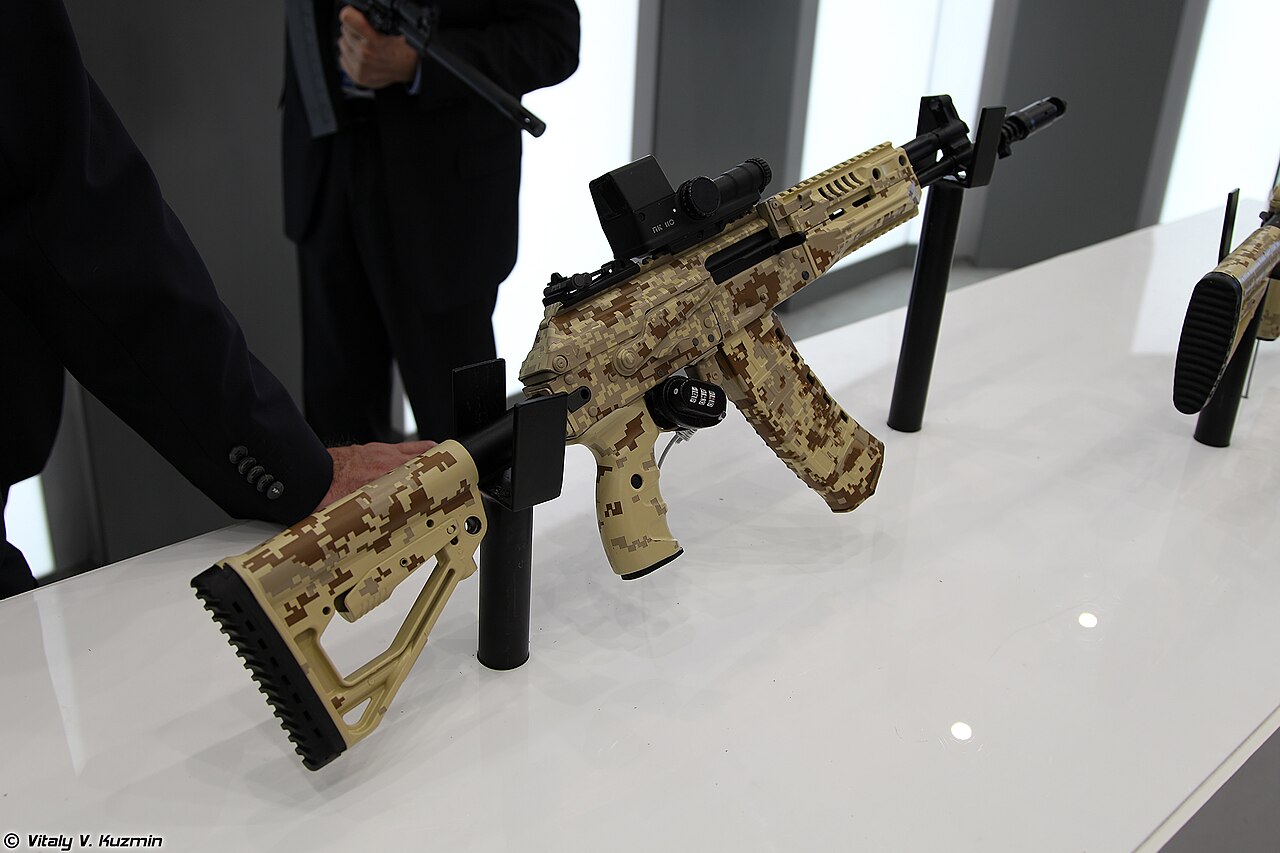
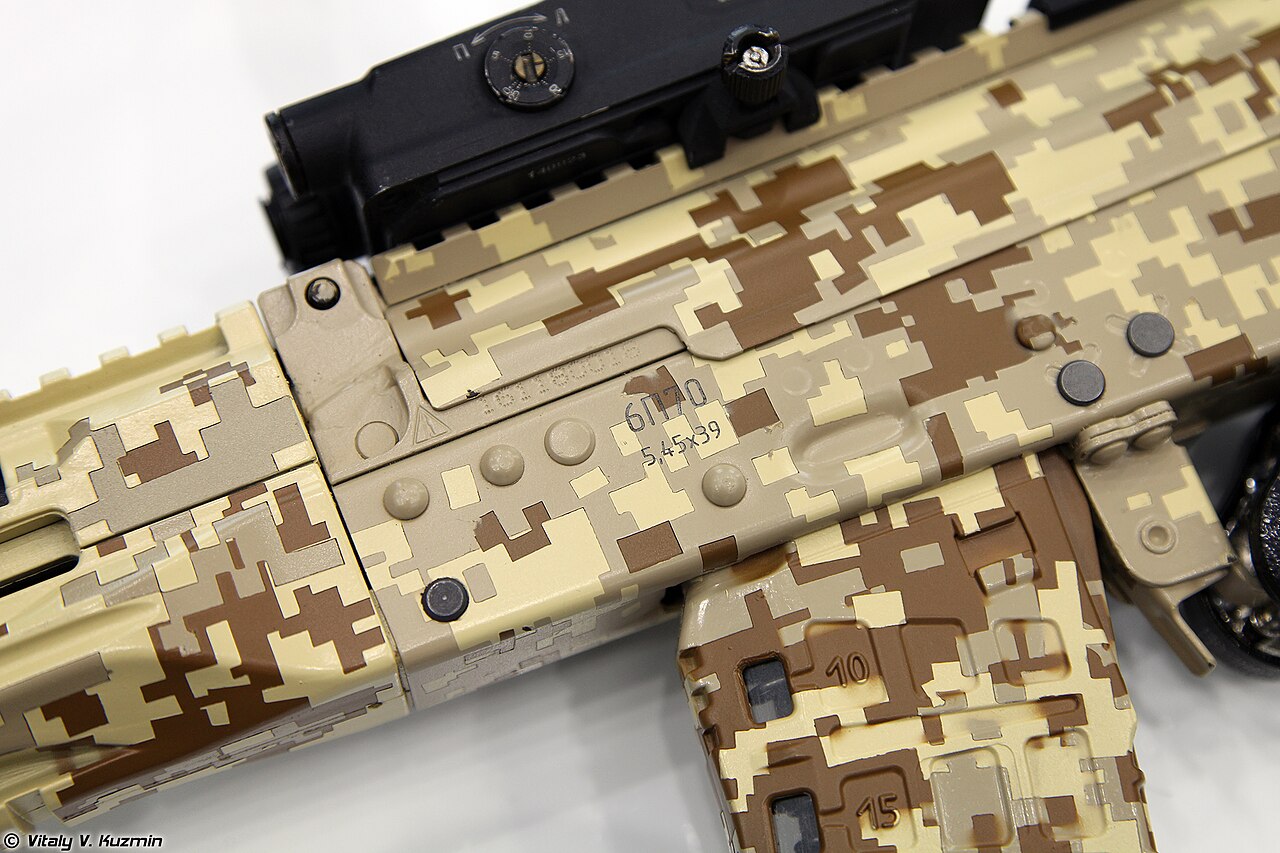
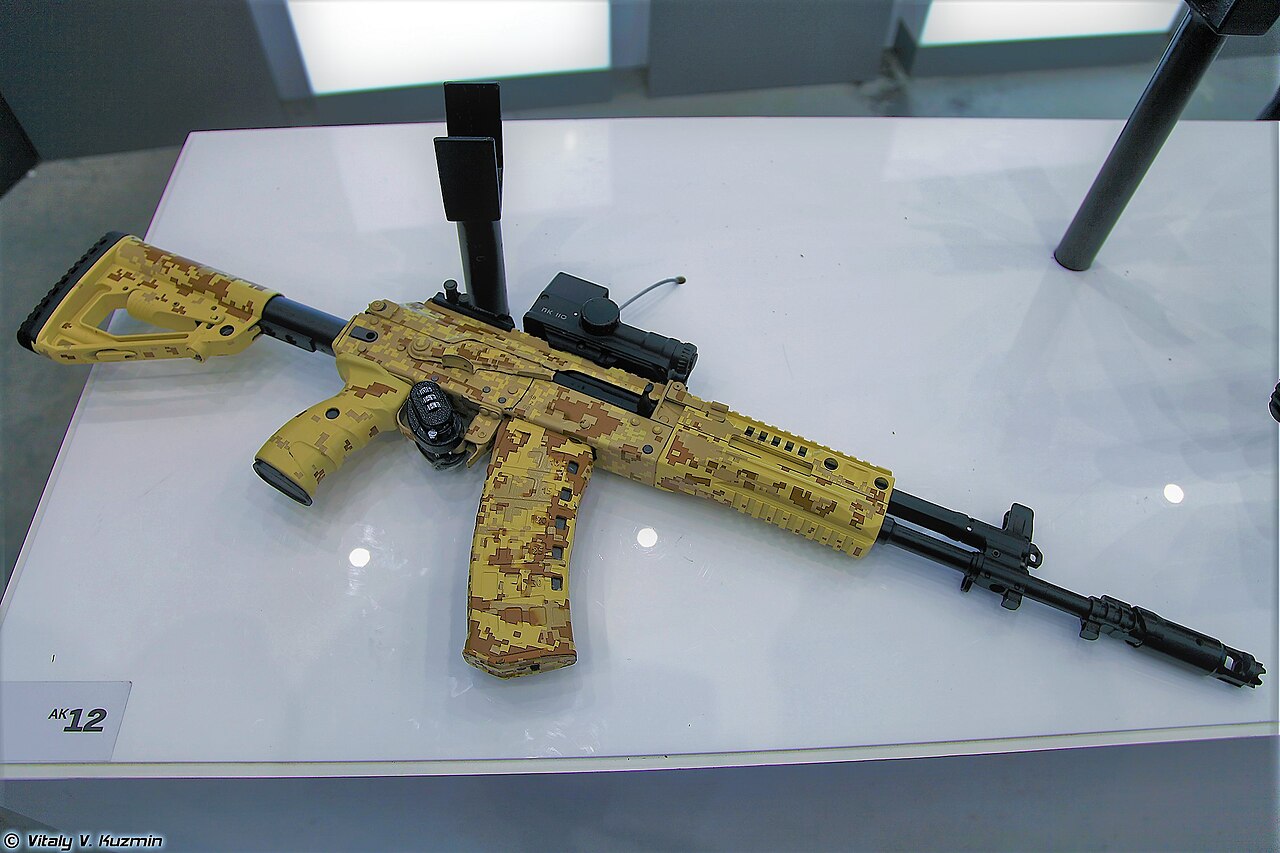
Frequently Asked Questions
Who is AK-12?
The AK-12 is a fifth-generation Russian assault rifle developed by Kalashnikov Concern (the successor to Izhmash) and assigned the GRAU index 6P70. It was purpose-built to compete in the Russian military's Ratnik equipment trials and ultimately earned a spot as a standard-issue weapon.
What are AK-12's powers/role?
Chambered in 5.45×39mm and driven by a gas-operated long-stroke piston, the AK-12 serves as a primary infantry rifle for Russian forces. It brings modernized ergonomics, an integrated optic rail, and a more modular receiver layout compared to earlier Kalashnikov models.
Why is AK-12 important?
As the fifth major iteration in the Kalashnikov lineage, the AK-12 represents the latest evolution of the most widely recognized rifle family on the planet. Its development showed Kalashnikov Concern's commitment to modernizing a decades-old platform while preserving the reliability that made the AK series a global icon.
What family does AK-12 come from?
The AK-12 belongs to a broad Kalashnikov family that spans calibers, including the 7.62×39mm AK-15, the 5.56×45mm NATO AK-19, and the 7.62×51mm NATO AK-308. Specialized offshoots such as the AK-12K, AK-12SK, and the RPK-16 light machine gun also share its core design philosophy.
More in Assault Rifles 1-24
Spotted an error? Know more?
Reader corrections go straight into our review queue. Suggest an edit · How this site is sourced