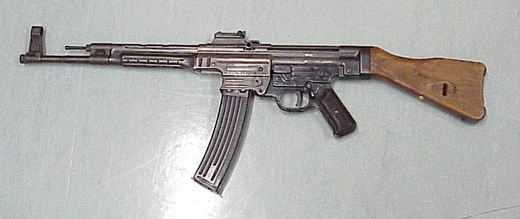
ADS amphibious rifle
Russian bullpup assault rifle for combat divers.

Pliskin · CC0
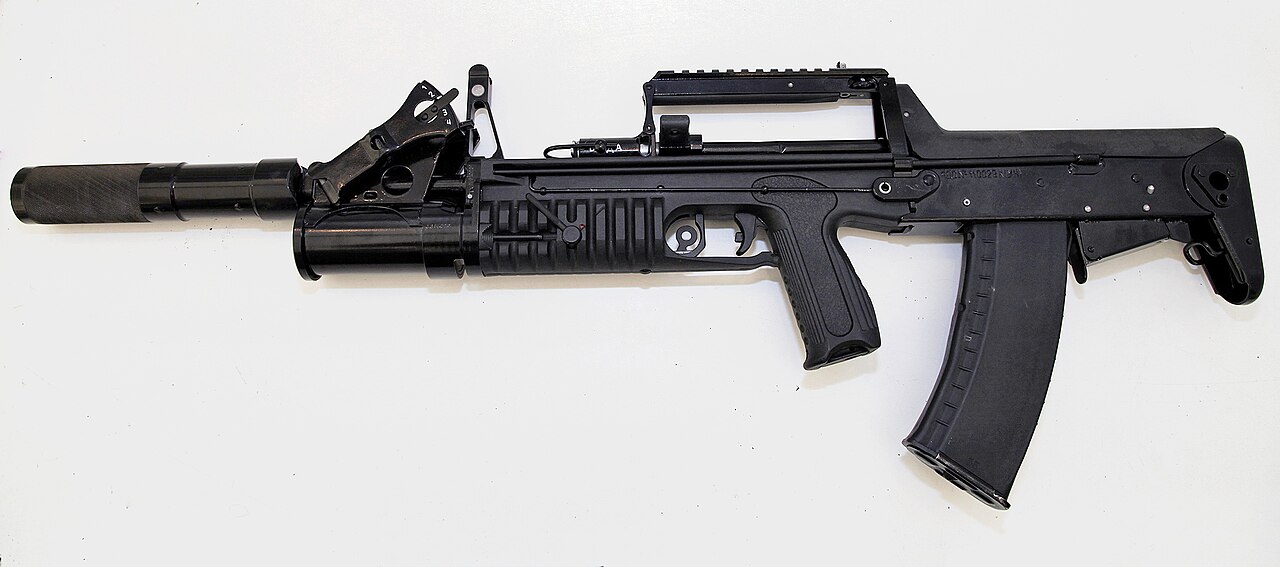
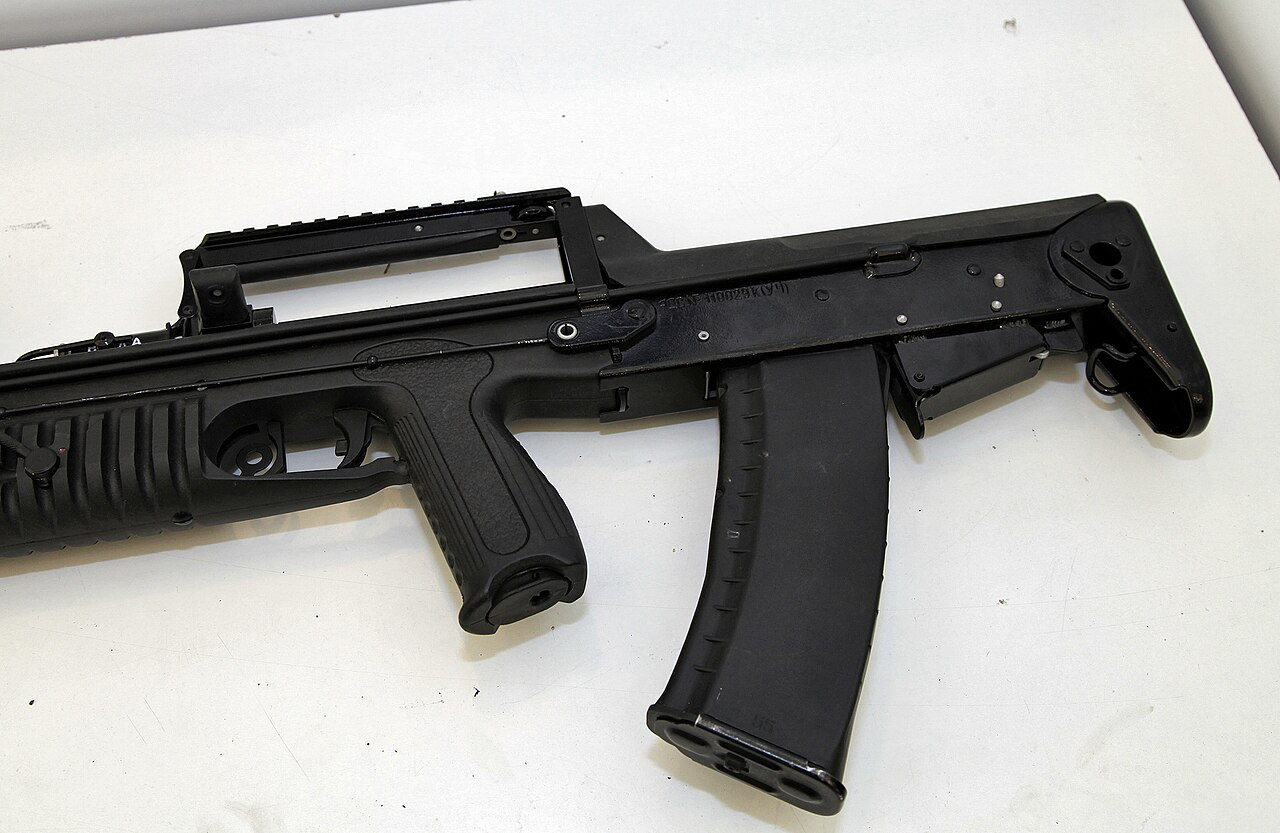
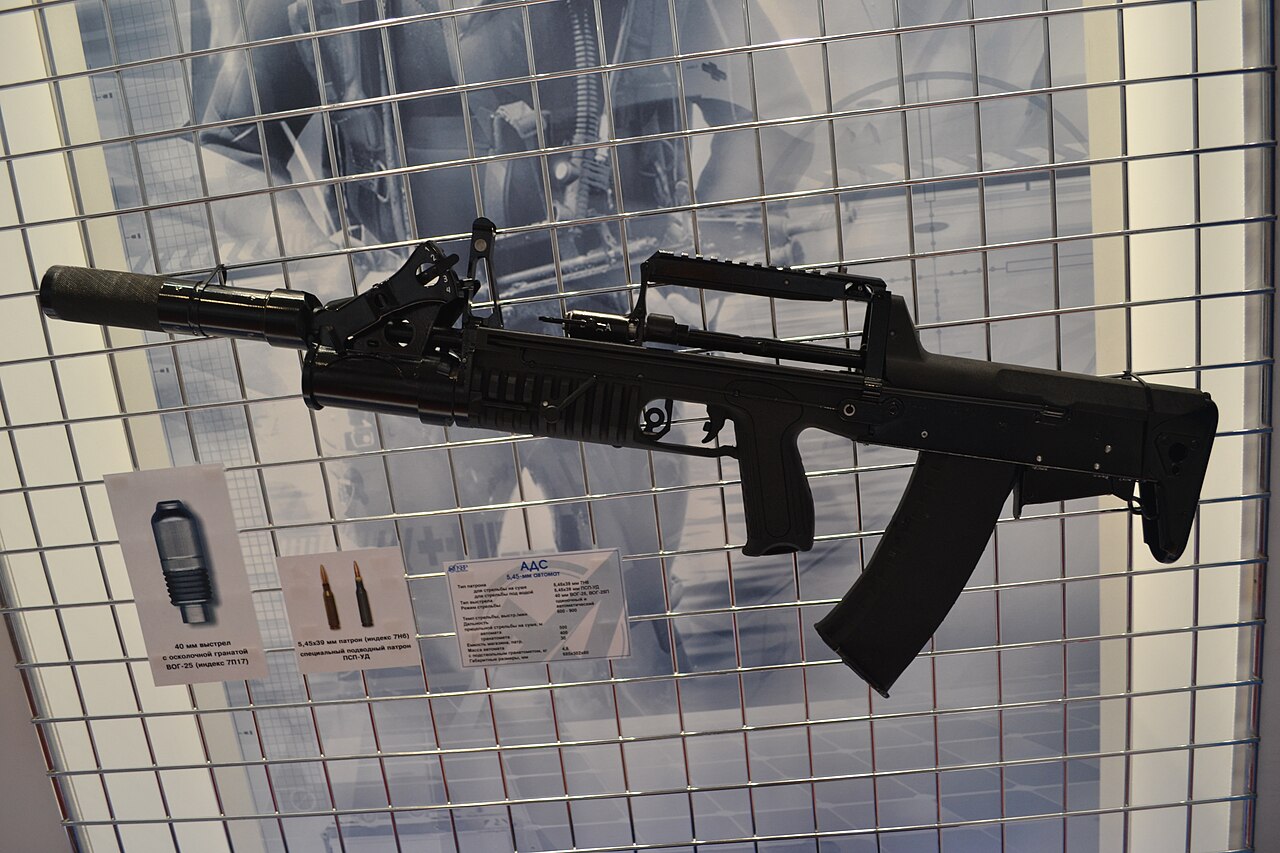
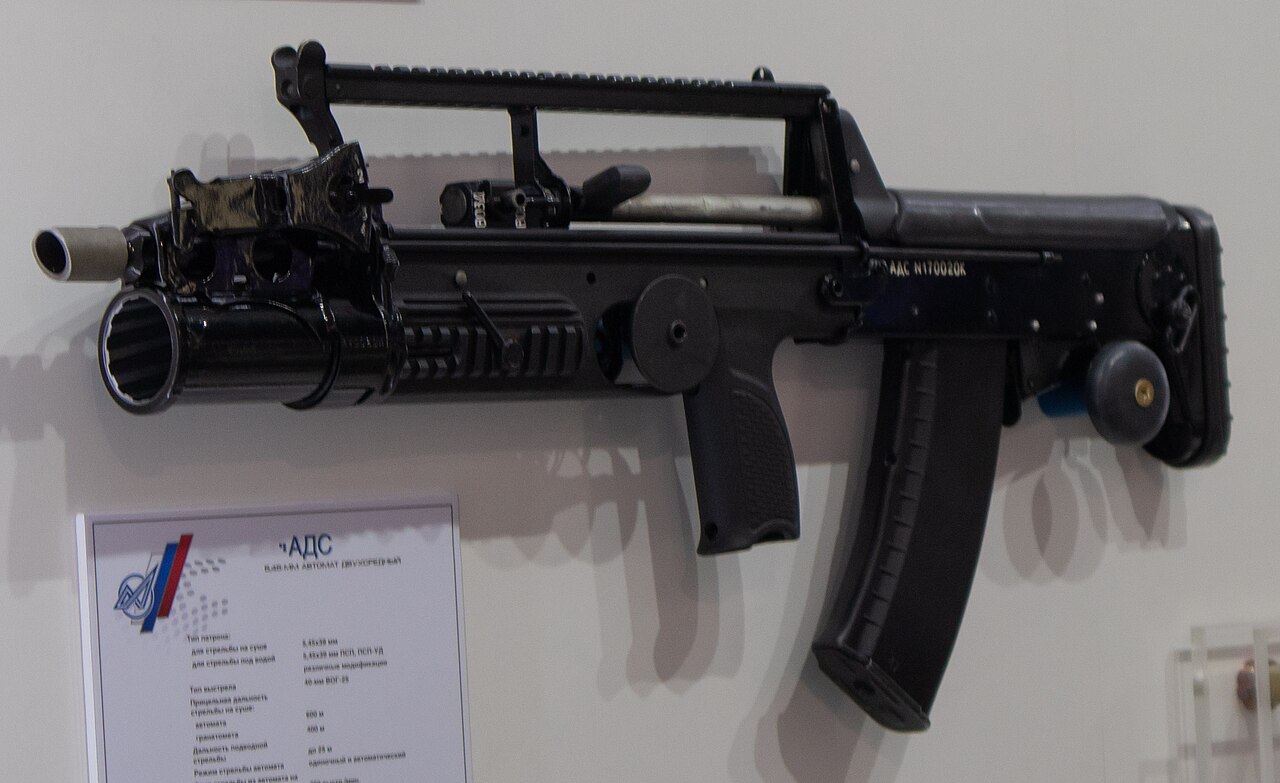
The ADS (Russian: АДС - Автомат Двухсредный Специальный - Special Dual-environment Automatic rifle) is a Russian bullpup assault rifle designed for combat divers. It fires the 5.45×39mm M74 round and can be fitted with a suppressor and optical sights.
For decades, Soviet and later Russian combat divers and naval commandos relied on separate underwater weapons like the SPP-1 pistol and APS assault rifle. These weapons performed poorly above water, forcing troops to carry two different firearms for amphibious missions. Around 2000, the ASM-DT experimental rifle aimed to solve this, but it required long underwater ammunition, an oversized receiver, and two magazine types. This design proved impractical. By 2005, the Tula Instrument Design Bureau (KBP) developed compact underwater ammunition that matched the size of standard 5.45×39mm rounds, allowing use of standard AK-74 magazines and barrels for both environments.
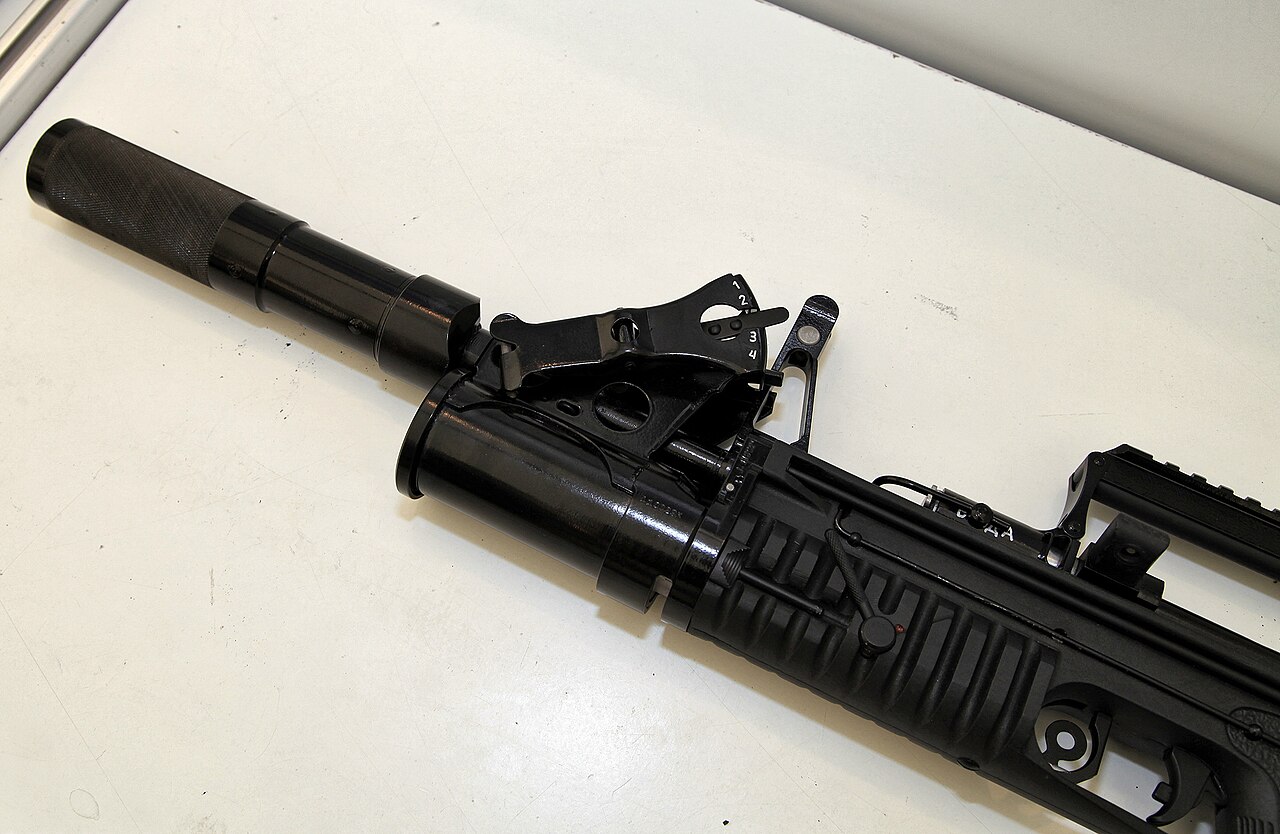
The rifle includes a 40 mm grenade launcher with a 400 m range, firing various VOG-25 grenades. It weighs about 4.6 kg with the launcher but no sight. On land, its effective range is 500 m, with a rate of fire of 700 rounds per minute. Underwater, using specially shaped cartridges (53.5 mm bullet length, 57 mm overall cartridge length), effective range is 25 m at 5 m depth and 18 m at 20 m depth. The design ejects spent cartridges forward, making it easy for left- or right-handed shooters and reducing gas exposure near the face.
After extensive field trials by undisclosed Russian naval special forces units, the ADS entered service in August 2013. It is set to replace APS underwater rifles and possibly some AK-74M models in Russian Navy special operations and other forces involved in underwater security and counter-terrorism. Rosoboronexport signed a supply contract with a CIS country. By September 2016, the ADS was in use with Russian Ministry of Defence Special Operations Force combat divers, and a Russian MoD video showed it used underwater by submarine forces during drills. The first batch for the Russian armed forces arrived in December 2019.
North Korea produces the ADS locally without a license. Russia also uses it.
Quick Facts
- Origin
- Russia
- Is Ranged
- Yes
- Service
- 2013–Present
- Designer
- KBP Instrument Design Bureau
- Design Date
- 2007
- Production Date
- 2013
- Weight
- 4.6 kg
- Length
- 685 mm
- Part Length
- 418 mm
- Cartridge
- 5.45×39mm M74 7N6 / 7N10 / 7N22 for above-water fire / 5.45×39mm PSP for under-water fire / 40 mm caseless (grenade launcher)
- Caliber
- 5.45mm
- Action
- Gas-operated, rotating bolt
Facts from the source article.
Lore & Background
For several decades, Soviet and then Russian combat divers and naval commando units were armed with special weapons for underwater combat, including the SPP-1 pistol and APS underwater assault rifle. The main drawback of these weapons is that their effectiveness (and life expectancy) for use above the water is severely degraded compared to standard 'above water' weapons. Therefore, combat divers and other Spetsnaz units, when engaged in amphibious operations, had to carry two types of weapons—one for underwater use and another for use on shore or on board enemy surface vessels. The first known attempt to produce a single weapon which could be effectively used either below or above the water was the ASM-DT experimental 'dual-medium' or amphibious assault rifle, developed in Tula around 2000.
The main problem with ASM-DT was that it still had to use long, specially designed underwater ammunition when submerged, which necessitated an overlong receiver, complicated magazine well of adjustable size and two types of magazines. This was found unsuitable for combat use, and further development commenced at KBP (Instrument Design Bureau) in Tula. By 2005, the design team at KBP successfully developed effective underwater ammunition which retains the compact size of the standard issue 5.45×39mm rounds, and thus can be loaded and fired from standard AK-74-type box magazines, and, more importantly, fired from the same chambers and barrels that would accept the 'above-water' ammunition.
The rifle was designed by Russia's Tula Instrument Design Bureau. It is equipped with a 40 mm grenade launcher which fires various modifications of VOG-25 grenades. The weapon uses 5.45×39mm bullets. The underwater cartridge is very similar in external appearance to the standard 5.45×39mm ammunition except for a different specially calculated bullet shape. The length of the bullet is 53.5 mm compared to an overall cartridge length of 57 mm. Fired cartridge extraction to the forward makes ambidextrous shooting convenient and reduces gas pollution in the face of the shooter region.
Reader's Guide
The ADS represents a significant step in equipping combat divers with a single weapon effective in both underwater and above-water environments, addressing a long-standing logistical and tactical problem. Its development at KBP in Tula overcame the limitations of the earlier ASM-DT experimental rifle by creating compact underwater ammunition that fits standard AK-74-type magazines and chambers, allowing seamless transition between environments without changing weapons or magazines. The rifle entered service in August 2013 and has been adopted by Russian Naval special forces and the Russian Ministry of Defence Special Operations Force Command combat divers. It is intended to replace APS underwater weapons and possibly some AK-74M general issue assault rifles in service with Russian Navy special operation units and other Russian special forces engaged in underwater operations such as security and counter-terrorism at sea. Rosoboronexport signed a contract with one of the CIS countries for the supply of ADS. The Russian armed forces received the first batch of ADS amphibious assault rifles in December 2019. North Korea produces the ADS locally without license.
Did You Know?
- The ADS is a bullpup layout chambered in 5.45×39mm M74.
- Its effective underwater firing range is about 25 meters at a depth of 5 meters.
From Two Guns to One: The Development Story
For decades, Soviet and later Russian combat divers and naval commando units faced an awkward logistical reality: their underwater weapons, including the SPP-1 pistol and the APS underwater assault rifle, performed poorly once the operator surfaced. Effectiveness and service life above the water were severely degraded compared to conventional firearms. This meant that any diver tasked with an amphibious mission—fighting beneath the waves and then engaging targets on a beach or aboard an enemy vessel—had to lug two separate weapons into the water. The first serious attempt to solve this problem was the ASM-DT, an experimental dual-medium rifle built in Tula around 2000. Its fatal flaw was that it still required long, purpose-built underwater cartridges, which forced an oversized receiver, a complicated adjustable magazine well, and two distinct magazine types. Combat units found the arrangement impractical. Development then shifted to the KBP Instrument Design Bureau, also in Tula. By 2005, their team had cracked the core engineering challenge: an underwater round compact enough to fit inside a standard AK-74-style box magazine and fire from the same chamber and barrel that handled conventional 5.45×39mm ammunition. That breakthrough made the ADS concept viable.
Engineering a Dual-Environment Platform
The ADS is a bullpup-configured assault rifle chambered for the 5.45×39mm M74 cartridge, placing it squarely in the AK-74 ammunition family. Its defining feature is the ability to fire a specially shaped underwater round—externally near-identical to the standard 5.45×39mm case, with a 53.5 mm bullet and 57 mm overall length—yet featuring a differently calculated projectile profile for submersion. On land the weapon achieves a 500-meter range at 700 rounds per minute. Underwater, effective reach is roughly 25 meters at a 5-meter depth and 18 meters at 20 meters. A 40 mm under-barrel grenade launcher, throwing VOG-25 rounds to 400 meters, is built into the design. The full system, launcher included but excluding any optical sight, weighs approximately 4.6 kilograms. Forward ejection of spent casings is a deliberate ergonomic choice: it keeps the gas stream clear of the shooter's face and makes the rifle comfortable for both right- and left-handed operators. The platform also accepts a suppressor and optical sights.
From Trial to Fleet: Adoption Timeline
The ADS underwent extensive field trials with undisclosed units of Russian Naval special forces before entering active service in August 2013. Its primary role was to supplant the APS underwater rifle and, potentially, to displace some AK-74M general-issue assault rifles within Navy special-operation units and other special forces tasked with underwater security or maritime counter-terrorism. By September 2016, the weapon had been formally adopted by the Russian Ministry of Defence Special Operations Force Command's combat diver element. That same period saw Rosoboronexport sign a supply contract with an unnamed CIS country, marking the rifle's first known export. The MoD also released a training video showing ADS rifles being employed underwater by Russian Submarine Forces during a defense drill, offering a rare public glimpse of the weapon in its intended environment. The first production batch was delivered to the Russian armed forces in December 2019, confirming that the ADS had moved beyond prototype and trial status into sustained operational procurement.
Beyond Russia: Legacy and Proliferation
The ADS's most striking legacy is its influence on how amphibious operations are equipped. For the first time, a single rifle could credibly cover both the submerged phase of a diver's mission and the surface engagement that followed, eliminating the need to carry two separate weapons into combat. That simplification reduced logistical burden and freed the diver's hands and attention for the task at hand. Within Russia, the rifle is expected to gradually replace the APS underwater rifle across Navy special-operation units and other special forces engaged in maritime security and counter-terrorism. Its compatibility with standard AK-74 magazines and the option to carry a 40 mm grenade launcher make it a versatile platform that can slot into existing supply chains. The weapon's reach extends well beyond Russian borders. Rosoboronexport secured a supply deal with a CIS nation, and North Korea has reportedly produced the ADS locally without a license, underscoring the design's appeal to operators seeking a compact, dual-environment rifle. The ADS thus represents a quiet but significant shift in how special forces approach the boundary between sea and land.
Gallery
Frequently Asked Questions
What is the ADS amphibious rifle?
The ADS (Автомат Двухсредный Специальный) is a Russian bullpup assault rifle built specifically for combat divers and naval commandos, allowing a single weapon to function both above and below the waterline.
What round does the ADS chamber and what is its rate of fire?
It fires the 5.45×39mm M74 intermediate cartridge at a cyclic rate of roughly 700 rounds per minute, the same ammunition family used across much of the Russian small-arms inventory.
How does the ADS solve the problem older Soviet underwater weapons had?
Previously, divers had to carry dedicated underwater guns like the APS or SPP-1 that performed poorly on land, forcing them to lug two separate firearms on amphibious operations. The ADS consolidates both roles into one rifle, so a diver can go from the boat to the beach without swapping weapons.
What is the ADS's effective range underwater versus on land?
Above water it is effective out to about 500 meters; submerged at five meters depth that range drops to roughly 25 meters, and at twenty meters depth to around 18 meters.
What are the ADS's weight and accessory options?
In its grenade-launcher configuration the rifle weighs approximately 4.6 kg, and the design accepts a suppressor as well as optical sights for improved accuracy in either medium.
More in Assault Rifles 1-24
Spotted an error? Know more?
Reader corrections go straight into our review queue. Suggest an edit · How this site is sourced