Mary E. Brunkow
American molecular biologist who co-identified FOXP3 and won the 2025 Nobel Prize.
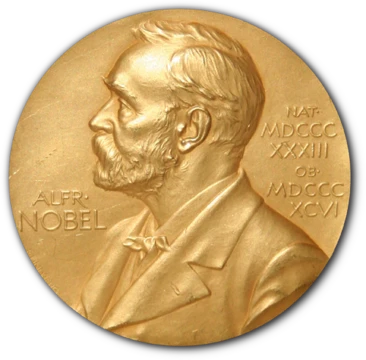
The 2025 Nobel Prize in Physiology or Medicine was awarded to Mary E. Brunkow, Fred Ramsdell, and Shimon Sakaguchi for discoveries about peripheral immune tolerance, as announced on October 6, 2025 by the Nobel Assembly at the Karolinska Institute.[1]
Quick Facts
- Born
- 1961
- Birthplace
- Portland, Oregon, U.S.
- Education
- University of Washington (BS); Princeton University (PhD)
- Known for
- FOXP3
- Fields
- Immunology; Molecular biology
- Workplaces
- Institute for Systems Biology; Celltech R&D
- Thesis year
- 1991
- Doctoral advisor
- Shirley M. Tilghman
Facts from the source article.
Key facts and history
She earned a Bachelor of Science in molecular and cellular biology from the University of Washington in 1983.[2] She received a Doctor of Philosophy in molecular biology from Princeton University in 1991.[2] Brunkow worked in industry research at Celltech R&D in Bothell, Washington.[3] She later became senior program manager at the Institute for Systems Biology in Seattle.[3]
On October 6, 2025, the Nobel Assembly announced Brunkow would share the Nobel Prize with Fred Ramsdell and Shimon Sakaguchi.[1] On June 24, 2026, she received the Golden Plate Award of the American Academy of Achievement.[1][4] In 1979, Brunkow completed her education at St. Mary's Academy, a high school located in Portland.[5] Shirley M. Tilghman served as the doctoral advisor for Brunkow's Ph.D. work.[2]
The 2001 Nature Genetics paper that Brunkow co-authored reported the identification of the scurfy gene product, which was initially called scurfin and later renamed FOXP3.[6]
What the cited sources add
The 2026 Summit account states Brunkow learned she had won the Nobel Prize from an Associated Press photographer on her porch at 3:15 in the morning.[4] The same source reports she had once planned on medical school until a favorite professor opened a door into the laboratory.[4] The account describes Brunkow as a microbiologist who finds her greatest creativity in baking.[4] At the ceremony, Dr. Frances Arnold and Dr. Lotte Knudsen presented an award to Dr. Mary Brunkow.[4]
References
- Wikipedia, "Mary E. Brunkow" (CC BY-SA 4.0), which cites: "The Nobel Prize in medicine goes to 3 scientists for work on peripheral immune tolerance", AP News, October 6, 2025; "Brunkow, Ramsdell and Sakaguchi win 2025 Nobel medicine prize", Reuters, October 6, 2025; "Golden Plate Awardees of the American Academy of Achievement", www.achievement.org; "2026 Summit", www.achievement.org (we also read that source) en.wikipedia.org
- Wikipedia, "Mary E. Brunkow" (CC BY-SA 4.0), which cites: "UW alum Mary E. Brunkow awarded the 2025 Nobel Prize in Physiology or Medicine", University of Washington, October 6, 2025; "Princeton alumna Mary Brunkow *91 receives Nobel Prize in Physiology or Medicine", Princeton University, October 6, 2025; "Princeton alumna Mary Brunkow *91 receives Nobel Prize in Physiology or Medicine", Princeton University, October 6, 2025; Brunkow, "Expression and function of the H19 gene in transgenic mice", ProQuest (we also read that source) en.wikipedia.org
- Wikipedia, "Mary E. Brunkow" (CC BY-SA 4.0), which cites: "Nobel Prize in Physiology or Medicine 2025", NobelPrize.org; Fuller-Wright, "Princeton alumna Mary Brunkow *91 receives Nobel Prize in Physiology or Medicine", www.princeton.edu, October 6, 2025 (original not read by us) en.wikipedia.org
- "2026 Summit", www.achievement.org. facts only, no text reused. achievement.org
- Wikipedia, "Mary E. Brunkow" (CC BY-SA 4.0), which cites: "Mary E. Brunkow – Facts", The Nobel Prize; "Scientist who graduated from Portland high school wins Nobel Prize in medicine", The Oregonian, October 6, 2025; "Scientist who graduated from Portland high school wins Nobel Prize in medicine", The Oregonian, October 6, 2025 (original not read by us) en.wikipedia.org
- Wikipedia, "Mary E. Brunkow" (CC BY-SA 4.0), which cites: Brunkow, "Disruption of a new forkhead/winged-helix protein, scurfin, results in the fatal lymphoproliferative disorder of the scurfy mouse", Nature Genetics, 2001, p. 68–73; Ramsdell, "FOXP3 and scurfy: how it all began", Nature Reviews Immunology, 2014, p. 343–349 (original not read by us) en.wikipedia.org
Each numbered sentence above was checked against the source it cites before publication. Sentences citing Wikipedia adapt text from the English Wikipedia article Mary E. Brunkow (contributors), used under CC BY-SA 4.0; this entry is available under the same licence. Other sources were used for facts only; no text or images are copied from them.
More in American Nobel Laureates
Spotted an error? Know more?
Reader corrections go straight into our review queue. Suggest an edit · How this site is sourced