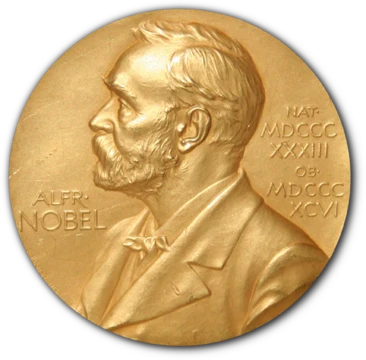
Daniel Carleton Gajdusek
Nobel-winning virologist later convicted of child molestation.
Daniel Carleton Gajdusek was an American physician and medical researcher who shared the 1976 Nobel Prize in Physiology or Medicine for demonstrating that kuru was transmissible, implying an unconventional infectious agent. He was later convicted of child molestation and spent 12 months in prison.
Quick Facts
- Born
- 9 September 1923
- Birthplace
- Yonkers, New York, U.S.
- Died
- 12 December 2008
- Place of death
- Tromsø, Norway
- Field
- Medicine
- Education
- University of Rochester; Harvard Medical School
- Known for
- Early discovery of prion disease
Facts from the source article.
Did You Know?
- Hanya Yanagihara's 2013 novel 'The People in the Trees' is based on Gajdusek's life, research, and child molestation conviction.
- Gajdusek's papers are held at the National Library of Medicine in Bethesda, Maryland, and at the American Philosophical Society in Philadelphia.
- The experiment establishing kuru's transmissibility involved drilling holes into chimpanzees' heads and placing pureed brain matter into their cerebellum.
Early life and education
Daniel Carleton Gajdusek was born in Yonkers, New York. His father was a Slovak from Smrdáky, and his mother came from Debrecen, Hungary. He completed his undergraduate studies at the University of Rochester in 1943, covering physics, biology, chemistry, and mathematics. He received his medical degree from Harvard in 1946, then did postdoctoral work at Columbia, Caltech, and Harvard. In 1951 he was drafted into the U.S. Army, working as a research virologist at Walter Reed Army Medical Service Graduate School until his discharge in 1954.
Career
In 1954, Gajdusek worked as a visiting investigator at the Walter and Eliza Hall Institute of Medical Research in Melbourne, Australia, where he began the research that led to his Nobel Prize. From 1970 to 1996, he was chief of the Laboratory of Central Nervous System Studies at NINDS at the National Institutes of Health. He was elected to the American Philosophical Society in 1978. Gajdusek's best-known work focused on kuru, a disease rampant among the South Fore people of New Guinea in the 1950s and 1960s. Introduced to the problem by district medical officer Vincent Zigas, Gajdusek provided the first medical description of the disorder, which was miscast as the 'laughing sickness' due to risus sardonicus. He began investigating in 1957 but found no conventional infectious agent, nutritional deficiency, or toxin. The direct link between cannibalism and kuru was first proposed by Shirley Lindenbaum and Robert Glasse, who published definitive evidence in the Lancet in 1968 with John D. Mathews. Gajdusek was initially dismissive of their anthropological evidence. With encouragement from Michael Alpers, an experiment inoculating affected brain tissue into chimpanzees established the disease's transmissibility in 1965. Gajdusek received the 1976 Nobel Prize alongside Alpers and Clarence Gibbs Jr. for demonstrating kuru was transmittable.
Child molestation and convictions
Gajdusek brought fifty-six children, mostly boys, from the South Pacific to live with him in the United States, where he paid for their schooling. One of them later accused him of molestation. In April 1996, he faced child molestation charges based on his own published journals, personal diary, and a victim's account. Those journals described sexual assaults on boys in New Guinea, Micronesia, and other islands, including assaults he committed. He pleaded guilty in 1997 and received a twelve-month prison sentence as part of a plea deal. After his release in 1998, he completed five years of unsupervised probation in Europe, never returning to the U.S. He lived in Amsterdam and spent winters in Tromsø, Norway. The documentary The Genius and the Boys reported that seven men confidentially testified that Gajdusek raped them as boys. Four said the encounters were untroubling, while three described them as shaming, abusive violations. Gajdusek openly admitted to molesting boys and expressed approval of incest.
Works
Gajdusek was a prolific author, publishing over 1,000 original papers, reviews, and commentaries. His works include 'Acute Infectious Hemorrhagic Fevers and Mycotoxicosis in the Union of Soviet Socialist Republics' (1953) and 'Unconventional viruses and the origin and disappearance of kuru' (1977).
Frequently Asked Questions
When and where was Daniel Carleton Gajdusek born?
Daniel Carleton Gajdusek was born on 9 September 1923 in Yonkers, New York, U.S.
When did Daniel Carleton Gajdusek die?
Daniel Carleton Gajdusek died on 12 December 2008 in Tromsø, Norway.
More in American Nobel Laureates
Spotted an error? Know more?
Reader corrections go straight into our review queue. Suggest an edit · How this site is sourced