Victor Ambros
Discoverer of the first known microRNA.
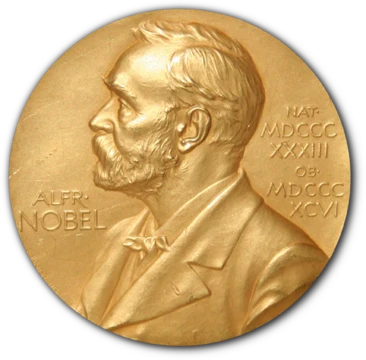
Victor Ambros, an American developmental biologist of Polish descent, identified the first microRNA. He earned his degrees at MIT and now teaches at the University of Massachusetts Medical School. In 2024, he won the Nobel Prize in Physiology or Medicine for this work.
Quick Facts
- Birth name
- Victor Robert Ambros
- Born
- 1 December 1953
- Birthplace
- Hanover, New Hampshire, U.S.
- Known for
- Discovery of microRNA
- Education
- Massachusetts Institute of Technology (BS, PhD)
- Fields
- Biology
- Thesis year
- 1979
- Doctoral advisor
- David Baltimore
Facts from the source article.
Biography
Victor Ambros was born in New Hampshire. His father, Longin Ambros, was a Polish refugee from World War II who had studied at Sigismund Augustus Gymnasium in Vilnius between 1937 and 1939. In 2026, Victor began the process of applying for Polish citizenship. He was raised on a small dairy farm in Hartland, Vermont, as one of eight children, and went to Woodstock Union High School. Ambros earned both his bachelor's and doctoral degrees in biology from the Massachusetts Institute of Technology, completing the bachelor's in 1975 and the PhD in 1979 under Nobel laureate David Baltimore. He then worked as the first postdoctoral fellow in the lab of future Nobel winner H. Robert Horvitz at MIT. In 1984, he joined Harvard's faculty but was denied tenure soon after his discovery of microRNA.
Research
In 1993, Ambros and colleagues Rosalind Lee and Rhonda Feinbaum reported in the journal Cell the discovery of single-stranded non-protein-coding regulatory RNA molecules in the organism C. elegans. Earlier work by Ambros and Horvitz had shown that the gene lin-4 was important for normal larval development by repressing the protein LIN-14; mutant worms lacking lin-4 function had high LIN-14 levels and developmental timing defects. Ambros and his team found that lin-4 did not encode a regulatory protein but instead produced small RNA molecules of 22 and 61 nucleotides, called lin-4S and lin-4L. Sequence analysis indicated that lin-4S was part of lin-4L, which formed a stem-loop structure. Working with Gary Ruvkun, Ambros discovered that lin-4S was partially complementary to sequences in the 3' untranslated region of the lin-14 messenger RNA, leading to a hypothesis that lin-4 regulated LIN-14 through an antisense RNA mechanism. In 2000, the Ruvkun lab characterized another small RNA, let-7, which was conserved across species, confirming that Ambros had discovered a class of small RNAs now known as microRNA. Ambros was elected to the National Academy of Sciences in 2007 and the American Academy of Arts and Sciences in 2011. He shared the 2024 Nobel Prize with Gary Ruvkun for the discovery of microRNA and its role in post-transcriptional gene regulation.
More in American Nobel Laureates
Spotted an error? Know more?
Reader corrections go straight into our review queue. Suggest an edit · How this site is sourced