Drew Weissman
American immunologist whose work enabled mRNA COVID-19 vaccines.
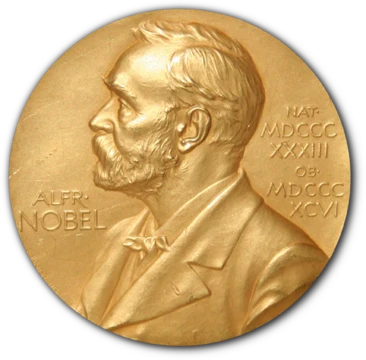
Drew Weissman is an American physician and immunologist whose research on RNA biology led to the development of mRNA vaccines. Weissman shared the 2023 Nobel Prize in Physiology or Medicine with Katalin Karikó for discoveries that enabled effective mRNA vaccines against COVID-19.
Quick Facts
- Born
- 7 September 1959
- Birthplace
- Lexington, Massachusetts, U.S.
- Education
- Brandeis University (BA, MA), Boston University (MD, PhD)
- Known for
- Modified mRNA technologies used in COVID-19 vaccines
- Fields
- Immunology
- Workplaces
- University of Pennsylvania
- Thesis year
- 1987
- Doctoral advisor
- Ann Marshak-Rothstein
Facts from the source article.
Did You Know?
- Weissman gets fan mail from people worldwide thanking him for making the COVID-19 vaccine possible; one letter said 'You've made hugs and closeness possible again'.
- He and Karikó were included in Time's 2024 list of influential people in health.
- Weissman is co-inventor on patents US8278036B2 and US8748089B2, which were licensed to Cellscript and then to Moderna and BioNTech for their COVID-19 vaccines.
Early life and education
Weissman was born in Lexington, Massachusetts, to Hal and Adele Weissman. His father is Jewish and his mother is Italian; he grew up celebrating Jewish holidays. He graduated from Lexington High School in 1977, then earned B.A. and M.A. degrees from Brandeis University in 1981, majoring in biochemistry and enzymology while working in Gerald Fasman's lab. He received his M.D. and Ph.D. from Boston University in 1987, followed by a residency at Beth Israel Deaconess Medical Center and a fellowship at the National Institutes of Health under Anthony Fauci.
Career
In 1997, Weissman moved to the University of Pennsylvania to establish a laboratory studying RNA and innate immune system biology. There he met Katalin Karikó at a photocopier; they shared frustrations over limited funding for RNA research. Karikó had been working on RNA therapy for cerebral diseases and strokes, and Weissman, an immunologist focused on vaccines, began collaborating with her. Their work faced obstacles including unwanted immune reactions from RNA. Starting in 2005, they published studies showing that synthetic nucleosides could modify RNA to prevent degradation by the body. They also developed a delivery technique using lipid nanoparticles to protect mRNA until it reached target areas. In 2006, Weissman and Karikó co-founded RNARx to develop novel RNA therapies. Their modified RNA technology became the key component of the Pfizer/BioNTech and Moderna COVID-19 vaccines deployed in 2020. Weissman has also collaborated with scientists at Thailand's Chulalongkorn University to develop COVID-19 vaccines for low- and middle-income countries.
Recognition
Weissman and Karikó received the 2023 Nobel Prize in Physiology or Medicine, as well as the 2020 Rosenstiel Award, the Louisa Gross Horwitz Prize, the Albany Medical Center Prize, the Lasker-DeBakey Clinical Medical Research Award, and the BBVA Foundation Frontiers of Knowledge Award. Weissman received an honorary degree from Drexel University College of Medicine, the 2021 Princess of Asturias Award for Scientific Research, and the 2022 Breakthrough Prize in Life Sciences. He also shared the Jessie Stevenson Kovalenko Medal, the Japan Prize, the Robert Koch Prize, the Tang Prize in Biopharmaceutical Science, and the Novo Nordisk Prize. In 2023 he received the Harvey Prize of the Technion. He was elected to the National Academy of Medicine and the American Academy of Arts and Sciences in 2022.
More in American Nobel Laureates
Spotted an error? Know more?
Reader corrections go straight into our review queue. Suggest an edit · How this site is sourced