Bushido Blade (video game)
A fighting game emphasizing realistic one-hit-kill sword combat.

Bushido Blade is a PlayStation fighting game from developer Lightweight and publisher Square. Its title comes from the Japanese warrior code, bushidō, and the game focuses on one-on-one fights with weapons. At launch, its realistic combat system was considered groundbreaking, especially the Body Damage System that tracks injuries to specific body parts.
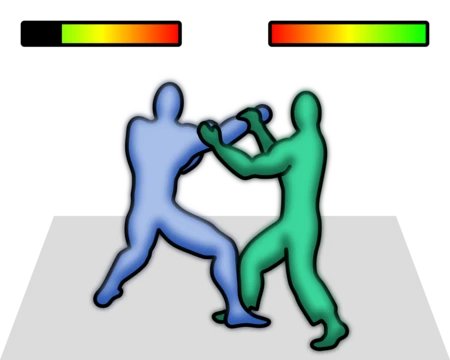
In most matches, there is no timer or health bar. A single solid hit often kills instantly, unlike typical fighting games that require many strikes to drain a health meter. However, it is possible to wound an opponent without killing them. The Body Damage System lets hits gradually disable limbs—slowing movement, reducing speed, or forcing a crawling crawl if the legs are crippled.
Eight weapons are available: katana, nodachi, long sword, saber, broadsword, naginata, rapier, and sledgehammer. Each has realistic weight and length, giving fixed power, speed, and blocking ability, though European weapons are noticeably shorter than their real counterparts. The Motion Shift System lets players chain swings into combos by pressing button sequences. Attacks vary depending on the stance—high, neutral, or low—switched via shoulder buttons or axis controls. Six characters are playable, each with different strength, speed, and unique special attacks. Some have a throwable subweapon. Characters also have varying proficiency with each weapon and one preferred weapon.
Players can run, jump, and climb through 3D environments. Battles are not confined to small arenas; the castle compound acts as a large hub with interconnected areas like a cherry blossom grove, moat, and bridge labyrinth. Some spots, such as a bamboo thicket, allow interaction.
Story mode adds a Bushido code mechanic. Dishonorable moves—striking a foe in the back, throwing dust in their eyes, or attacking while they bow—will end the playthrough early with a berating message. The game also includes a two-player versus mode, a link mode for the PlayStation Link Cable, a practice mode, a first-person mode, and Slash mode, where the player faces 100 enemies in sequence.
The plot is set in a fictional feudal Japan-like period, despite samurai cinema themes. A 500-year-old dojo called Meikyokan teaches Narukagami Shinto disciplines.
Quick Facts
- Title
- Bushido Blade
- Developer
- Lightweight
- Publisher
- JP · Square · WW · Sony Computer Entertainment
- Director
- Kunihiko Nakata
- Producer
- Tetsuhisa Tsuruzono
- Composer
- Shinji Hosoe / Ayako Saso / Takayuki Aihara
- Released
- JP · March 14, 1997 · NA · October 16, 1997 · PAL · February 1, 1998
- Genre
- Fighting
- Modes
- Single-player, multiplayer
- Platforms
- PlayStation
Facts from the source article.
Lore & Background
Bushido Blade was the first title developed by Lightweight, a partially owned subsidiary of Square. The project was directed by Shuhiko Nakata, who wished to add tension to the traditional fighting game formula by having the possibility of a one-hit kill. Nakata stated that hit detection was implemented for the torso, head, and limbs to make the game more of a 'swordsmanship simulator' rather than a fighting game. The director explained that the bushidō code of honor present in the game emphasized the concept of one's own survival as found in teachings of earlier Japanese time periods.
The game's story takes place in a fictional feudal Japan-like period, despite characters and themes similar to samurai cinema. A fictional 500-year-old dojo known as Meikyokan teaches the disciplines of the master Narukagami Shinto. A society of assassins named Kage (“Shadow”) was once led by the honorable Utsusemi, but he lost his position to Hanzaki after a fierce battle.
Reader's Guide
Bushido Blade is significant for its innovative approach to fighting games, replacing health gauges and time limits with realistic one-hit kills and a Body Damage System that allows incremental wounding. This design choice drew both praise and criticism: some reviewers found the one-hit kills made victory or defeat arbitrary with unskilled players, while others applauded how it emphasized concentration over memorized combos. The game's Bushido code mechanic, which punishes dishonorable tactics, further distinguished it from contemporaries. Commercially, it was the 25th best-selling game of 1997 in Japan, selling nearly 387,937 copies, and sold 324,083 units in the United States as of January 2003. A direct sequel, Bushido Blade 2, was released on the PlayStation a year later, and another related game, Kengo: Master of Bushido, was developed by Lightweight for the PlayStation 2. The game was later added to the PSone Classics roster on the Japanese PlayStation Store in 2008.
Did You Know?
- The North American release added blood, replacing the yellow flash that appears during a fatal blow in the Japanese version.
- The game's music was created by Shinji Hosoe, Ayako Saso, and Takayuki Aihara, and released on a two-disc set in 2001.
- Acting dishonorably in story mode, such as striking a foe in the back, will abruptly end the player's playthrough.
Redefining the Fighting Game Genre
Bushido Blade shattered the conventions of its era by stripping away the safety nets players had grown accustomed to. There is no health bar to chip away at, no countdown timer pressing the player forward. Instead, a single well-placed strike from a katana or sledgehammer can end a duel instantly, transforming every exchange into a high-stakes negotiation of space and timing. Yet the game does not reduce combat to mere binary outcomes. Its Body Damage System allows a fighter to land non-lethal blows that progressively impair an opponent—slowing their stride, dulling their swings, or crippling their legs until they can only crawl across the ground. This layered approach to injury, combined with eight distinct weapons each carrying realistic weight, reach, and blocking properties, gave the PlayStation title a depth of physicality that set it apart from the arcade-style brawlers dominating the genre at the time.
Honor as a Gameplay Mechanic
What distinguishes Bushido Blade's narrative mode from a standard campaign is its embedded moral framework. The game enforces the bushidō code of honor not as flavor text but as an active rule set. Striking an opponent from behind, hurling dust into their eyes, or launching an attack while they still bow at the start of a bout are all classified as dishonorable. Accumulate enough of these transgressions and the playthrough terminates abruptly, met with a message that scolds the player for their conduct. This design choice transforms the story mode into a role-playing exercise in restraint, where the most skilled player might still lose by choosing the wrong victory. The narrative follows an escaped assassin fleeing the Meikyokan dojo and its shadow society Kage, battling through the Yin and Yang Labyrinth Castle to survive. Each character selection subtly reshapes the story's details, adding replay value to what is fundamentally a test of both blade skill and personal integrity.
A Studio's Debut and a Composer's Vision
Bushido Blade marked the very first title from Lightweight, a subsidiary partially owned by Square at the time of its 1997 PlayStation launch. Director Shuhiko Nakata conceived the project as a swordsmanship simulator rather than a conventional fighting game, implementing hit detection across the torso, head, and limbs to reward precise, anatomically grounded strikes. He also clarified that the game's interpretation of bushidō leaned toward the older Japanese emphasis on self-preservation rather than the Edo-period way of dying codified in the Hagakure. The audio landscape was equally distinctive. Shinji Hosoe, known from Namco and Arika, composed the score with contributions from Ayako Saso and Takayuki Aihara, weaving flute, violin, and shamisen into an atmospheric soundscape. The twenty-three-track album was later issued on a two-disc set alongside Square's Driving Emotion Type-S soundtrack in 2001, released under Hosoe's own Super Sweep Records label rather than Square's typical DigiCube imprint.
Expanding the Blade's Legacy
The critical and player reception of Bushido Blade's innovative combat engine proved durable enough to spawn follow-up titles. A direct sequel, Bushido Blade 2, arrived on the PlayStation just a year after the original, extending the one-on-one armed combat formula. Lightweight also carried the design philosophy forward to the next generation, delivering Kengo: Master of Bushido for the PlayStation 2, a game sharing both the thematic title and the core gameplay DNA of the series. Even the release timeline tells a story of Square's broader publishing strategy: the game was originally targeted for a February 1997 Japanese launch but was delayed to March to clear the slot for Square's Aques sports-game line, which debuted in February. The title was presold in advance, signaling strong consumer anticipation. Together, these sequels and the original's cultural footprint cemented Bushido Blade as a defining entry in the PlayStation library, a game whose emphasis on lethal precision and moral consequence left a lasting mark on how future action titles approached combat design.
Frequently Asked Questions
What is Bushido Blade (video game)?
It is a 1997 PlayStation fighting title created by Lightweight and published by Square, built around realistic one-on-one sword duels rather than the combo-heavy brawling typical of the genre.
How does combat work in Bushido Blade (video game)?
Matches have no round timer or visible health meter; a single clean strike to a vital spot usually ends the bout instantly, so positioning, feints, and timing matter far more than button-mashing.
What is the Body Damage System in Bushido Blade (video game)?
It is a mechanic that records injuries to specific body parts, so a non-lethal hit can slow an opponent's movement or weaken their grip before a finishing blow is delivered.
Who developed and published Bushido Blade (video game)?
The game was made by the studio Lightweight and shipped by Square for the PlayStation, with its Japanese release landing in 1997.
Why is Bushido Blade (video game) considered important in fighting-game history?
At launch its lethal, realistic swordplay and the Body Damage System broke sharply from the health-bar, combo-driven formula that dominated the genre, earning it a reputation as a groundbreaking outlier.
More in 3D fighting games 1-24
Spotted an error? Know more?
Reader corrections go straight into our review queue. Suggest an edit · How this site is sourced